George’s Intro
Planning starts here.
Hi, I’m George. I’m a British Wheel of Yoga teacher, creator of the Online Yoga Lesson Planner and maker of yoga card decks.
A blank lesson plan can be wonderfully full of possibility. It can also feel like making soup from half a lemon, three carrots and a mysterious tub from 2017.
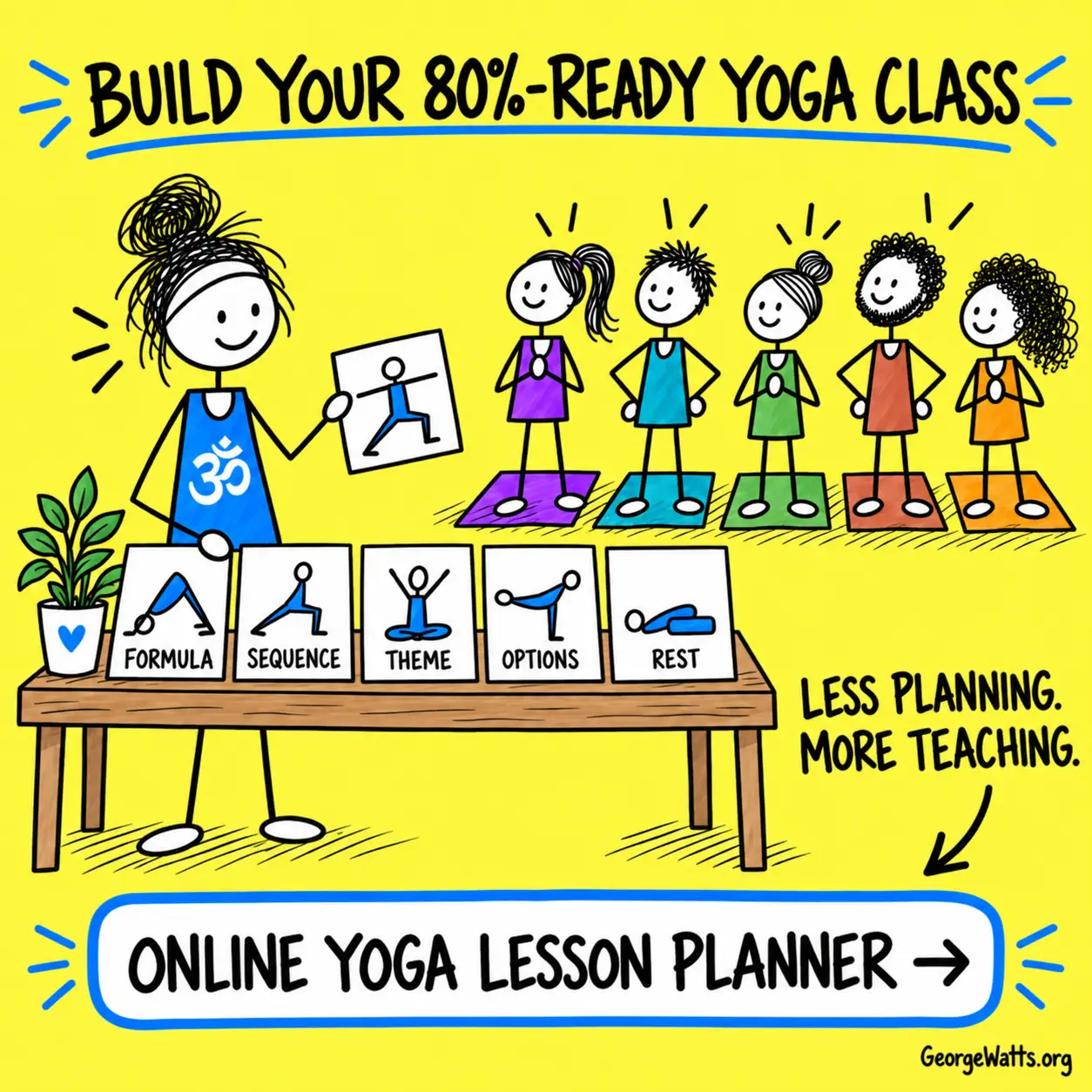
This Hub gives you five sensible places to begin: a formula, a sequence, a theme, a ready-made class plan or the needs of the students in front of you. The aim is not to finish every word for you. It is to help you reach an editable, approximately 80%-ready plan quickly.
We yoga teachers have spent so long drawing stick figures in our yoga lesson plans that they feel like old friends. Naturally, I’ve snuck them into my sticky-note doodles to make the useful bits of this post easier to remember. Small yellow spaces for big ideas that stick.
Jump to The 80% Ready Yoga Class Planner ↓
On This Page
Choose Your Lesson-Planning Route
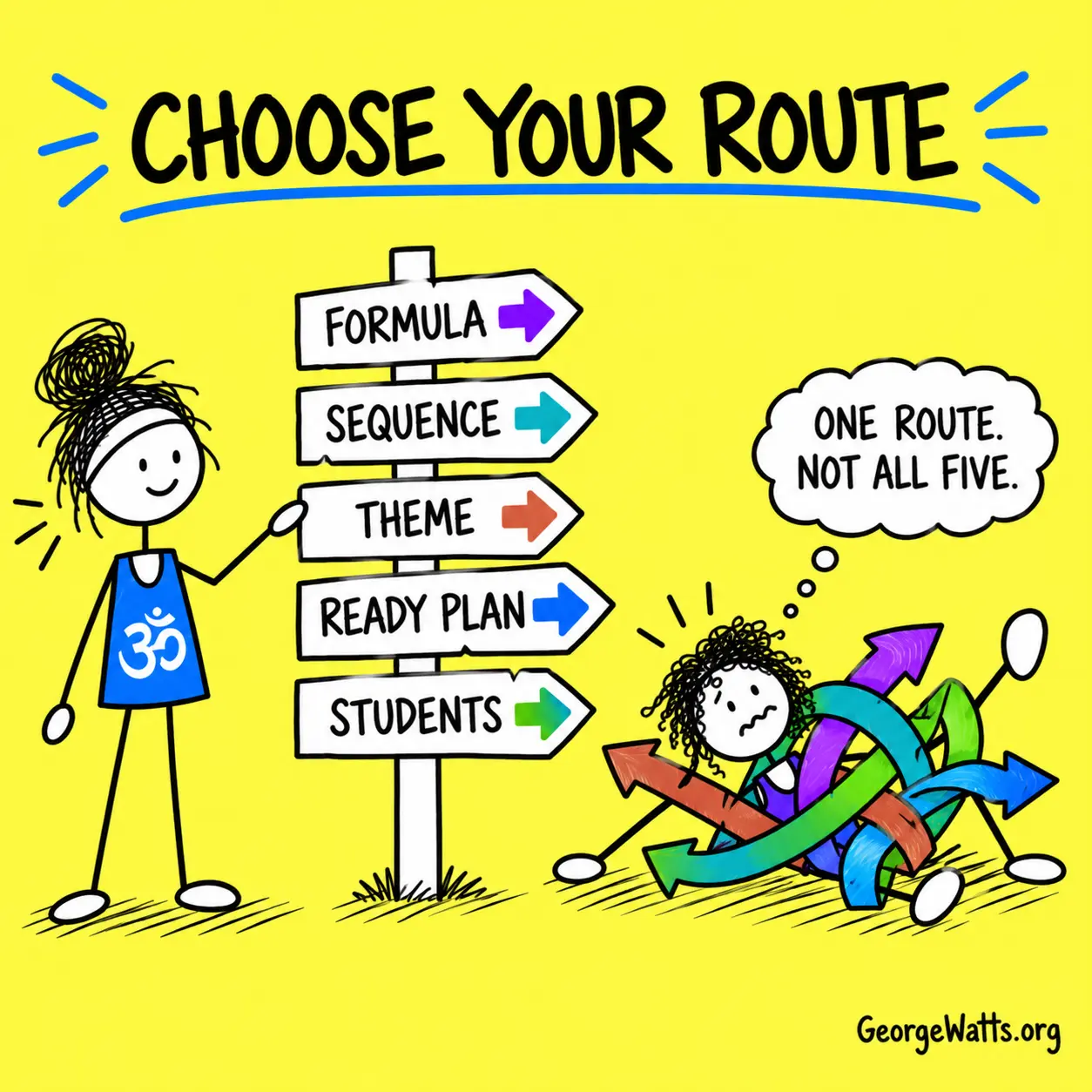
Click An Option Below To Choose Your Lesson Planning Route
2SequenceYou know the goal but need the poses to flow.
3ThemeYou want one idea to connect the whole class.
4Ready-made planYou want a useful starting plan to customise.
5Student needsYou need chair, wrist, balance or mobility options.
6Build it hereYou want an editable timed outline now.
For a broader bank of ideas, explore 101 Yoga Lesson Planning Ideas or the primary collection of 101 Yoga Class Planning Tips and Ready-to-Use Plans.
Start With a Formula

A formula is a reusable class shape. It removes the need to make every decision from scratch while leaving you free to change the poses, theme and teaching language.
A balanced 60-minute formula could be:
- Arrival: 5 minutes
- Warm-up: 10 minutes
- Standing work: 18 minutes
- Main focus: 10 minutes
- Floor work: 10 minutes
- Relaxation: 7 minutes
That totals 60 minutes. More importantly, it gives you something useful to edit.
Useful formula examples
Shape the Sequence
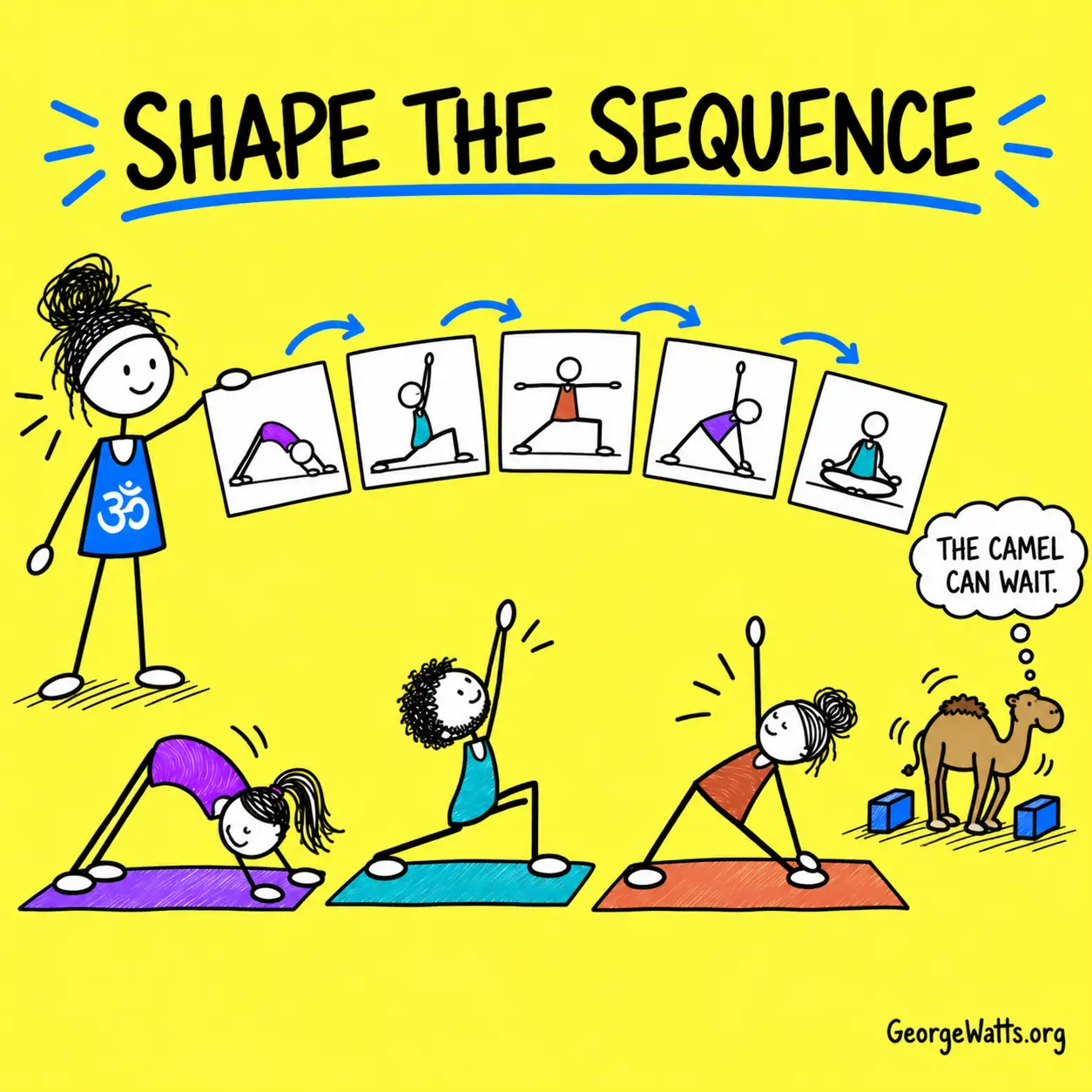
Sequencing is the part that turns a list of poses into a class. Each section should prepare for what follows and help students move without unnecessary furniture removal.
Ask these five questions:
- What is the class preparing students to do or feel?
- What does each pose prepare them for?
- Does the next transition make sense?
- Where will students need an easier option or a pause?
- Does the energy settle before relaxation?
Real-world example. If the main focus is balance, begin with steady contact through the feet, add simple weight shifts, practise a supported balance, then offer an unsupported version. Tree Pose is less surprising when it has received a proper invitation.
Sequence with a clearer method
Add a Useful Theme

A useful theme can be said in one sentence. It gives the class a thread without turning every pose into a lecture.
Grounding example: “Press down to feel supported.” You could introduce it during arrival, repeat it while students stand and return to it before relaxation.
The poses still matter. The breath still matters. The theme quietly connects them.
Theme ideas you can use
Borrow and Adapt a Ready-Made Plan

Borrowing is sensible. A ready-made plan lets you see the structure, timings and teaching arc before you adapt it for your own group.
For example, the Yoga for Your Spine plan gives you a complete theme and pose menu. You might keep its gentle spinal movements, remove anything unsuitable for your group and add more supported rest.
Use a shared plan as a starting point, not a script carved into a particularly inflexible yoga block.
Browse 37 free yoga class plans
Adapt the Plan for Real Students

A class plan becomes teachable when it includes options. Think about the students you expect, then leave room for the students who actually arrive.
A 60-minute grounding class
Group: mixed-ability adults attending an evening class.
Purpose: steadier energy and a calmer finish.
Useful adaptations: wall or chair support for balance, fists or blocks for wrist comfort, bent knees in forward folds and a longer supported rest.
Teaching thread: press down to feel supported.
Plan useful alternatives
The 80% Ready Yoga Class Planner

Start with a structure. Choose the class length and type. The planner creates a timed formula that you can edit for the people you teach.
The 80% Ready Yoga Class Planner
- Load one of the six starting structures below.
- Choose the class length.
- Edit the timings, poses, options and teaching notes.
- Copy or print your plan before leaving, because it is not saved.
Timed class formula
Your editable class outline
The result is a starting plan. Check it against your training, the needs of the group and what you observe in the room.
George’s Conclusion
A useful plan can change. Begin with a formula, borrow what already works and shape the final details around the students in front of you.
The Hub is here whenever your planning brain goes into Child’s Pose and refuses to come out.