On This Page
George’s Intro
I updated this post in 2026.
Hi, I’m George. I’m a British Wheel of Yoga teacher, creator of the Online Yoga Lesson Planner and maker of yoga card decks.
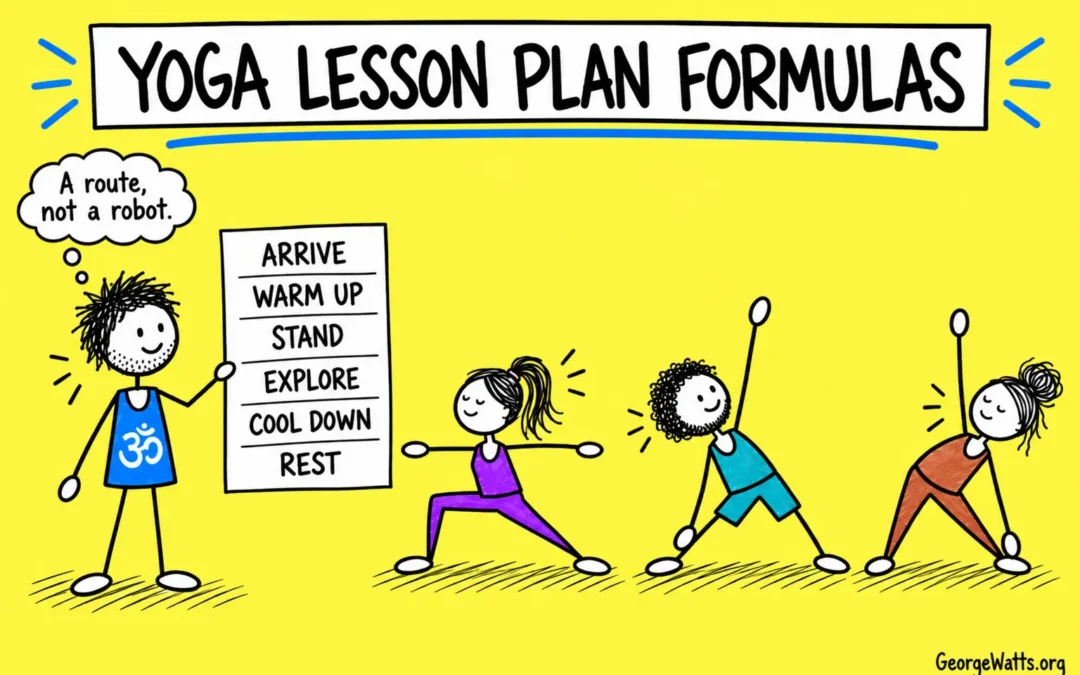
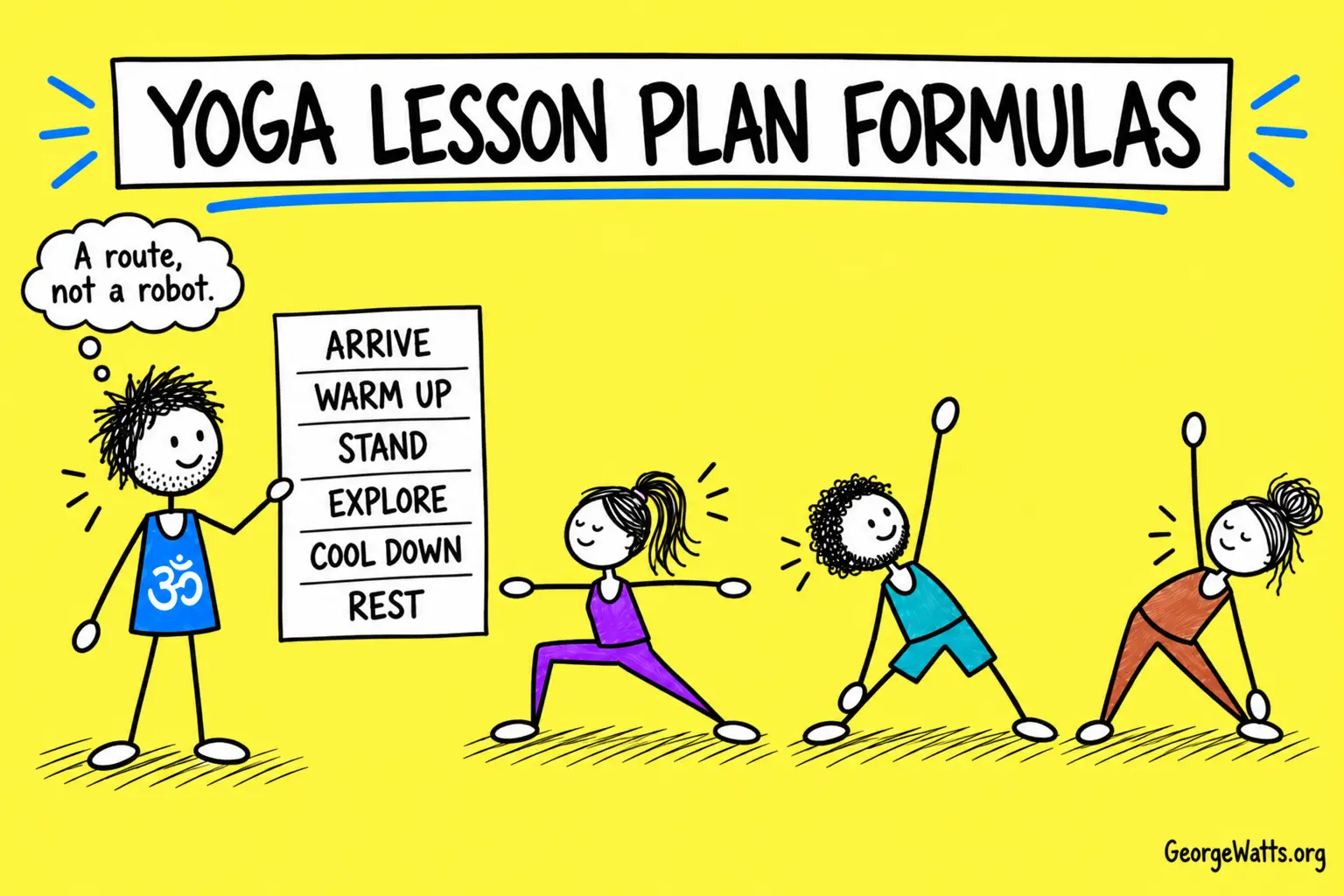
A yoga lesson plan formula is a reusable class structure. It tells you what each part of the lesson needs to do before you decide exactly which poses, breathing practices or teaching points will do it.
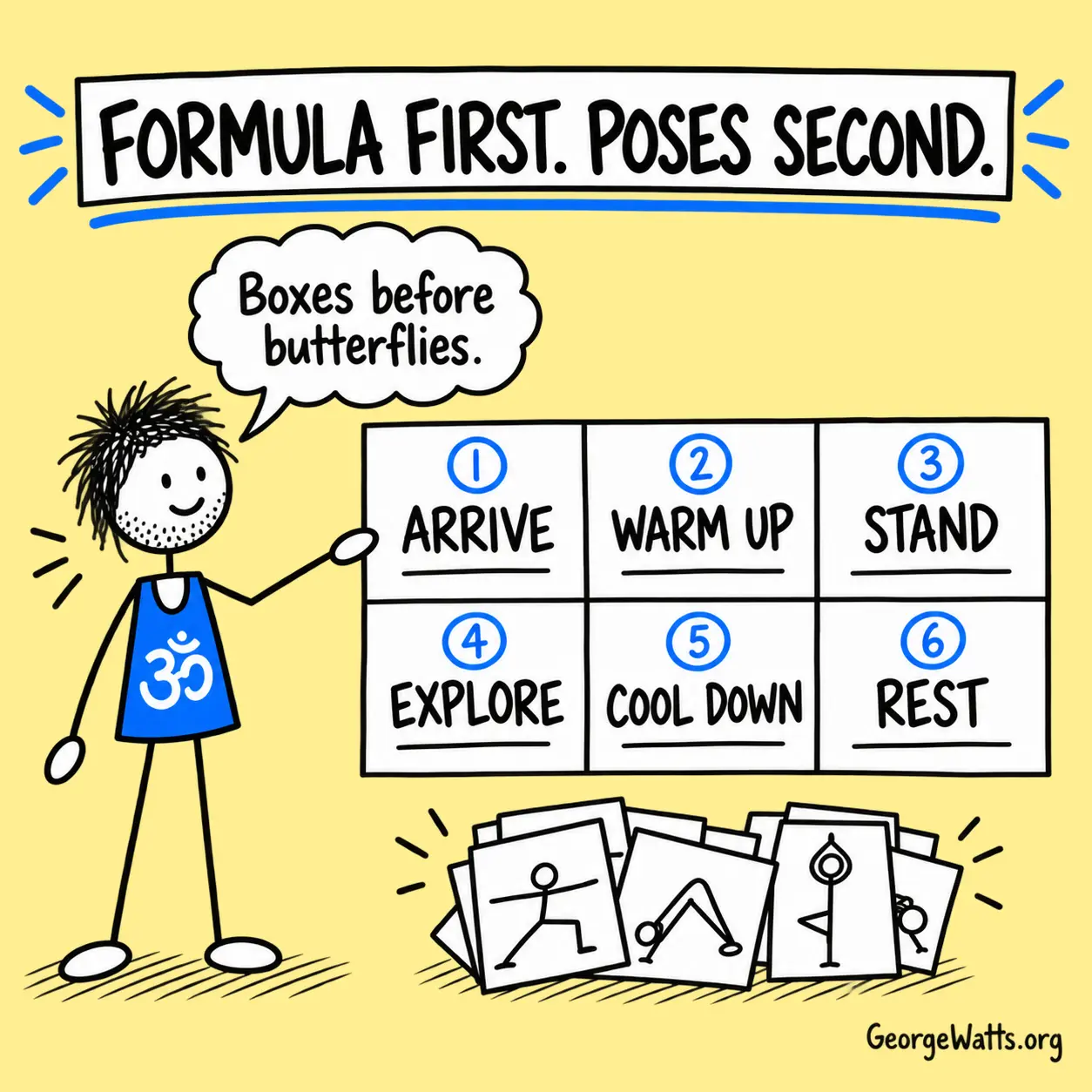
That small change of order matters. When you choose the route first, you are less likely to begin with a pile of favourite poses and spend the rest of the evening trying to make them behave like a class.
We yoga teachers have spent so long drawing stick figures in our yoga lesson plans that they feel like old friends. Naturally, I’ve snuck them into my sticky-note doodles to make the useful bits of this post easier to remember. Small yellow spaces for big ideas that stick.
This guide gives you a complete 60-minute example, six ways to adapt a formula for real groups, twenty starting ideas and an editable builder you can copy into your lesson plan or notes.
Jump to the editable Formula Builder ↓
What Is a Yoga Lesson Plan Formula?
A formula names the purpose and rough time of each section. A finished plan fills those sections with suitable practices, transitions, options, cues and teaching language.
The reusable route
Arrive, warm up, stand, explore, cool down and rest.
The route can serve many classes because it describes the job of each section.
Today’s specific journey
Breath awareness, Cat-Cow, Warriors, balances, Bridge, twist and Savasana.
The plan describes the practices, sequence and teaching choices for one group on one day.
The formula does not need to be clever. It needs to be clear enough that you can look at it and know where the class is going.
For another quick way to check movement coverage, see my 6-4-2 yoga lesson planning method.
A Complete 60-Minute Formula
Here is a general mixed-level Hatha formula. The sections are broad enough to reuse and specific enough to guide a real plan.
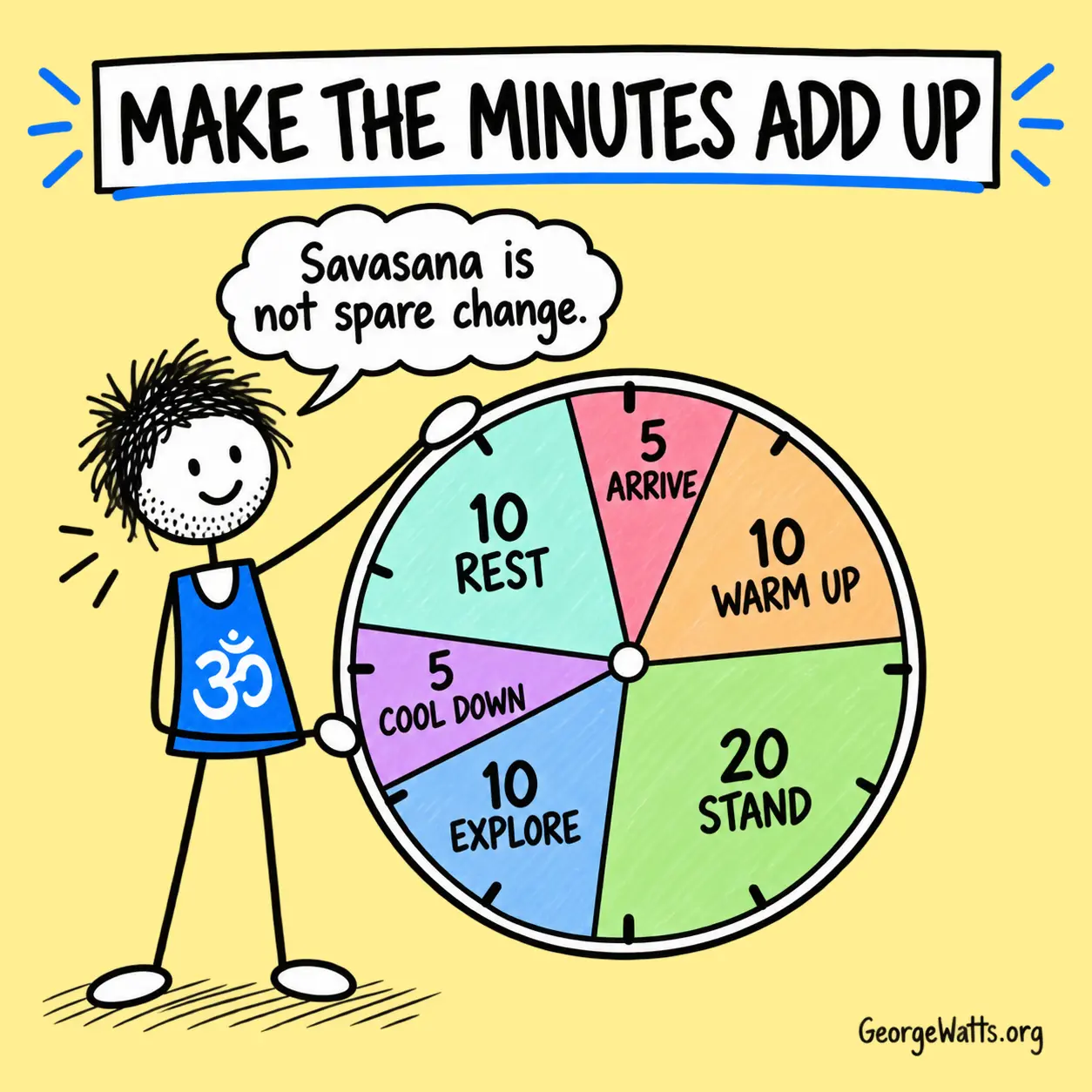
| Section | Purpose | Possible pose families | Minutes |
|---|---|---|---|
| Arrive | Settle, notice and establish the class aim. | Constructive rest, seated arrival, simple breath awareness. | 5 |
| Warm up | Prepare the joints, breath and main movement patterns. | Joint mobility, Cat-Cow, gentle side bends and twists. | 10 |
| Stand | Build heat, stability and clear directional movement. | Standing poses, lunges, accessible balances. | 20 |
| Explore | Develop the main lesson purpose without rushing. | Peak-pose preparation, floor work or a themed sequence. | 10 |
| Cool down | Reduce demand and return towards the floor. | Forward folds, supported shapes, gentle twists. | 5 |
| Rest | Allow stillness, integration and a clear ending. | Savasana, body scan or guided relaxation. | 10 |
| Total | 60 | ||
Notice that the formula does not demand a fixed number of poses. A ten-minute warm-up might use three unhurried movements. A twenty-minute standing section might use six linked shapes or three poses explored carefully on both sides.
If your class regularly runs late, protect the final rest first. My guide to ending a yoga class on time gives you a simple way to do that.
Build Your Formula in Six Steps
Work from the group and purpose towards the pose choices. That order keeps the formula useful instead of turning it into a disguised list of favourite asanas.
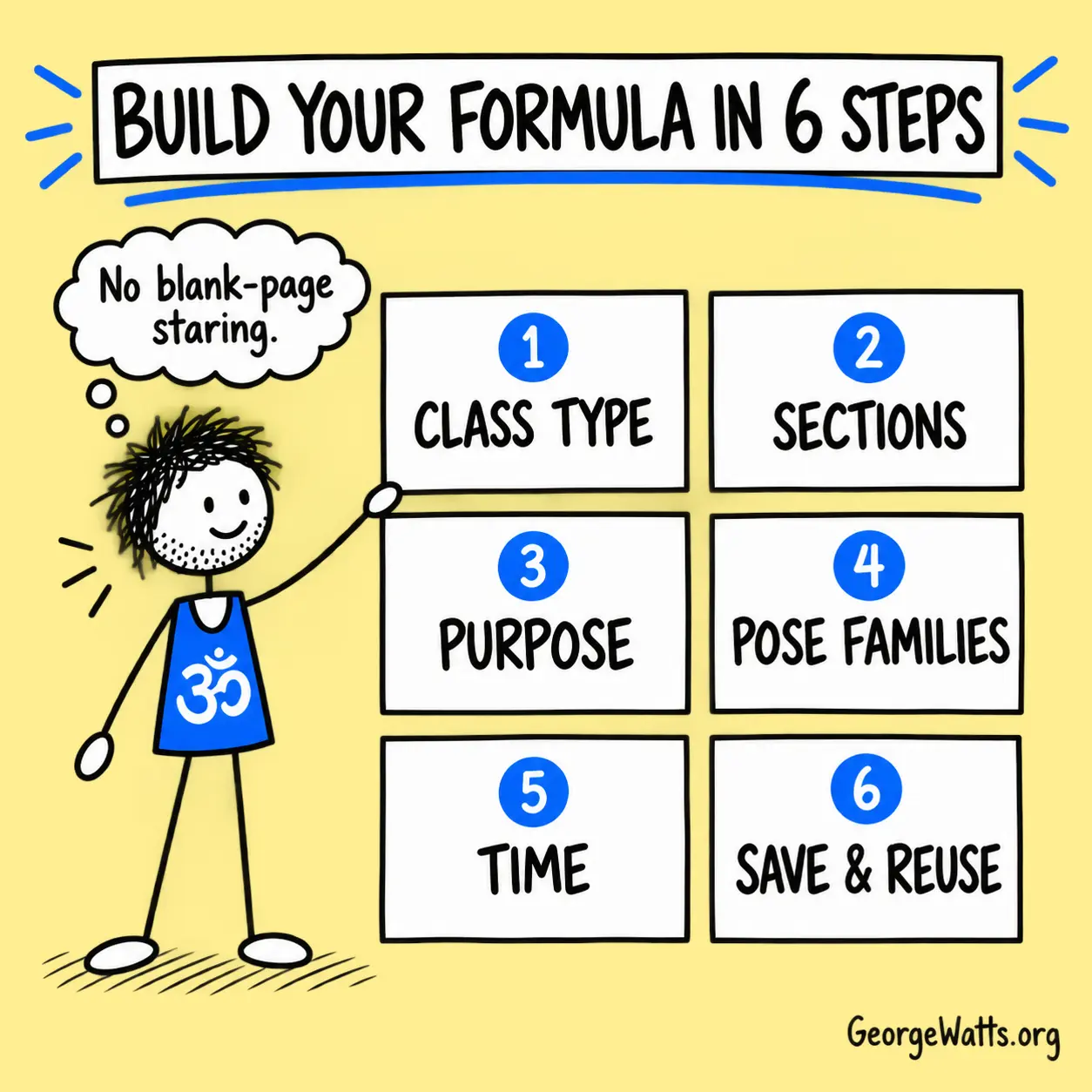
Name the class type
Write the people, setting, length and broad style: beginners in a village hall, mixed-level online Hatha, chair yoga or a workplace session.
Choose the sections
Give the class a small number of recognisable stages. Six is often plenty. Combine sections when the lesson is short.
Give each section a purpose
Write what the section needs to achieve. If you cannot describe its job, it may not need to be there.
Add pose families
Choose categories before individual poses: seated mobility, standing strength, balances, backbends, twists and rest.
Set the time
Give every section minutes and check the total. Include transitions, explanations and the ordinary business of teaching humans.
Save and reuse
Teach the route, note what happened and adjust it. Reuse the structure with new aims, practices and groups.
Then turn the formula into a real lesson by adding appropriate practices and rehearsing the route. My three-step preparation routine explains how I do that before teaching.
Build Your Reusable Yoga Class Formula
Edit the example below. Change the class, section names, purposes, pose families and minutes. The total updates as you type.
Yoga Class Formula Builder
Your edits stay in this browser tab. Copy your formula before leaving.
| Section | Purpose | Pose families or practices | Min | Remove |
|---|---|---|---|---|
Six Real-World Formula Examples
A useful formula changes with the people, setting and available time. These examples show the same planning idea applied to six different teaching situations.
Mixed-Level Hatha
5 arrive, 10 warm up, 20 standing, 10 explore, 5 cool down, 10 rest.
Use steady progressions and keep a smaller or supported option visible.
Workplace Reset
3 arrive, 8 mobility, 12 standing, 10 seated release, 7 breath, 5 rest.
Reduce floor changes and choose practices that work in ordinary clothing.
Chair Yoga
5 arrive, 12 seated mobility, 15 supported standing, 10 strength and balance, 8 cool down, 10 rest.
Keep the chair role clear and offer seated versions without presenting them as second best.
Vinyasa Class
5 arrive, 12 warm up, 25 progressive flow, 13 explore, 10 floor work, 10 rest.
Rehearse transitions and plan where students can pause or leave the flow.
Beginner Course
10 arrive and recap, 15 foundations, 25 standing skills, 15 focus practice, 10 questions and cool down, 15 rest.
Repeat the outer structure each week while changing one manageable learning focus.
Restorative Class
8 arrive, 10 gentle preparation, 12 supported pose one, 12 supported pose two, 8 transition and breath, 10 rest.
Budget honestly for prop setup, quiet transitions and coming out of shapes.
For a detailed accessible structure, see my six-part chair yoga class formula. For a more detailed sequencing route, use my 10-step yoga sequencing formula.
One Formula, Three Real Classes
The outer route can stay familiar while the practices change. Here is one six-part formula translated for three settings.
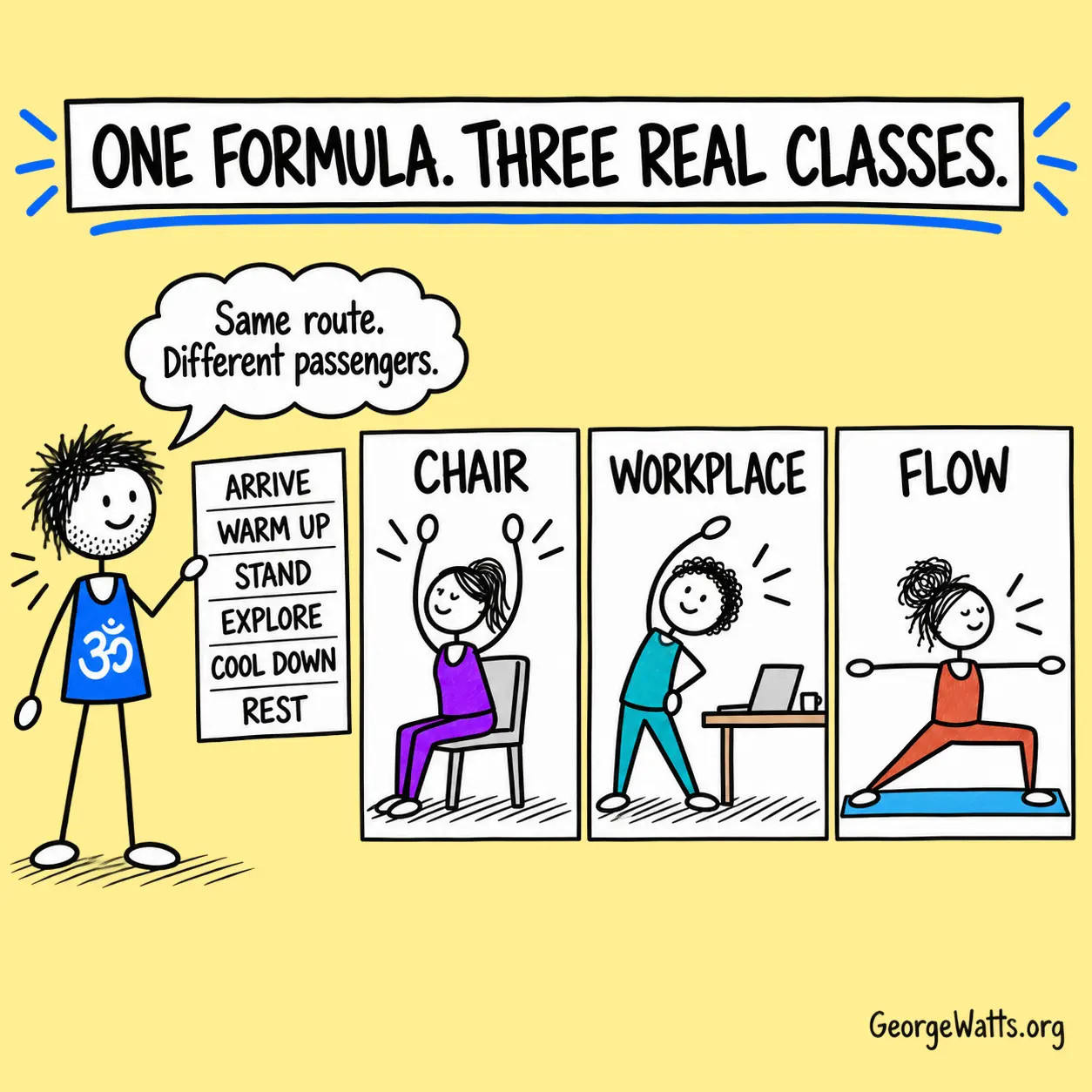
| Formula job | Chair class | Workplace class | Flow class |
|---|---|---|---|
| Arrive | Feet, seat and breath | Notice chair, desk and breath | Constructive rest |
| Warm up | Seated joint mobility | Neck, shoulders, wrists and spine | Cat-Cow and low-lunge waves |
| Build | Supported standing strength | Standing side body and legs | Sun Salutation variations |
| Explore | Seated and supported balance | Steady standing balance | Warrior sequence into Tree |
| Reduce | Seated fold and twist | Chair-supported fold and breath | Hip release and lying twist |
| Rest | Supported seated relaxation | Seated body scan | Savasana |
This is why a reliable formula does not make your classes identical. It removes one layer of blank-page decision-making so you can pay more attention to suitability, progression and teaching.
Twenty Yoga Lesson Plan Formula Ideas
Use these as starting routes, not compulsory recipes. Change, combine or shorten them to fit the class in front of you.
Classic Hatha
Arrive, mobilise, stand, balance, floor work, rest.
Beginner Foundations
Arrive, explain, practise one skill, apply it, recap, rest.
Peak Pose
Arrive, identify actions, prepare, progress, explore, counterpose, rest.
Theme Thread
Introduce theme, embody it simply, develop it, reflect, rest.
Breath-Led Hatha
Notice breath, mobilise with breath, stand, breathe in stillness, rest.
Chair Yoga
Arrive seated, mobilise, supported stand, strengthen, settle, rest.
Workplace Reset
Pause, release upper body, stand, focus eyes and breath, return.
Online Mixed-Level
Check space, warm up clearly, simple main route, floor work, rest.
Gentle Morning
Wake joints, lengthen, balance, breathe, set intention.
Evening Wind-Down
Arrive, slow mobility, forward fold, twist, supported rest.
Restorative
Arrive, prepare props, supported pose, transition, supported pose, rest.
Yin
Settle, target area one, return to neutral, target area two, return to neutral, rest.
Back-Care Theme
Observe, mobilise, stabilise, strengthen, release, rest.
Balance Theme
Ground, mobilise feet and hips, stable shapes, balance, settle.
Twist Theme
Lengthen, mobilise, rotate gently, apply standing, unwind, rest.
Hip Mobility
Arrive, warm spine, stand, vary hip actions, neutralise, rest.
Six-Week Course
Recap, teach one new skill, practise, apply, questions, rest.
Pranayama Focus
Settle, free posture, observe breath, teach technique, return, rest.
Philosophy Theme
Introduce idea, simple movement, explore, pause, reflect, rest.
Ten-Minute Mini Class
Arrive, move, focus, settle. One clear job for each part.
Teach, Note, Improve and Reuse
A formula becomes useful through small observations after real teaching, not through perfect planning before the first class.
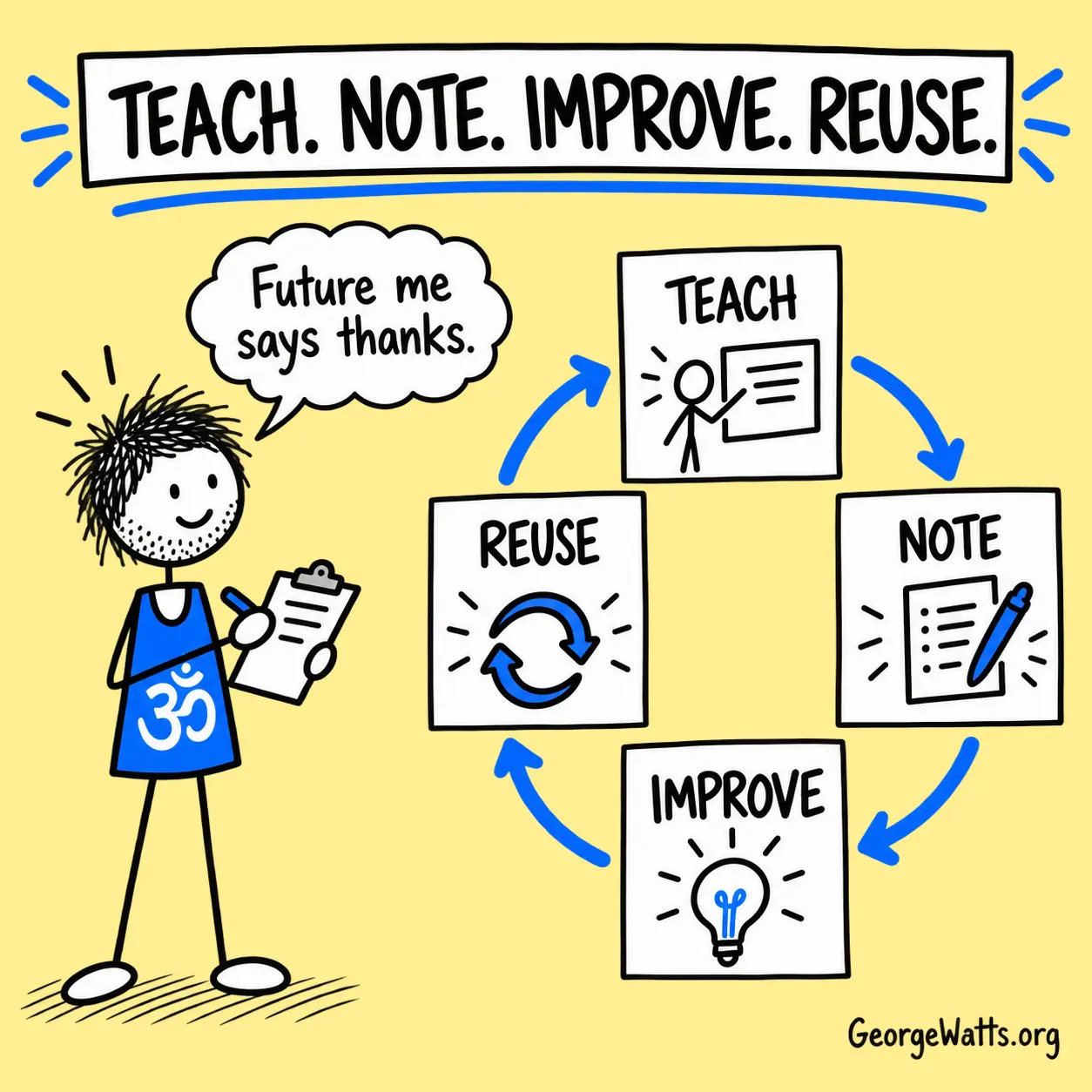
Teach
Use the route, but respond to the room. The formula serves the students, not the other way around.
Note
After class, write two or three useful facts: where time went, which transition snagged and what helped.
Improve
Change one section or timing decision. Avoid rebuilding the entire structure because one detail misbehaved.
Reuse
Keep the route and change the practices, theme or level. Familiar structure creates more room for attentive teaching.
Before reusing a formula, ask: does it fit these people, this room and this amount of time? My guide to 29 yoga sequencing mistakes provides a fuller check for purpose, progression, choices, transitions, timing and rest.
Common Questions About Yoga Lesson Plan Formulas
Does a formula make every class the same?
No. The route can stay familiar while the poses, theme, pace, teaching language and options change. A formula reduces unnecessary decisions. It does not remove responsive teaching.
Should I start with poses or sections?
Start with the people, purpose and sections. Then choose pose families and individual practices. This helps each pose earn its place in the class.
How many sections should a formula have?
Use the smallest number that makes the route clear. Four sections may be enough for a short workplace class. Six to eight can work well for a longer general class.
What if the minutes do not add up?
Change the formula before adding more poses. Protect the ending, allow realistic transition time and decide which section is genuinely less important today.
Can I use the same formula for different groups?
Yes, if you recheck the level, setting, pace and choices. A chair class, online class and Vinyasa class can share an outer route while needing very different practices.
Is a formula a complete lesson plan?
No. A complete plan adds specific practices, order, sides, repetitions, options, cues, props and timing. The formula is the structure that helps those details work together.
George’s Conclusion
A useful yoga lesson plan formula gives you a route before you choose the scenery.
Name the class, divide it into sections, give each section a purpose, add suitable pose families and make the minutes add up. Then teach it, note what happened and improve the route without starting from a blank page.
When you need more structures, sequencing guides and ready-made examples, visit my Yoga Lesson Planning Hub.
Turn the Formula Into a Saved Lesson Plan
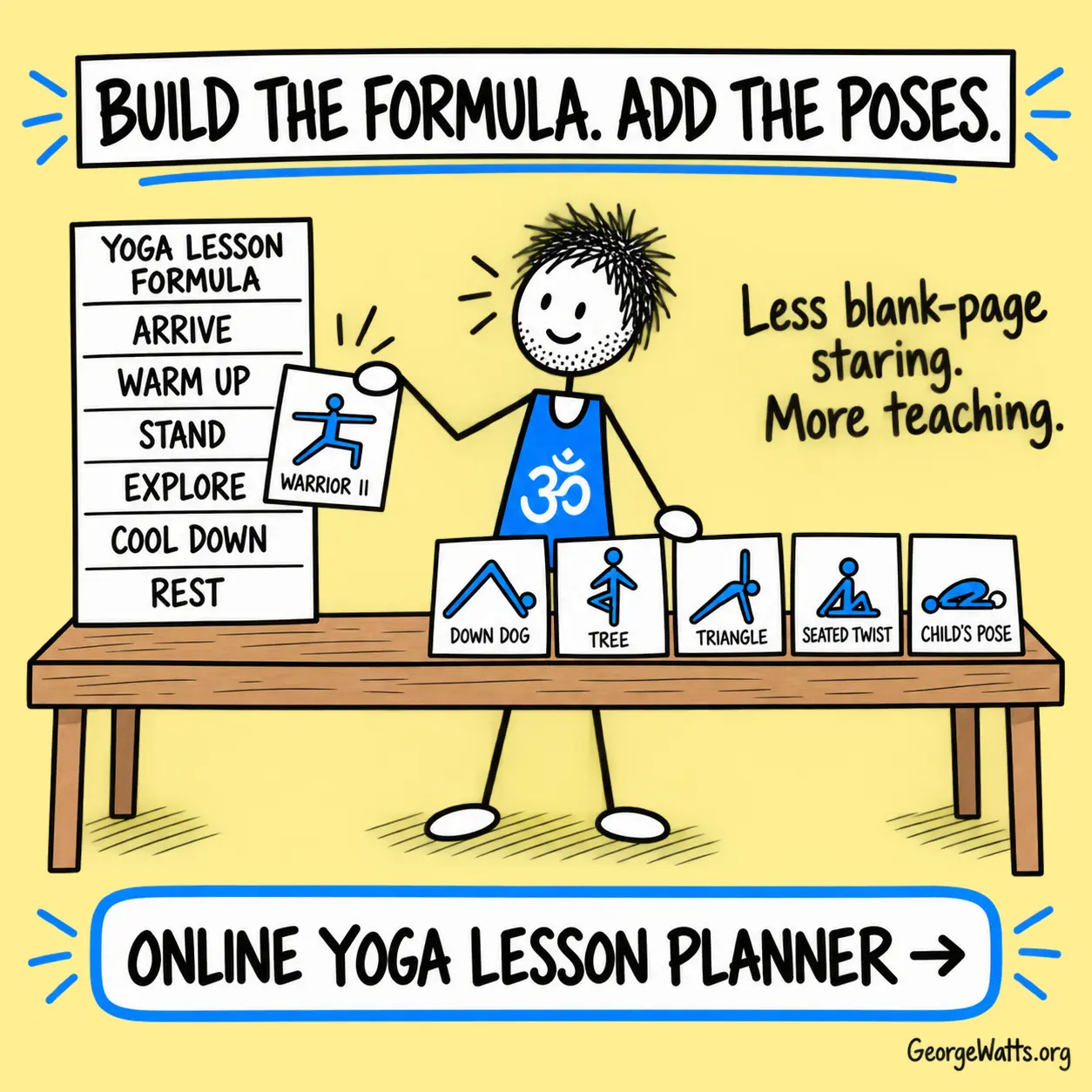
Build the route here, then use the Online Yoga Lesson Planner to choose poses, organise the sequence and print the plan you will teach.