

George’s Intro
I updated this post in 2026.
A yoga workshop is a promise to go deeper, not merely a longer class with more biscuits.
I’m George, a BWY yoga teacher, creator of the Online Yoga Lesson Planner, yoga card deck maker and enthusiastic sticky-note doodler.
Jump to The Yoga Workshop Planner ↓
I have taught hundreds of yoga classes, and locally distributed flyers were almost always the number-one marketing tactic bringing new students into my classes.
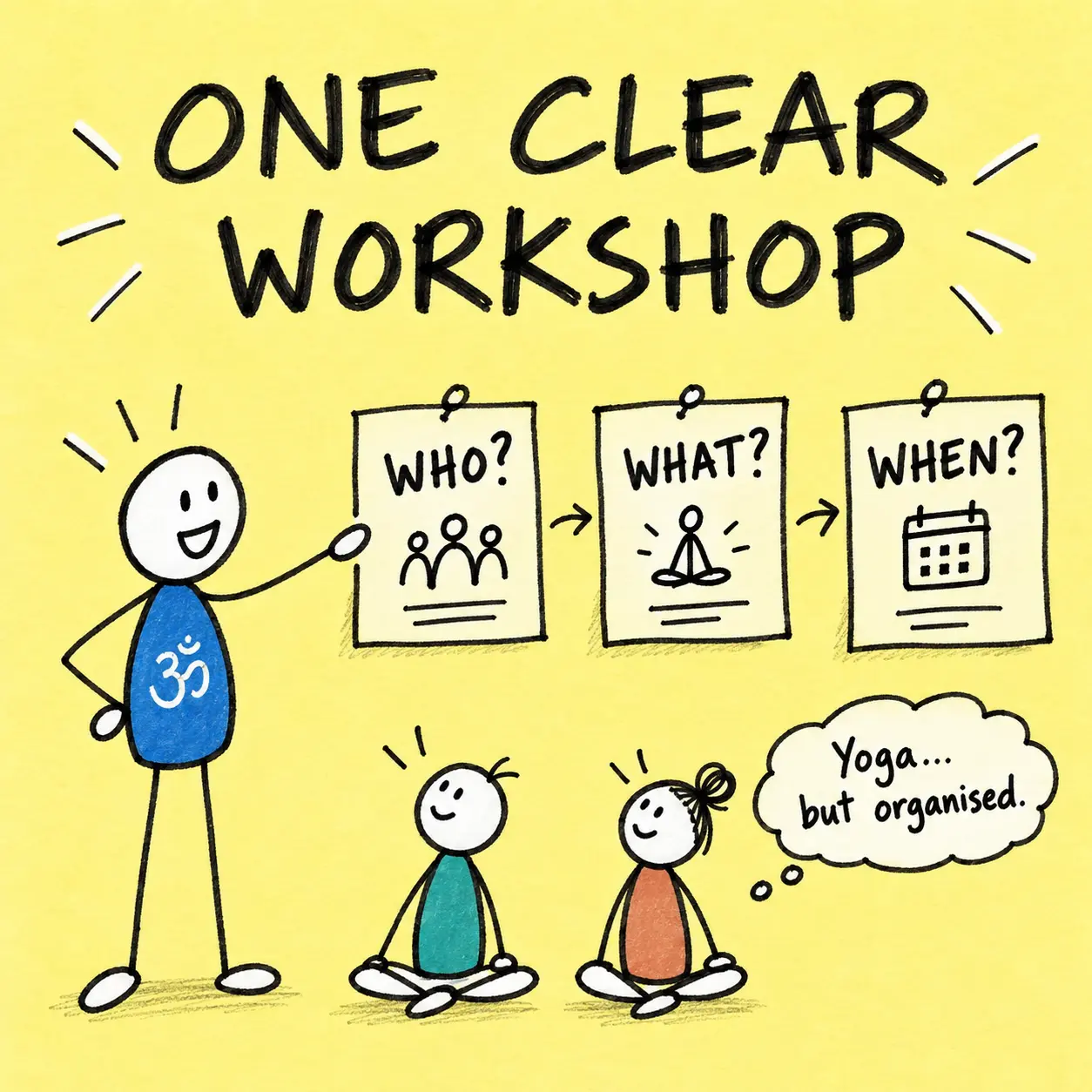
Start with a Workshop, Not a Timetable
A class usually serves an ongoing practice. A workshop makes a more specific promise: spend a defined block of time exploring one theme, skill or problem in greater depth.
“A Saturday yoga workshop” is a date. “A two-hour workshop that helps desk-bound beginners build a comfortable home practice” is an offer. The clearer version makes the teaching, price and promotion easier to judge.
9 Steps To Plan A Yoga Workshop
Test the idea before paying for the room.
The first four steps choose the outcome, participants, demand test and timetable. Steps five to nine set the price, inspect the venue, agree the rules, promote the offer and review the workshop.
Choose One Useful Outcome
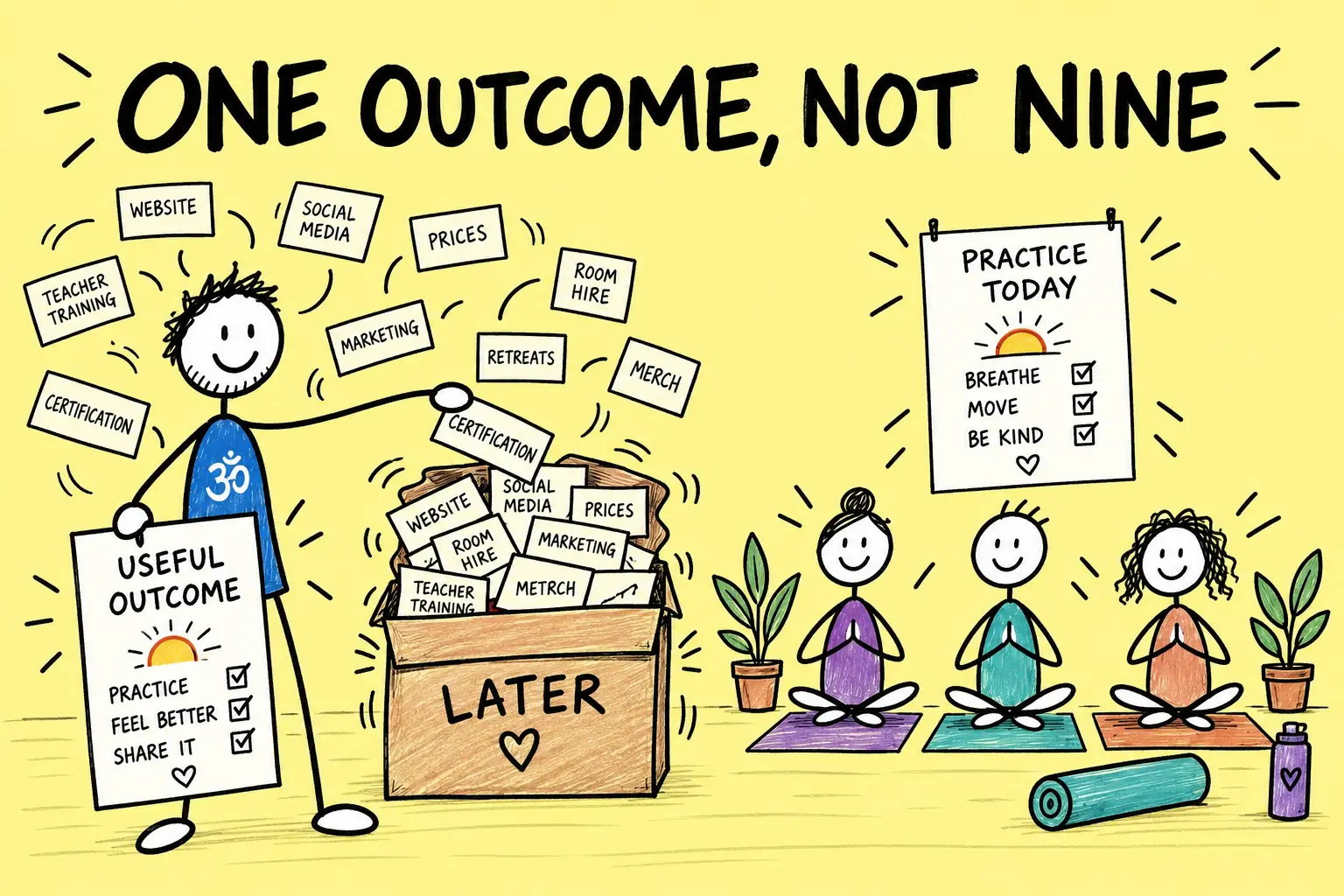
Begin with the change a participant can reasonably experience. A useful outcome is specific enough to shape the session without promising a cure, transformation or sudden ability to levitate above the village hall carpet.
- Learn a short sequence for a clear situation or audience.
- Explore one family of postures with appropriate options.
- Build confidence using props or adapting common poses.
- Understand a theme, technique or philosophy and apply it in practice.
- Leave with a simple plan or handout for continuing at home.
Write the outcome in one sentence: “By the end, participants will have practised, understood or created…” If the sentence contains four different outcomes, you probably have a small festival.
Example: A teacher considering “Yoga for Better Living” narrows it to a two-hour workshop where complete beginners learn and rehearse a 15-minute evening sequence using a mat, chair and two blocks. The narrower outcome decides what belongs in the room and what belongs in a future workshop.
Define the Right Participants
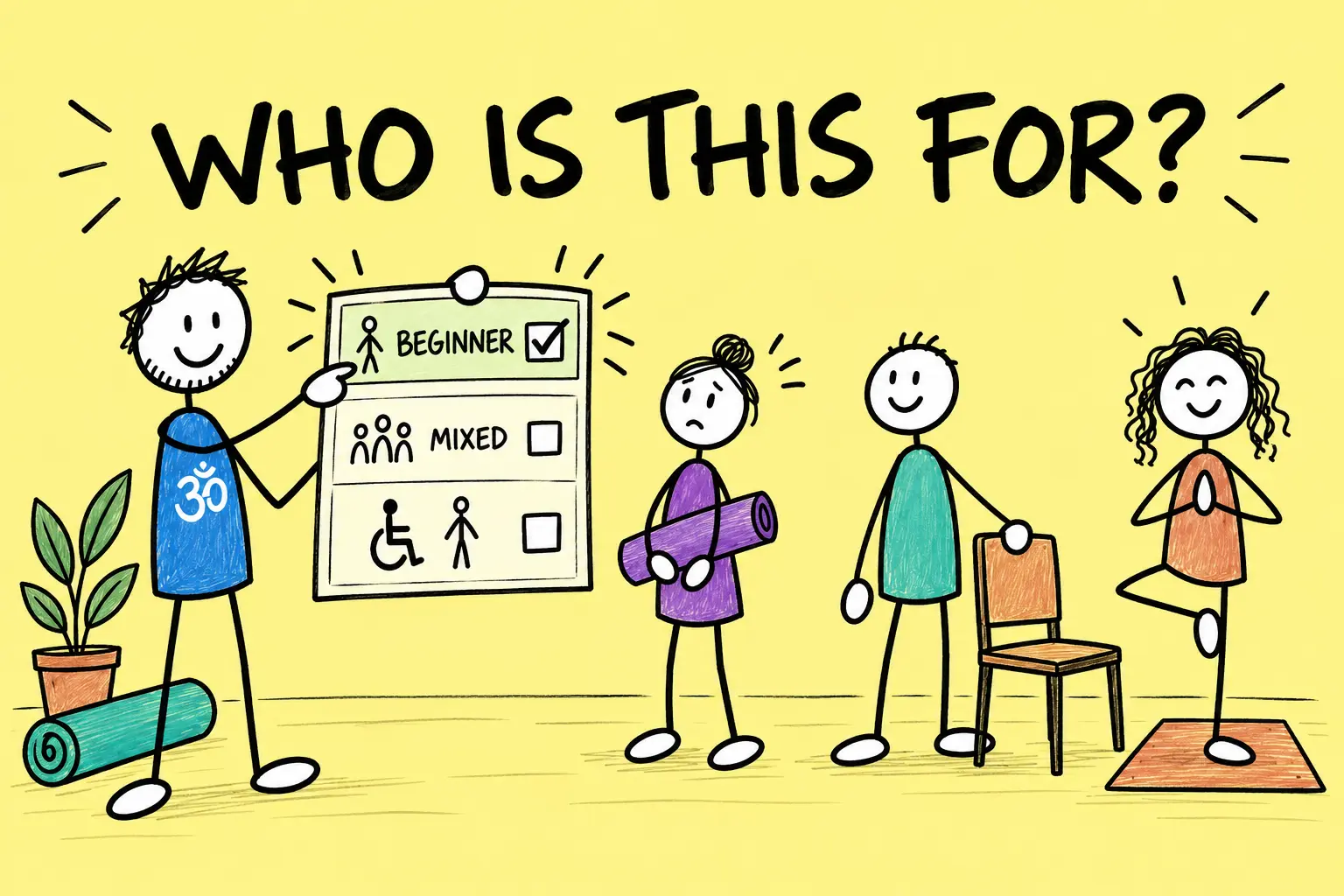
A workshop for everybody is difficult for anybody to recognise. Define the experience level, interests and practical needs of the people you genuinely want to help.
- Beginner, mixed or experienced level
- Relevant theme or teaching goal
- Mobility and accessibility needs
- Maximum safe, teachable group size
- What participants should bring
- What is included in the price
State who the workshop is for and who it is not for. Clear boundaries are reassuring. They also reduce the collection of hopeful emails asking whether a two-hour inversion workshop is ideal for someone who has never tried yoga and dislikes being upside down.
Example: Instead of advertising to “all levels”, a teacher chooses adults returning to yoga after a long break. The description promises a steady pace, prop options and no expectation of advanced poses. Suitable students can recognise themselves before booking.
Test Demand Before Paying for the Venue
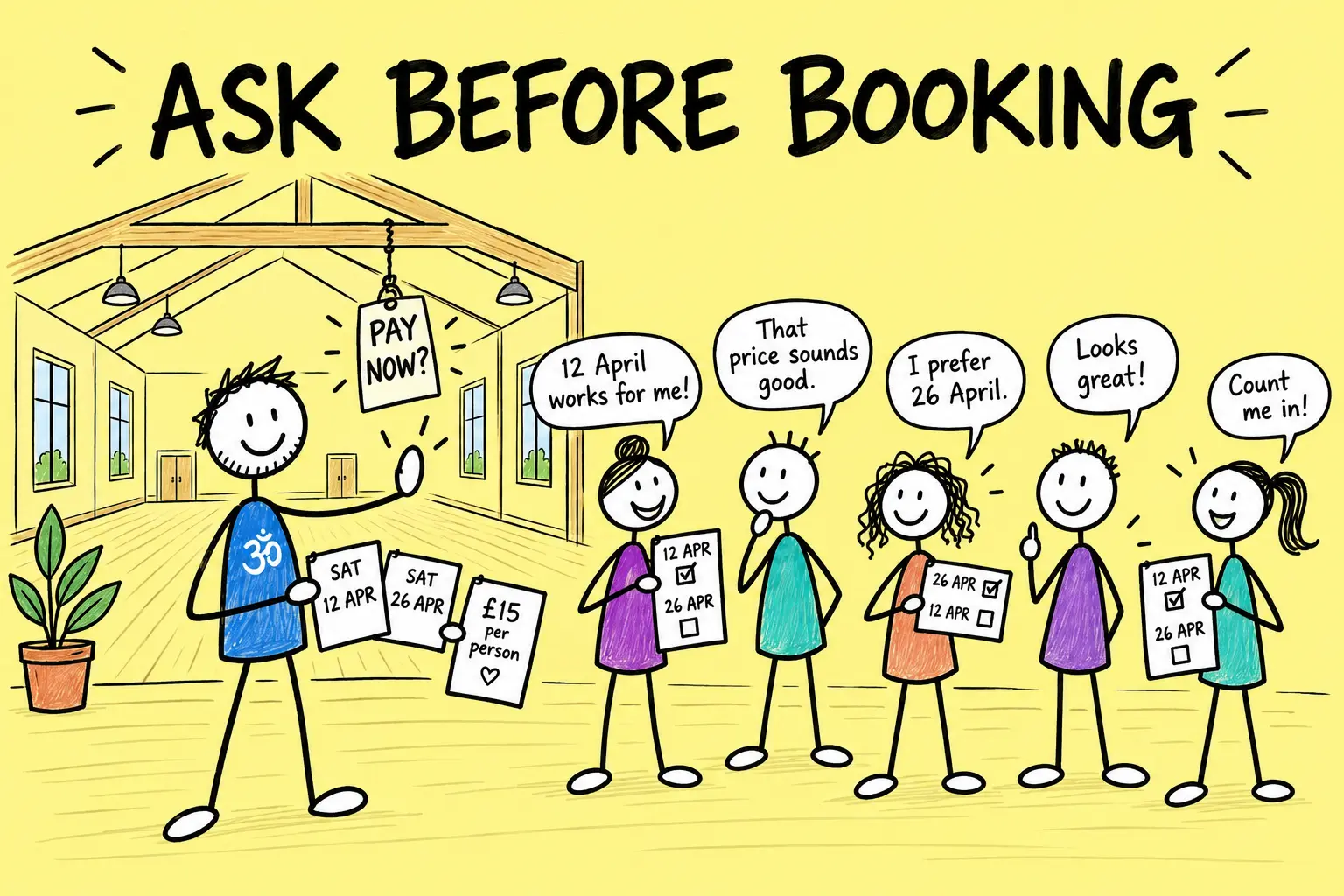
Speak to suitable students before committing to the largest room in the county. Ask about the theme, format, likely price range and two possible dates. Interest is useful; a paid booking or refundable deposit is stronger evidence.
- Make a short list of people who fit the intended audience.
- Ask a neutral question rather than fishing for compliments.
- Record objections about date, duration, travel and price.
- Set a decision date and minimum viable booking number.
- Use a waiting list if the idea is still exploratory.
Five thoughtful conversations can reveal more than fifty social-media likes. Likes are pleasant. They remain stubbornly difficult to exchange for venue hire.
Example: A teacher sends two possible dates and a £35 price to twelve existing students. Six reply, five prefer Saturday and four pay a refundable £10 deposit. That is useful evidence for booking a small room, not the hall with sixty chairs.
Build the Timetable Backwards
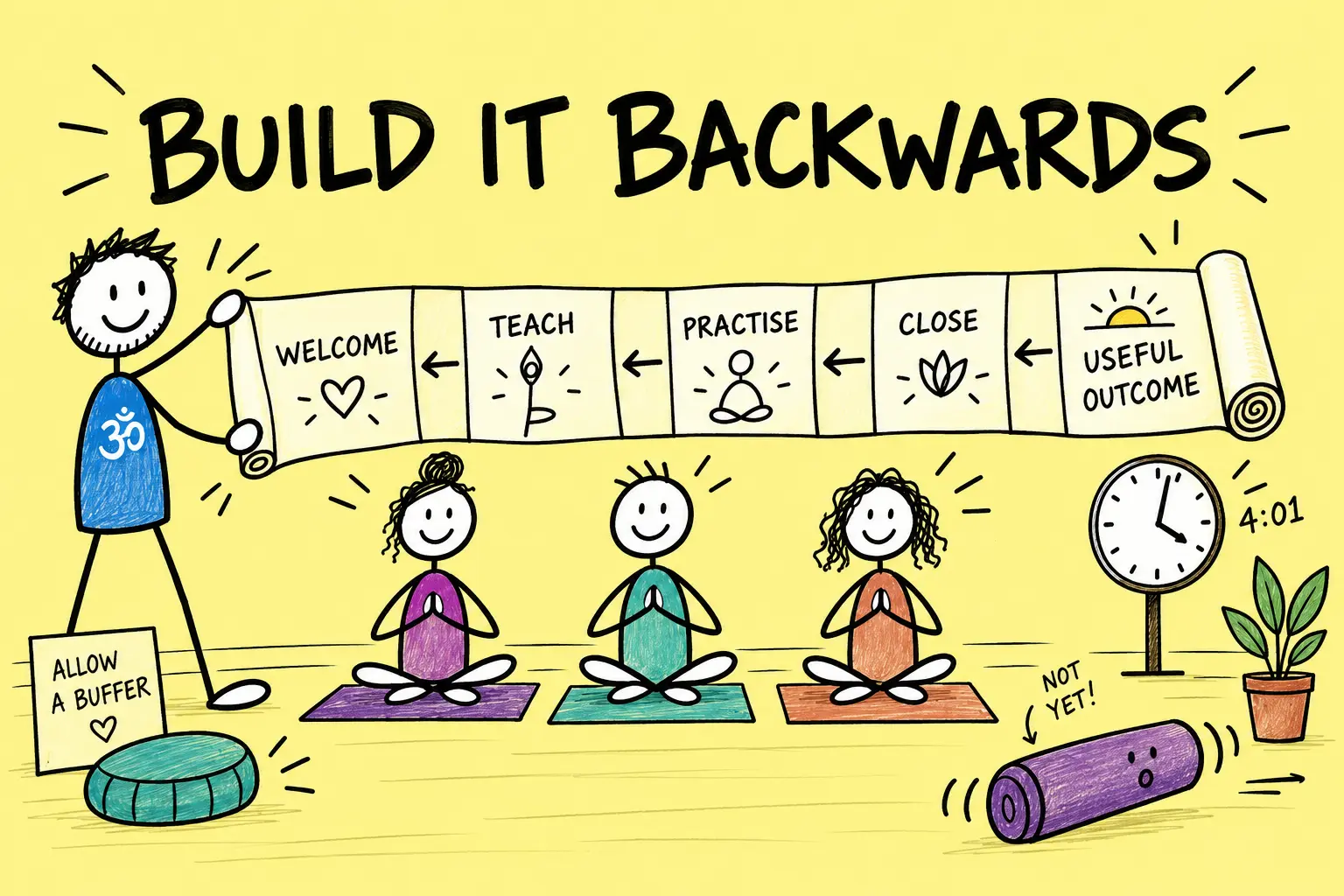
Protect the outcome before adding activities. Start with what participants need to leave understanding or able to practise, then work backwards through teaching, exploration and preparation.
- Arrival and registration
- Welcome and expectations
- Warm-up and progressive practice
- Main teaching or exploration
- Comfortable break and refreshments
- Questions and personal reflection
- Closing practice or integration
- Buffer for the unexpected
Add realistic setup and clearing time outside the advertised hours. A workshop that ends at 4pm does not mean you and the bolsters dematerialise at 4:01.
Example: For a two-hour workshop, a teacher allows 10 minutes for arrival, 15 for the welcome, 20 for foundations, 35 for progressive practice, 10 for a break, 20 for application, 10 for questions and 10 for closing. Thirty minutes of setup and twenty minutes of clearing sit outside the advertised time.
Price from Real Costs

Do not begin with a dramatic profit total. Begin with the costs you will still owe if only the minimum number of people book.
- Fixed costs: venue, insurance additions, design, advertising, travel and paid help.
- Variable costs: refreshments, printed material, payment fees and anything supplied per participant.
- Your time: planning, promotion, administration, setup, delivery, clearing and follow-up.
Break-even places = fixed costs ÷ (ticket price − variable cost per person). Round the result up. If fixed costs are £420, the ticket is £45 and each participant costs £6, the workshop needs eleven paid places to cover those fixed and variable costs. That is an illustration, not a suggested price.
Model a low, expected and full attendance scenario. Decide in advance when you will proceed, resize, postpone or refund.
Example: The room, promotion and travel cost £280. Each participant adds £5 of materials and fees, and the ticket is £35. The break-even calculation is £280 ÷ £30, so ten paid places are required. The teacher now knows the minimum number before publishing the booking page.
Inspect the Venue in Person
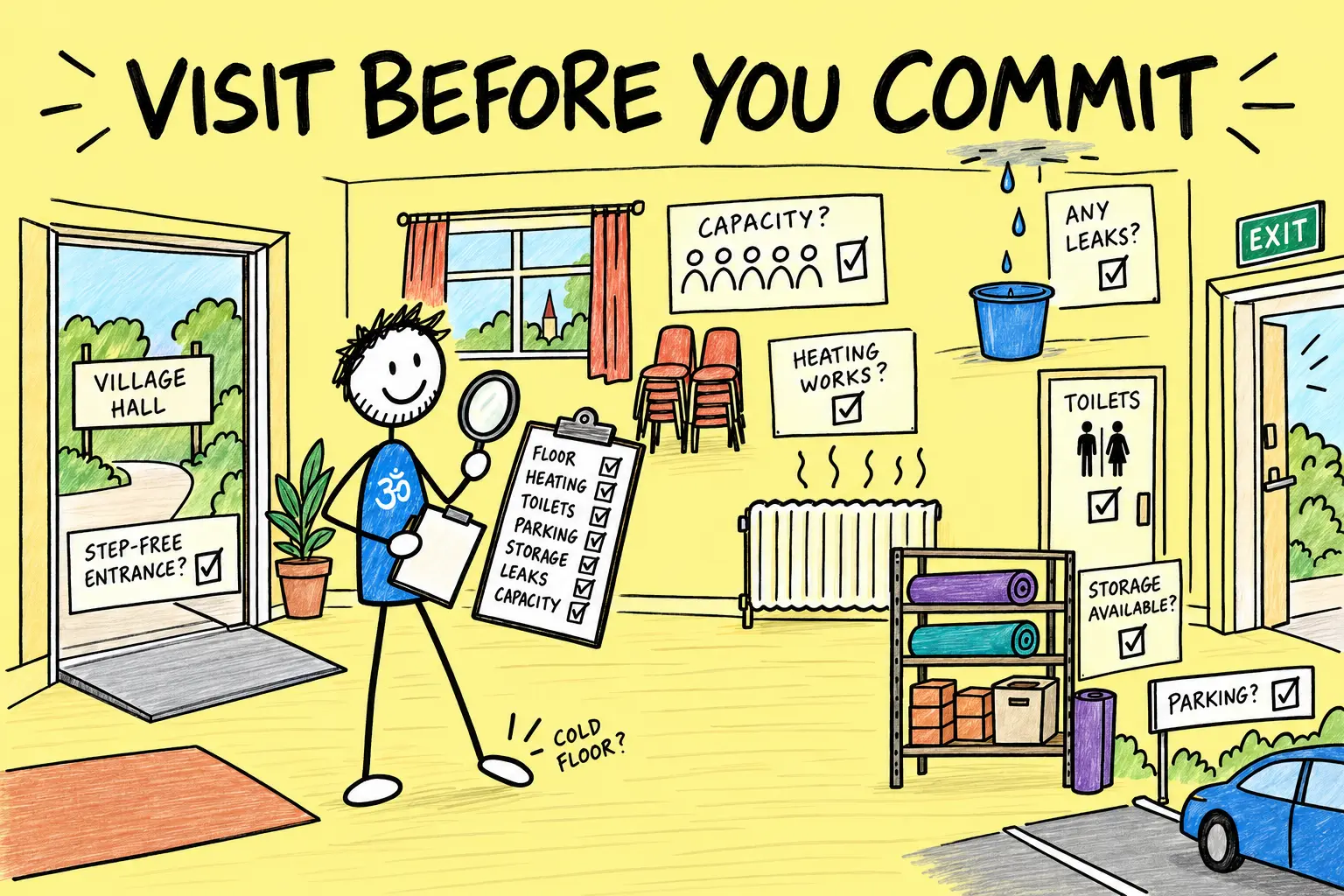
A beautiful photograph cannot tell you whether the floor is cold. Visit at a similar time of day and check the room as a teacher and as a first-time participant.
- Usable practice area and capacity
- Floor, temperature and ventilation
- Noise before and during the slot
- Toilets and changing arrangements
- Step-free access where required
- Parking and public transport
- Entrances, exits and lighting
- Setup, storage and clearing time
Agree who opens the building, handles keys, adjusts heating and responds if the previous booking is still packing away. The quietest part of a yoga workshop should not be the organiser staring at a locked door.
Example: A venue photograph looks peaceful, but an afternoon visit reveals a slippery floor, locked heating controls and a car park shared with a busy market. The teacher chooses the slightly plainer hall nearby because it is warm, accessible and predictable.
Set Booking, Safety and Cancellation Rules
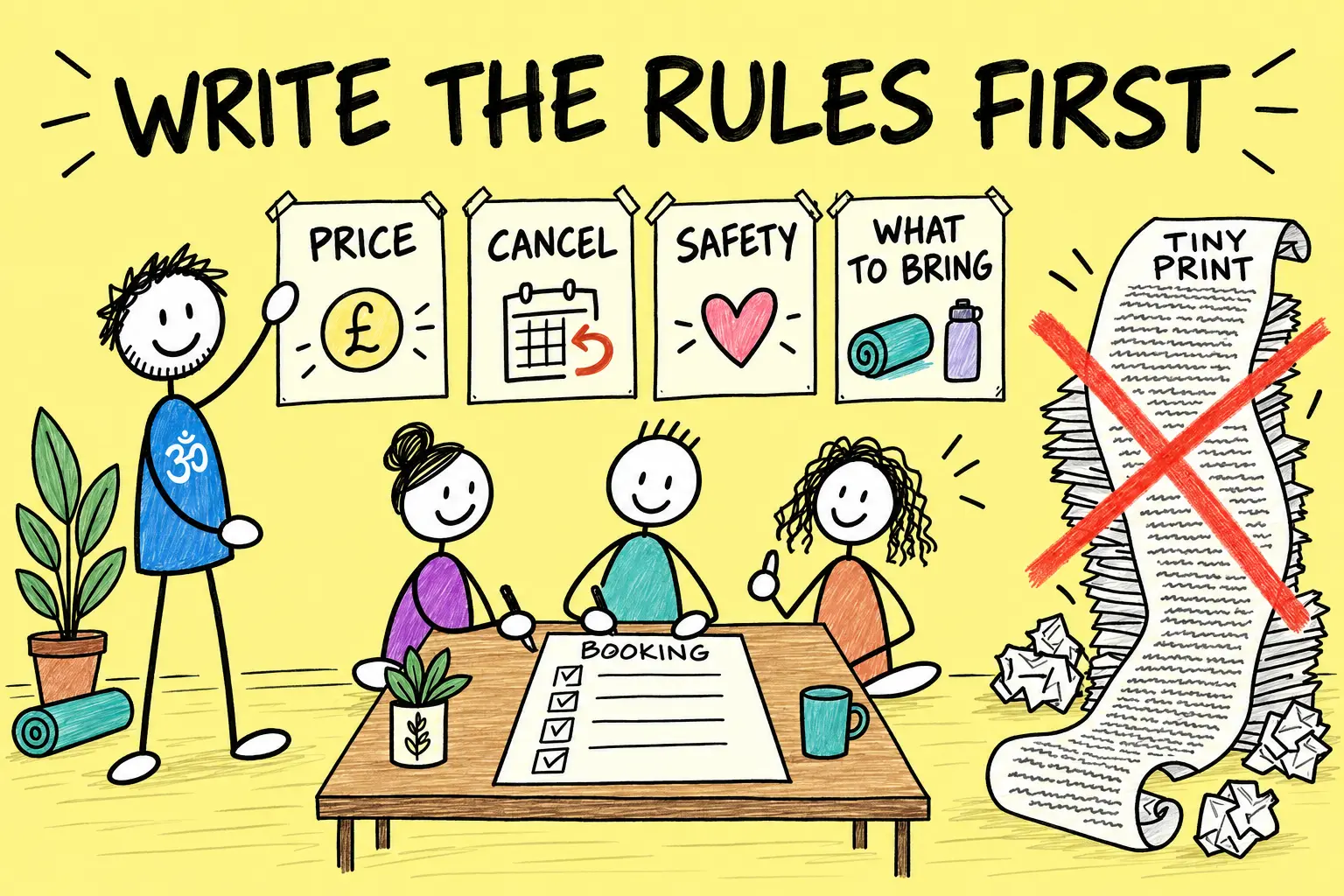
Write the practical terms before taking money. Make the price, inclusions, cancellation policy, transfer rules and minimum-number decision clear at the point of booking.
- Confirm insurance and any venue requirements.
- Complete a proportionate risk assessment and emergency plan.
- Agree responsibilities with the venue in writing.
- Collect only the participant information you genuinely need.
- Explain accessibility, equipment and relevant prerequisites.
- Keep booking, payment and emergency-contact arrangements secure.
The UK Health and Safety Executive advises organisers to match the planning detail to the event’s scale and risk, clarify responsibilities and use risk assessment as the basis of the safety plan. Its event-safety guidance is a useful starting point. Check your insurer, venue and relevant local rules for your own workshop.
Example: A booking page states the £35 price, twelve-place limit, ten-person minimum, cancellation date, transfer option, accessibility details and what to bring. A participant can understand the agreement without emailing six follow-up questions.
Promote a Clear Offer
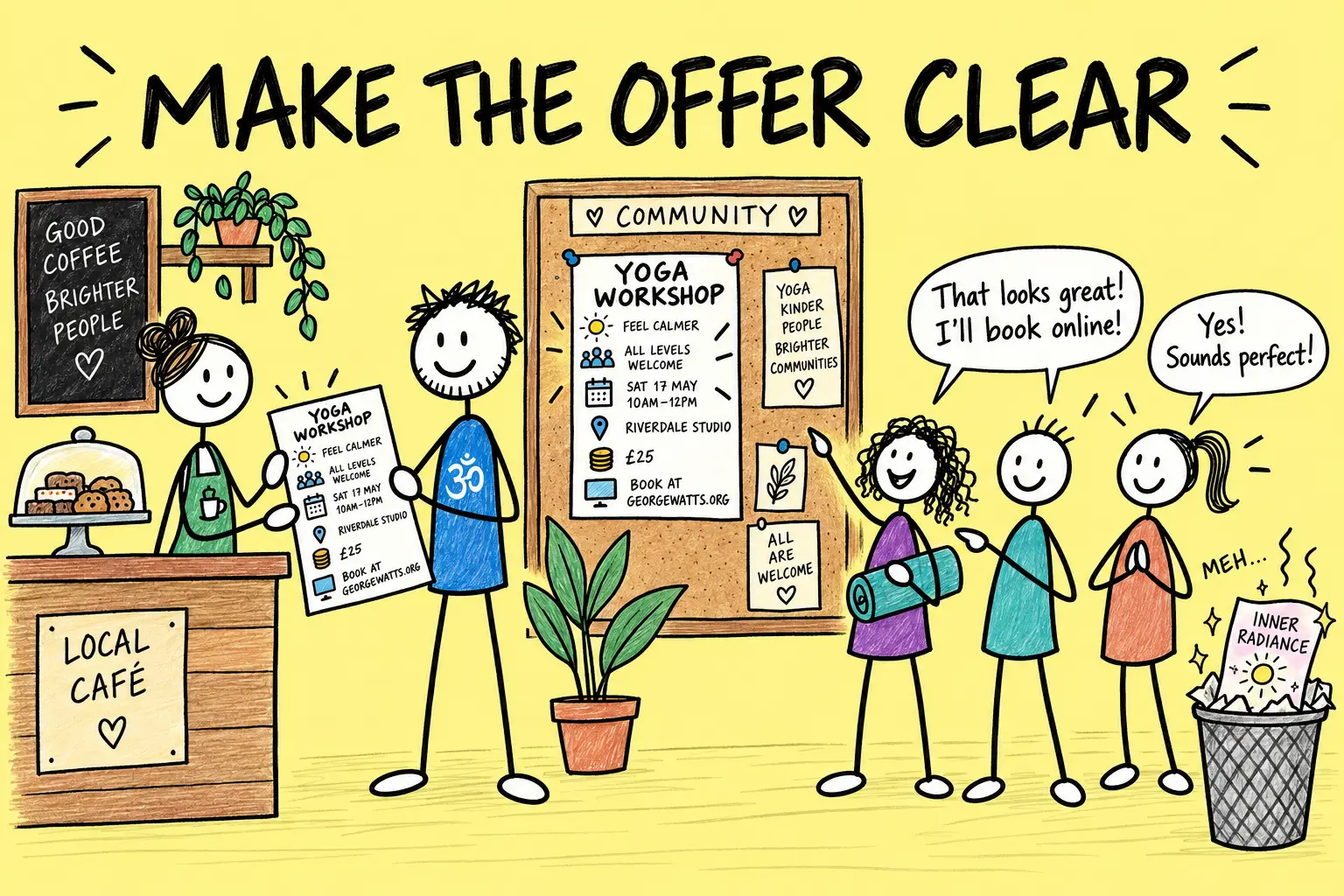
Promotion worked best for me when it became a human conversation. Flyers were almost always my number-one local marketing tactic. I visited dozens of nearby businesses, asked if they would display one and explained why the workshop could be useful to their staff or customers.
I did not simply feed a flyer through the letterbox and flee. The short conversation gave the paper context, and it helped me learn which organisations saw a genuine fit.
- Tell current and former students who have agreed to hear from you.
- Ask well-matched local organisations to display or share the details.
- Create one page containing the outcome, audience, date, venue, price and booking link.
- Use one strong image and repeat the same clear wording across channels.
- Track enquiries and bookings by source rather than guessing afterwards.
Short Workshop Description
[Workshop title] is a [duration] practical workshop for [specific participants]. We will explore [clear theme] so you can [reasonable outcome]. It takes place on [date] at [venue]. The price is [amount] and includes [what is included]. [Accessibility or experience note]. Book by [date] at [link].
Specific information removes work from the reader. “A nourishing journey into your inner radiance” may be lovely, but it still leaves Mum wondering where to park.
Example: “A two-hour introduction to supported yoga for complete beginners, Saturday 10am to noon at Riverside Hall, £35 including a home-practice sheet” gives local partners something useful to share. One relevant conversation at a café noticeboard can outperform a week of vague social posts.
Deliver, Review and Follow Up
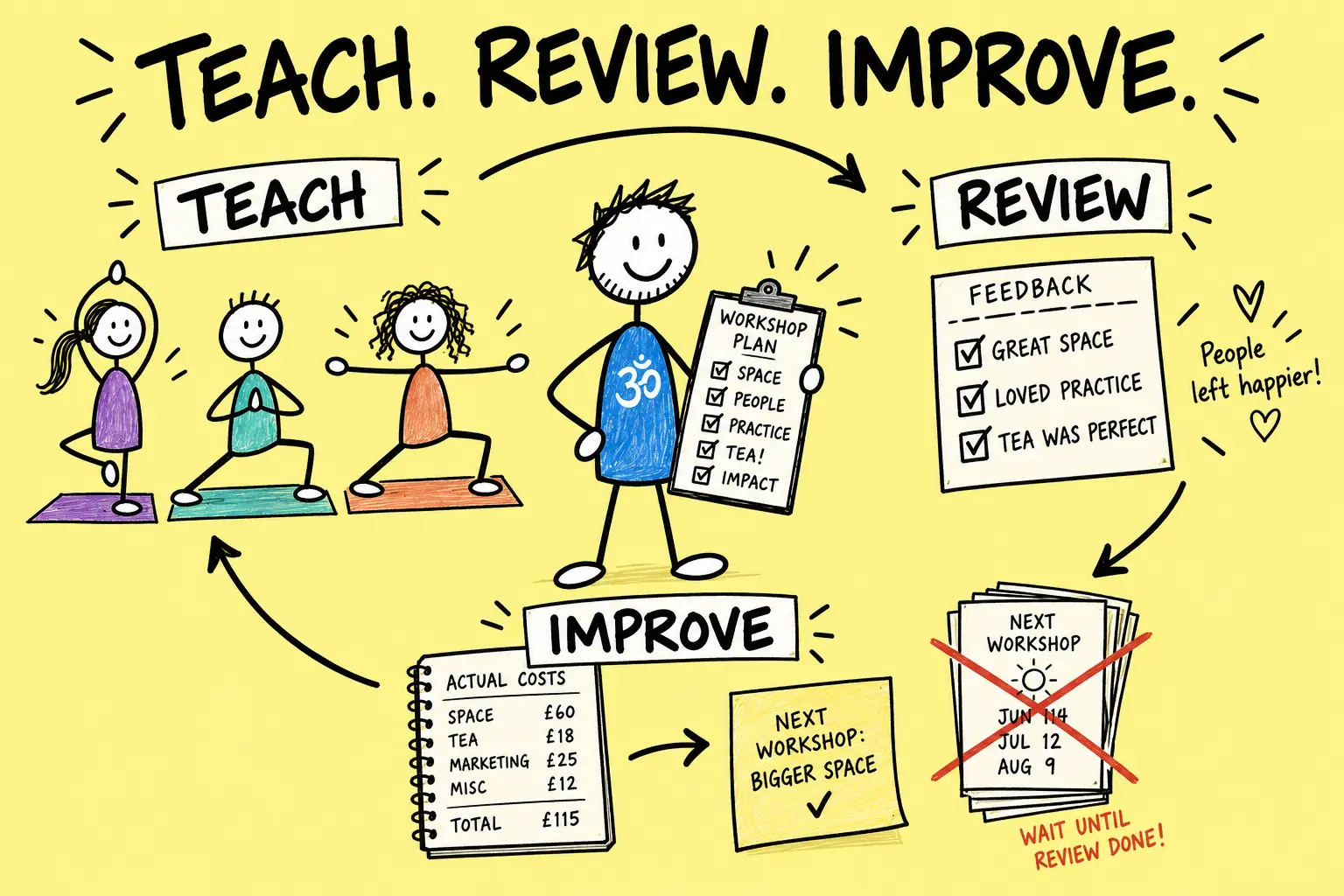
On the day, protect the essentials and stay flexible. Arrive early, check the room, greet people, explain the shape of the session and keep enough space in the timetable to respond to the group in front of you.
- Record attendance and any practical incidents.
- Ask a small number of useful evaluation questions.
- Note which activities ran long, rushed or landed particularly well.
- Send promised resources and a brief thank-you message.
- Review the actual income, costs and hours.
- Decide whether to repeat, revise or retire the idea.
Feedback does not need a twelve-page survey. Ask what was most useful, what was unclear and what participants would change. Then make one sensible improvement before the next event.
Example: Ten people attend. Their feedback says the practical section was useful but questions felt rushed, and the teacher discovers administration took three hours. The next version keeps the practice, shortens the opening and schedules more question time before adding another date.
The Yoga Workshop Planner
Start with this complete worked example, then replace every answer with your own workshop details. Your changes save automatically in this browser. When you are finished, copy the plan into your notes, document or email.
Worked example: Supported Yoga for Complete Beginners — a practical two-and-a-half-hour workshop planned for a small community venue.
Do not book a ballroom to validate an idea that still fits on one sticky note.
Frequently Asked Questions
How long should a yoga workshop be?
Long enough to deliver the stated outcome without padding. Two or three hours can suit a focused local workshop; a fuller day needs appropriate breaks, refreshments and a more substantial teaching journey. Let the content and audience decide.
How many people should attend?
There is no universal ideal. Use the venue’s safe capacity, the attention the topic requires, your insurance and the break-even calculation. A smaller group can be the better workshop when personal support matters.
How much should I charge?
Calculate your real costs and time first, then compare the offer with relevant alternatives available to your audience. Do not copy another teacher’s ticket price without knowing their venue cost, group size or business model.
When should I start promoting?
Test interest before the final commitment, then work backwards from the booking deadline. A higher-priced or destination event usually needs a longer decision period than a short local workshop.
What should the booking form include?
Collect the information necessary to administer the booking, communicate relevant practical details and support the safe delivery of the event. Explain how information will be used and stored, and avoid collecting personal detail merely because a template contains an empty box.
What happened to the Yoga Retreat Kit?
The separate product has been retired. The useful retreat and workshop planning material is being absorbed into the Yoga Marketing Kit, so the practical marketing resources have one clearer home.
Give Your Workshop a Marketing Plan
A clear workshop still needs the right message, sensible promotion and a practical way to track bookings. Explore the Yoga Marketing Kit, where the useful Retreat Kit material is being consolidated.
George’s Conclusion
A yoga workshop is not a multiplication trick. It is a specific teaching promise supported by evidence, a conservative budget and a room that works in real life.
Choose one outcome, ask real people, calculate the break-even point and plan the smallest version worth delivering. If it goes well, repeat it with better evidence. If it does not, you have learned something useful without accidentally founding a retreat empire beside a locked village hall.