Updated on 11 September 2026.
George’s Intro
A yoga teaching business does not need to begin with a studio, a complicated website and 47 matching water bottles.
I’m George, a BWY yoga teacher, creator of the Online Yoga Lesson Planner, yoga card deck maker and enthusiastic sticky-note doodler.
A useful first business needs a specific student, a class they want, numbers that make sense and a simple way to book. The aim is not to look enormous. The aim is to build a small version that can teach you what to do next.
Jump to the free Yoga Teaching Business Starter Workbook ↓
6 Steps To Start A Yoga Teaching Business
Build the smallest version that can teach you something.
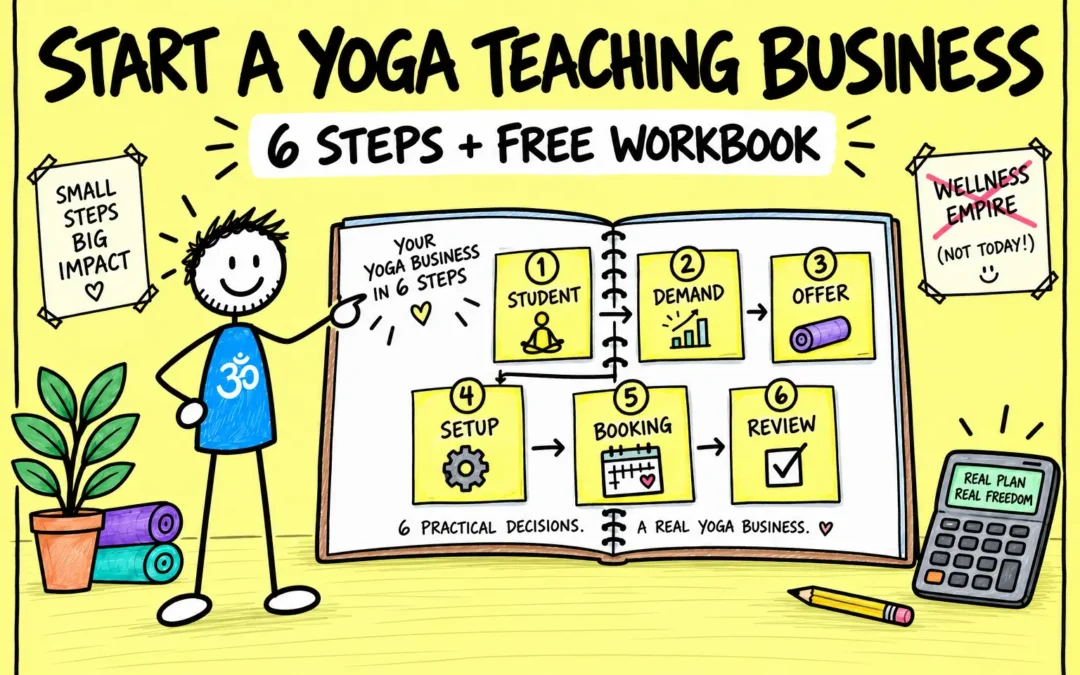
The first three steps establish who the business helps, whether enough people want the class and how the offer works financially. Steps four to six put the practical foundations, booking route and 90-day learning cycle in place.
On This Page
1. Choose Who Your Yoga Business Helps
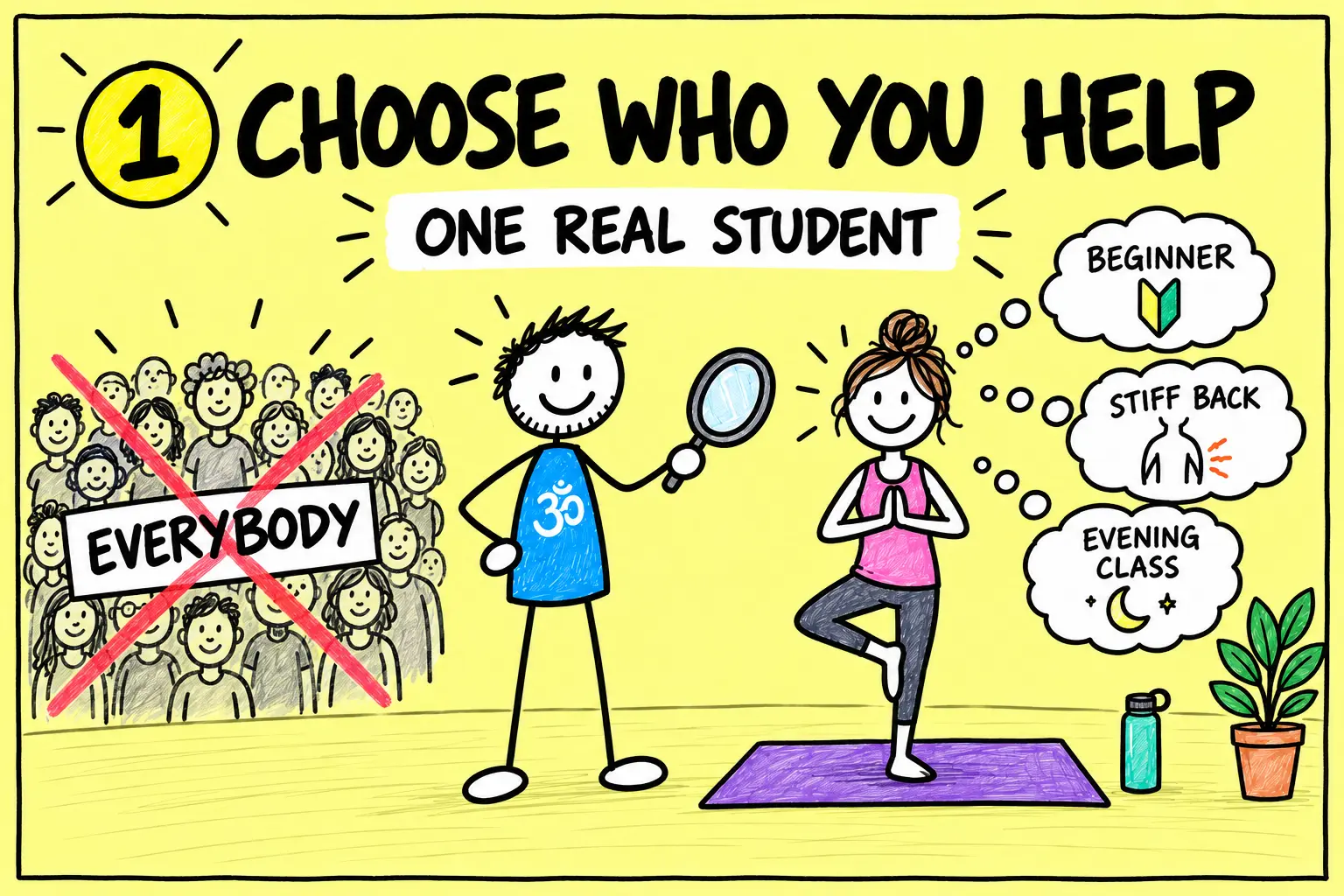
Begin with one recognisable group of students and one useful result.
“Yoga for everyone” sounds welcoming, but it does not help a beginner decide whether your Tuesday class suits them. Start with people you are appropriately trained and genuinely interested to teach: perhaps complete beginners, active older adults, desk workers, runners or people who prefer a small supportive group.
Ask four practical questions:
- Who do I most enjoy and feel competent to teach?
- What do they want help with?
- What commonly stops them joining a class?
- What time, place and teaching style would make attendance realistic?
Turn the answers into a plain offer statement: “I help [specific student] achieve [useful result] through [your approach].”
This is a starting position, not a lifelong vow written on a mountain. You can broaden the business when real students give you a reason. If you need ideas, use my list of 101 yoga classes, workshops and services to test.
2. Test Demand Before Spending
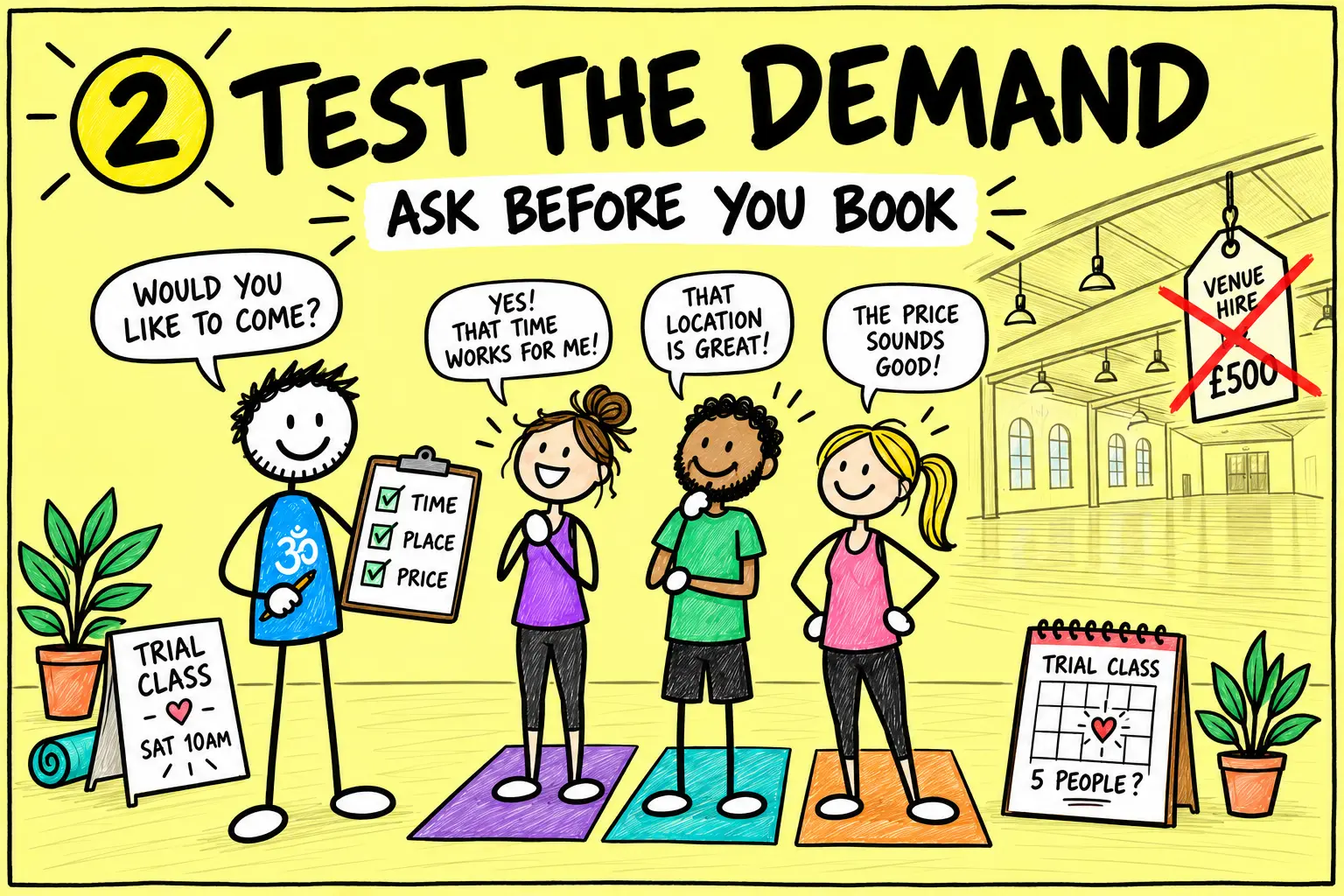
Speak to likely students before committing to large costs.
A cheerful social-media like is not the same as somebody booking a six-week course. Talk to ten people who resemble the student you described in step one. Ask what they currently do, what makes a class difficult to attend and which practical details matter.
Then test the smallest useful version:
- a one-off paid taster in a hired room;
- a short beginner block with a minimum viable group;
- a small workplace pilot;
- or a private-session package for one clearly defined need.
Decide the minimum number of paid bookings required before you confirm the session. A test should protect your time and give you evidence. It should not turn you into the proud owner of 300 leaflets for a class nobody can attend.
If a venue is the next decision, work through my seven steps for finding a free or low-cost yoga venue.
3. Shape Your Services And Prices
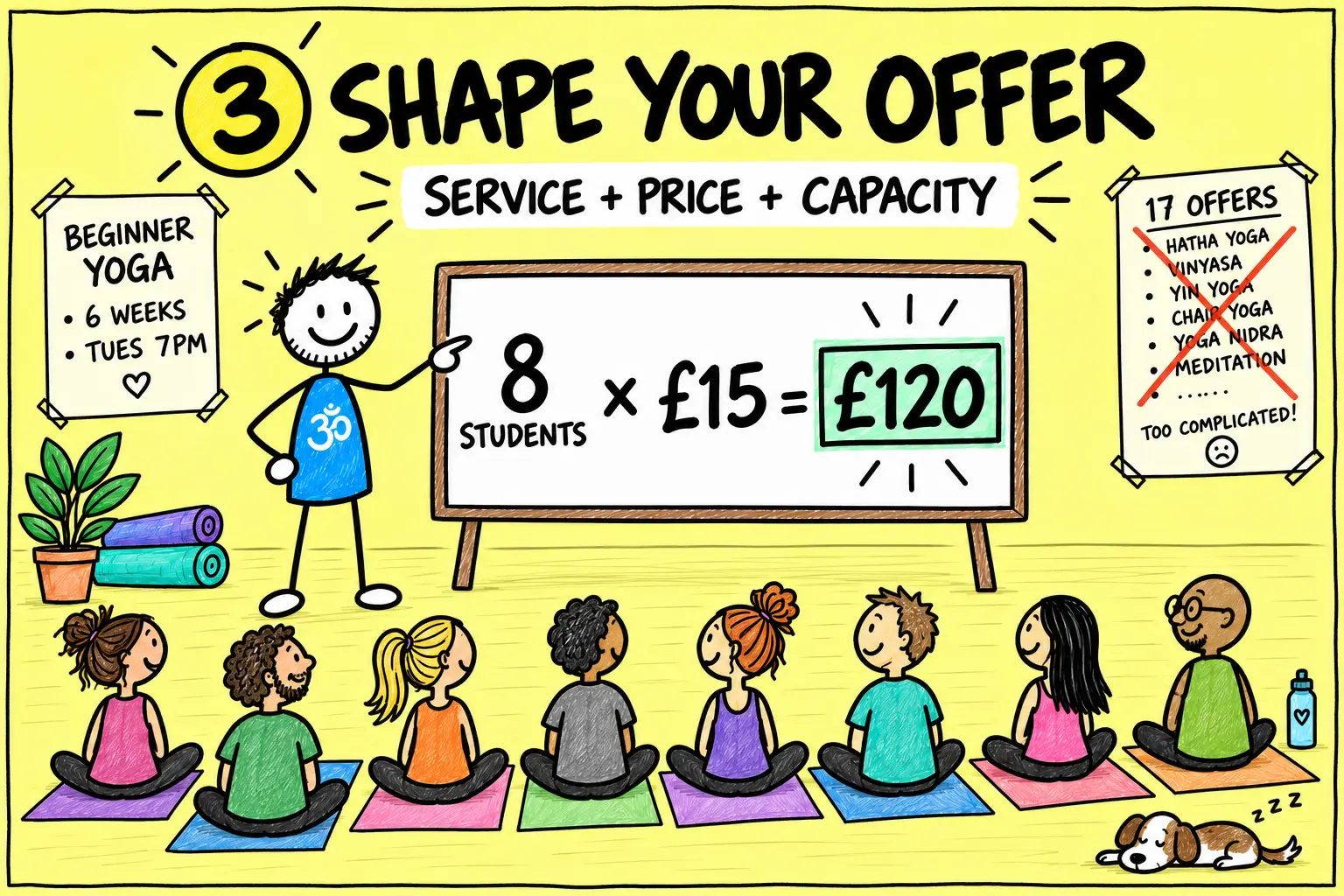
Give each service a clear promise, format, price and capacity.
For example: “A six-week Tuesday evening yoga course for complete beginners, limited to eight students.” That sentence helps you choose the room, create the class page, set the price and plan the lessons.
Test the basic monthly arithmetic:
Use realistic attendance, not a permanent fantasy in which every mat contains a smiling human. Add venue hire, payment fees, insurance, software, equipment, preparation, travel, administration and marketing. Then decide what your working time needs to pay.
A full class can still be a poor business if the price ignores half the work. Use the free Yoga Class Pricing Calculator to work through costs, time, target pay, attendance and a sensible buffer.
4. Set Up The Business Foundations
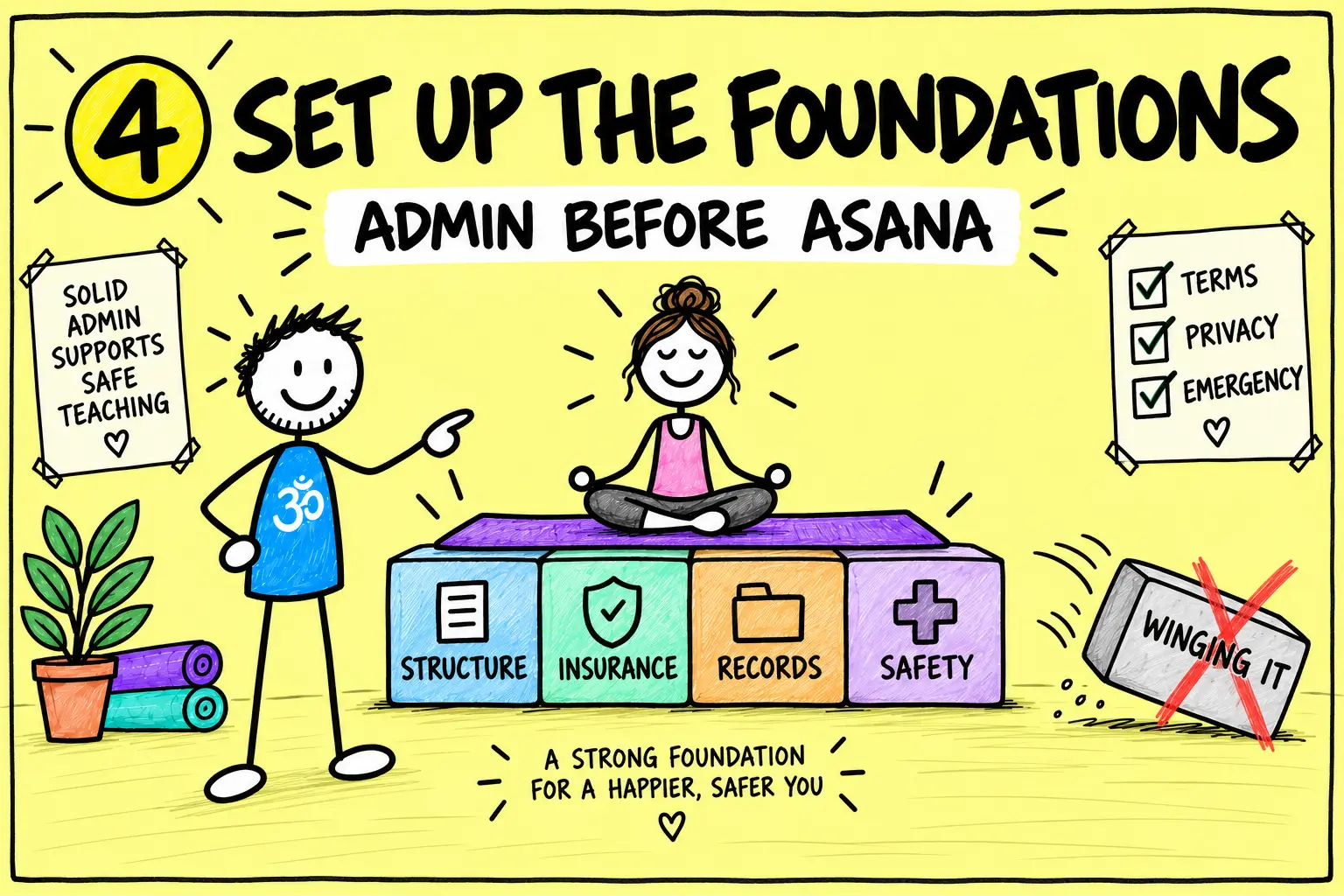
Protect the teaching with suitable structure, insurance, records and safety processes.
Choose a suitable business structure
In the UK, many independent yoga teachers begin as sole traders. A limited company or partnership may suit different responsibilities and plans. The structure affects tax and legal responsibilities, so use the current GOV.UK business-structure guidance and ask an accountant when your circumstances are not straightforward.
GOV.UK says you can begin trading without registering as a sole trader, but you must register for Self Assessment if you earn more than £1,000 in a tax year. Check the current sole-trader steps rather than relying on a number remembered from an old article.
Match the protection to the teaching
Confirm that your qualifications and experience match the students, activities and settings you intend to teach. Discuss public liability, professional indemnity and any other appropriate cover with an insurer, and make sure the policy covers your actual delivery model.
Prepare participant screening, attendance records, emergency procedures, cancellation terms and a secure way to hold personal information. Sole traders and partners also need suitable income and expense records for Self Assessment; see the current GOV.UK record-keeping guidance.
If you employ people, separate responsibilities can apply, including Employers’ Liability insurance. Check the current official guidance.
This article and workbook are educational planning tools, not legal, tax, insurance or financial advice. Check the rules that apply to your circumstances and use a qualified adviser when needed.
5. Make Enquiry And Booking Easy
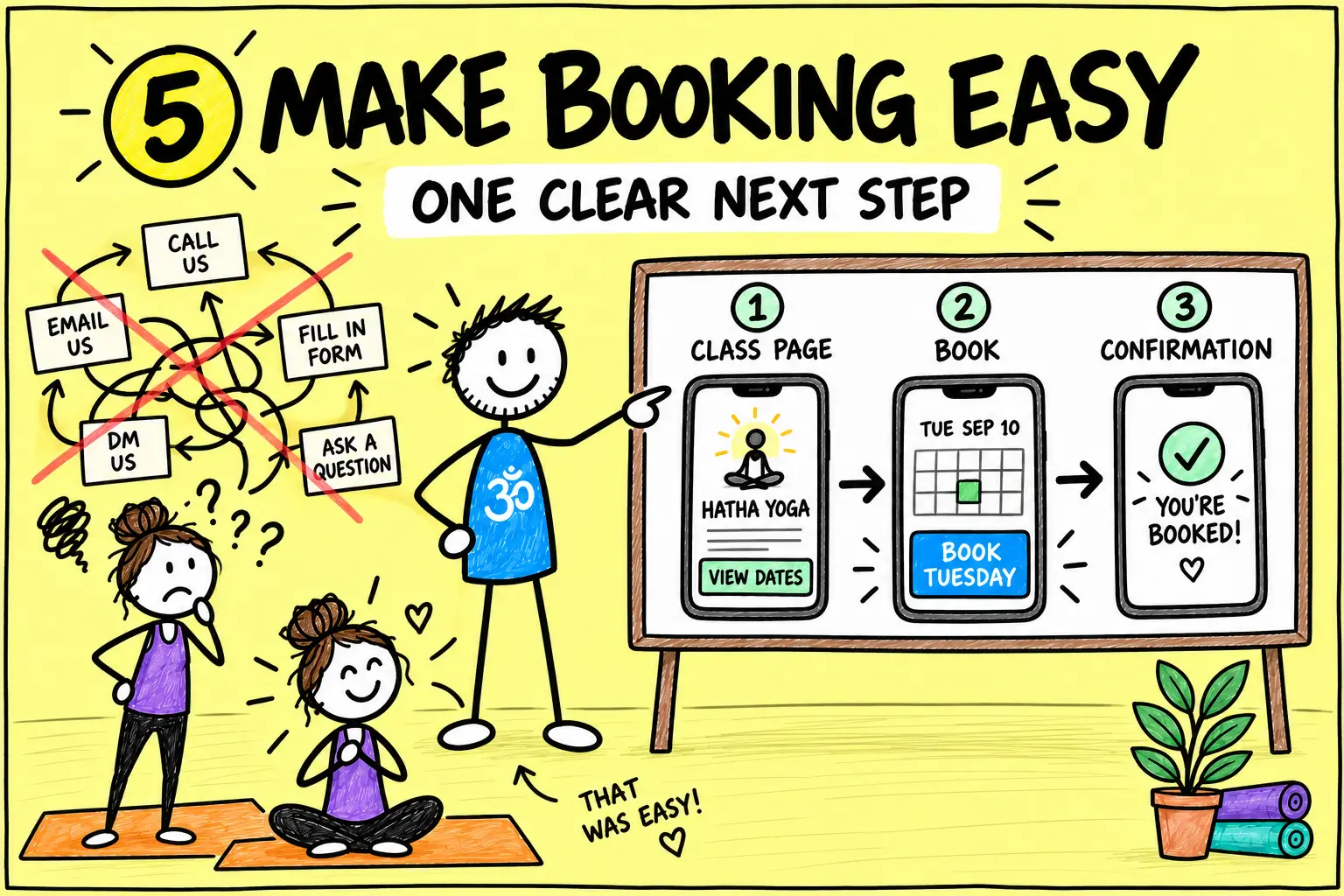
Give a suitable student one clear route from question to confirmation.
Your class page or booking message should answer the ordinary questions that delay action:
- Who is the class for?
- What will happen?
- When and where is it?
- What does it cost?
- What should the student bring?
- How do they book, pay and receive confirmation?
Test the whole route on a phone. Click the link, complete the form, make a test payment where practical and read the confirmation. The most beautiful booking button in the world is still a small blue cul-de-sac when it does nothing.
Keep marketing consent separate and clear. If you plan to send promotional emails or texts, check the ICO’s current direct-marketing guidance. For the website itself, use my eight-step yoga teacher website guide.
6. Run A 90-Day Test And Review The Numbers
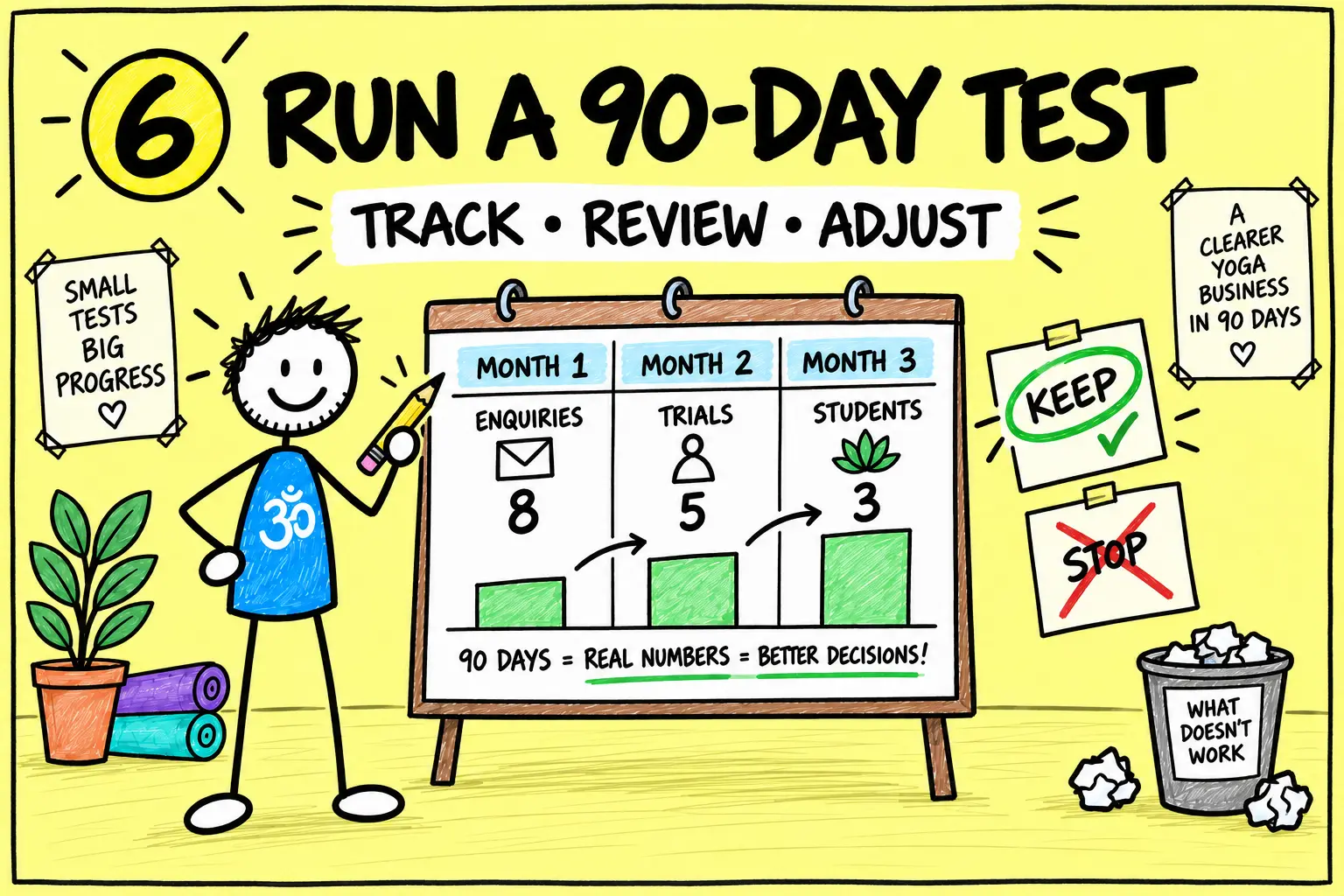
Choose a short test, complete the actions and review what actually happened.
Set one useful 90-day goal, such as launching a six-week beginner course with six paying students. Break it into weekly actions: speak to potential students, compare venues, write the class page, invite a small list, run the first session and request feedback.
Track a short chain of measures:
Add revenue, direct costs and total working hours. At the end of each month, choose one thing to keep, one thing to change and one thing to stop. The numbers are not there to judge your worth as a teacher. They are there to stop your timetable making decisions behind your back.
If you want a fuller plan for a dedicated studio, use my eight-step Yoga Studio Business Plan guide.
Yoga Teaching Business Starter Workbook
Turn the six decisions into a business snapshot, realistic numbers and a focused 90-day plan.
Choose Your Workbook
Both versions contain the same nine editable tabs, dropdown menus, revenue calculations, 12-month forecast and 90-day action plan.
Complete the pale-yellow cells. The blue cells calculate automatically, so change the inputs rather than typing over the results.
Nine editable tabs · automatic revenue, profit and margin calculations · 90-day plan
Questions Yoga Teachers Ask Before Starting
Do I need a yoga studio?
No. Many teachers begin with hired community spaces, private sessions, workplace classes or online teaching. A regular studio creates fixed costs and responsibilities, so earn evidence before adding them.
Do I need a formal business plan?
You need a plan that helps you make decisions. The free workbook is enough for a small first test. A longer written plan becomes useful when you are borrowing money, signing a substantial lease, involving partners or building a larger studio.
How much should I charge?
There is no useful universal price. Work from your costs, total working time, desired pay, class capacity and realistic attendance, then compare the result with the local market and the value of the offer.
What should I launch first?
Choose the smallest paid service that fits your training and answers a real student need. One well-defined weekly class or short course usually teaches you more than a menu containing every yoga idea you have ever met.
Current UK Guidance Used For This Update
George’s Conclusion
A useful yoga business grows through clear decisions and small completed tests.
Choose one student, confirm the demand, shape an offer, protect the foundations, make booking easy and review the numbers after 90 days. You do not need to predict the whole business. You need to learn what the next sensible version should be.
The free workbook gives those decisions somewhere to live other than the back of a receipt beside an increasingly anxious cup of tea.