
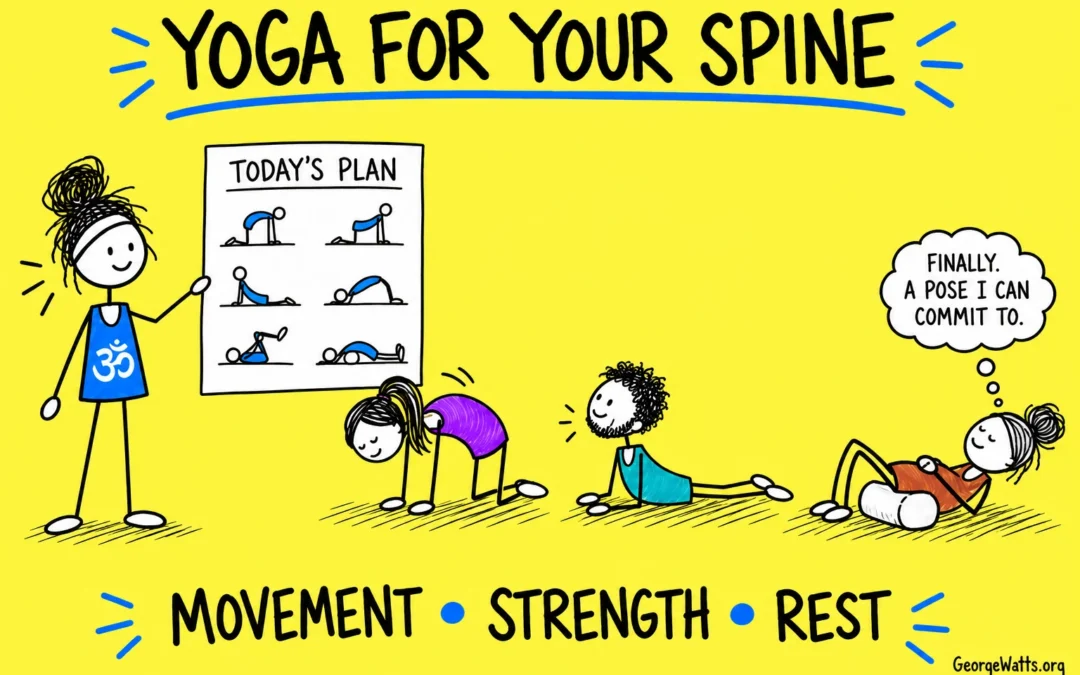
George’s Intro
Your spine comes to every class. It also attends every email, car journey and suspiciously long cup of tea. This post is about giving it a little more variety.
I’m George Watts, a British Wheel of Yoga teacher, creator of the Online Yoga Lesson Planner and maker of yoga card decks. I’m mildly obsessed with squeezing useful teaching ideas into sticky-note doodles.
Below you’ll find my free spine-themed class plan, 21 pose options, 101 small practice and planning ideas, and teaching notes. Treat them as a menu to adapt to the person in front of you.
Jump to the free lesson plan ↓
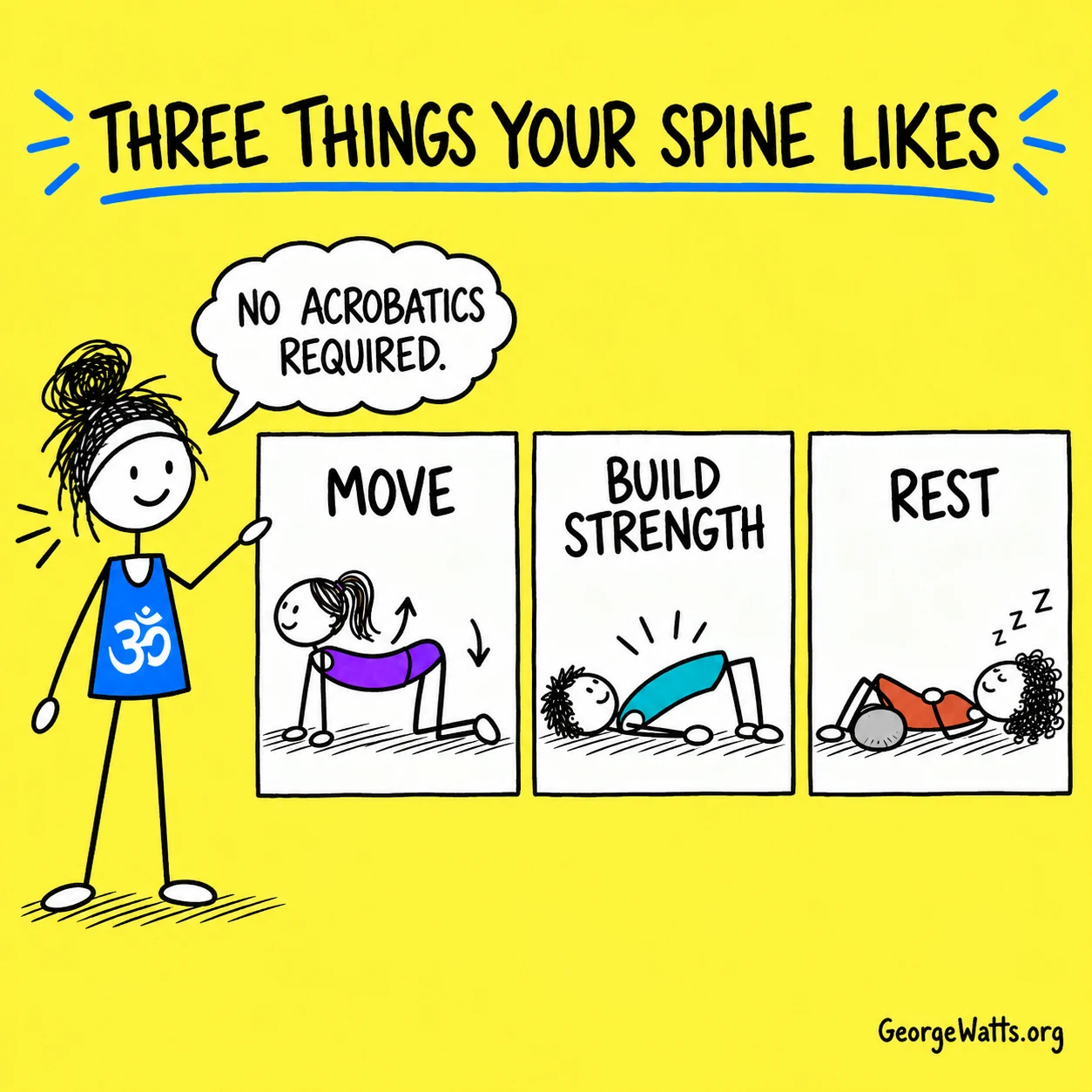
Start with the person
Yoga can be one way to stay active, but no pose suits every back. Use a comfortable range, build gradually and stop if pain gets worse. Existing symptoms, recent surgery or a diagnosed spinal condition call for individual advice.
The NHS back-pain guide explains when to seek help. Back pain with new bladder or bowel changes, loss of feeling around the genitals or anus, or weakness or numbness in both legs needs urgent emergency assessment.
Free Yoga for Your Spine Lesson Plan
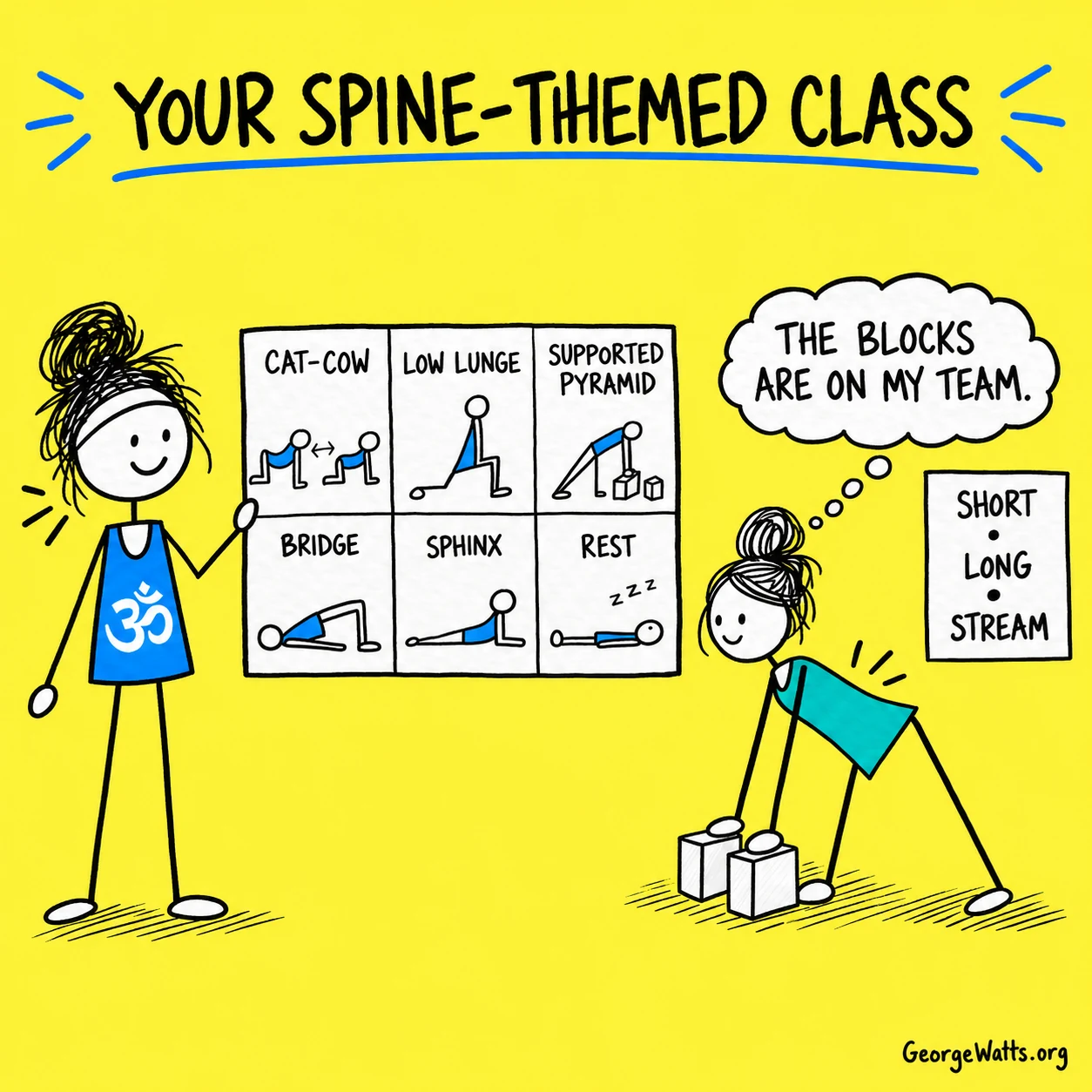
Here is the plan I created for my own class. It uses Pyramid Pose as its peak pose. Shorten the stance, soften the knees and use blocks where appropriate; the floor is not taking attendance.
Choose a view below to explore the full sequence.
Open the free class plan
Short plan → · Long plan → · Stream plan →
Use the short view for a class reminder, the long view for teaching notes, or the stream view to follow the plan on screen.
The Online Yoga Lesson Planner lets you choose poses and organise your own version. For more sequencing help, read my peak-pose planning formula.
Aims and Objectives
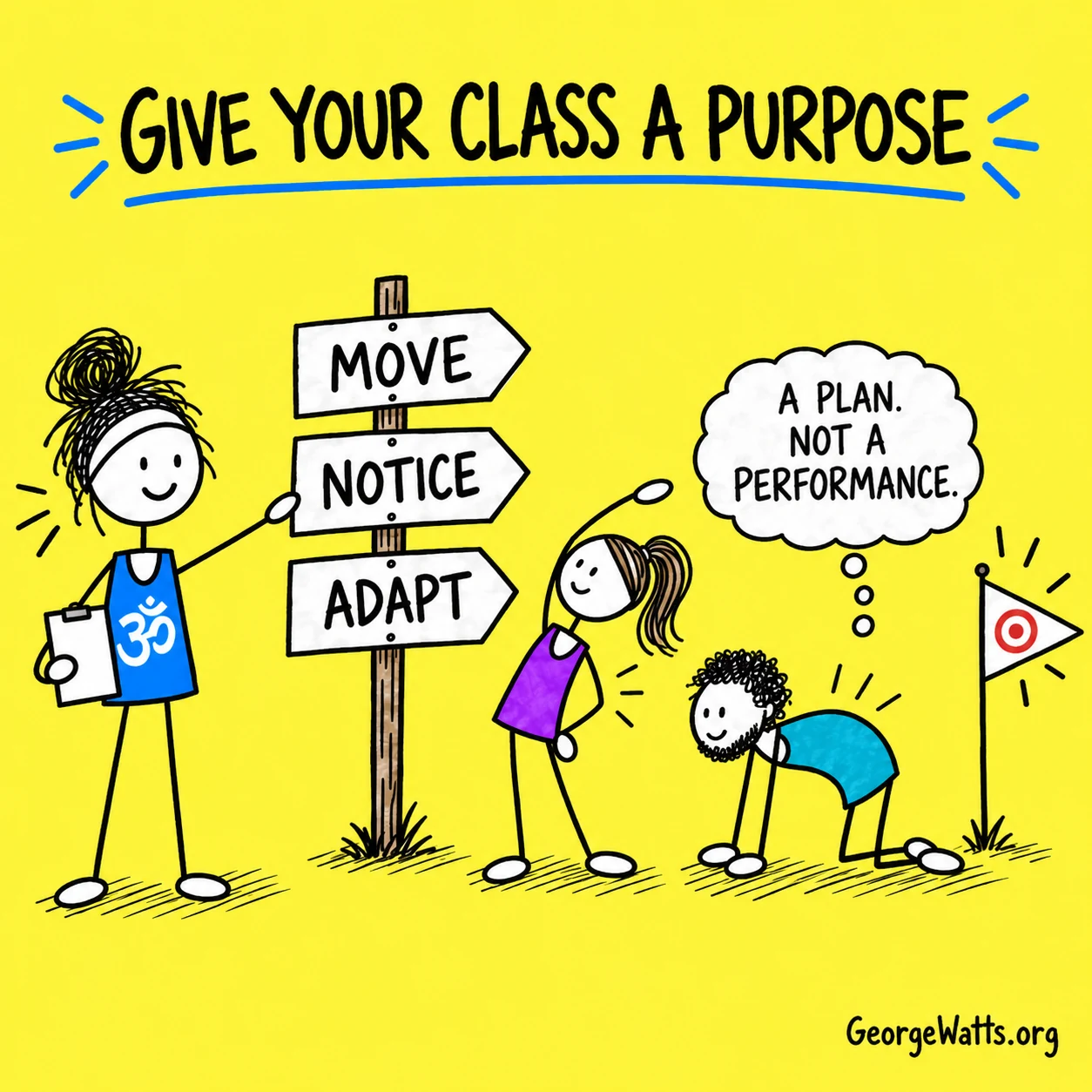
Give the class a direction. Aims describe the experience you hope to offer; objectives describe what students can practise or notice. Avoid promising that one class will remove pain or correct everyone’s posture.
21 Yoga Pose Options for Your Spine-Themed Class
Choose, don’t collect. These are teaching options, not a prescription for back pain or a sequence to complete in order. A few well-chosen movements may serve a class better than a tour of all 21.
101 Small Practice and Planning Ideas
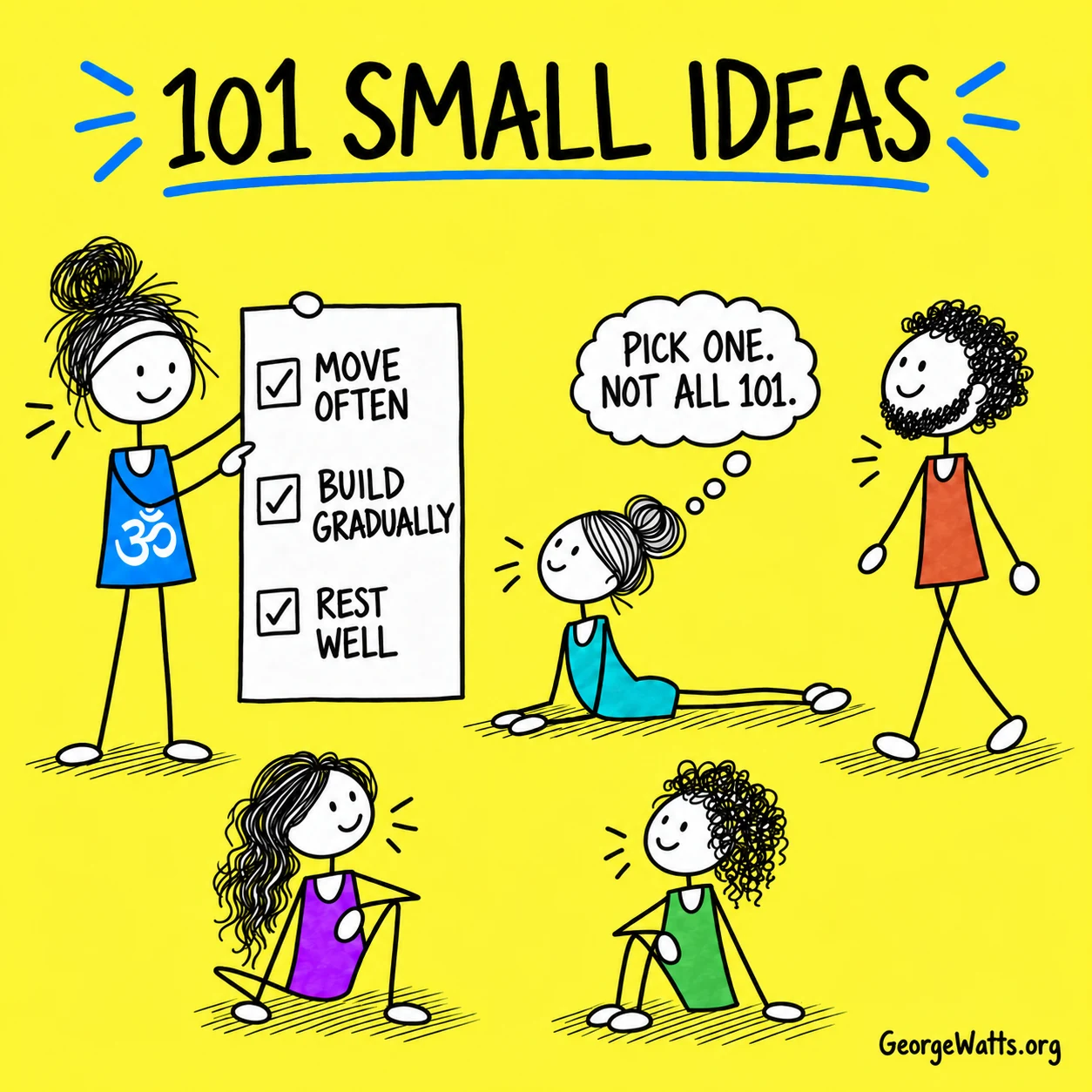
This is a menu, not a challenge. The first 80 ideas cover habits, preparation and teaching choices; the last 21 revisit the pose menu. They are practical prompts, not 101 proven treatments.
1–10: Everyday movement
- Take a short walk during a work break.
- Put a movement break in your diary.
- Stand up between two desk tasks.
- Change position before you feel stuck.
- Try a comfortable seated stretch.
- Walk while making a phone call when practical.
- Keep a little clear space for movement.
- Choose an activity you actually enjoy.
- Start with a practice you can repeat.
- Let a short session count.
11–20: Build a repeatable habit
- Set a reminder that suits your day.
- Keep a simple practice note beside your desk.
- Put your props where you can find them.
- Choose tomorrow’s first movement today.
- Pair movement with an existing habit.
- Plan a quieter option for busy days.
- Leave room for rest days.
- Notice how you feel after practice.
- Record a useful adaptation.
- Repeat a helpful movement instead of chasing novelty.
21–30: Make daily tasks comfortable
- Adjust your screen to a comfortable position.
- Bring frequently used items within easy reach.
- Support your feet when sitting if that feels better.
- Try a cushion if the chair feels uncomfortable.
- Alternate desk positions when practical.
- Take breaks on longer car journeys.
- Share a heavy load across smaller trips.
- Ask for help with an awkward lift.
- Clear the route before carrying something bulky.
- Choose footwear you find comfortable.
31–40: Breathing and pauses
- Give yourself enough time to settle before practice.
- Notice your breathing without forcing it.
- Release unnecessary jaw tension.
- Let the shoulders soften between efforts.
- Use an easy exhale during a manageable effort.
- Pause between repetitions.
- Check whether you are holding your breath.
- Reduce the effort if breathing becomes strained.
- Finish with a quiet moment.
- Choose a comfortable resting position.
41–50: Start small and use support
- Begin a new movement with a small range.
- Build practice time gradually.
- Try fewer repetitions first.
- Learn the exit before entering an unfamiliar pose.
- Practise transitions slowly.
- Use a wall when balance is the distraction.
- Bring a block up to your hand.
- Pad sensitive knees.
- Support the head in a resting pose if useful.
- Choose a chair-based alternative when getting to the floor is difficult.
51–60: Adapt and respond
- Use a shorter stance when it feels steadier.
- Soften the knees in a forward fold.
- Choose a lower backbend.
- Avoid pulling yourself deeper into a twist.
- Try a smaller side bend.
- Keep a rest option available throughout class.
- Change one thing at a time when exploring an adaptation.
- Treat discomfort as information, not a challenge.
- Stop a movement that makes pain worse.
- Ask a qualified clinician about persistent or worrying symptoms.
61–70: Build gradually
- Choose a manageable strengthening option.
- Try hands elevated rather than full floor plank.
- Use knees-down plank where appropriate.
- Explore a small bridge lift.
- Lower slowly after a strengthening movement.
- Rest between efforts.
- Keep resistance light when learning a new movement.
- Practise both sides without forcing equal range.
- Notice fatigue before technique becomes rushed.
- Choose progress you can sustain.
71–80: Teach and communicate
- Tell your teacher about relevant symptoms before class.
- Ask what a pose is intended to explore.
- Ask for a different option when you need one.
- Share which props helped you.
- Plan around your students’ needs.
- Include preparation before a demanding pose.
- Allow time for a gradual finish.
- Use one clear teaching cue at a time.
- Praise a thoughtful choice rather than a deeper shape.
- Keep the practice curious rather than competitive.
81–101: Revisit the 21 pose options
- Explore Mountain as a standing check-in.
- Try a small range of Cat–Cow.
- Rest in a supported Child’s Pose if comfortable.
- Explore low Sphinx rather than a large backbend.
- Try a modest Low Cobra lift.
- Practise a small Bridge and slow return.
- Try a low Locust variation suited to you.
- Explore a gentle Lying Twist.
- Choose a seated twist without pulling.
- Try a supported Thread the Needle variation.
- Pad the knee in Low Lunge.
- Use blocks in Pyramid.
- Soften the knees in Standing Forward Fold.
- Adapt a Wide-Legged Fold with hand support.
- Bring a bolster into a Seated Fold.
- Use the thigh as support in Extended Side Angle.
- Try a shallow Chair Pose.
- Shorten the stance in Warrior II.
- Choose an appropriate Plank variation.
- Hold behind the thighs in Happy Baby.
- Finish in Supported Savasana or another comfortable rest.
Core and Pelvic-Floor Awareness
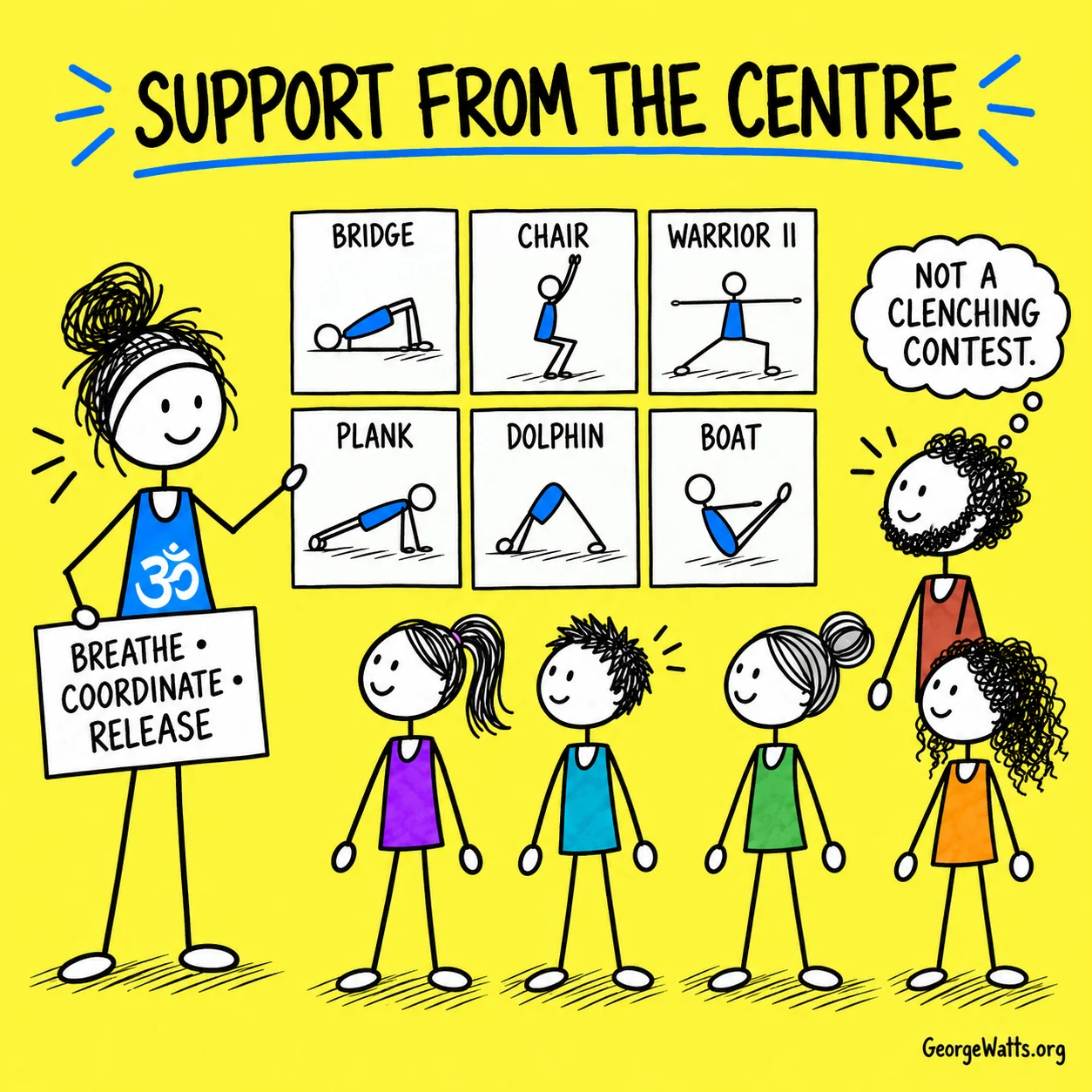
More squeezing is not always better. The pelvic floor is part of a wider system of support and breathing. General yoga poses do not replace an individual pelvic-floor assessment or an exercise programme.
The original six examples—Bridge, Chair, Warrior II, Plank, Dolphin and Boat—can prompt discussion about effort and coordination. They are not equally suitable for everyone, and the harder options are not required for this class.
See University Hospitals Plymouth’s pelvic-floor relaxation guidance for more context.
If someone has pelvic pain, leakage or a feeling of heaviness, suggest individual advice from an appropriate healthcare professional. Keep classroom cues gentle and allow release between efforts.
Core Work Without the Clenching Contest
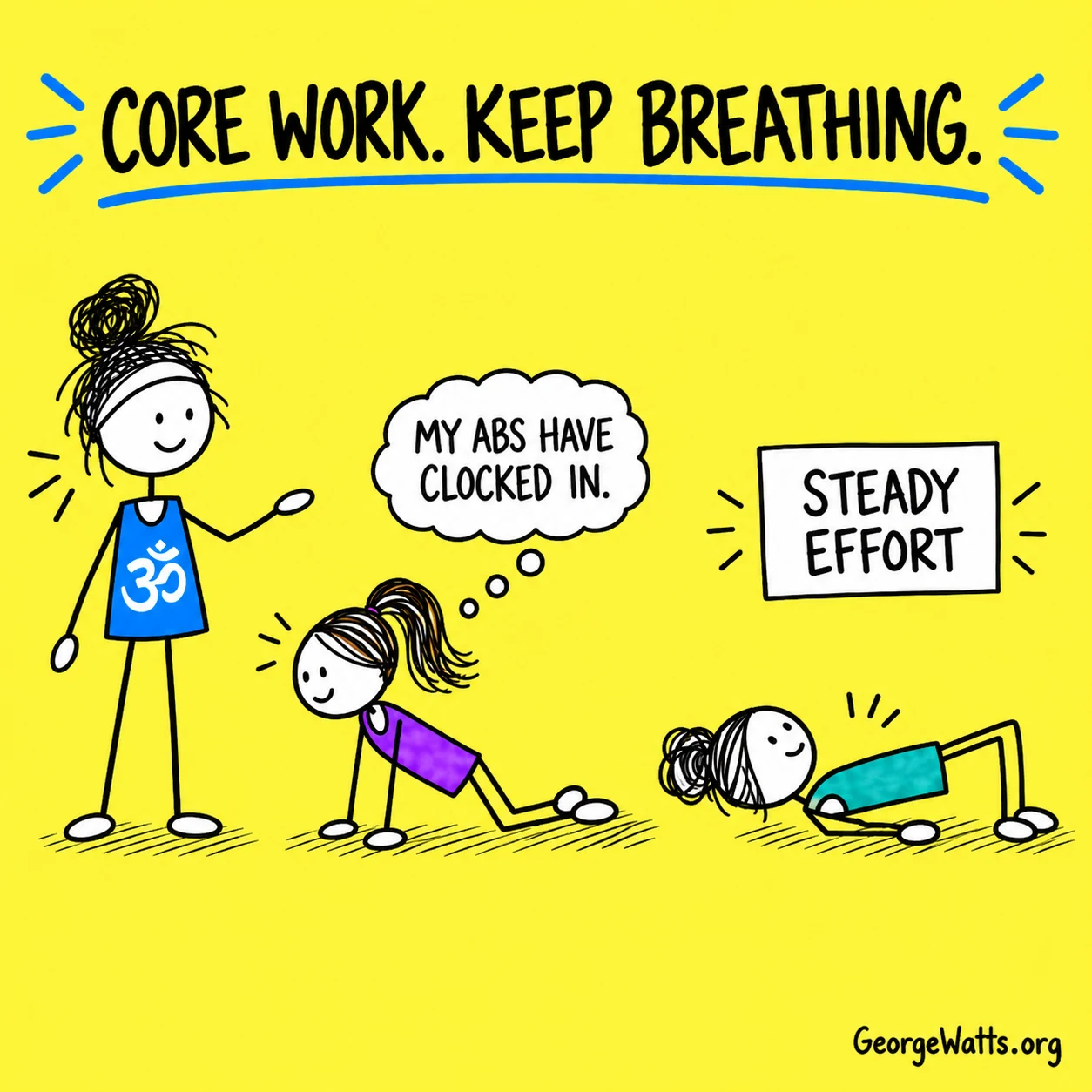
“Engage your core” needs context. Give a cue for the task rather than asking students to suck their stomachs in as hard as possible. The aim is a manageable effort they can coordinate with breathing.
Five cues to try
- Use enough effort to feel steady.
- Keep breathing as you move.
- Make the movement smaller if control becomes difficult.
- Lower slowly, then release the effort.
- Choose the version you can repeat comfortably.
For this spine-themed class, start with a suitable Bridge or modified Plank. More demanding exercises can belong in other classes without becoming a compulsory test here.
A Little Yoga, Often
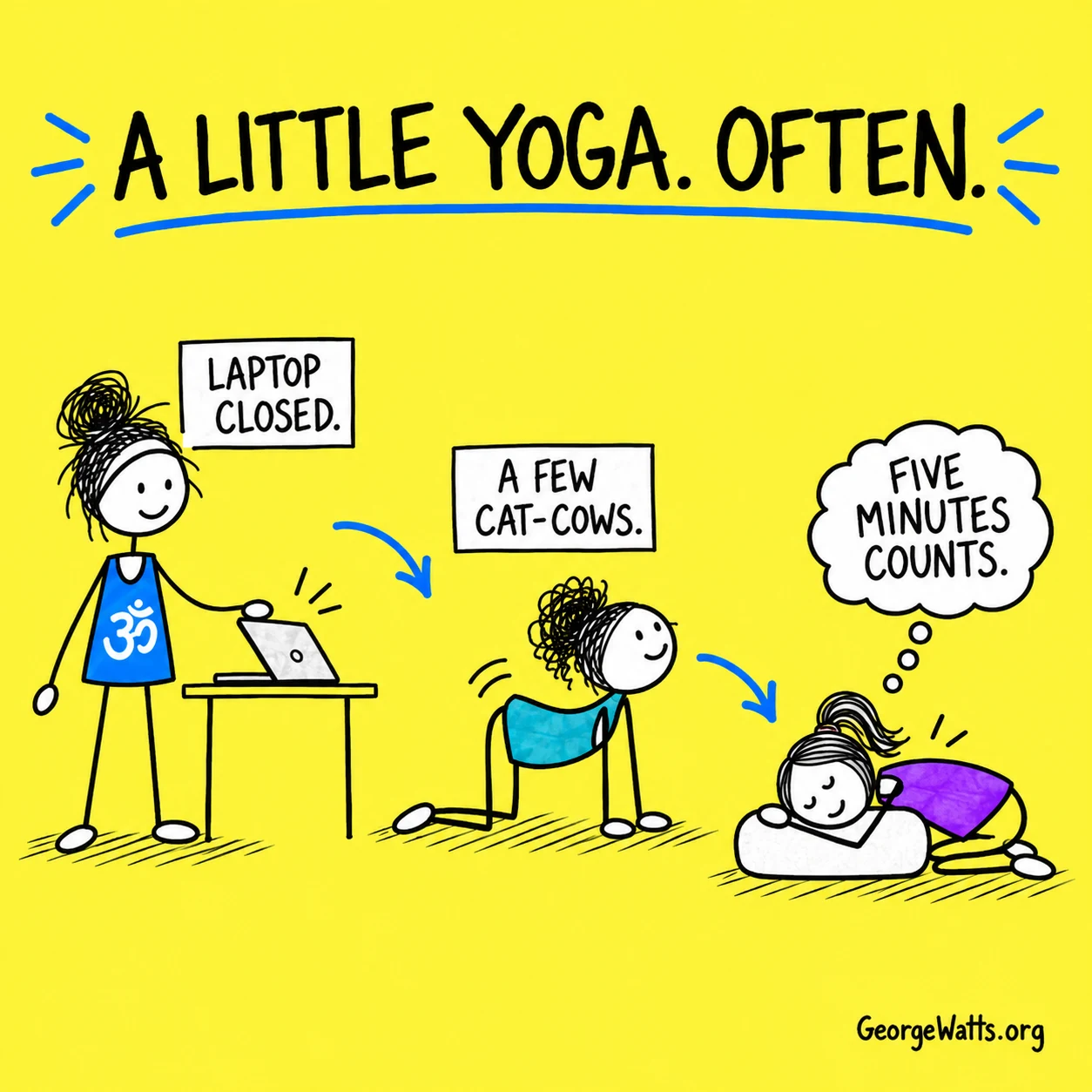
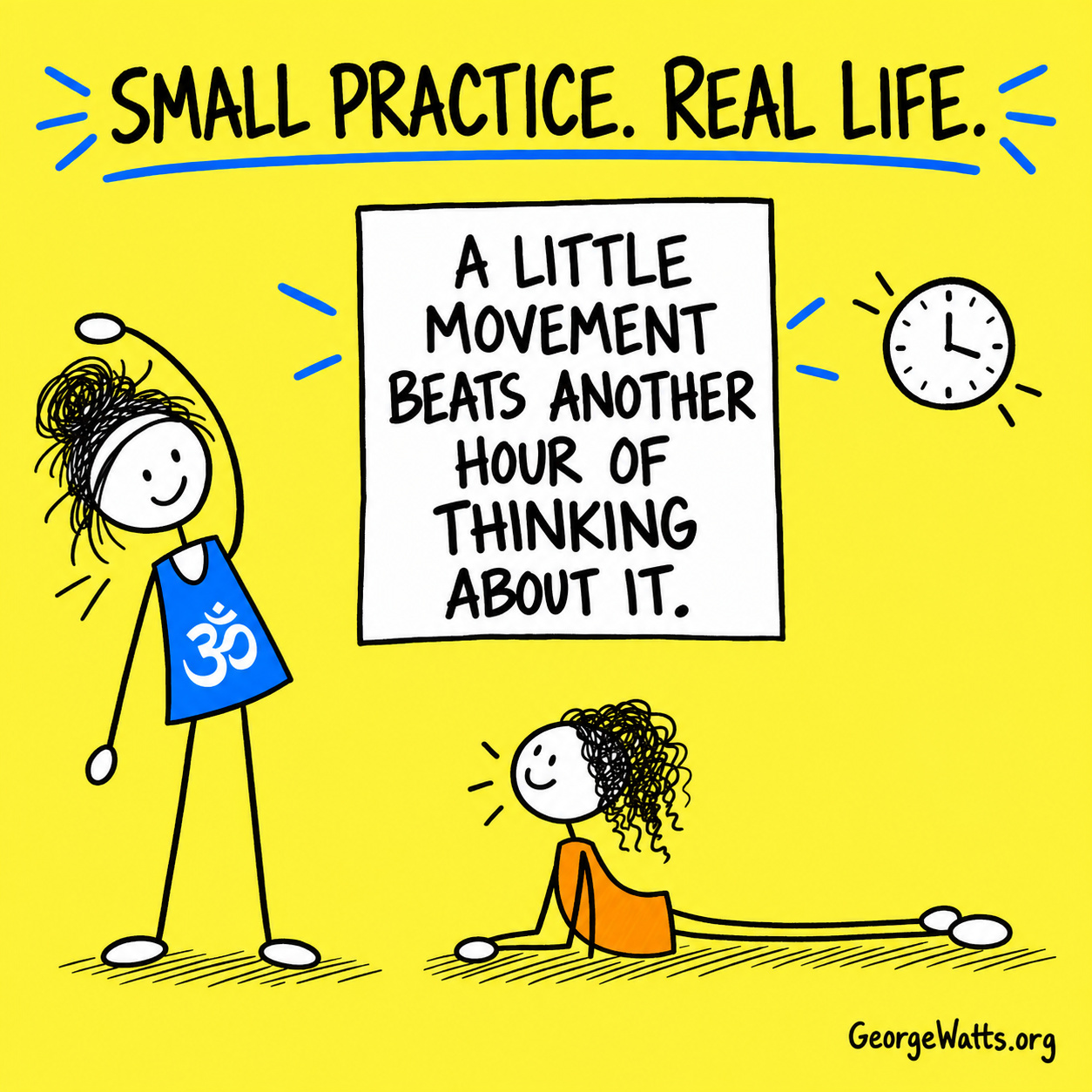
Make starting easy. My own workday can disappear into blog posts, planning and drawing. A short pause is easier to fit in than waiting for a mythical empty afternoon.
Choose a familiar movement, a realistic time and a place where you can practise. Frequency is a personal choice; more is not automatically better.
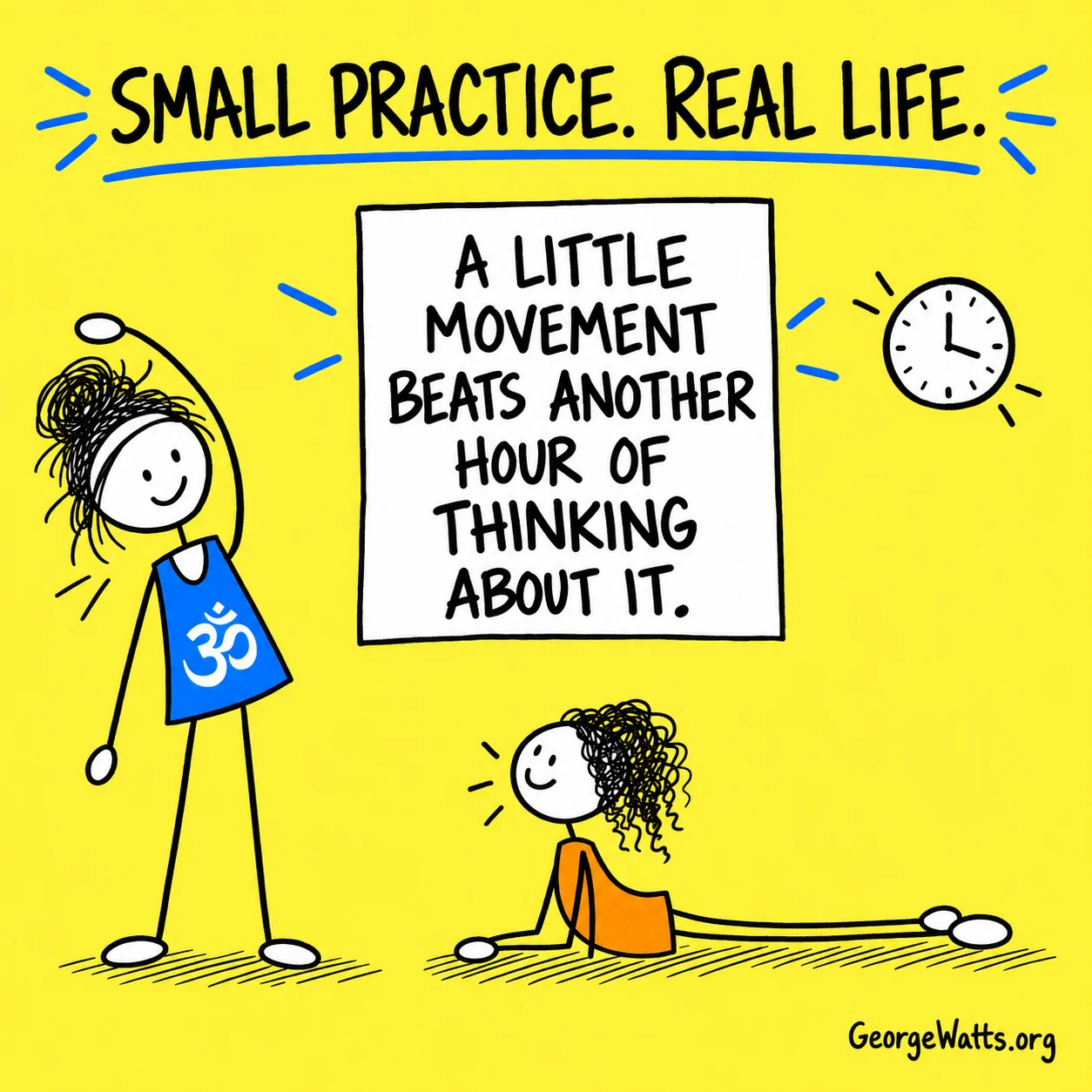

I like a simple timer because my phone comes with a complimentary rabbit hole. Try a reminder around your own work rhythm; 25 minutes is an example, not a medical sitting limit.
Download the practice reminder ↓
Rest Is Part of the Plan

Let the effort finish. Supported Savasana offers a chance to pause and notice the body. A bolster beneath the knees may feel comfortable; side-lying or another position is equally valid.
Describe the experience rather than promising that the pose realigns vertebrae or decompresses discs. Ask whether the student feels supported, warm enough and able to breathe easily.
Explore Upper-Back Movement
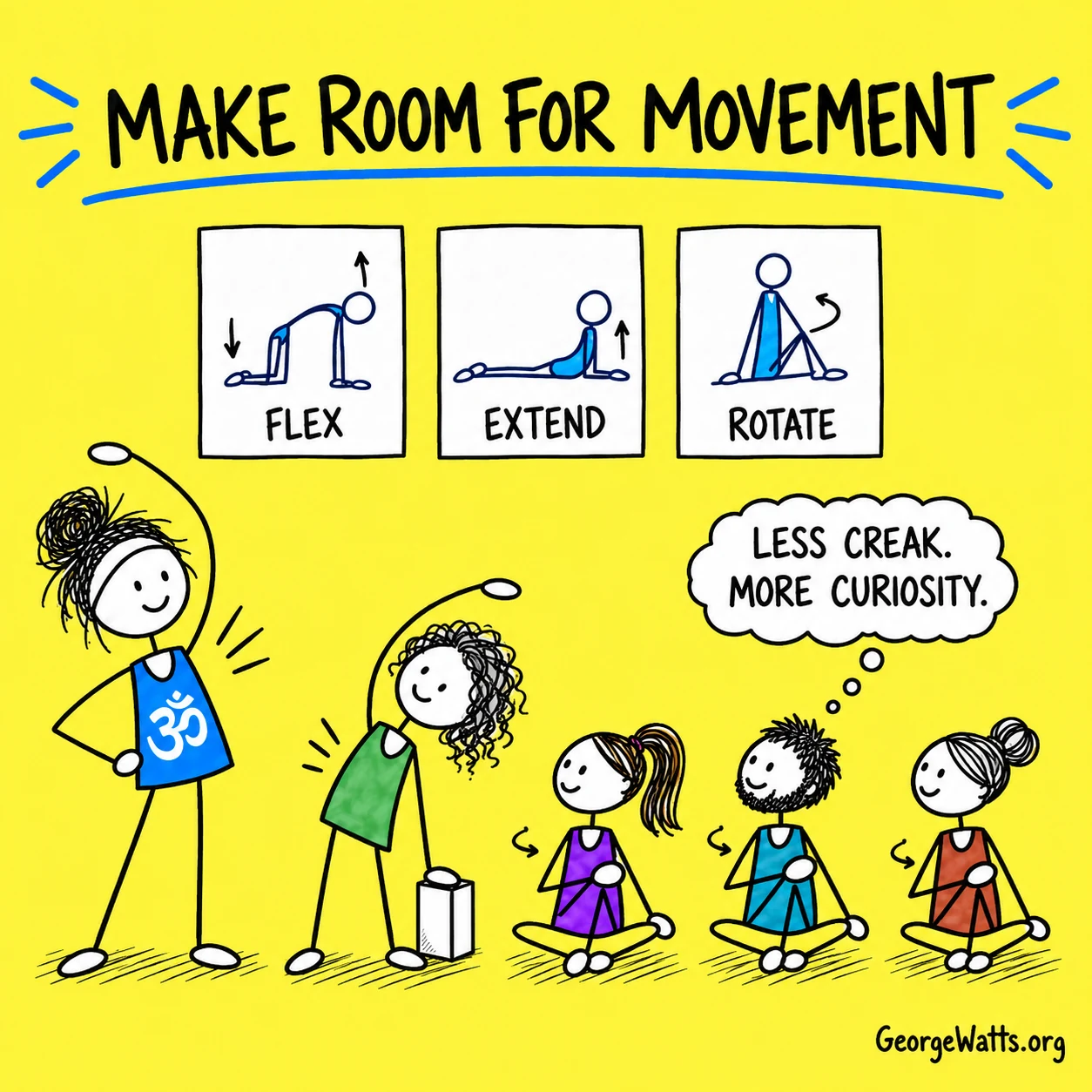
Think movement variety. The thoracic region is the part of the spine associated with the ribcage. Choose modest movements and observe how the whole body participates rather than forcing one area to move.
A gentle seated twist
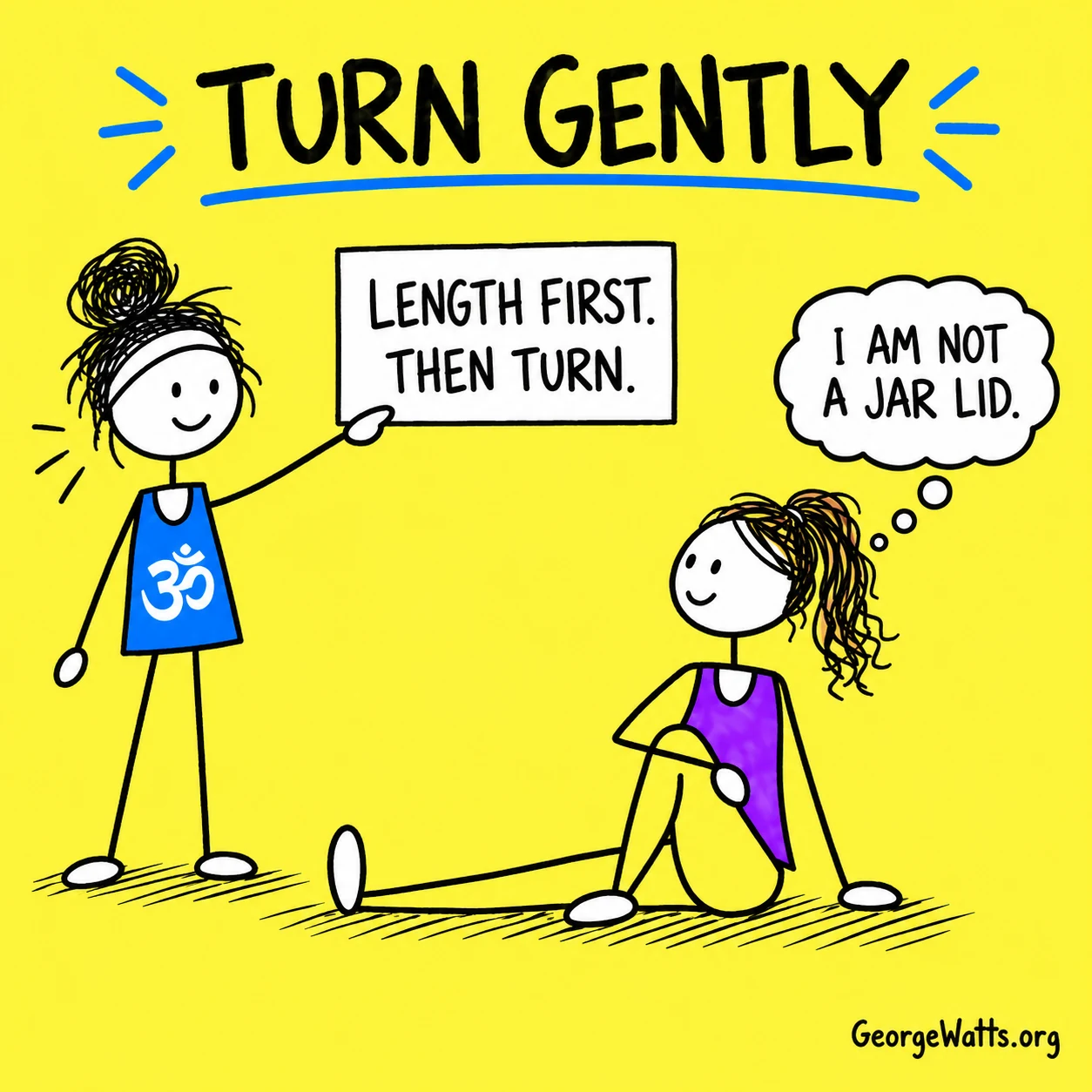
In a seated twist, find a comfortable upright seat and use a small turn. Avoid levering against the knee to chase depth; a simpler chair-based version may suit the student better.
Cat–Cow
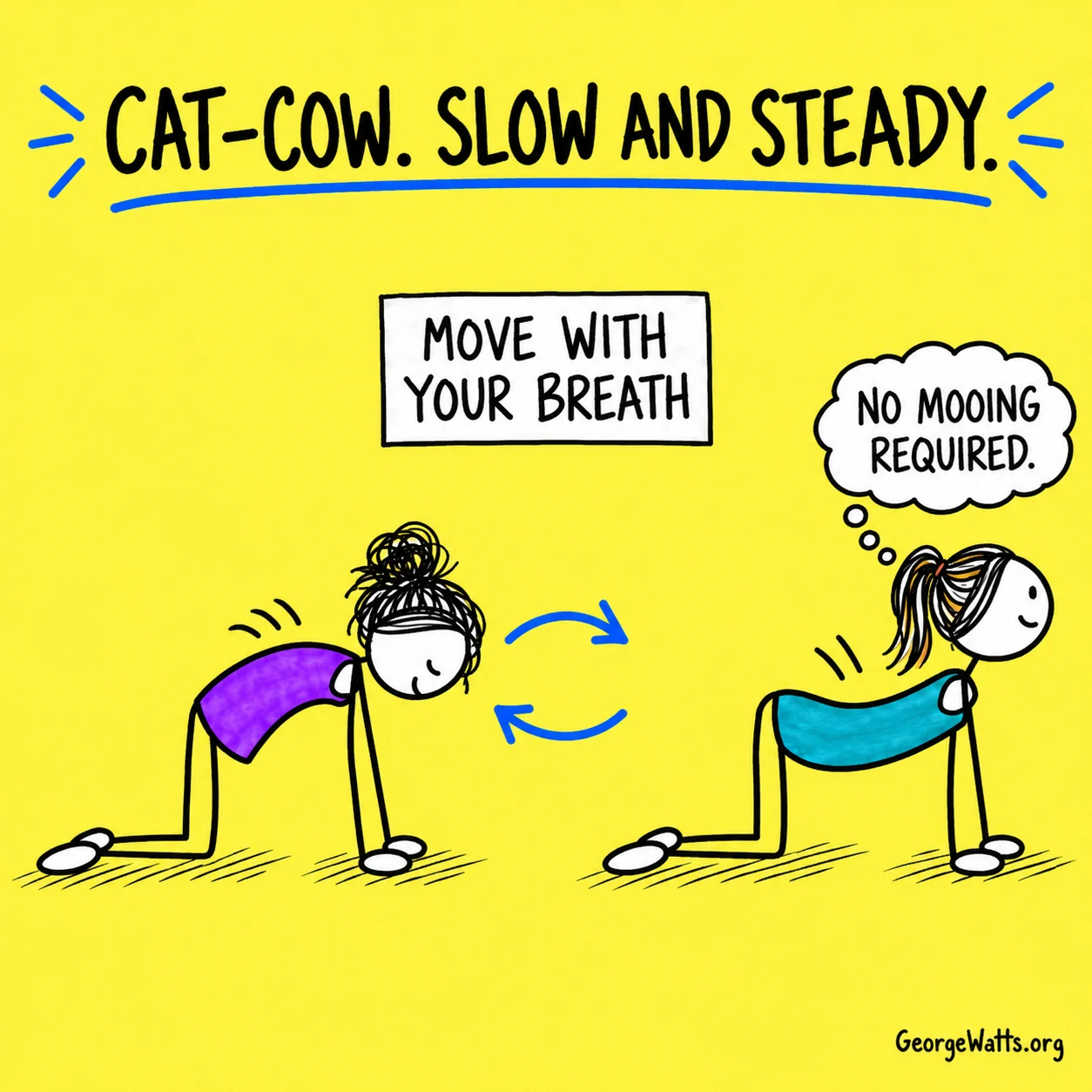
For Cat–Cow, start on hands and knees or choose a supported seated version. Explore gentle rounding and lengthening with easy breathing. Keep the neck comfortable and reduce the range if needed.
Sphinx and Thread the Needle are other options to consider. They are alternatives to adapt, not a checklist everyone must finish.
Make Space in Child’s Pose

Support changes the experience. In Child’s Pose, a bolster can meet the front of the body. Adjust the knee position and arm placement to suit comfort.
If kneeling or folding does not suit the student, offer a different rest. A supported position is useful because the person finds it comfortable, not because it earns the correct silhouette.
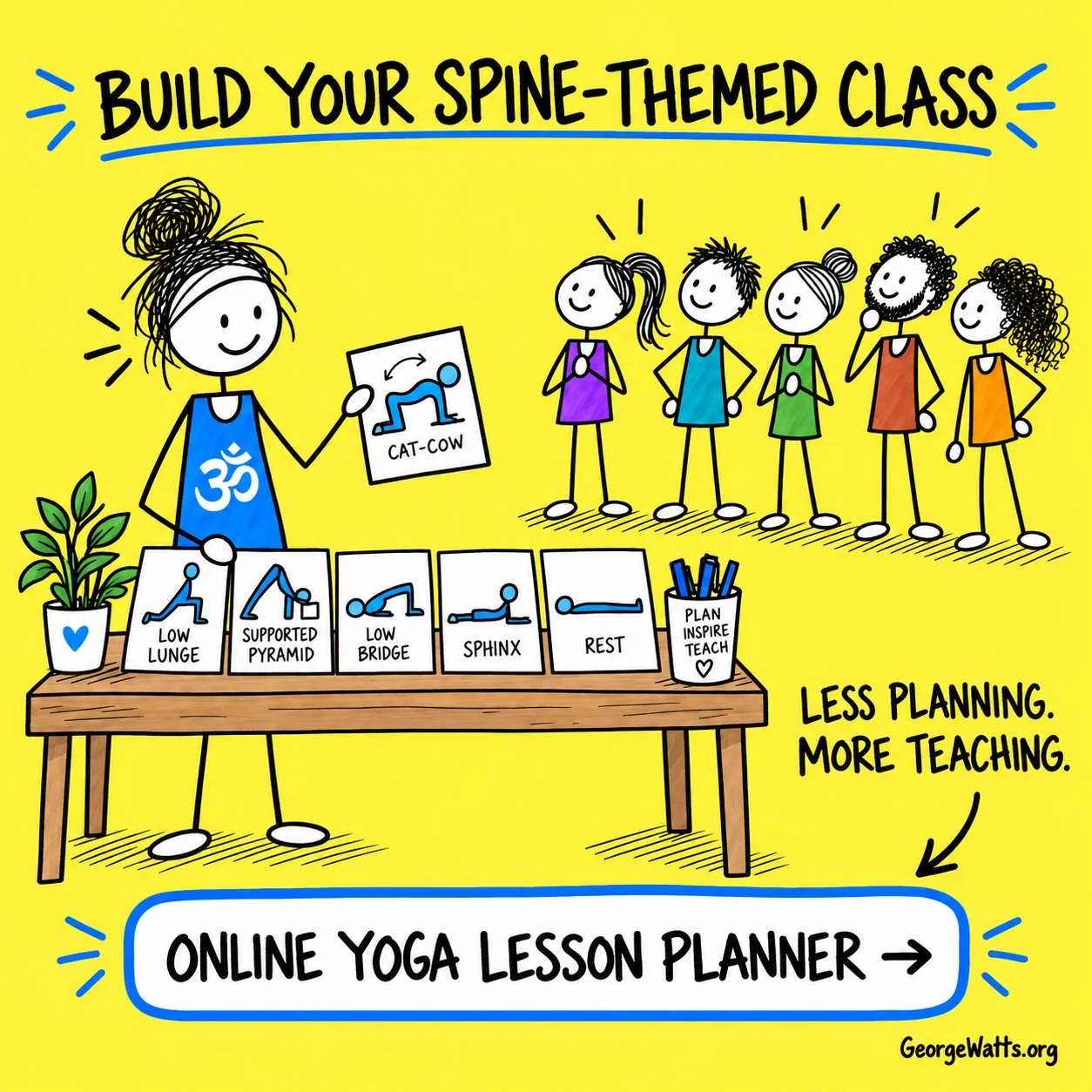
Build Your Own Spine-Themed Class
Make the plan fit the people. Use the Online Yoga Lesson Planner to choose movements, reorder the sequence and save your own version. Keep preparation, options and rest visible on the page.
George’s Conclusion
Your spine does not need a gold medal. Start with one useful habit, one suitable movement or one better-supported rest. Keep what helps and adapt what does not.
For teachers, the most useful plan is one you can change when a real person walks into the room. The sticky-note teacher is very flexible about that—even when the students are not.