Browse by category
George’s Intro
A little challenge. Plenty of choice. I’m George, a BWY yoga teacher, creator of the Online Yoga Lesson Planner, yoga card deck maker and enthusiastic sticky-note doodler.
Some days a balance feels like an interesting puzzle. Other days, finding two matching socks is quite enough of a challenge. Your yoga practice can make room for both.
This free, editable handout introduces eustress: stress experienced as a positive, manageable challenge. Use it to start a conversation about effort, support and knowing when to ease off.
What Is Eustress?
Eustress is often called “good stress”. Think of the energy you might feel when learning something that stretches you but still feels within reach. The label describes how a challenge is experienced; it does not mean that every stressful situation is beneficial.
The NHS explains that a little stress can help us focus, while too much can affect our body, mood and relationships. What feels manageable depends on the person, the situation and the support available.
You do not have to transform distress into eustress by thinking positively. Sometimes the useful response is to reduce a demand, ask for help or step away.
Exploring Eustress in a Yoga Class
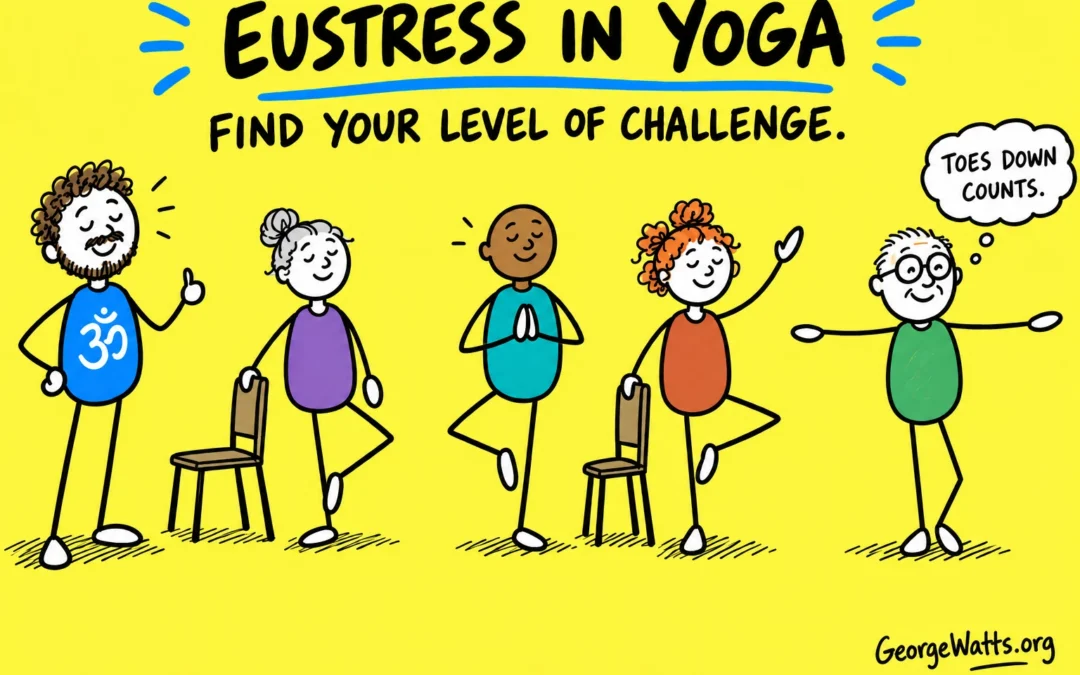
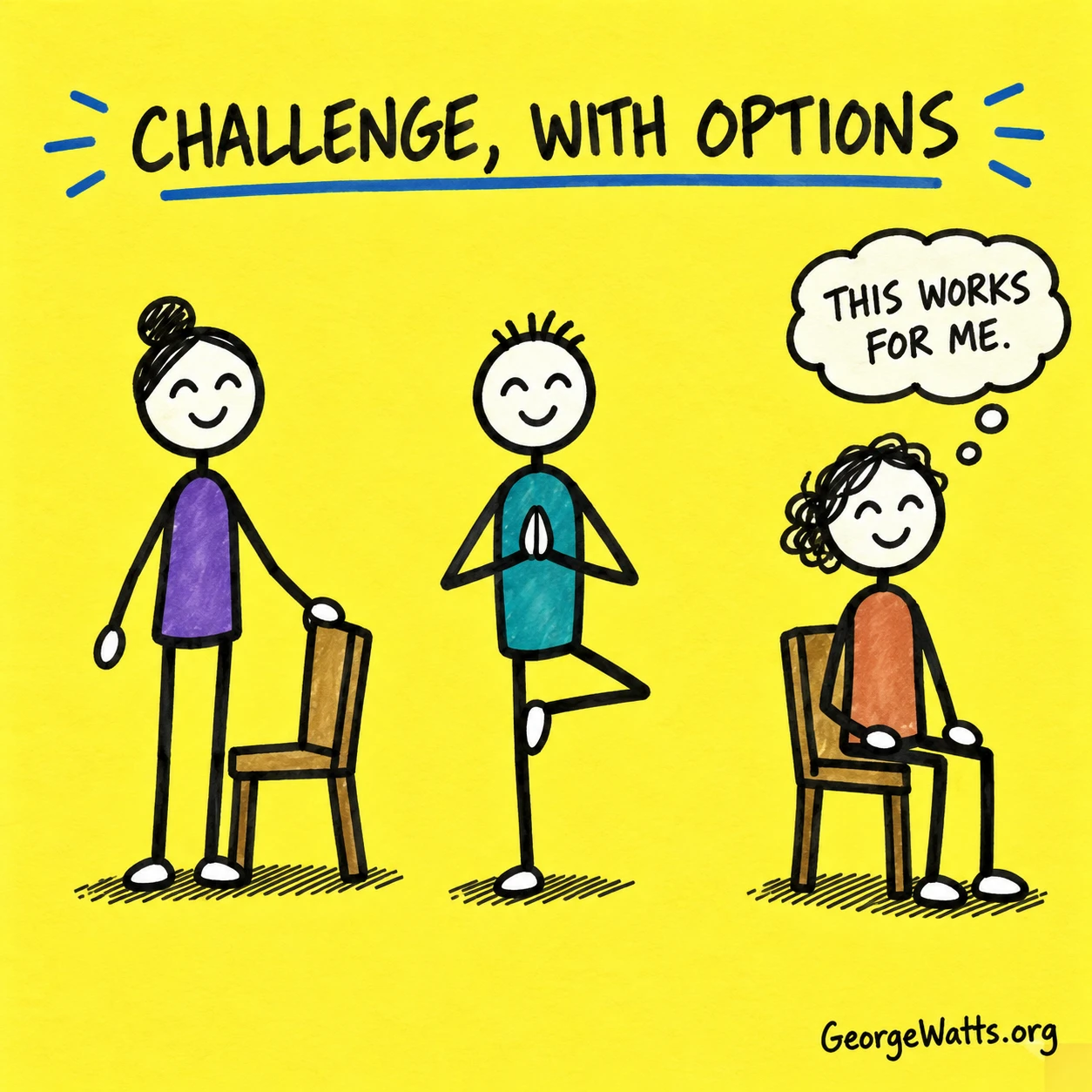
Offer a small challenge with clear options. A familiar balance can work well: both feet down, toes lightly touching the floor, or a hand resting against a wall. A seated alternative or a pause belongs in the invitation too.
- Start with support. Let students find a position that feels comfortable and steady.
- Change one thing. Explore a small shift of weight or a brief change in duration, if appropriate.
- Invite observation. Ask whether the experience feels interesting and manageable, or whether it is time to adjust.
- Make easing off ordinary. Returning to both feet is part of the exploration.
These are reflection prompts, not a test of someone’s nervous system or a reason to stay with pain, dizziness or distress. Students can stop whenever they wish.
Download the Eustress Handout
The one-page handout includes a plain-language explanation, a supported balance exploration and space to reflect. Both versions are editable and use a white background for printing.
Your free Eustress handout
Download the Word handout (.docx) ↓
Download the LibreOffice handout (.odt) ↓
Three Ways to Use the Handout
Before practice: Ask, “What would make today’s class feel manageable?” Students can reflect privately; nobody needs to explain their circumstances to the room.
During practice: Give equally welcoming options and let students choose. Avoid presenting the unsupported version as the successful one.
After practice: Invite students to note what helped and what they would change next time. A useful discovery might be “I liked trying something new” or “I needed more support”.
George’s Conclusion
Find a challenge you can work with. A useful class gives students something to explore and enough freedom to adapt it. Nobody needs to audition for the role of most determined person in the room.
Download the handout, try one small idea and leave room for a different answer tomorrow. The chair is allowed to help.