
George’s Intro
I updated this post in 2026.
A yoga teacher blog should begin with a student’s question.
Not with a panic about algorithms, a heroic publishing schedule or the belief that Google is waiting for your 2,000-word thoughts on every chakra before teatime.
I’m George, a BWY yoga teacher, creator of the Online Yoga Lesson Planner, yoga card deck maker and enthusiastic sticky-note doodler.
Jump to the 30-Day Yoga Blog Plan ↓
What Is Your Yoga Blog For?
A blog is the useful part of your website that can answer questions before, between and after classes. A prospective student might find a first-visit guide. A regular student might revisit the breathing practice you taught. Another yoga teacher might discover a planning method and then explore one of your resources.
The blog itself is not the business goal. Choose what you want a useful post to help the reader do: understand your approach, prepare for a class, join an email list, book a suitable session or explore a relevant resource.
8 Steps To Start A Useful Yoga Teacher Blog
Answer real questions before chasing traffic.
The first four steps define the blog, reader, topics and publishing home. Steps five to eight create useful posts, make them easy to scan, share them sensibly and learn from the results.
2Write for One ReaderBegin with a real question or hesitation.
3Pick Three Topic LanesCreate focus without running out of ideas.
4Choose Your Publishing HomeKeep the useful article somewhere you control.
5Write a Useful AnswerAdd experience, examples and a next step.
6Format for ScanningHelp the eye understand the page quickly.
7Share It SensiblyUse a few relevant distribution routes.
8Measure and ImproveNotice which posts earn useful action.
Choose One Job for the Blog
Your blog does not need to attract everybody interested in yoga. It needs to help the people your teaching or resources are designed for.
Choose one primary job for the next six months:
- help suitable local students discover a class;
- prepare beginners for their first visit;
- support existing students between sessions;
- show your teaching experience and approach;
- introduce a relevant workshop, course or resource;
- build a permission-based email audience.
You can support more than one outcome, but one primary job makes topic choices and calls to action much easier. If the blog is meant to support a local beginners’ class, a thoughtful first-class guide is probably more useful than a general essay about “wellness”.
Example from GeorgeWatts.org: How to Create Your First Yoga Lesson Plan Formula
This post has one clear job: answer the practical questions a teacher has when building a reusable class formula. It moves from “What is a formula?” through class type, sections, pose categories, timings and reuse. The reader arrives with one planning problem and leaves with a process they can follow.
Start with the destinationWhat should the right reader understand or do after reading?
Write for One Real Reader
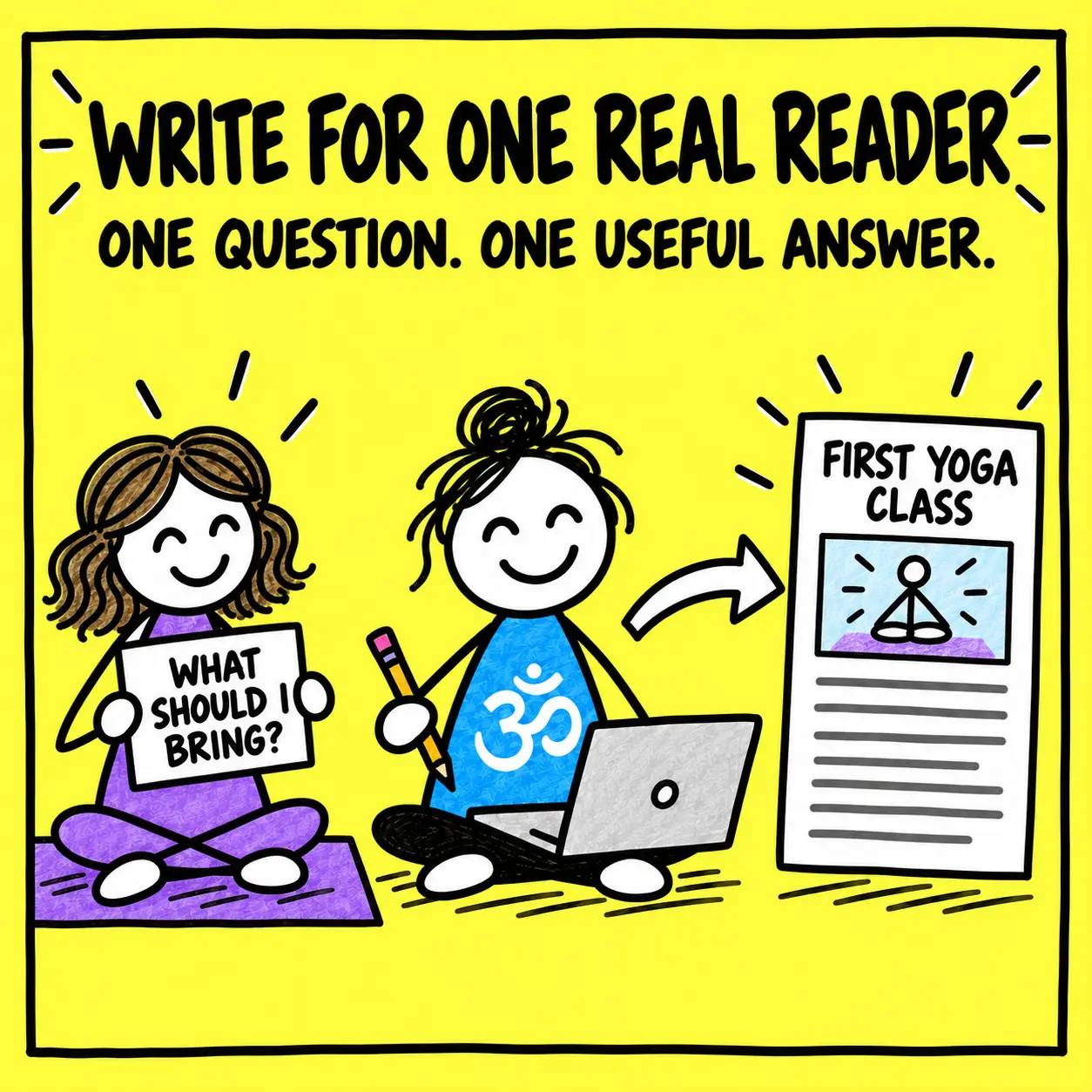
A useful post normally begins before you sit at the keyboard. It begins when a student asks a question, misunderstands an instruction, worries about a first class or tells you what they are trying to practise at home.
Keep a simple question list. Add the exact words people use after class, in enquiries and in email replies. Those phrases are valuable because they reveal what the reader actually wants to know—not what a content calendar thinks they ought to want.
Turn one question into a post
Question: “What should I bring to my first yoga class?”
Post: Explain clothing, mats, arrival time, injuries or concerns, venue access and what the first ten minutes will feel like.
Next step: Link to the correct beginner class or enquiry page.
Write as though you are answering that person. You can make the wording clearer during editing; keep the human conversation during the first draft.
Example from GeorgeWatts.org: Eileen Ash-Inspired Chair Yoga Lesson Plan
This lesson-plan post is written for a recognisable reader: a teacher planning an accessible chair yoga class for older students. The gentle exercises, practical teaching choices and downloadable plans all serve that reader. A focused post feels useful because the right person can immediately see that it was made for them.
Pick Three Topic Lanes
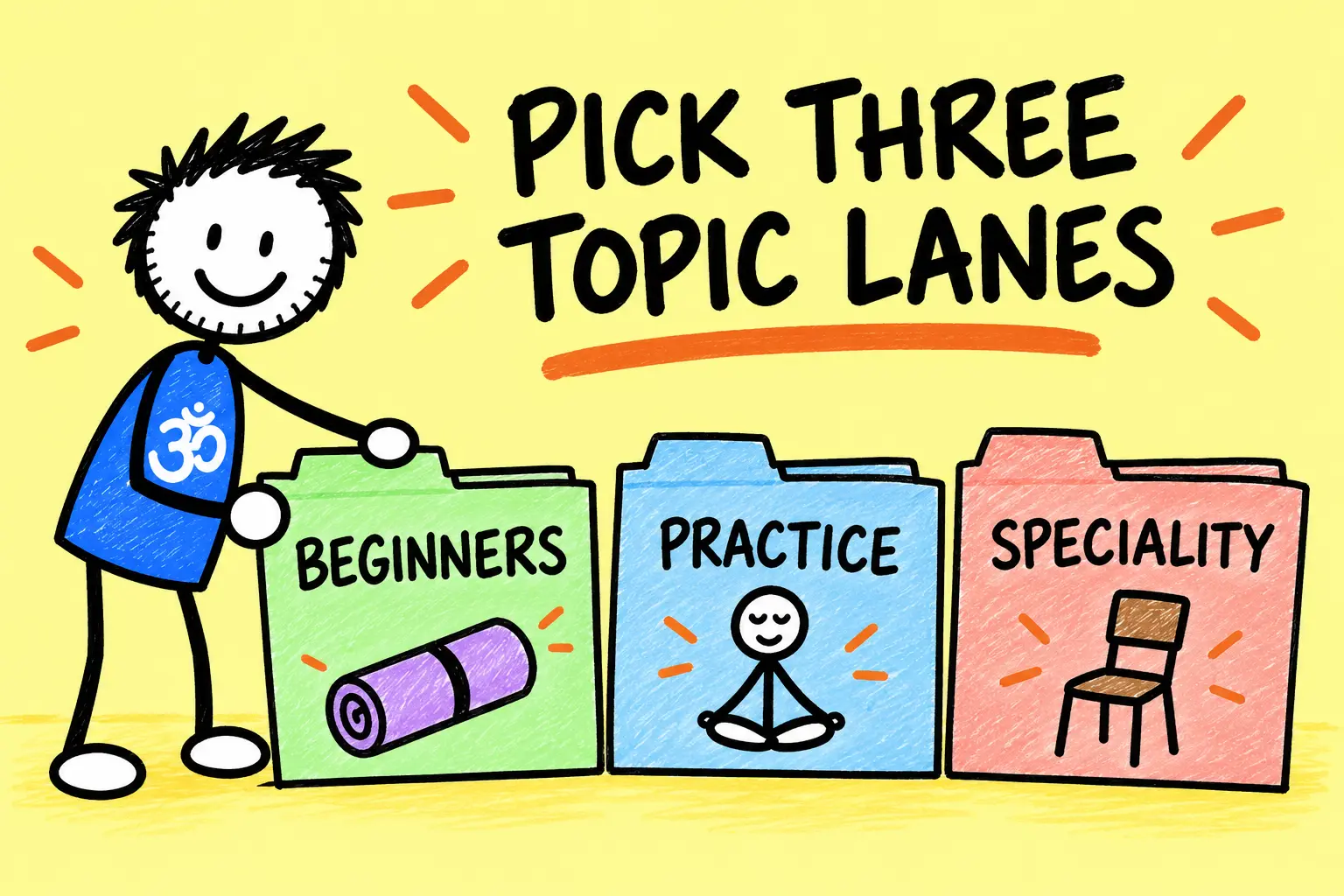
Categories should help readers find related posts and help you recognise what belongs on the blog. They do not need to reproduce the entire history and philosophy of yoga.
Choose three lanes that connect your experience, the reader’s questions and the work you want the blog to support. For example:
- Starting yoga: first visits, equipment, common worries and beginner-friendly explanations.
- Practising between classes: short sequences, breathing exercises and reminders from recent lessons.
- Your teaching speciality: chair yoga, yoga for runners, small-group courses or another clear area you understand.
Your lanes are a working filter, not a vow. Review them after ten posts. Keep the subjects that produce useful conversations and quietly release the category that has become a cupboard full of one lonely article.
If the focus still feels foggy, use Find Your Yoga Teaching Niche to clarify the people, context and offer.
Example from GeorgeWatts.org: Yoga Lesson Planning Hub
The hub shows how repeatable topic lanes make a large subject easier to navigate. Its core lanes include lesson-plan formulas, sequencing and class themes, with supporting sections for free plans and chair yoga. Each new post can strengthen one lane instead of sending the blog in a completely new direction.
Topic testDoes this subject help a reader you understand take a step you can support?
Choose Your Publishing Home

Publish the full, useful article somewhere you control. Social platforms are good distribution routes, but a social account is not the same as a durable library on your own website.
If you already have a WordPress website, its post system is a sensible home. Other platforms can also work. The important questions are practical:
- Can you edit and update old posts?
- Can readers find related topics easily?
- Can you control links and calls to action?
- Can search engines access the article?
- Can you export or move the content?
- Will you realistically use the system?
A platform does not possess magical SEO dust. Clear structure, accessible pages, useful content and sensible technical setup matter more than the logo on the publishing screen.
Example from GeorgeWatts.org: How to Pronounce & Memorise 101 Asanas In Sanskrit
This free course has a permanent home on GeorgeWatts.org, where the pronunciations and supporting resources can be organised, linked and improved over time. Social posts can point people towards it, but the useful material remains on a website that George controls.
Write a Useful, People-First Answer
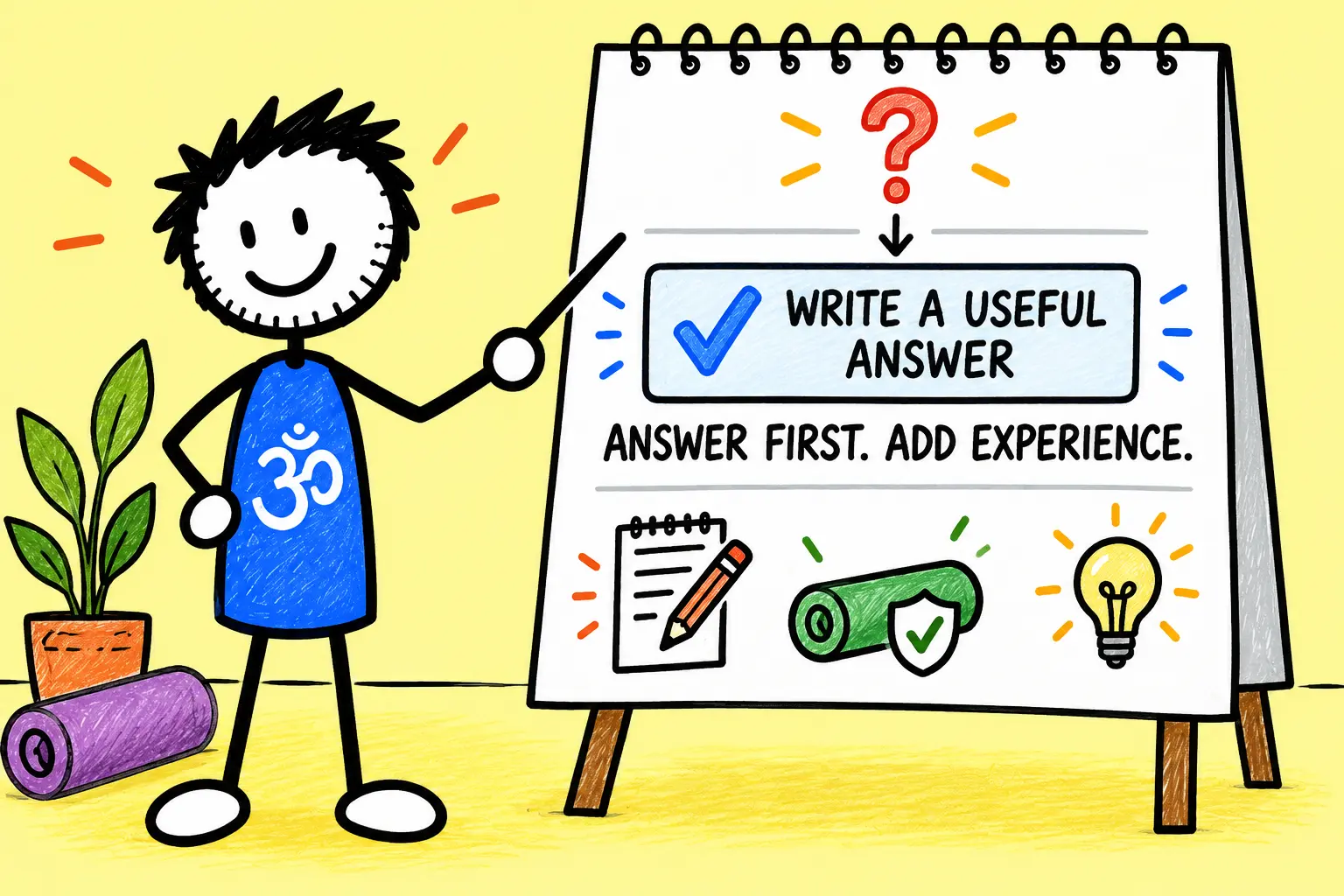
Answer the main question early. Then add the teaching experience, examples, cautions and practical detail that make your answer worth choosing over a generic summary.
Google’s people-first content guidance asks whether a page demonstrates first-hand expertise, helps the reader achieve their goal and provides a satisfying experience. It also states that Google does not have a preferred word count.
Use the length the answer needs. A venue-directions post may be brief. A complete guide to planning a beginners’ course may need more room. Stop when the reader can act without having to search again for the missing half of the answer.
A simple post structure
- Opening: state the useful answer or problem clearly.
- Context: explain who the post is for and why it matters.
- Guidance: use logical headings, steps, examples or options.
- Experience: add what you have noticed while teaching or testing.
- Next step: offer one relevant action rather than five competing buttons.
Using AI without losing your voice
AI can help organise notes, suggest a structure or expose gaps in a draft. It cannot supply your lived teaching experience, check every health claim or decide what your students genuinely need.
Google’s guidance on generative AI content says it can be useful for research and structure, while producing many pages without adding value may violate its spam policies. Begin with your own question, story, observations and examples. Then verify facts, rewrite the language in your voice and remove anything you could not confidently say to a student.
Example from GeorgeWatts.org: Downward Facing Dog: Free Lesson Plan + Modifications
The post gives yoga teachers the useful material promised by the title: a complete lesson plan and practical Downward Facing Dog modifications. The answer is not hidden behind a long detour. Supporting teaching detail adds depth after the reader can already see that the page will solve the problem they brought with them.
Useful beats epicThe post is long enough when the right reader can take the next sensible step.
Format the Post for Scanning
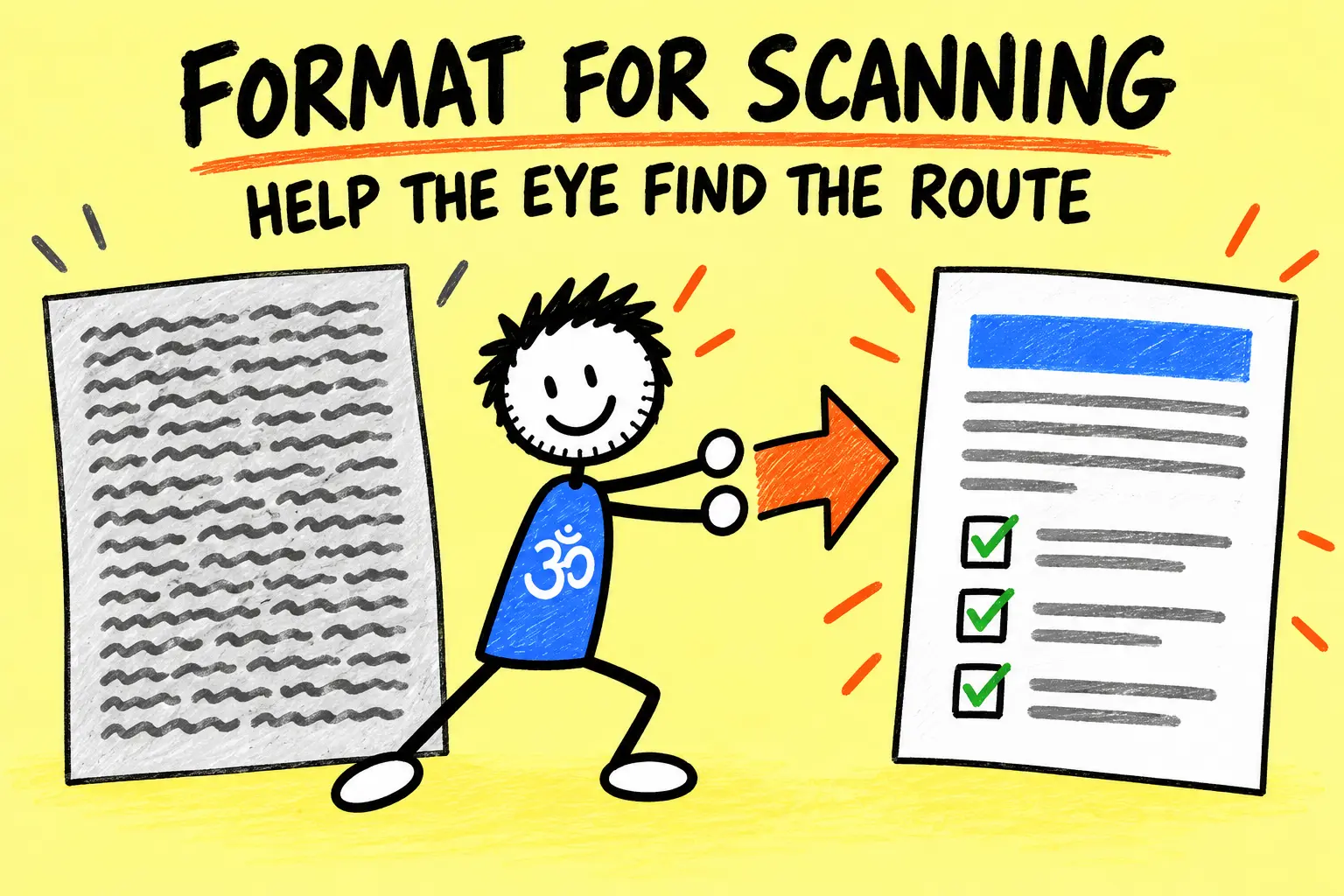
Readers make quick decisions with their eyes. Give the opening sentence its own paragraph so the promise is easy to find before the reader commits to the rest.
Then make the structure visible:
- use descriptive headings;
- keep paragraphs comfortably short;
- use lists when the information is genuinely a list;
- bold only a few useful phrases;
- include relevant images with helpful alternative text;
- check the post on a phone before publishing.
A wall of text asks the reader to excavate the answer. Decorative boxes around every paragraph create a different sort of obstacle. Use one clear visual hierarchy and let ordinary prose do most of the work.
Edit aloud. It catches tangled sentences, accidental repetition and the moment your friendly explanation turns into a committee report.
Example from GeorgeWatts.org: Shoulderstand Peak-Pose Plan
The page uses a jump link, clear headings, numbered modification options and a structured 90-minute lesson plan. A teacher can scan directly to safety guidance, pose choices, themes or the complete sequence. The page reveals its route before asking the reader to study every sentence.
Share the Post Sensibly
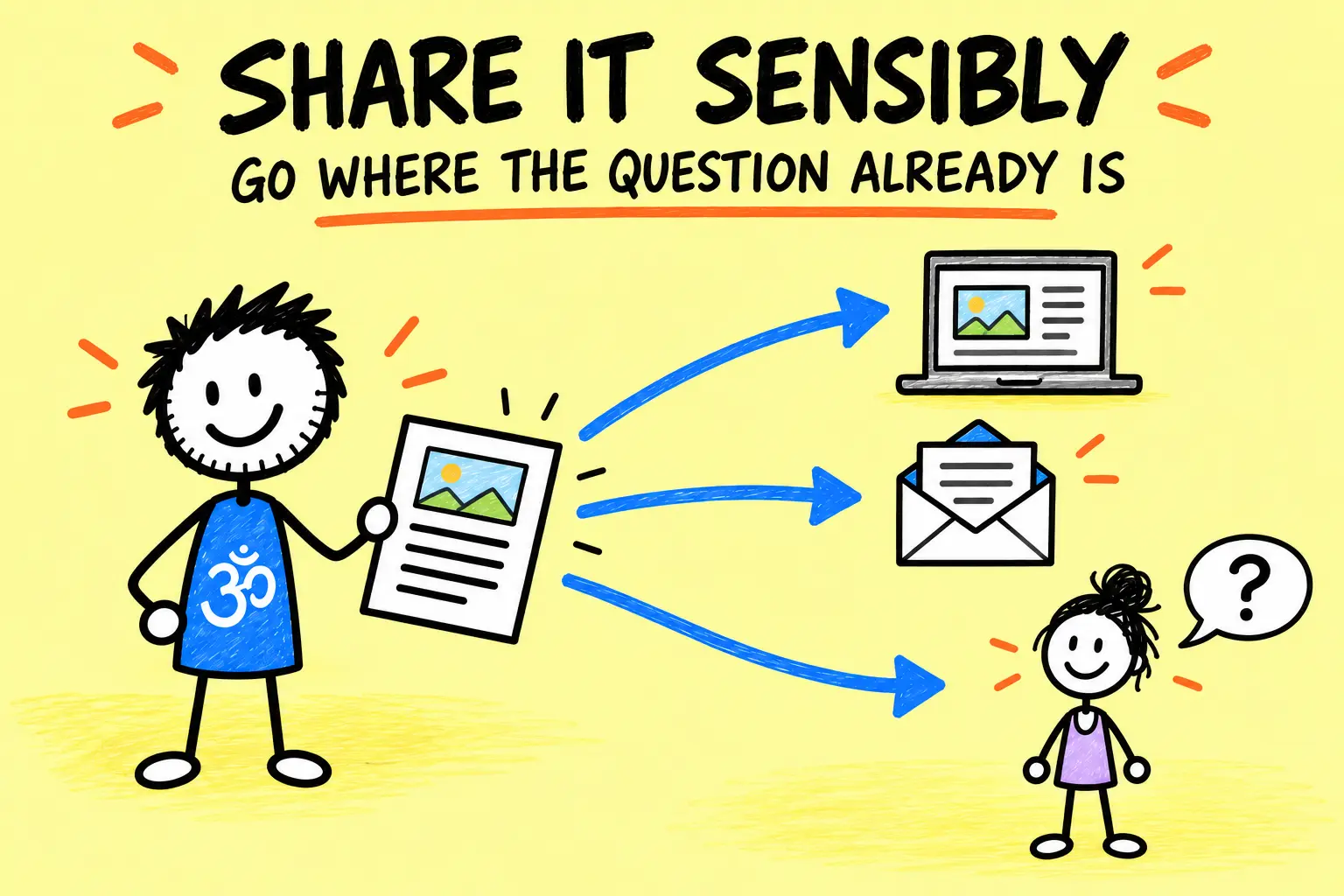
Publishing is the beginning of distribution, not a signal to paste the link everywhere you have ever opened an account.
Choose two or three relevant routes:
- email people who have asked to hear from you;
- share a useful extract on the social platform you actually use;
- link from an older post that answers a related question;
- send it to a local partner when it genuinely helps their audience;
- mention it after class when it answers the question being discussed.
A useful sharing introduction
“Several students have asked what to bring to their first class, so I’ve put the practical details in one place. Here is the guide if your first session is coming up: [link].”
Do not ask students to distribute a copied promotional script or turn a private conversation into unsolicited marketing. Give people an accurate link; let them recommend it in their own words if they genuinely wish to.
Example from GeorgeWatts.org: Yoga Teacher Email Marketing
This post explains a sensible distribution route for useful website content: a permission-based email list. A teacher can publish a helpful article on their own site, then email the relevant people rather than reposting it everywhere. The website holds the resource; the email gives the right readers a reason to visit it.
Distribution testShare where the question already exists, not wherever a posting box exists.
Measure and Improve the Useful Posts
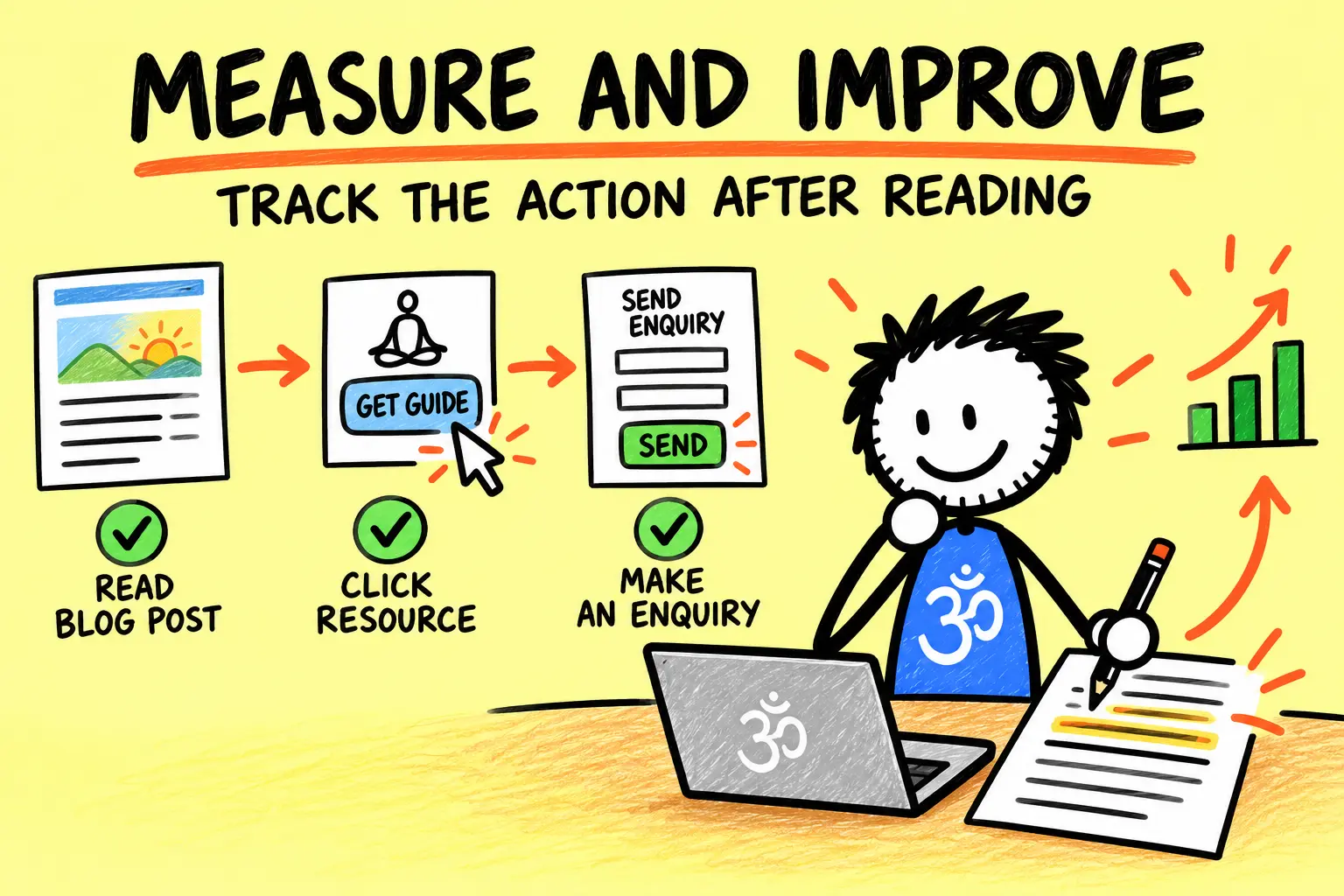
Page views tell you that a page loaded. They do not tell you whether the right person found an answer, joined a class or explored a relevant resource.
Choose one useful measure for each post:
- search impressions and clicks;
- clicks to the relevant class page;
- email sign-ups;
- suitable enquiries;
- downloads of a useful resource;
- replies or questions from readers.
Review posts every few months. Correct outdated details, improve the opening, repair links, add an example and connect useful related articles. Keep the original publication date visible unless the article has been substantially rebuilt; honesty is more useful than pretending a dusty paragraph became new because the calendar changed.
Do not judge a specialist post only by large traffic numbers. Ten suitable local readers can be more useful than a thousand accidental visitors who wanted something else.
Example from GeorgeWatts.org: 7 Steps To Find A Free Or Low-Cost Yoga Venue
This older article was improved by adding practical tools, including a venue-viewing checklist, an outreach email and a small pilot test. The subject did not need replacing. The page needed more help for the reader’s next action. That is the kind of improvement worth measuring: resource clicks, suitable enquiries and better follow-up questions.
Measurement testTrack the action that matters after the reading, not only the reading.
8 Yoga Blog Posts You Could Write Next
Choose the question you can answer from real teaching experience.
- What happens in my first yoga class?Remove uncertainty about arrival, clothing, equipment and pace.
- Three ways I modify a pose in classShow practical teaching choices without promising medical outcomes.
- A five-minute practice from this week’s lessonHelp regular students revisit one useful part of the class.
- How I plan a beginners’ sequenceShare the reasoning behind a simple, teachable structure.
- Is this class suitable for me?Explain the audience, pace, access and enquiry route honestly.
- A local guide to starting yoga in your townAnswer the practical location questions that national sites cannot.
- One teaching mistake and what I changedTurn experience into a specific, useful lesson.
- A question students ask about breathingGive a careful explanation and a simple practice option.
Your 30-Day Yoga Blog Plan
The purpose of the first month is to create a repeatable process—not to become a publishing factory.
- Week 1Choose the job and reader. Decide what the blog should support, select three topic lanes and collect ten real questions.
- Week 2Write one useful answer. Draft from experience, check the facts and add one relevant next step.
- Week 3Edit and publish. Put the opening sentence on its own, improve the headings, check the mobile view and publish on your website.
- Week 4Share and learn. Use two suitable distribution routes, record the starting measures and choose the next reader question.
One useful post this month is a stronger beginning than eleven abandoned drafts this weekend.
Yoga Teacher Blogging FAQs
Do I need a website before starting a yoga blog?
You need a reliable publishing home. A blog on your own website gives you useful control over the article, links and next steps. If a new website would delay you for months, begin by planning and drafting the first posts while the simple publishing setup is prepared.
Is WordPress best for yoga teacher blogging?
WordPress is a practical choice when your existing website already uses it, but the platform alone does not guarantee search visibility. Choose a system you can maintain that produces accessible pages, supports useful navigation and lets you retain or export your content.
How often should a yoga teacher publish?
Choose a pace you can sustain without weakening your teaching or the article. One useful monthly post is better than a daily burst followed by silence. Increase the frequency only after the writing, editing and sharing process feels manageable.
How long should a yoga blog post be?
Long enough to answer the question properly. There is no universal ideal. Remove repetition, include the practical detail the reader needs and stop when the answer is complete.
Can I use AI to write yoga posts?
Use it as an assistant for structure, questions or editing—not as a substitute for experience and responsibility. Supply your own observations and examples, verify factual or health-related statements, and rewrite the result until it sounds like something you would genuinely say.
How does a blog help fill yoga classes?
A useful post can attract or reassure suitable people, demonstrate your approach and connect them to an appropriate class page. The path needs to be explicit: answer the question, explain the fit and offer one clear booking or enquiry step.
Give Your Blog a Marketing Plan
A blog becomes more useful when it supports a clear offer and a manageable marketing system. The Yoga Marketing Kit helps you choose practical tests, write clearer messages and track what deserves another month.

George’s Conclusion
A successful yoga teacher blog is not measured by how efficiently it feeds the internet. It is measured by whether a real reader found a useful answer and recognised a sensible next step.
Begin with one student question. Add what you have learned by teaching. Make the page easy to scan, publish it somewhere you control and share it where the question already exists. Then listen for the next question. That is enough to build a useful library—one post at a time.