
George’s Intro
I updated this post in 2026.
A niche is a useful filter.
It helps you decide who a class is for, what to offer and how to explain it without producing a sentence that floats away in a cloud of “mind, body and soul”.
I’m George, a BWY yoga teacher, creator of the Online Yoga Lesson Planner, yoga card deck maker and enthusiastic sticky-note doodler.
Your niche is not a lifetime contract. It is a practical starting point you can test and adjust. You do not have to become the world’s only yoga teacher for left-handed golfers by Friday.
A Working Definition
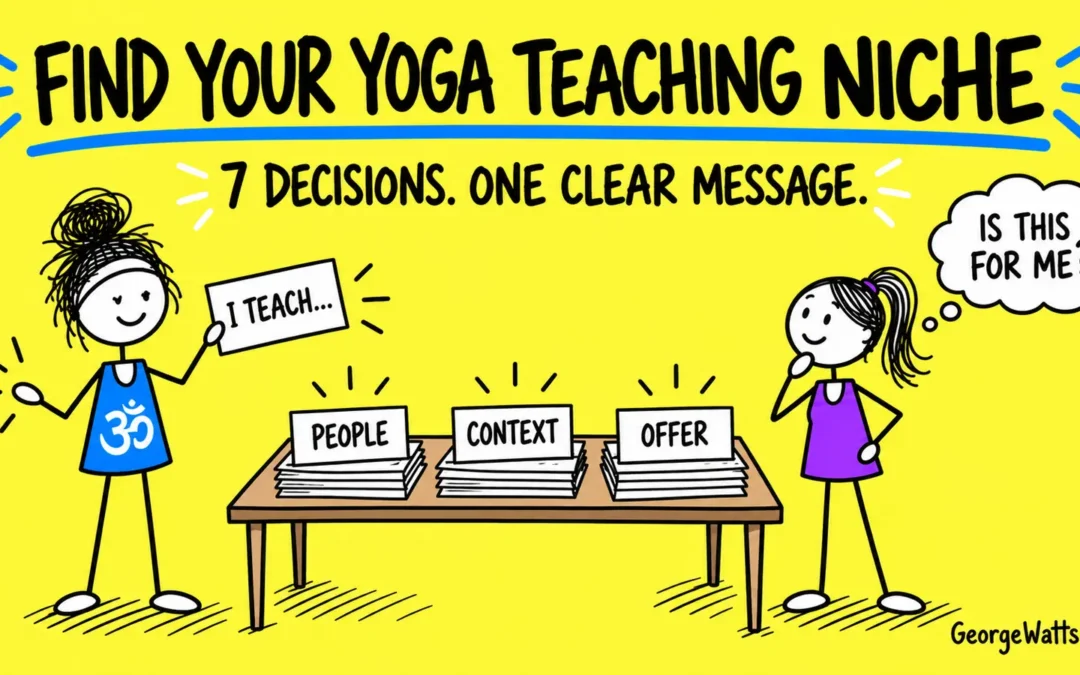
A yoga teaching niche is a clear combination of people, context and offer. It should fit your skills, be understandable to students and be reachable through sensible marketing channels.
7 Steps To Find Your Yoga Teaching Niche
Choose a useful fit, then test it with real people.
The first four decisions identify the people, context, teaching fit and ways to reach them. The final three shape a clear offer, test real demand and explain the niche in one sentence.
Work through the decisions in order, or jump to the part that is currently foggy. The final decision turns your niche into a natural one-sentence introduction.
1Start with People You Understand
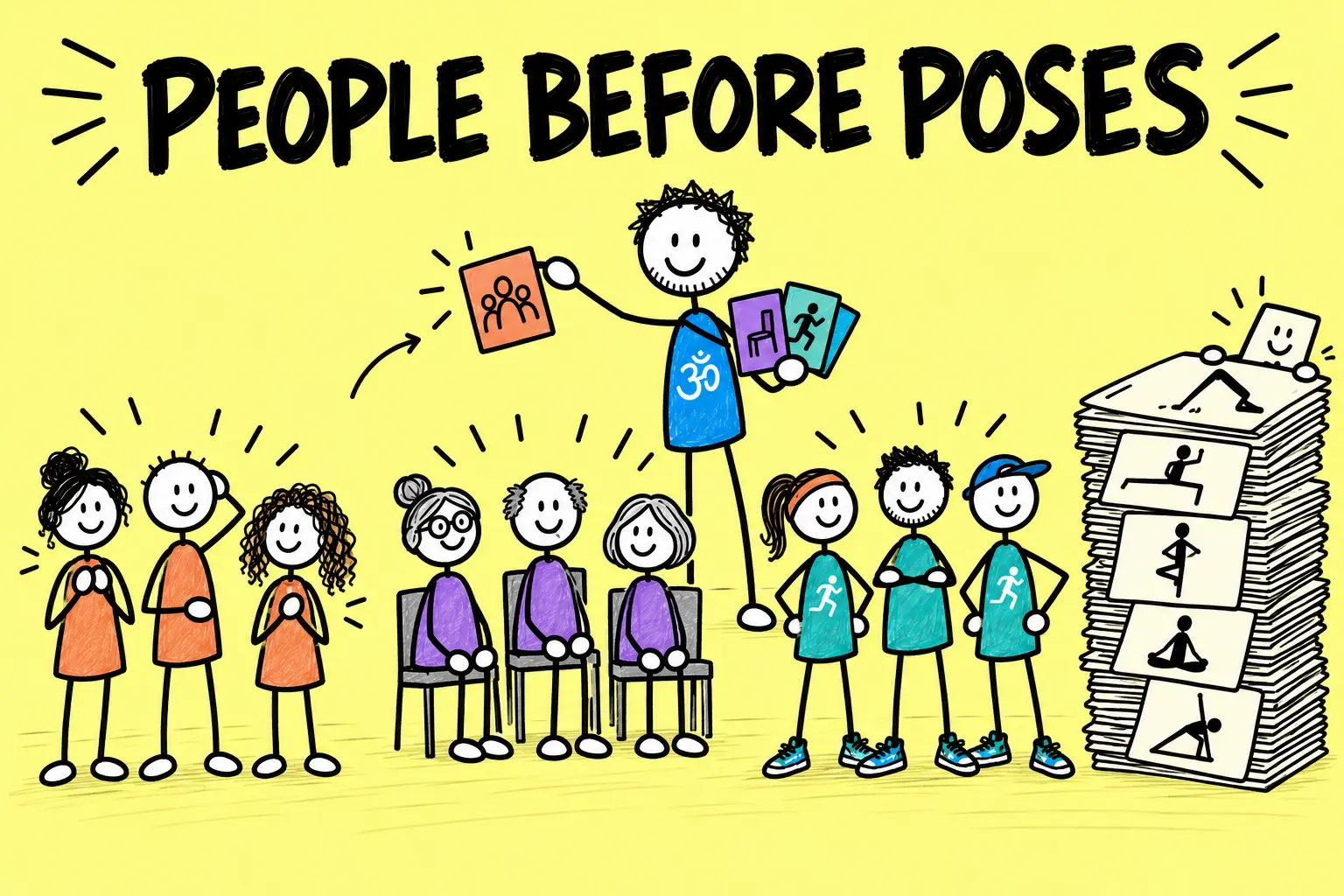
Pick people before poses. Begin with a group whose routines, questions or barriers you understand. They might be complete beginners, adults who prefer chair-based practice, local runners, desk workers or people returning after a long break.
A broad label is rarely enough on its own. “Yoga for adults” includes nearly everybody. “A calm introduction to yoga for adults who feel nervous about joining their first class” gives you something useful to design and explain.
Write down three possibilities
- People you already teach or speak with regularly.
- People connected to a community, workplace or activity you know.
- People who repeatedly ask you a similar question.
Choose familiarity over fantasy. A glamorous audience you cannot understand or reach may be a lovely daydream, but it is a poor first marketing plan.
2Name the Context

Listen for the sentence people already use. What is happening when they look for a class? What makes joining difficult? What would make the first step feel manageable?
Useful questions include:
- What made you start looking for a yoga class now?
- What are you unsure about before attending?
- Which format, time or location would make participation easier?
- What have you tried before, and what did or did not suit you?
Use the answers to improve the class, not to manufacture fear. Describe what you genuinely teach and avoid diagnoses, cures or guaranteed results. “Supported movement with chair options” is clear. “Fix your back in three Tuesdays” is a small sentence carrying an enormous liability-shaped suitcase.
3Check the Teaching Fit
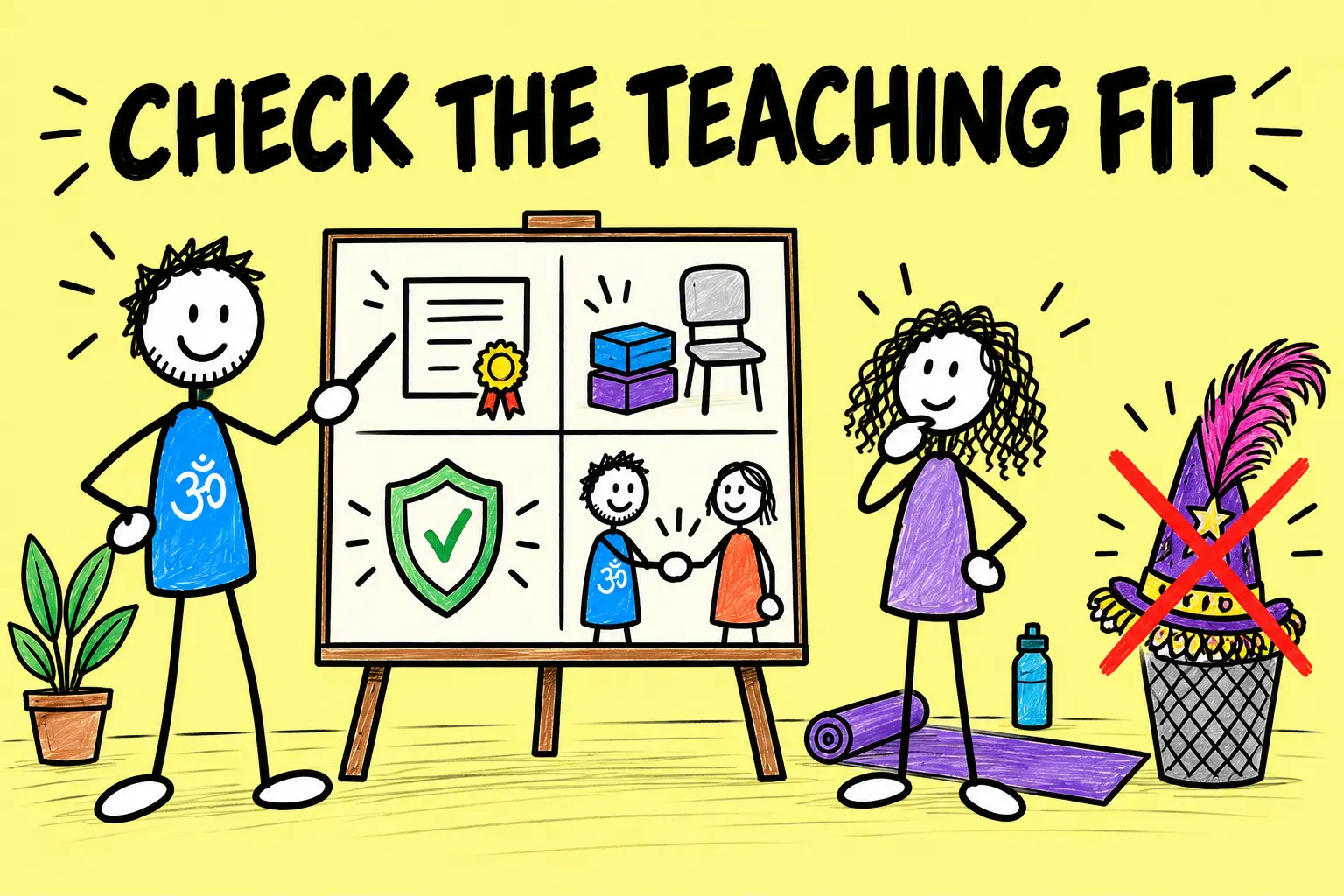
Fit comes before novelty. A promising niche must sit within your training, experience and practical ability to teach the people you are inviting.
- Can you plan and adapt the class confidently?
- Do you understand the relevant accessibility and safeguarding needs?
- Are you staying within your professional scope?
- Would additional training, supervision or a qualified partner be appropriate?
You do not need a dramatic new speciality. Your niche may simply combine skills you already use well with a clearer audience and format. If it requires expertise you do not have, choose another starting point or develop the right support before promoting it.
4Check Your Reach
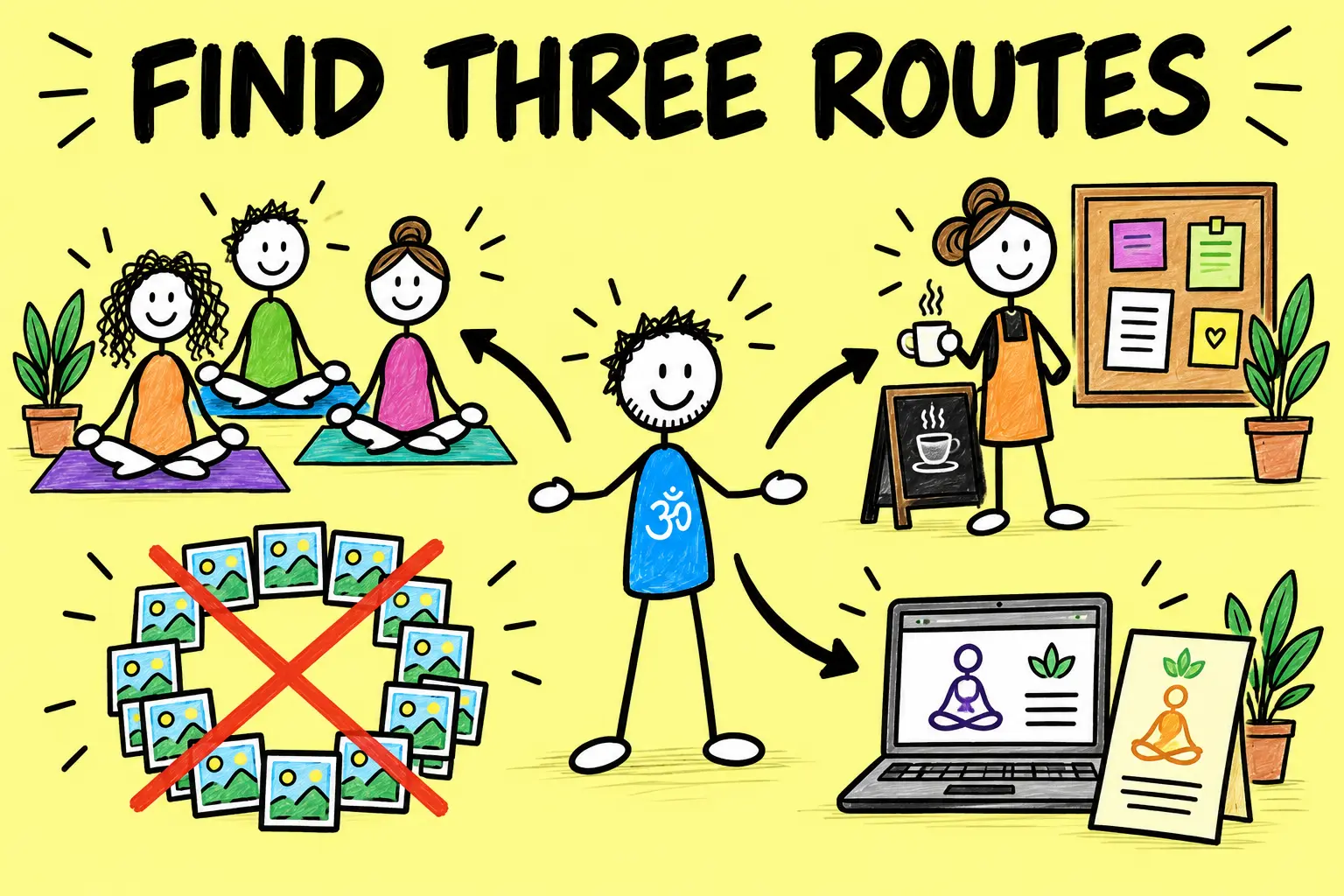
A niche needs a route to real people. Before designing the logo, list the sensible ways your intended students might hear about the offer.
Look for three routes
- Existing students, enquiries or email subscribers who have asked for something relevant.
- A venue, club, workplace or community organisation with an overlapping audience.
- A useful webpage, local listing, flyer location or social group that the audience genuinely uses.
If you cannot name a credible route, the niche may still be worthwhile, but “how will I reach them?” becomes the next question to solve. Posting the same square graphic seventeen times is not seventeen routes.
5Shape One Clear Offer

Turn the niche into something bookable. Choose one format, level, location, timetable and next step. A niche is a direction; an offer is the thing a student can actually join.
Vague
Yoga for beginners.
Clearer
A four-week Hatha yoga course for complete beginners in Carmarthen, with clear options and time to learn the foundations. Tuesdays at 6 pm from [date].
Start with the smallest format that gives the idea a fair test: perhaps a short course, a workshop, a regular class or a small-group session. The 101 Yoga Business Ideas guide can help you compare practical formats.
Do not build a retreat, video library, card deck and twelve-part course before one person has booked the first class. Enthusiasm is useful. So is a chair and a quiet ten minutes.
6Test Real Demand

Encouragement is not the same as demand. “That sounds lovely” is pleasant feedback. A relevant enquiry, reply, waiting-list sign-up or booking is stronger evidence.
- Describe the offer in a short paragraph.
- Show it to a small number of suitable people or a relevant partner.
- Ask what is clear, what is missing and whether the timing or format works.
- Invite one meaningful next step: reply, register interest or book.
- Set a review date and decide what evidence would justify repeating, adjusting or stopping.
Keep the first test small enough to learn from. Likes are welcome; they are less helpful when the venue invoice arrives wearing sensible shoes.
Before taking payment
State the dates, price, minimum or maximum numbers, cancellation terms and what happens if the class does not go ahead. A clear test should be fair to the teacher and the student.
7Explain It in One Clear Sentence
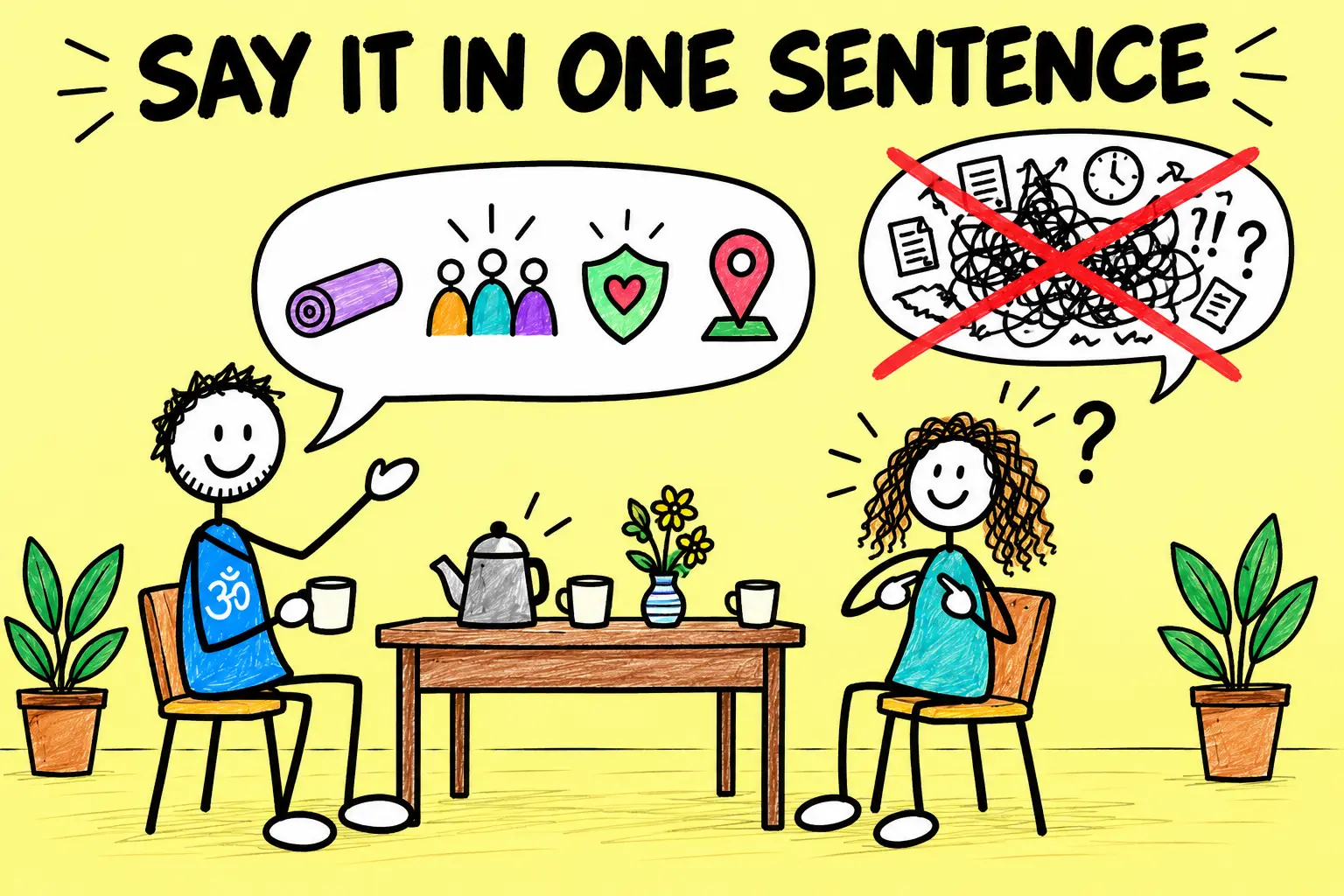
Say what you teach in ordinary language. Your introduction does not need to sound like a boardroom trapped in a lift. Its job is to help somebody decide, “Is this for someone like me?”
I teach [format or type of yoga] for [people or situation], with [reassuring or distinctive detail] at [place, time or next step].
Use only the parts needed in the conversation. If somebody asks what you do at a village-hall kettle, the booking terms can wait until the second sentence.
Four Practical Examples
“I teach a four-week Hatha yoga course for complete beginners in Carmarthen, with clear options and time to learn the basics.”
“I teach chair yoga for adults who prefer seated and supported movement, with no need to get down on the floor.”
“I teach short after-work yoga sessions for local desk workers, combining gentle movement, breathing and a clear finish to the working day.”
“I teach small-group yoga sessions for runners, using general mobility, balance and relaxation practices within my yoga teaching scope.”
Avoid trying to squeeze your philosophy, biography, favourite quotation and every possible benefit into the same breath. If the listener wants more, explain what happens in the class and offer the relevant next step.
Use the Niche Scorecard
Before committing more time or money, check the idea against these five questions:
- Teaching fit: can I deliver this safely and confidently within my skills?
- Student evidence: have suitable people described this need or shown meaningful interest?
- Reach: can I name sensible ways to contact the intended audience?
- Offer clarity: can somebody understand what they can join, where, when and how?
- Testability: can I learn something without building the enormous version first?
A weak answer is not a verdict. It is the next question to investigate.
Plan a 30-Minute Working Session
- Shortlist three possibilities — 10 minutes
Write three combinations of people, context and offer. Use requests or conversations you have genuinely heard.
- Check the evidence — 10 minutes
Score each possibility for teaching fit, student evidence, reach, clarity and testability. Choose the strongest working idea.
- Write and test the sentence — 10 minutes
Complete the one-sentence template, read it aloud and show it to one person who resembles the intended student. Ask what they think the class involves.
A working niche is allowed to change.
The purpose is clarity for the next test, not a stone tablet for the next decade.
Yoga Teaching Niche FAQs
Does every yoga teacher need a niche?
No. A general local class can work well. A niche becomes useful when you need to make an offer easier to understand, reach a particular group or design a more relevant class.
How narrow should a niche be?
Narrow enough that the intended student recognises the offer, but broad enough that you can reach a workable group. “Yoga for everybody” is difficult to shape. “Yoga for one specific person who is free at 7:13 on alternate Thursdays” may have gone too far.
Can I have more than one niche?
Yes, but test one offer and message at a time. Different audiences may need different pages, emails or conversations. Combining every niche into one headline usually returns you to “yoga for everyone”.
Can the niche be based on a yoga style?
Yes, if the intended students understand what the style means and why the format suits them. If the name needs a paragraph of translation, lead with the experience and explain the tradition afterwards.
Is a one-sentence introduction the same as a slogan?
No. A slogan may be memorable but vague. A useful introduction identifies the offer and the people it suits. It can change as the class, evidence or audience changes.
What about a niche involving a health condition?
Use relevant training, remain within your scope and describe your teaching accurately. Avoid diagnosing, treating or promising results you cannot support. Where appropriate, work with suitably qualified professionals and make referral boundaries clear.
Give the Marketing Part a Proper Plan
Your niche gives the marketing a direction. The Yoga Marketing Kit helps you turn that direction into practical tests for attracting and keeping suitable students.
George’s Conclusion
Specific is useful; microscopic is not. Choose a group you understand, shape one offer and say what it is in ordinary language. Then let real conversations and bookings improve the next version.
You are choosing a useful starting point, not swearing lifelong allegiance to golfers, runners or the Tuesday-evening desk workers of Carmarthen. Test, listen and adjust.