George’s Intro
I updated this post in 2026.
A retreat does not need frantic promotion. It needs a clear invitation and a manageable plan.
Hi, I’m George. I’m a British Wheel of Yoga teacher, creator of the Online Yoga Lesson Planner and maker of yoga card decks.
I’ve hosted yoga retreats in the UK and tried more than one way of filling the room. Different channels produced different responses, but the lasting lesson was simple: choose the right people, make the benefit clear and organise a few useful actions you can repeat.
We yoga teachers have spent so long drawing stick figures in our yoga lesson plans that they feel like old friends. Naturally, I’ve snuck them into my sticky-note doodles to make the useful bits of this post easier to remember. Small yellow spaces for big ideas that stick.
Jump to the Yoga Retreat Promotion Planner ↓
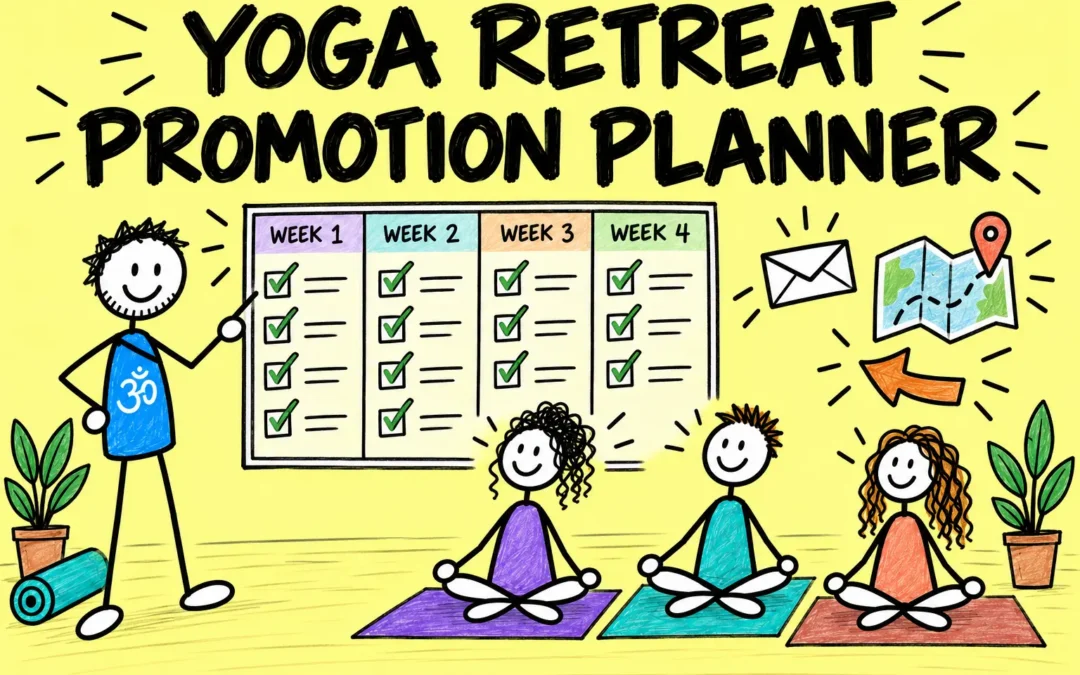
Yoga Retreat Promotion Planner
Build the campaign before polishing the flyer.
The free editable planner below helps you clarify the retreat, write one honest promise, choose one booking path and map four weeks of promotion. Your entries save automatically in your browser, and you can download the finished plan as a text file.
Yoga Retreat Promotion Planner
Build a manageable 30-day campaign and keep every useful action in one place.
- Clarify the retreat. Define one audience, one honest benefit and one booking path.
- Map four weeks. Choose a small number of useful actions you can realistically complete.
- Draft the invitation. Turn the same clear promise into a respectful email.
- Create the bonus flyer. Use the flyer tab only after the campaign foundations are clear.
- Download your plan. Keep a text copy with the rest of your retreat notes.
Stored on your device: your entries save automatically in this browser and are not sent to GeorgeWatts.org.
Your Flyer Copy
Your Email Invitation
Design a Yoga FlyerMake the hierarchy, copy and print checks clearer.
Yoga Teacher Email MarketingBuild a permission-based email system you can maintain.
Local Yoga Partnership PlannerPlan a small, fair collaboration with a relevant organisation.
Weekly Marketing Action TrackerRecord the useful marketing actions you actually completed.
Create a Helpful Yoga ResourceTurn a recurring student question into something genuinely useful.
How to Use the Yoga Retreat Promotion Planner
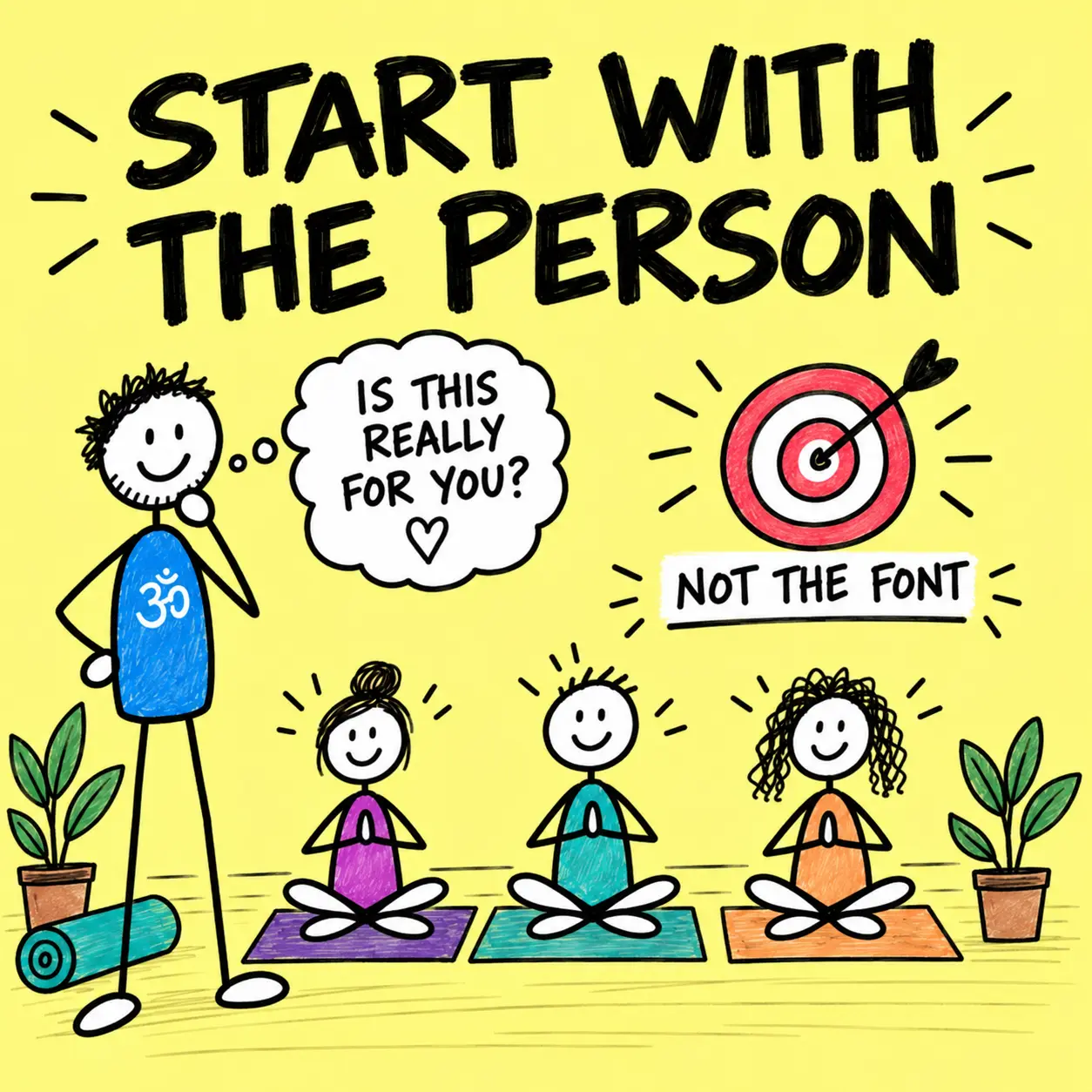
1. Start With One Person and One Need
Picture one recognisable person.
“People interested in yoga” is too broad. Decide who would genuinely value this particular retreat and what they want help with.
For example, you might plan for busy teachers who want a screen-free weekend, regular students who want longer practices, or older beginners who need a gentle pace and clear accessibility information.
Write one sentence: This retreat is for [person] who wants [useful change].
2. Turn the Details Into a Clear Promise
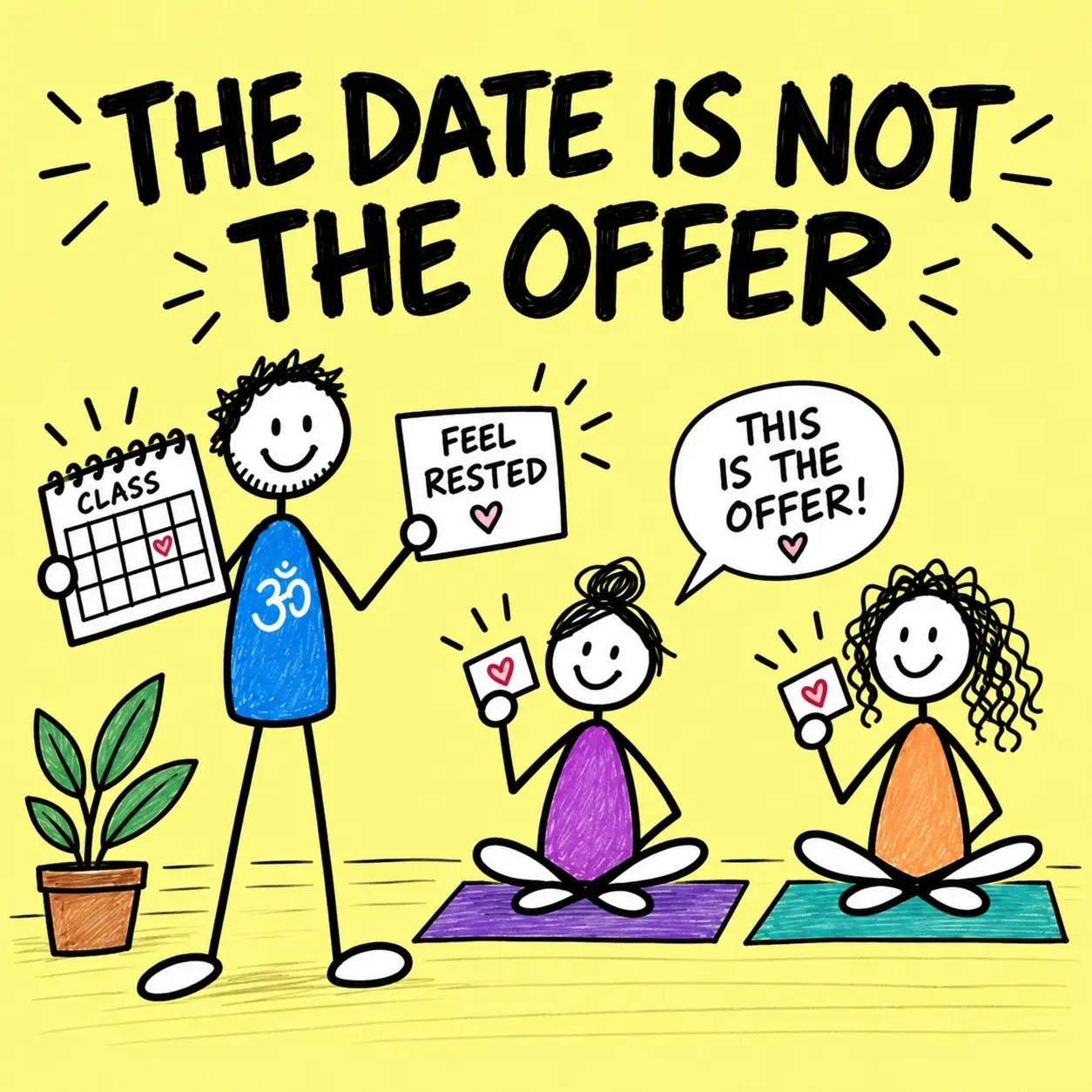
The date is not the whole offer.
Describe the useful experience without promising a miraculous transformation. “Weekend Yoga Retreat, 18–20 June” gives facts. “A quiet weekend of yoga, walking and proper rest” gives somebody a reason to keep reading.
Other honest examples include “a gentle introduction to restorative yoga,” “three days to deepen your home practice,” or “a walking and yoga weekend for people who need fewer screens and more hills.”
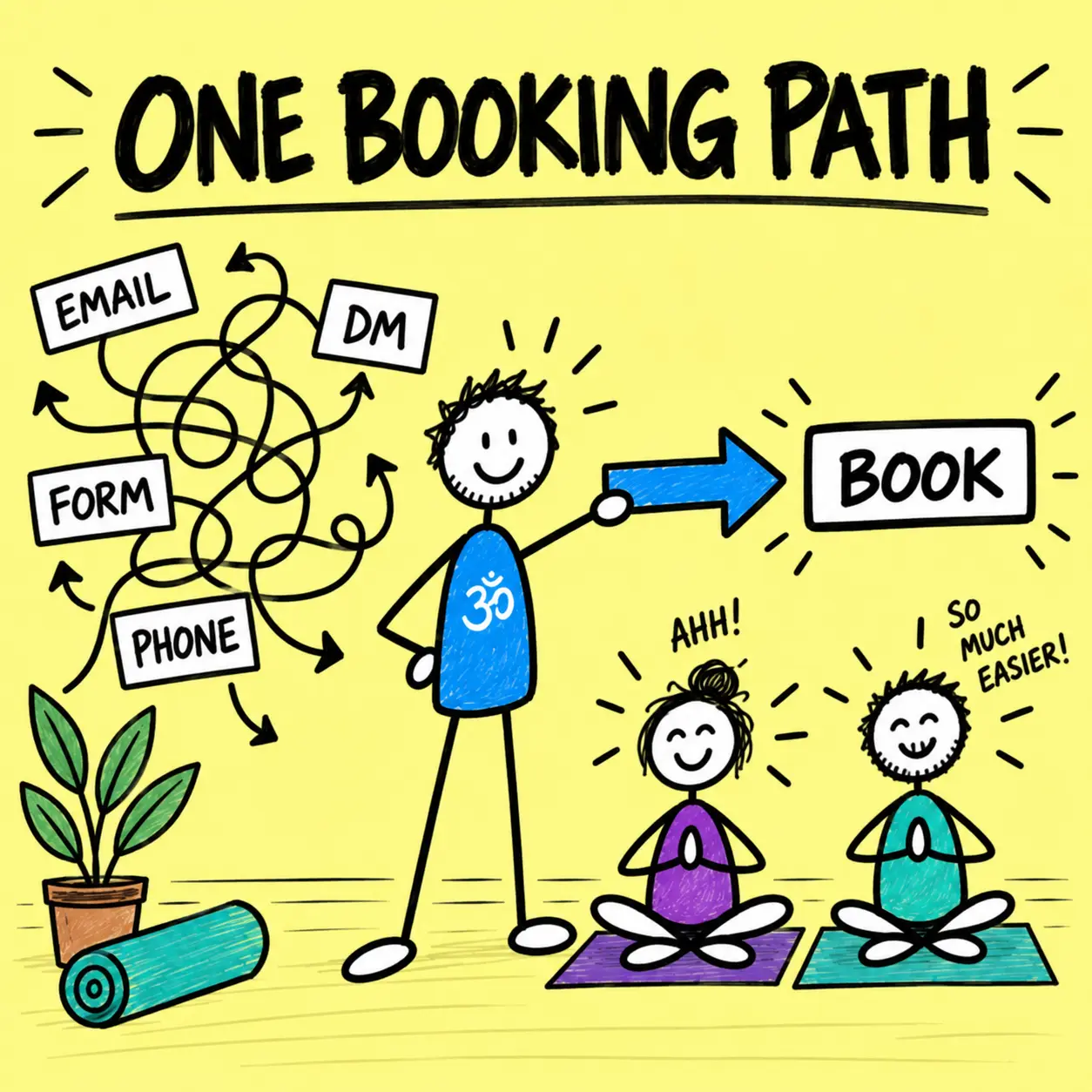
3. Give People One Booking Path
Choose the next action before promoting anything.
Send everybody to one current booking page or enquiry form. It should repeat the same dates, price, suitability notes and inclusions used throughout the campaign.
For example, a small retreat might use one page with a “Check availability” form. A confirmed residential weekend might use one page with room options, deposit terms and a single “Book your place” button.
Use the yoga teacher website guide if the booking page needs improving first.
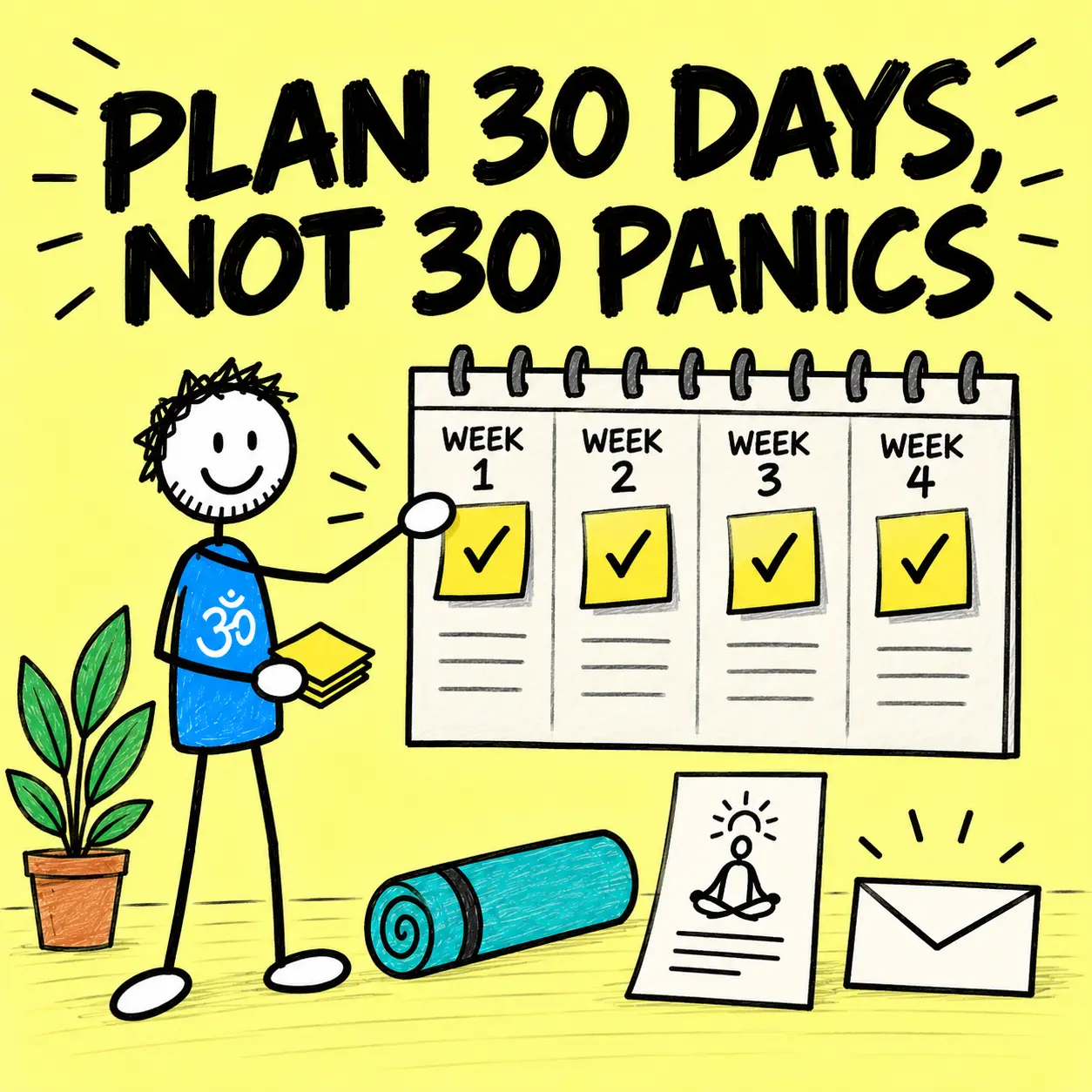
4. Map a Calm 30-Day Campaign
Give each week one job.
Week 1 can prepare the booking page and core message. Week 2 can introduce the retreat to existing students. Week 3 can involve a few suitable local partners. Week 4 can answer questions, send one reminder and review the response.
This is enough to create momentum without attempting to colonise the internet before breakfast.
5. Put the Invitation Where It Helps
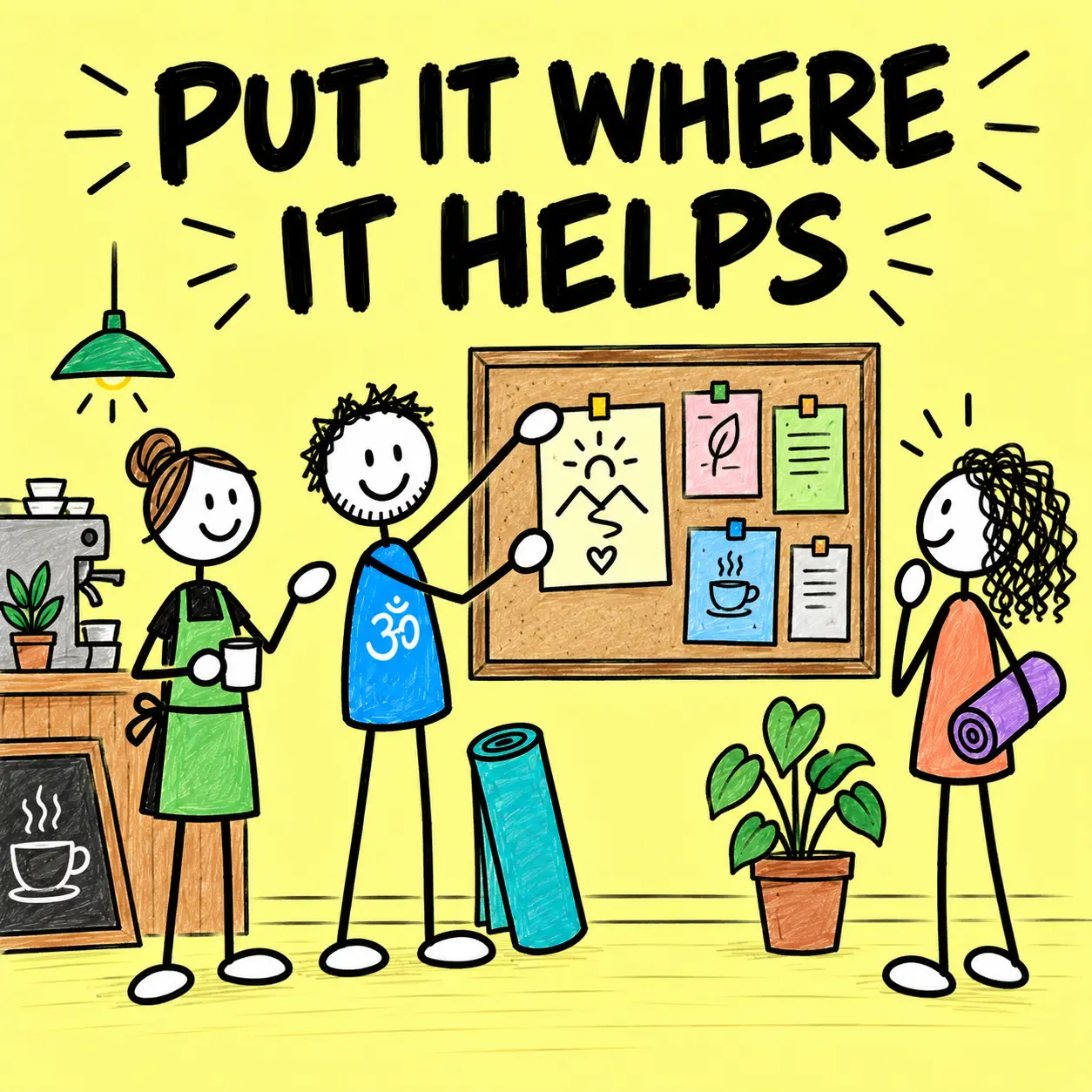
Relevance matters more than reach.
Begin with your own class community and people who have already asked about retreats. Then choose a few places where the audience genuinely overlaps with yours.
Useful examples might include the retreat venue’s mailing list, an independent café noticeboard, a walking group, a complementary wellbeing practitioner or a community centre where you already teach.
Ask permission before leaving printed material or requesting a share. For a fair exchange with another organisation, use the Local Yoga Partnership Planner.
6. Send a Respectful Invitation Email
Use the same clear message in a short email.
Simple Yoga Retreat Invitation
Subject: A quiet yoga weekend in [place], [dates]
Hi [name],
You mentioned that [relevant need], so I wanted to share this retreat with you.
I’m hosting [retreat name] for [who it is for]. It includes [two or three useful details] and is designed to help participants [honest benefit].
It runs from [arrival] to [departure] at [venue]. The price is [price], including [main inclusions].
You can read the full details and book here: [one link]
Warm wishes,
[your name]

Only email people when you have an appropriate reason and permission to do so. In the UK, check the ICO’s current electronic-mail marketing guidance. The yoga teacher email marketing guide can help you build a calmer permission-based system.
Bonus: Create a Yoga Retreat Flyer
The flyer supports the plan.
Once the audience, promise and booking path are clear, use the planner’s Bonus Flyer tab to draft a concise flyer. It can be printed for suitable local venues or exported as a small digital image for students and partners who genuinely want to share it.
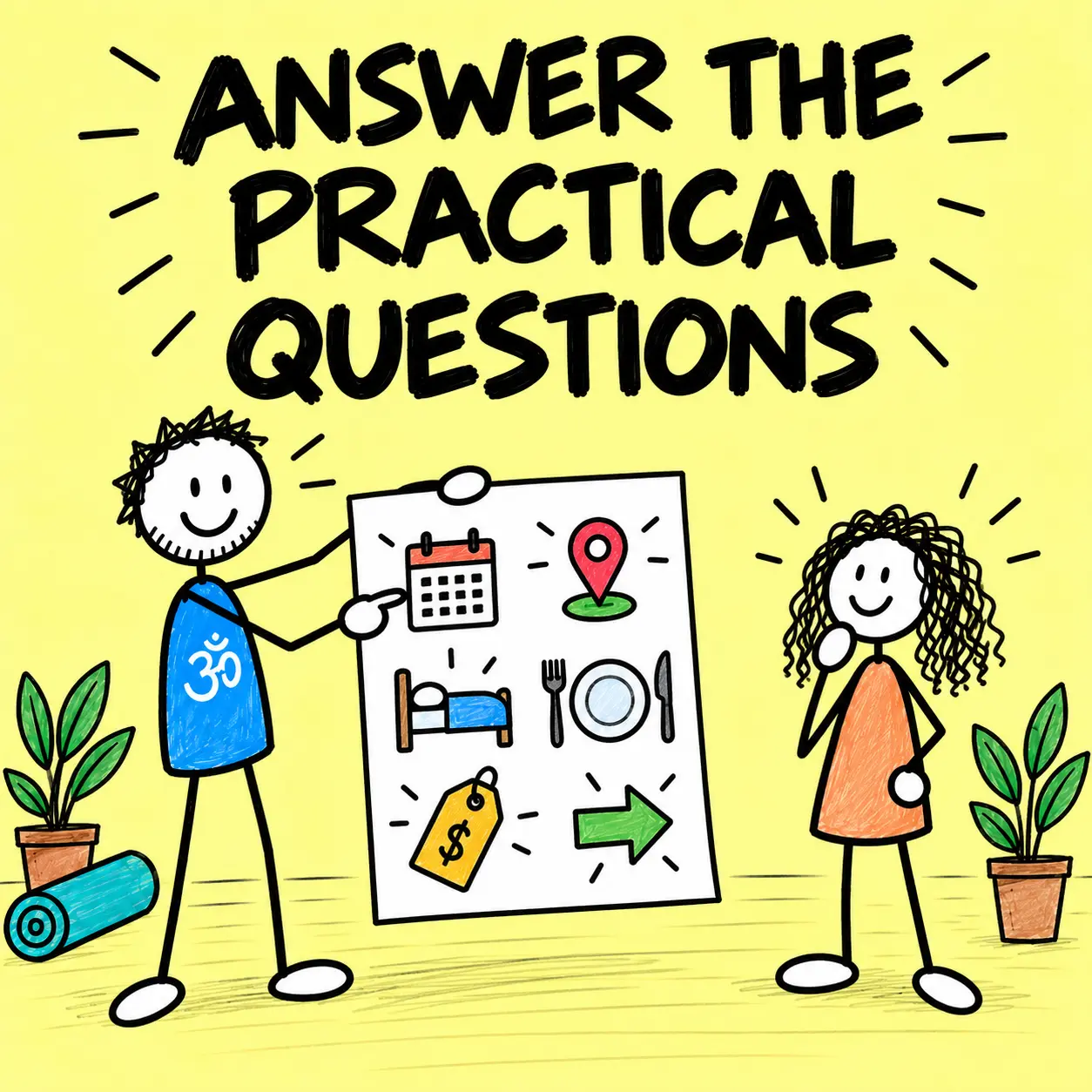
Include the Essential Details
- What: a plain-English retreat name and short description.
- Who: the intended experience level and suitability notes.
- When: arrival and departure dates and times.
- Where: venue, area and useful travel context.
- Included: teaching, accommodation, meals and equipment.
- Price: the full cost, deposit and payment terms.
- Next step: the same booking or enquiry link used everywhere else.
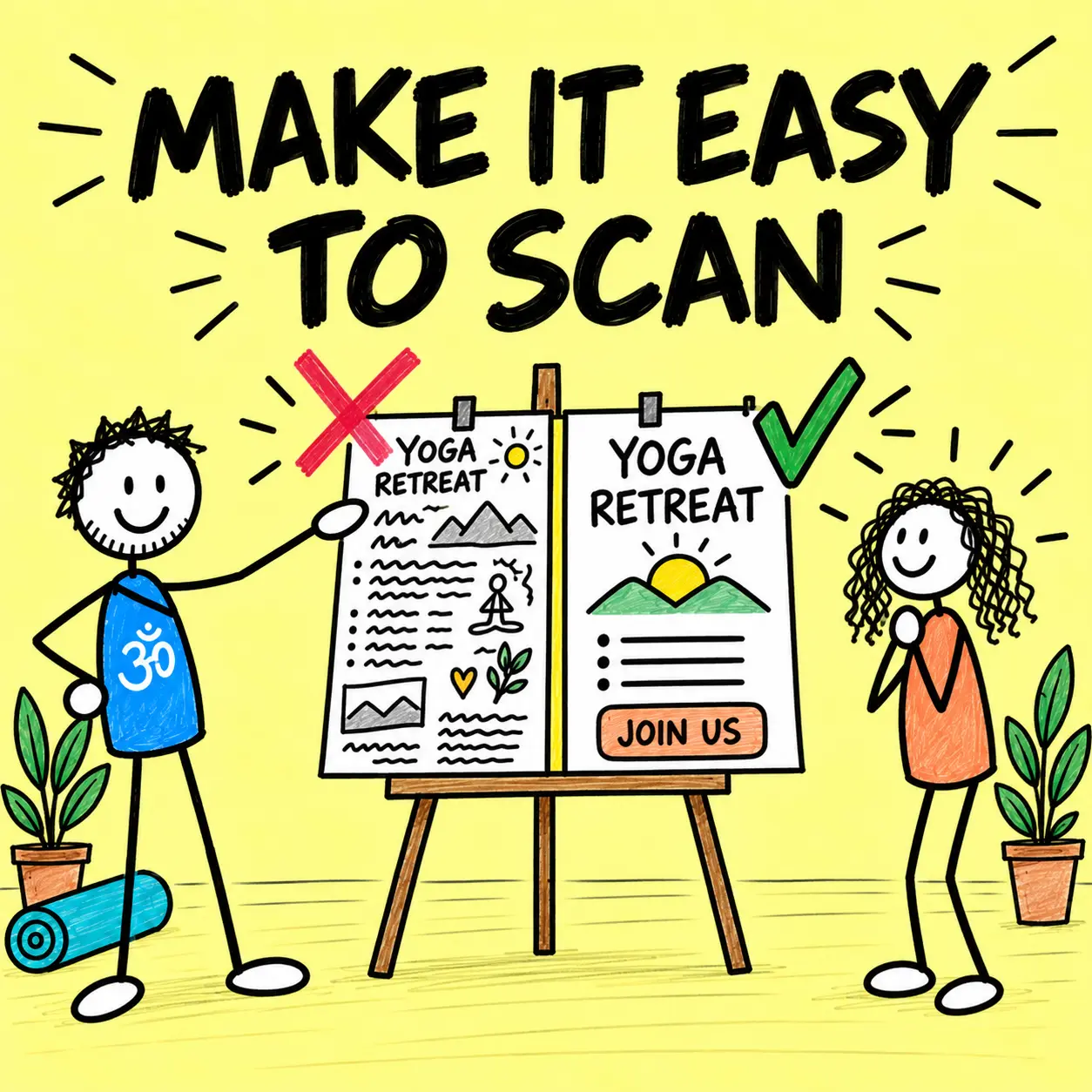
Make the Flyer Easy to Scan
Give the headline, honest promise and booking action the most visual weight. Keep the supporting copy short, leave breathing room and use enough contrast for comfortable reading.
If every sentence is enormous, bold and urgent, the flyer is not confident. It is shouting from inside a laminator.
The yoga flyer design guide covers hierarchy, proofreading and print checks in more detail.
George’s Conclusion
A useful yoga retreat promotion plan is calm, specific and repeatable. It identifies the right people, gives them an honest reason to care and maps the next four weeks of useful action. The flyer is one supporting piece, not the campaign itself.