
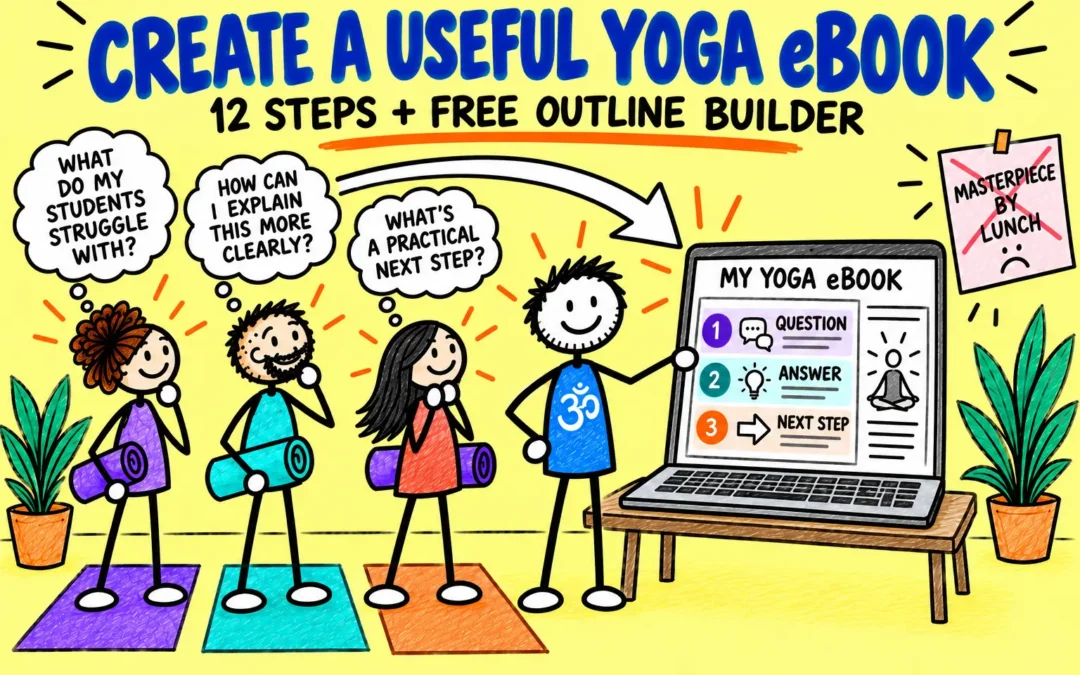
George’s Intro
I updated this post in 2026.
Think writing a useful yoga eBook means disappearing for months with a laptop and a heroic supply of biscuits?
I’m George, a BWY yoga teacher, creator of the Online Yoga Lesson Planner, yoga card deck maker and enthusiastic sticky-note doodler.
My background in golf taught me the value of writing for a recognisable person with a recognisable problem. “Yoga” is an ocean. “A short warm-up for golfers who feel stiff before the first tee” is a useful glass of water.
Jump to the free Chair Yoga eBook ↓
Jump to the Yoga eBook Outline Builder ↓
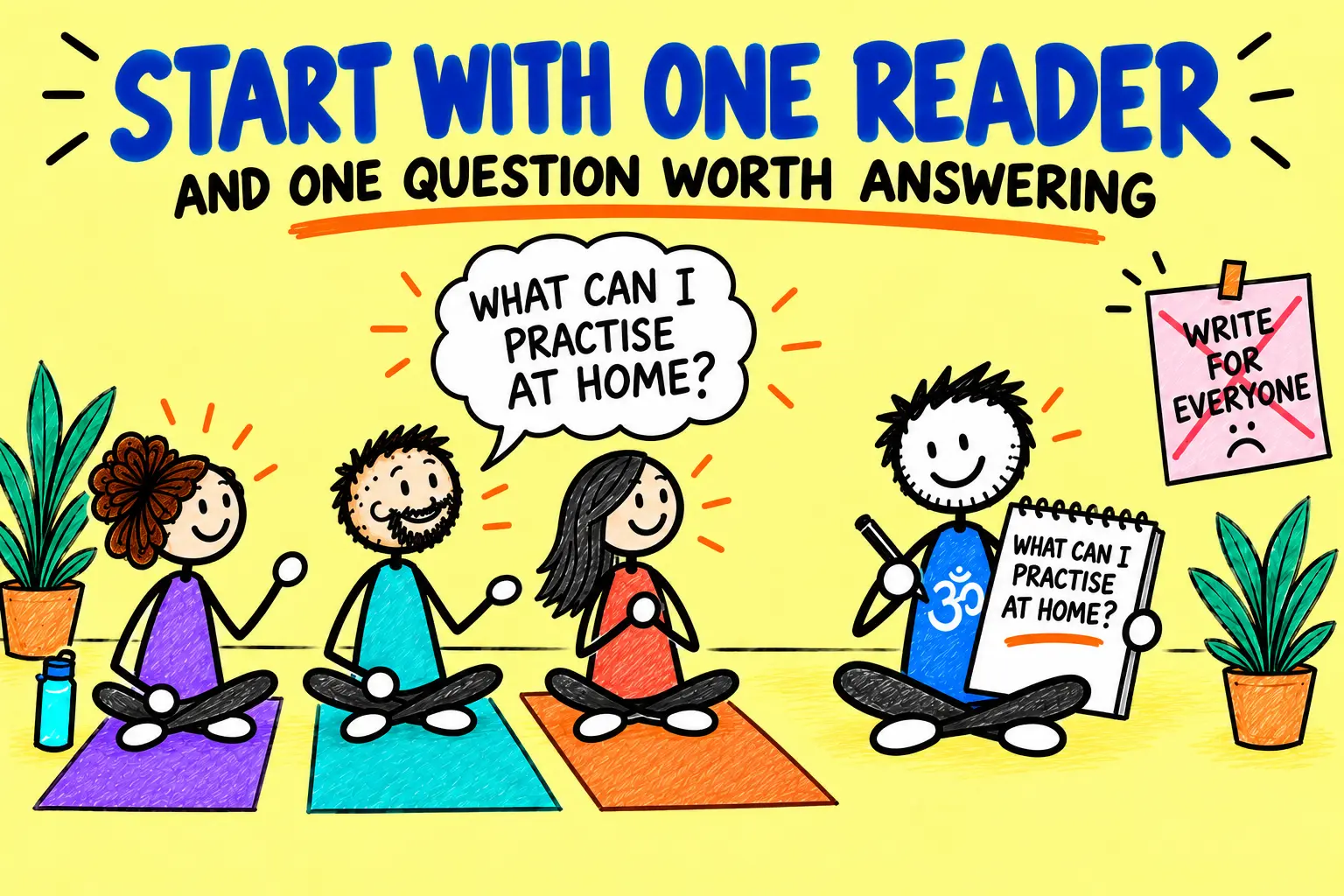
12 Steps To Create A Useful Yoga eBook
Build the outline before decorating the cover.
The first six steps choose the reader, question, useful change, scope, outline and source material. Steps seven to twelve draft, edit, test, design, export and publish the finished eBook.
Choose One Reader
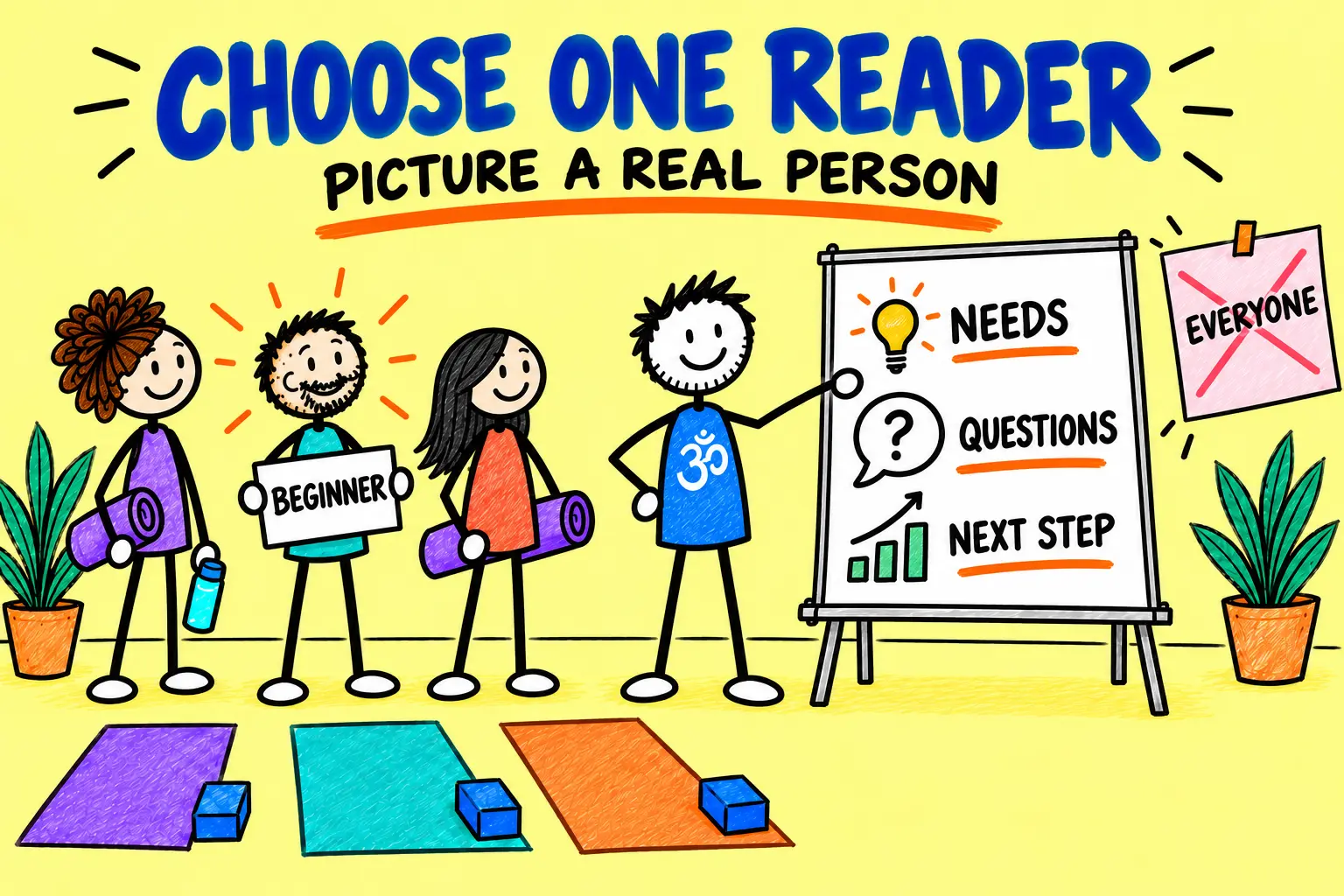
Picture a real person before choosing the title.
A useful eBook does not begin with everything you know. It begins with what one group of people needs next. That might be new students preparing for their first class, desk workers who want a short movement break, runners who need a calmer recovery routine or yoga teachers planning a particular theme.
Use the yoga teaching niche guide if the audience still feels like “anybody with a spine and an internet connection.”
Find One Real Question
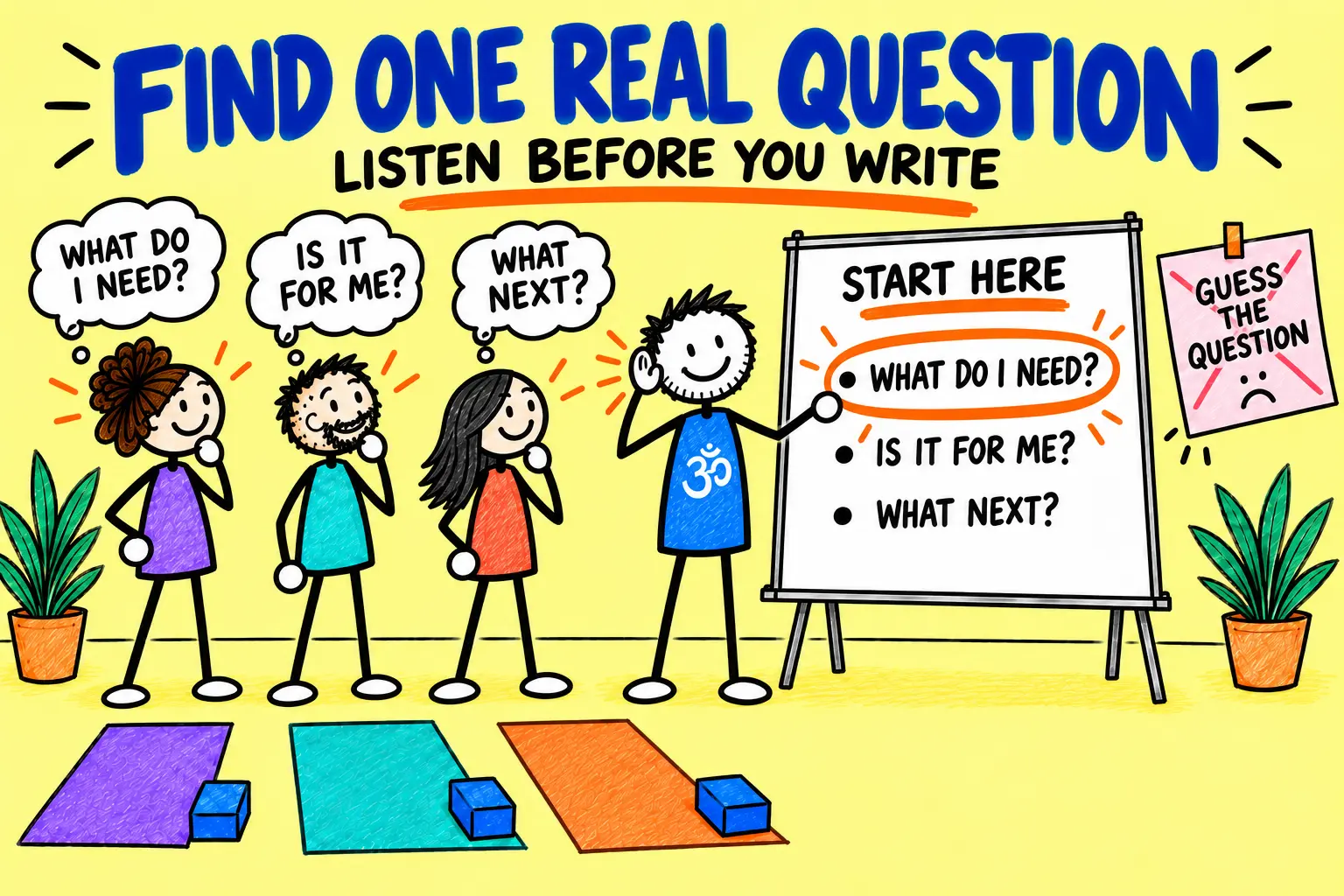
Listen before you outline.
Write down the questions students already ask in class, by email or before booking. Choose one that can be answered safely and usefully in a short resource. You can also ask a few suitable readers what they find confusing, but do not collect personal information you do not need.
Define the Useful Change
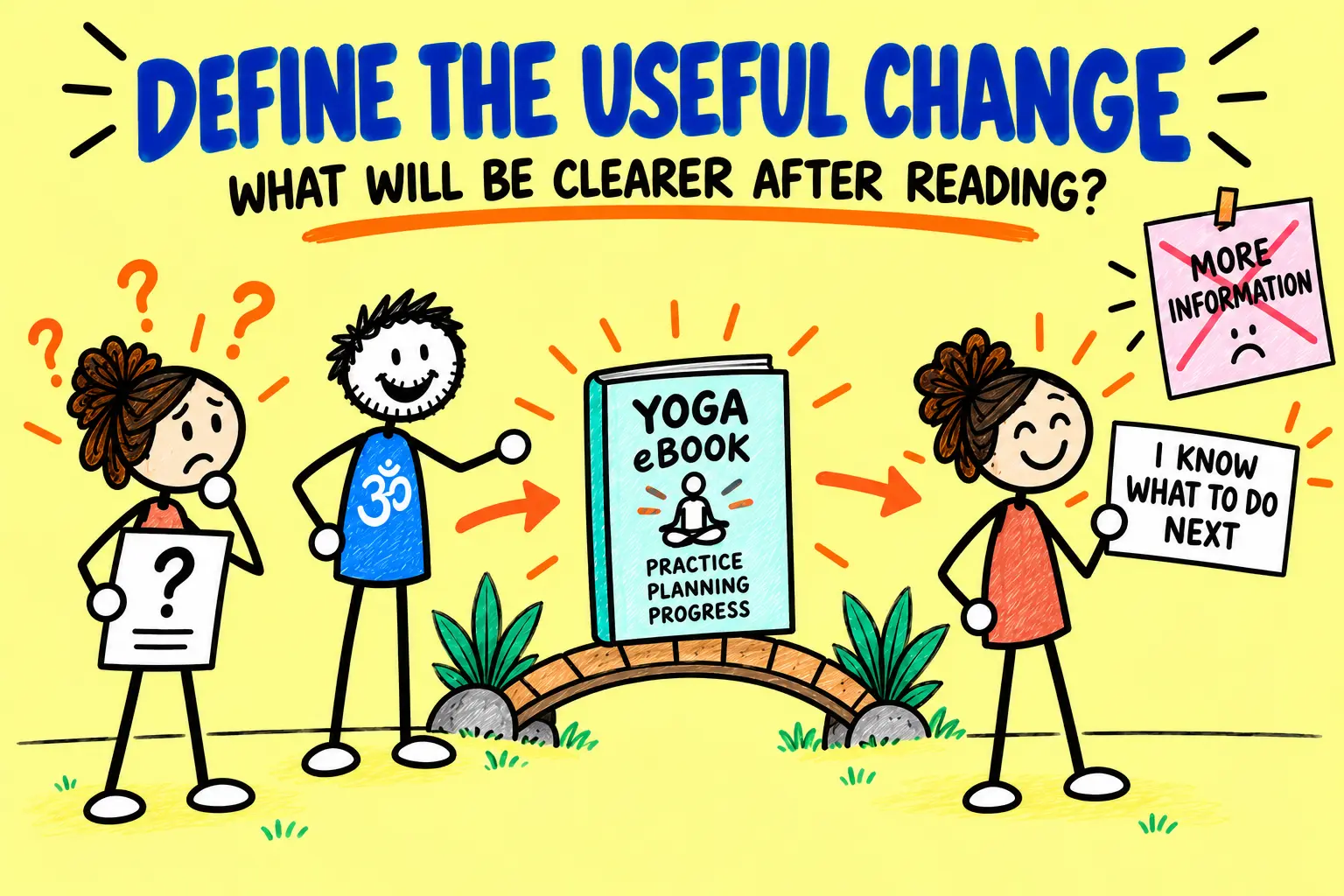
Promise a sensible next step.
Finish this sentence: After reading this, the reader will be able to… Use a result you can genuinely support. “Choose three comfortable desk stretches and know when to stop” is clearer than “transform your health forever.”
If the resource includes movement or wellbeing guidance, state who it is for, its limits and when the reader should seek appropriate professional advice. Helpful boundaries build trust. They also prevent a five-page PDF from applying for the job of the entire healthcare system.
Choose the Format and Scope
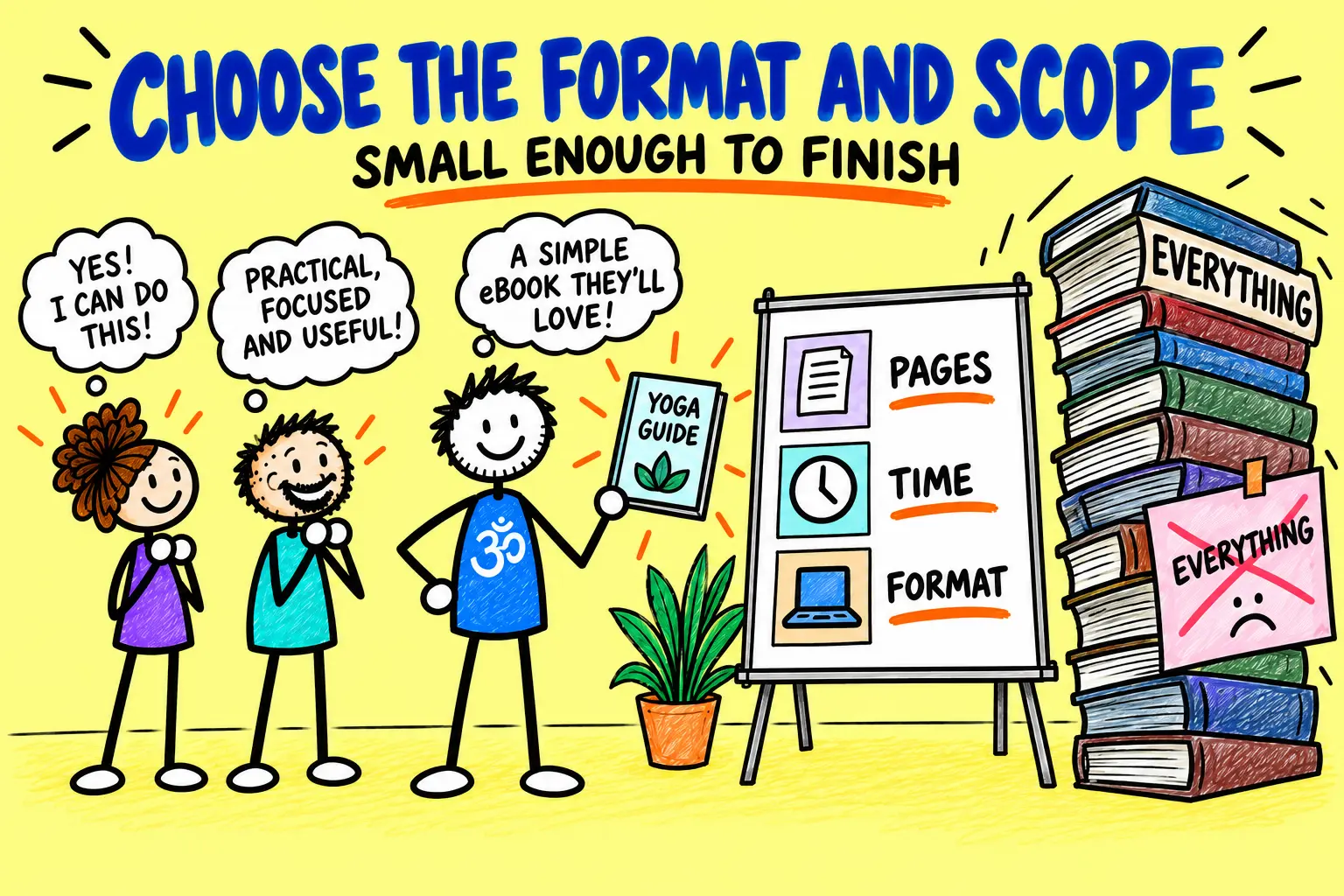
Match the format to the question.
- Checklist: useful for preparation, safety or a repeated process.
- Mini guide: useful for explaining a small topic in a clear sequence.
- Practice plan: useful when the reader needs steps, timing and options.
- Workbook: useful when reflection or decisions matter more than reading.
- Reference sheet: useful when people need to return to the same information.
Aim to answer the chosen question completely, then stop. Page count is not a measure of kindness.
Build the Outline Before the Introduction
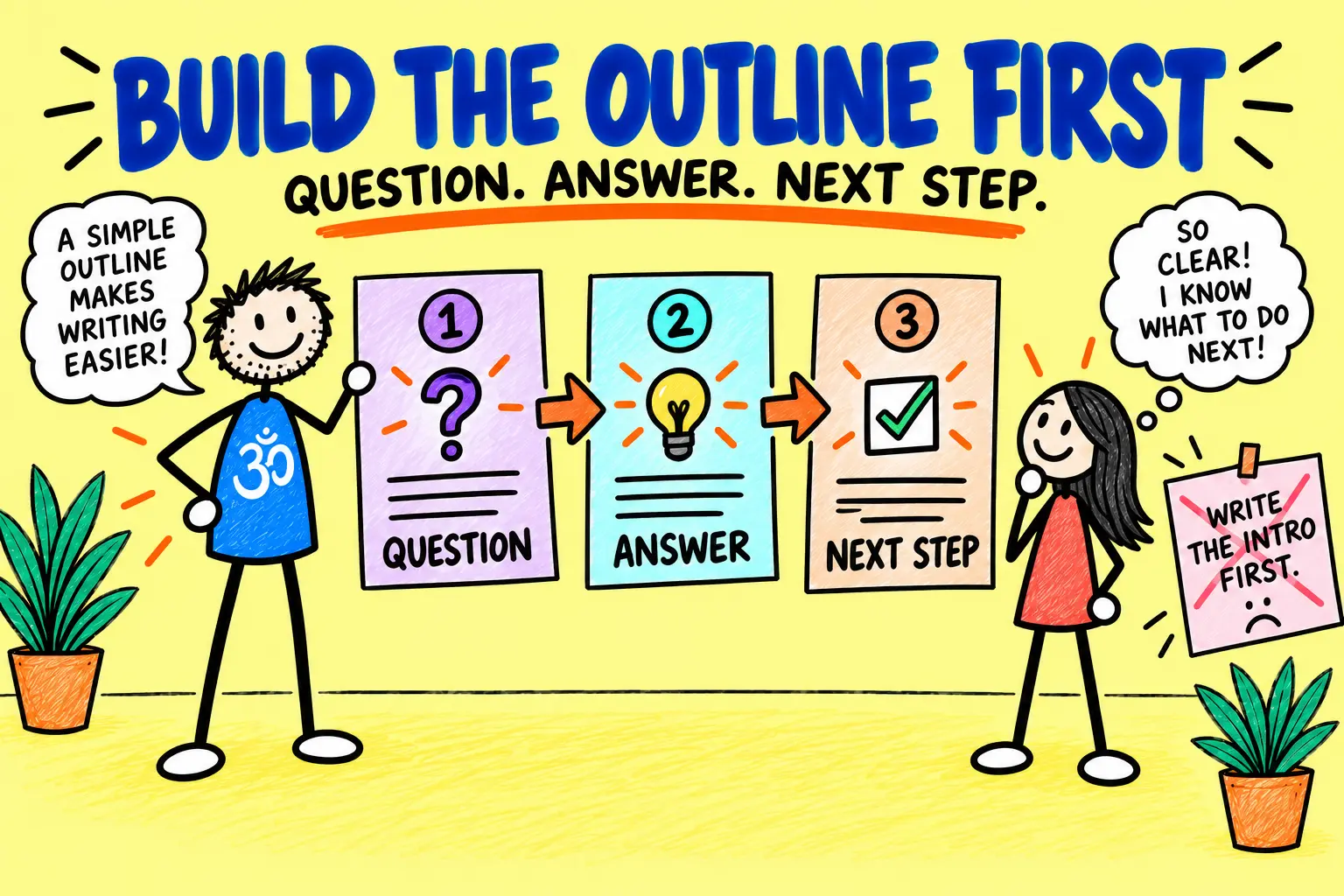
Turn the answer into a short journey.
Begin with the reader’s question, divide the answer into three to seven useful sections, then finish with one practical next step. Each heading should tell the reader what that section helps them do.
A simple structure is: the question, what matters, the steps, common mistakes, useful options, and what to do next. The editable builder below creates this outline while you remain on the page.
Gather Original Material and Sources
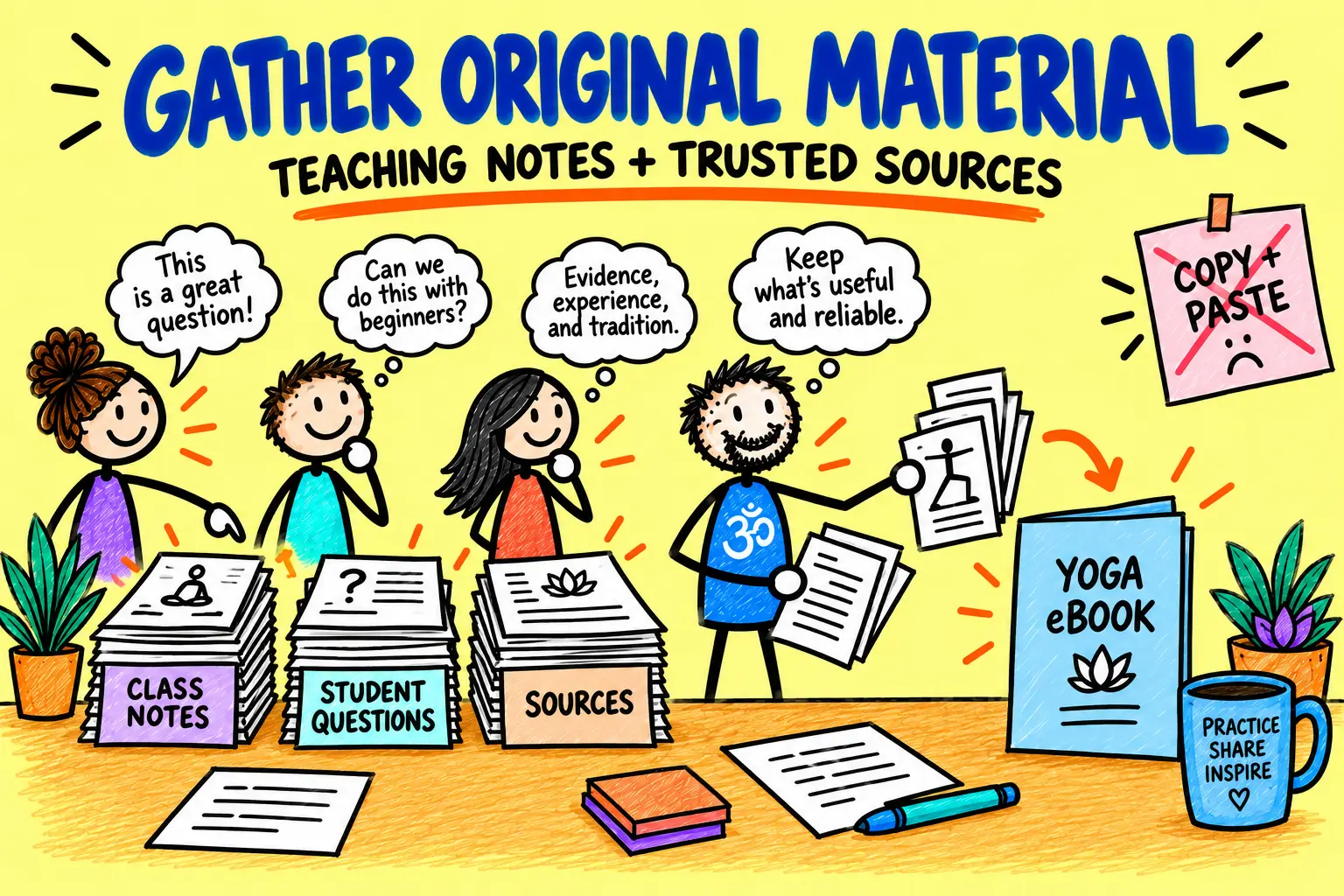
Collect what supports the answer.
Bring together your own teaching notes, examples, photographs or doodles, plus reliable sources where they are needed. Record the source beside each borrowed fact while researching, because “I will remember where that came from” is one of the more ambitious forms of yoga philosophy.
Do not copy and paste other people’s articles into the draft. Paraphrase what you have learned, add proper attribution and use only images you created or have permission to use.
Write the First Draft Without Polishing Every Line
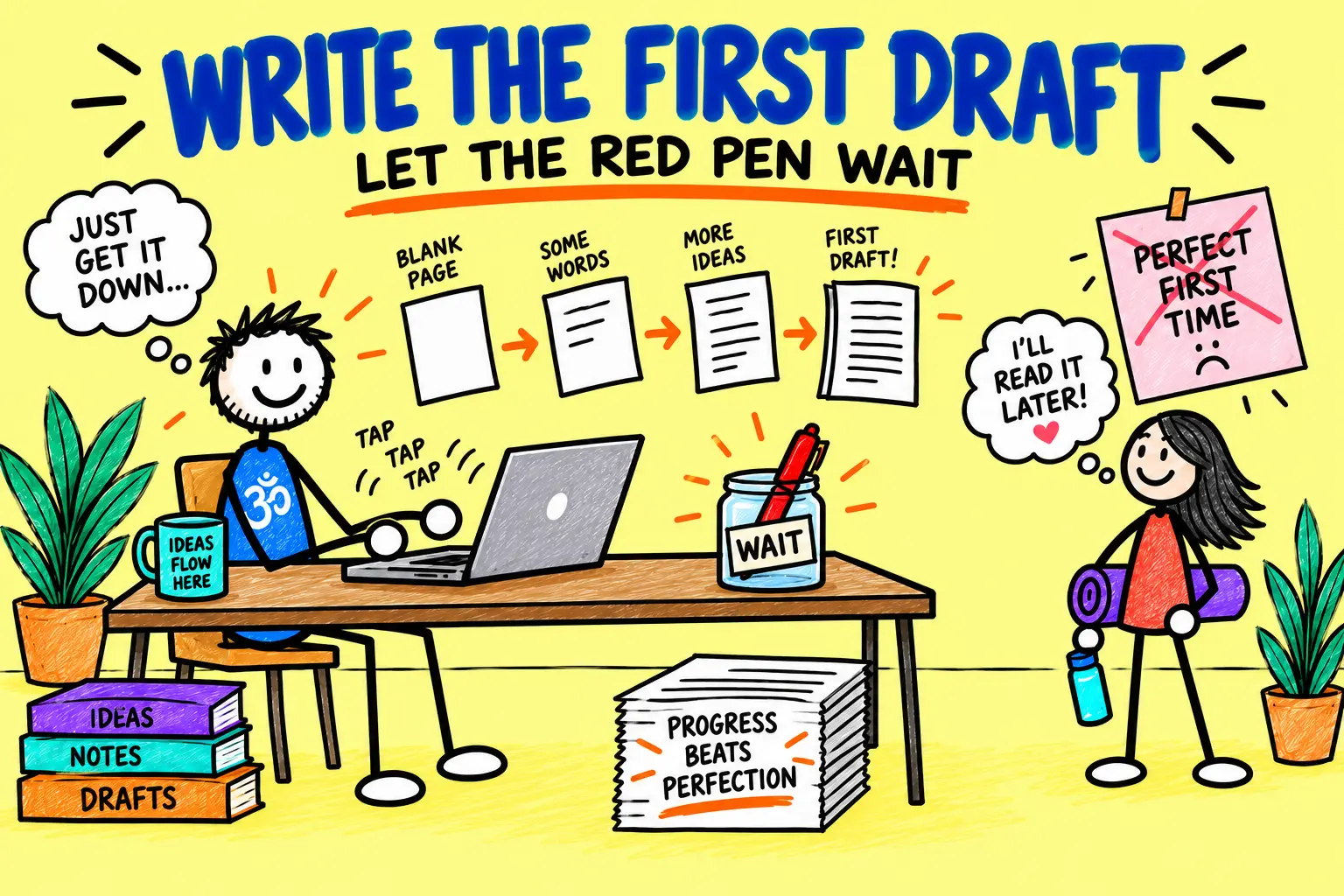
Write one section at a time.
Use the outline as a set of small writing appointments. Explain the point as if you were speaking to one interested student. Short paragraphs, plain language and helpful examples will usually do more work than a parade of “breakthrough,” “ultimate” and “guaranteed.”
Leave obvious notes such as [add example] or [check source] and keep moving. Drafting and editing require different moods. Trying to do both at once is like teaching Triangle Pose while rearranging the furniture.
Edit for Clarity, Accuracy and Personality
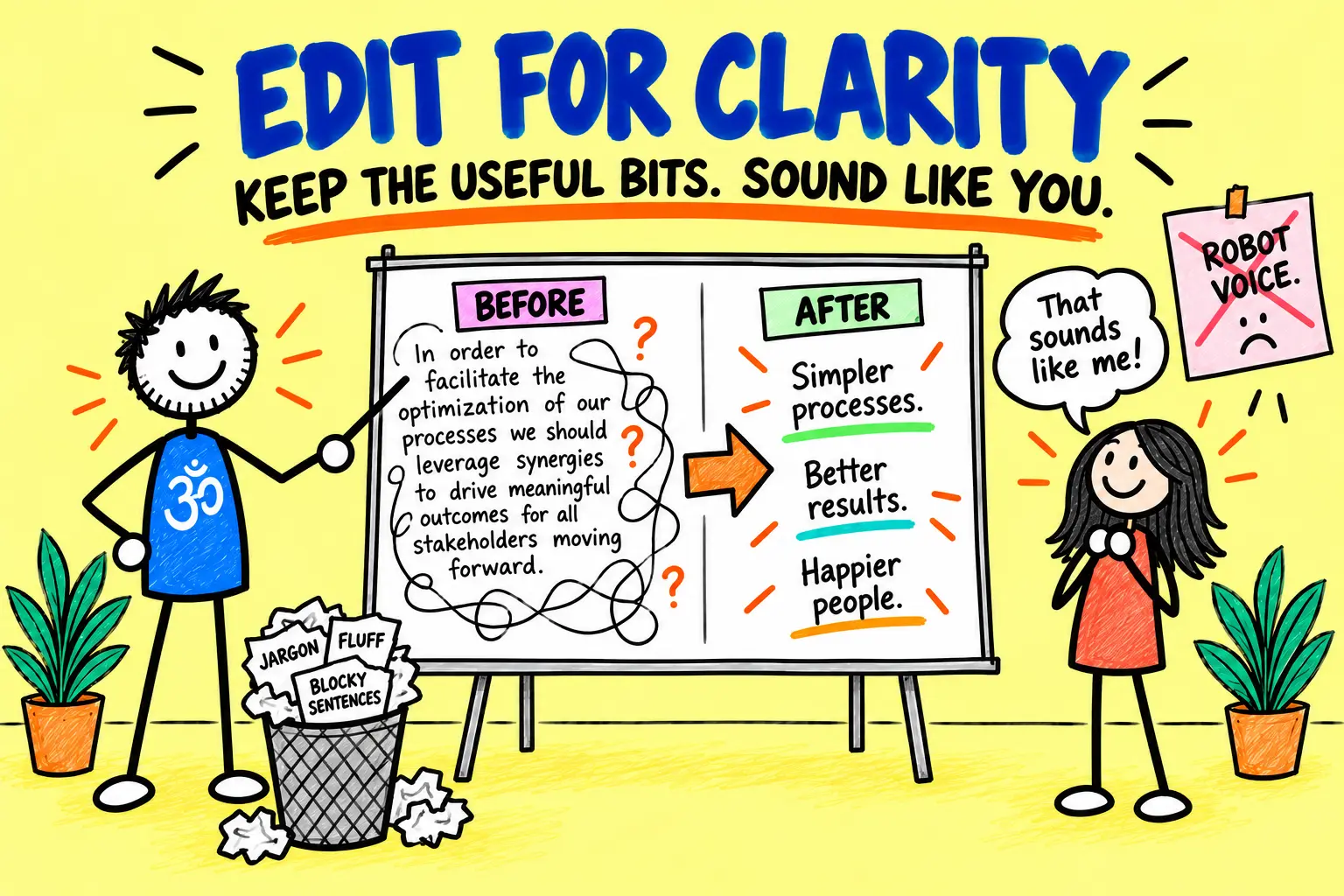
Now invite the red pen back.
Remove repetition, shorten long sentences and check that every section answers the promised question. Read the draft aloud. Awkward phrases become much easier to hear when they have nowhere left to hide.
Keep your own voice. A little humour and a specific example can make the resource memorable, provided the joke does not obscure the instruction or turn the reader into the punchline.
Ask One Suitable Reader to Test It
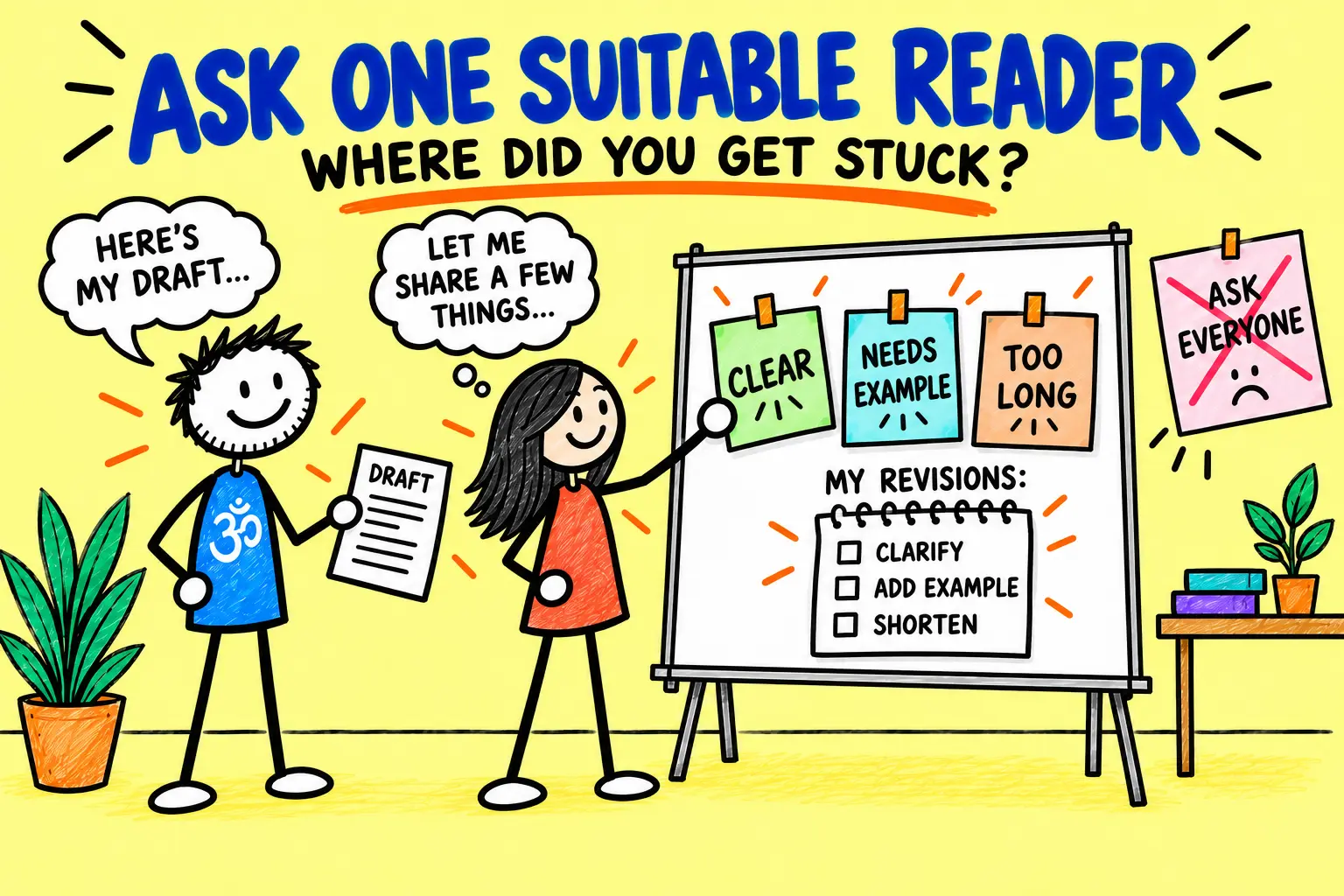
Test usefulness before collecting praise.
Ask one or two people from the intended audience where they became confused, what felt missing and what they would do next. A useful correction is more valuable than a vague testimonial. If you later publish a genuine testimonial, get permission and do not quietly improve the wording until it sounds like Shakespeare attended your Tuesday class.
Design for Reading, Not Decoration
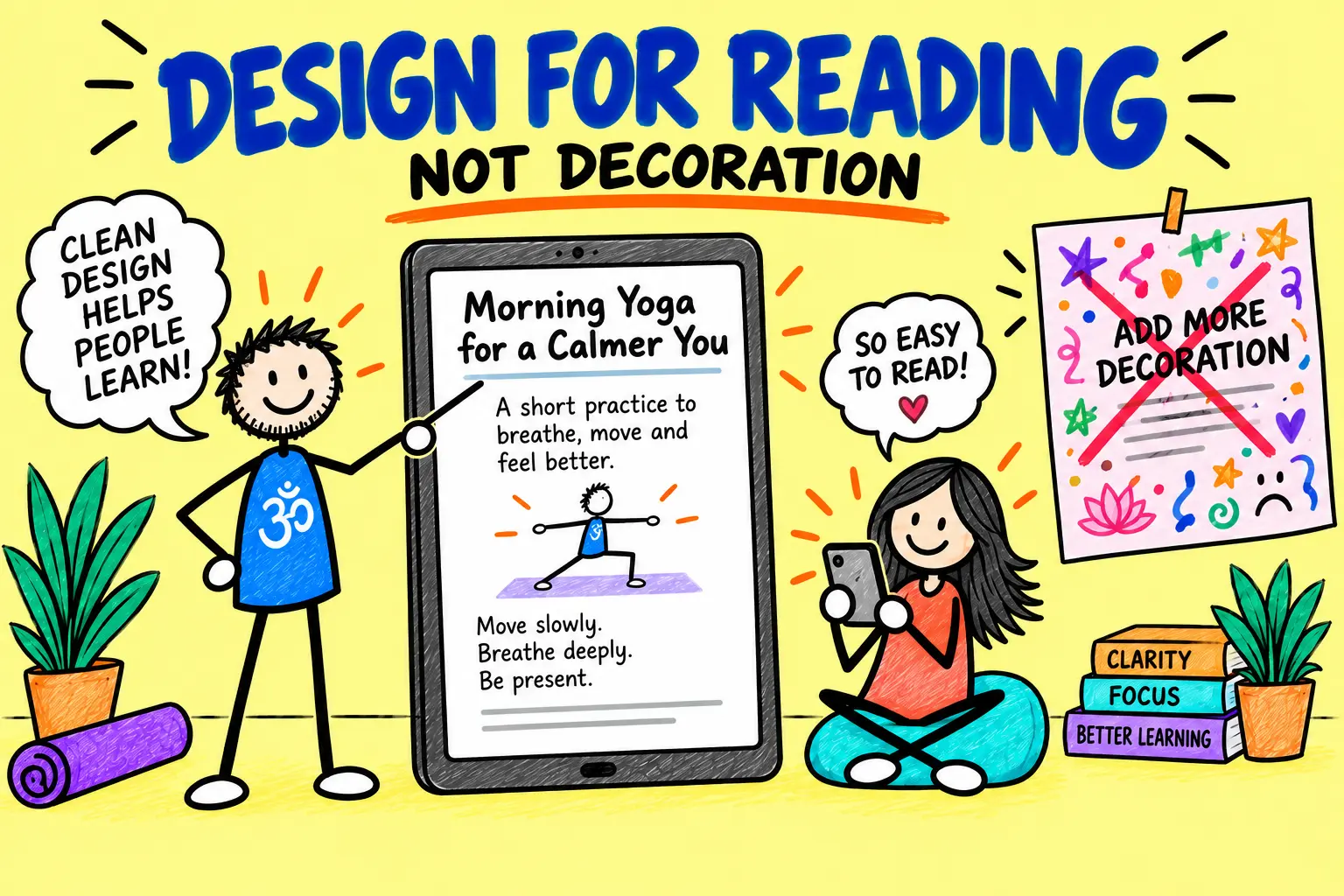
Give the information room to breathe.
Use a readable font, clear heading levels, good contrast, descriptive links and meaningful image captions. Keep important instructions as real text rather than hiding them inside an image. Add your name, website and update date so a saved copy still has context months later.
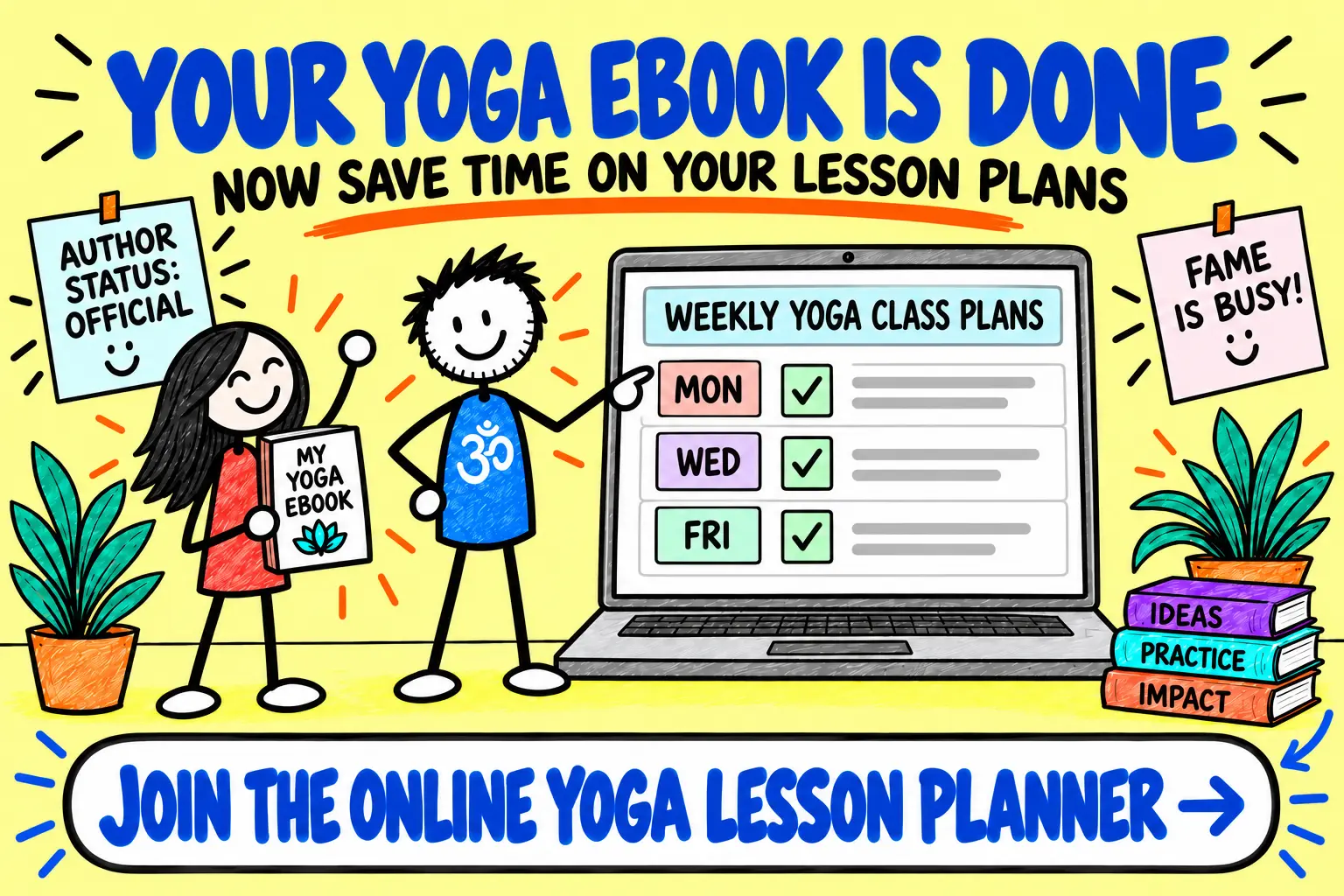
If the resource includes poses or a practice sequence, create the structure with the Online Yoga Lesson Planner, then adapt the explanation for the intended reader.
Export and Test the PDF
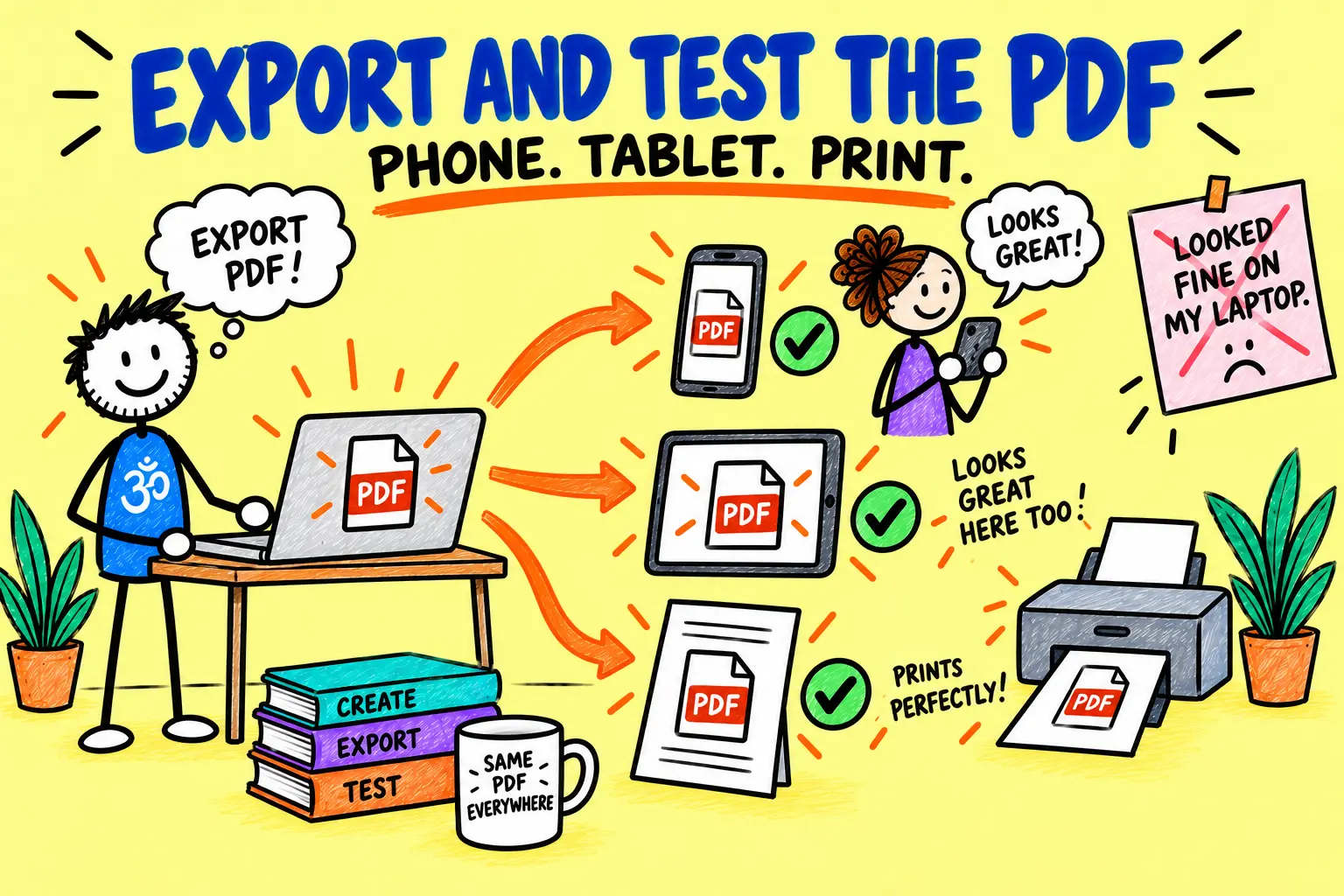
Open the file as a reader would.
Export from your chosen writing or design program, then check the PDF on a computer and phone. Test every link, confirm the pages are in the right order, make sure images remain clear and ask somebody else to proofread the final version. File names should explain what the resource is without requiring archaeological work.
Publish One Clear Next Step and Keep It Current
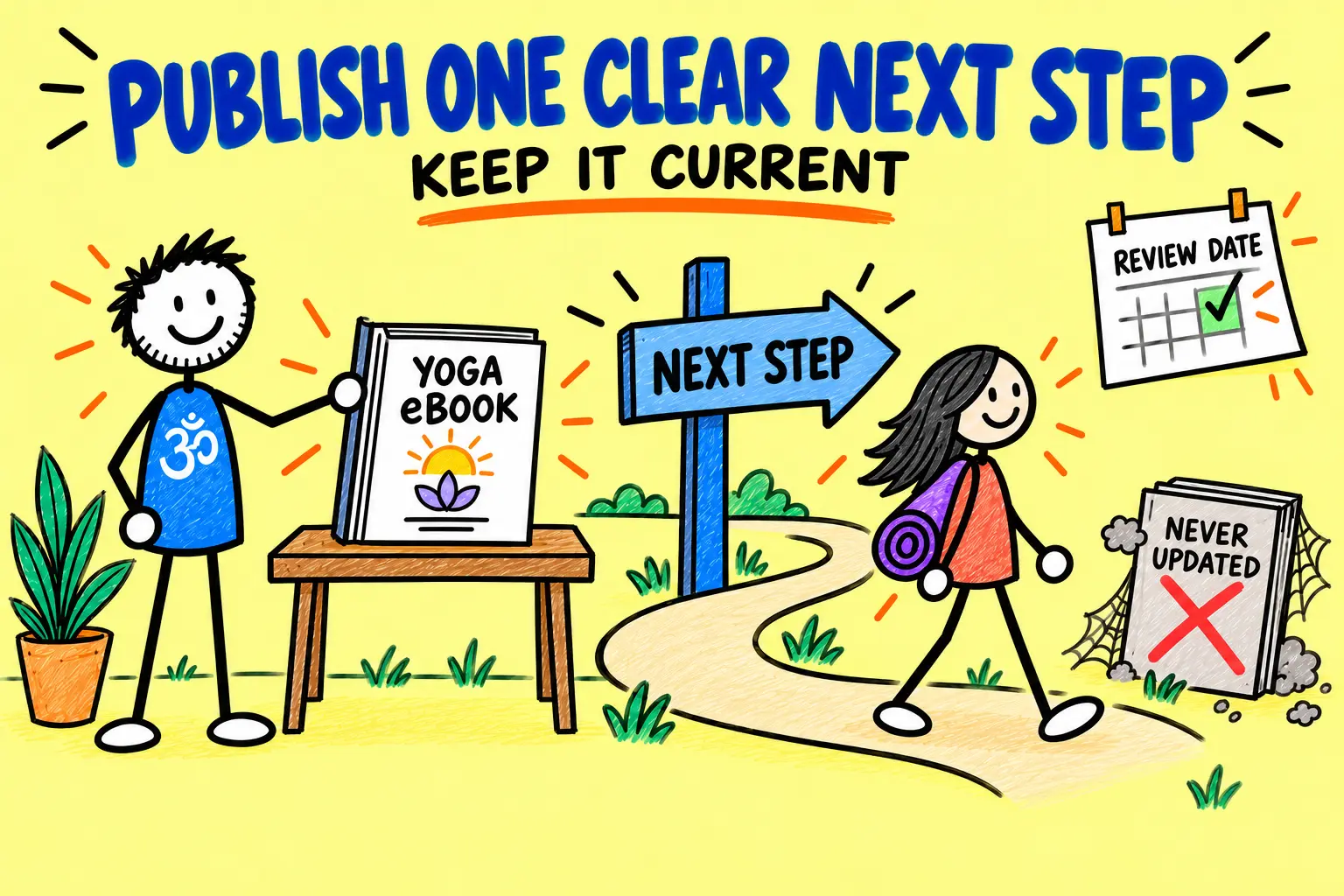
Give the eBook a useful home.
Create a web page that explains who the resource is for, what question it answers and how to get it. Offer one obvious next step, such as reading a related post, joining a suitable class or replying with a question. The yoga teacher website guide will help you build that path.
If you collect email addresses, use clear permission and explain what people will receive. The yoga teacher email marketing guide includes a calmer welcome sequence and simple measures that matter.
Add an update date to the resource and review it periodically. Broken links and stale advice do not become vintage; they simply become broken links and stale advice.
Chair Yoga for Beginners
A gentle 15-minute chair-yoga eBook and ready-made lesson plan.
This is what the 12-step system looks like when it becomes a finished eBook.
I created Chair Yoga for Beginners using the same system above: one recognisable reader, one real question and one useful change. It is written for a complete beginner who wants a gentle practice without getting onto the floor.
The 15-page guide includes a stable-chair setup, a timed 15-minute sequence, ten illustrated movements and an easier option for every stronger movement. It is also a useful ready-made chair yoga lesson plan for students who want to practise at home.
- One clear reader: a complete chair-yoga beginner.
- One practical question: “What can I do with one sturdy chair and 15 minutes?”
- One useful result: a calm, easy-to-follow home practice.
DOWNLOAD THE FREE CHAIR YOGA EBOOK ↓
Free PDF · 15 pages · A4
Yoga eBook Outline Builder
Turn one reader question into a focused outline, writing plan and publication checklist without leaving this page.
- Name the reader and question. Begin with a real need, not a page target.
- Shape the outline. Give each section one useful job.
- Plan four writing sessions. A book is easier to begin when it has appointments.
- Run the publication check. Test accuracy, readability, permissions, links and the next step.
Stored on your device: your entries stay in this browser and are not submitted to GeorgeWatts.org.
Reader + Question
Example: Your First Yoga Class: What to Bring, Expect and Ask.
Build the Outline
Your Working Outline
Your outline will appear here.
Four-Session Draft Plan
Example: Choose a date that allows time to review the draft properly, not an imaginary deadline invented by an excitable headline.
Publication Check
More Free Yoga Business Tools
Create a Helpful Yoga ResourcePlan a useful resource around one real student question.
Find Your Yoga Teaching NicheConnect your knowledge with a recognisable audience need.
Build a Yoga Teacher WebsiteGive the finished resource a clear, useful home.
Yoga Teacher Email MarketingWelcome suitable readers with permission and a manageable sequence.
101 Yoga Business IdeasExplore other classes, workshops, services and resources to test.
Yoga Teacher Income Mix PlannerCompare the money, costs, hours and energy behind a paid resource.
Ready. Your entries save automatically in this browser.
Conclusion
A useful yoga eBook does not need to contain everything you know or appear by sunset. It needs one recognisable reader, one genuine question, an honest answer and enough editing to make that answer pleasant to use.
Use the Outline Builder to shape the small version first. Finish it, test it with a suitable reader, correct it and keep it current. Your next eBook can be longer if the question genuinely needs more space. The biscuit budget may also be reviewed at that point.