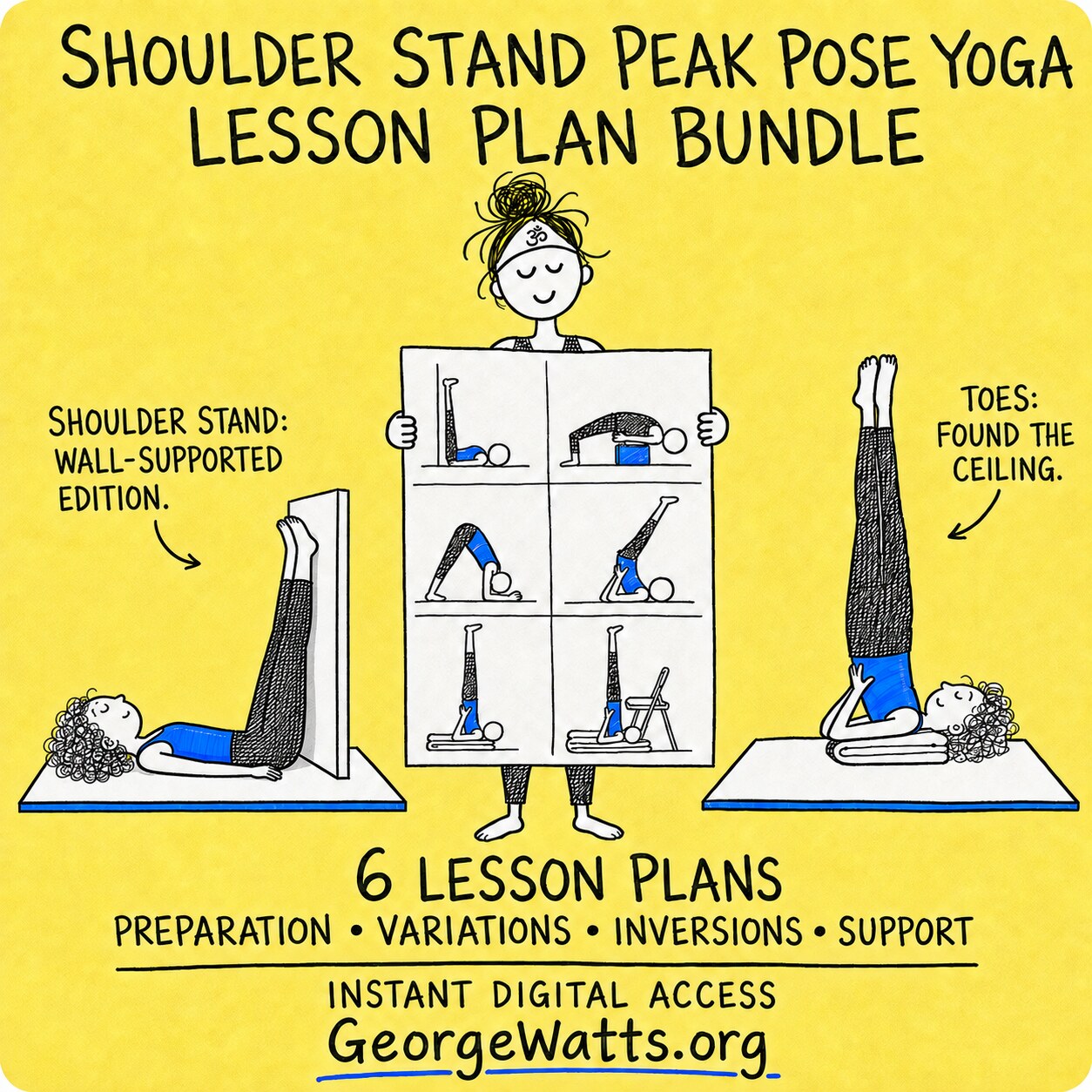
Shoulder Stand Peak Pose Yoga Lesson Plan Bundle
£9.00
Six ready-to-use Shoulder Stand yoga lesson plans for a complete six-week course. Every lesson includes Short, Long and Stream views. Instant digital access.
Build towards Shoulder Stand—one clear class at a time.
Get six ready-to-use Shoulder Stand yoga lesson plans, each supplied in Short, Long and Stream views for teaching, preparing and practising.
Everything included
6
Lesson plans
A complete six-week Shoulder Stand course created by BWY yoga teacher George Watts.
3
Plan views
Every lesson comes as a Short, Long and Stream Plan.
52
Variations
Explore 12 Shoulder Stand variations, 28 inversions and 12 chair inversions.
£9
Instant access
A digital teaching resource ready to access after purchase.
One plan. Three useful views.
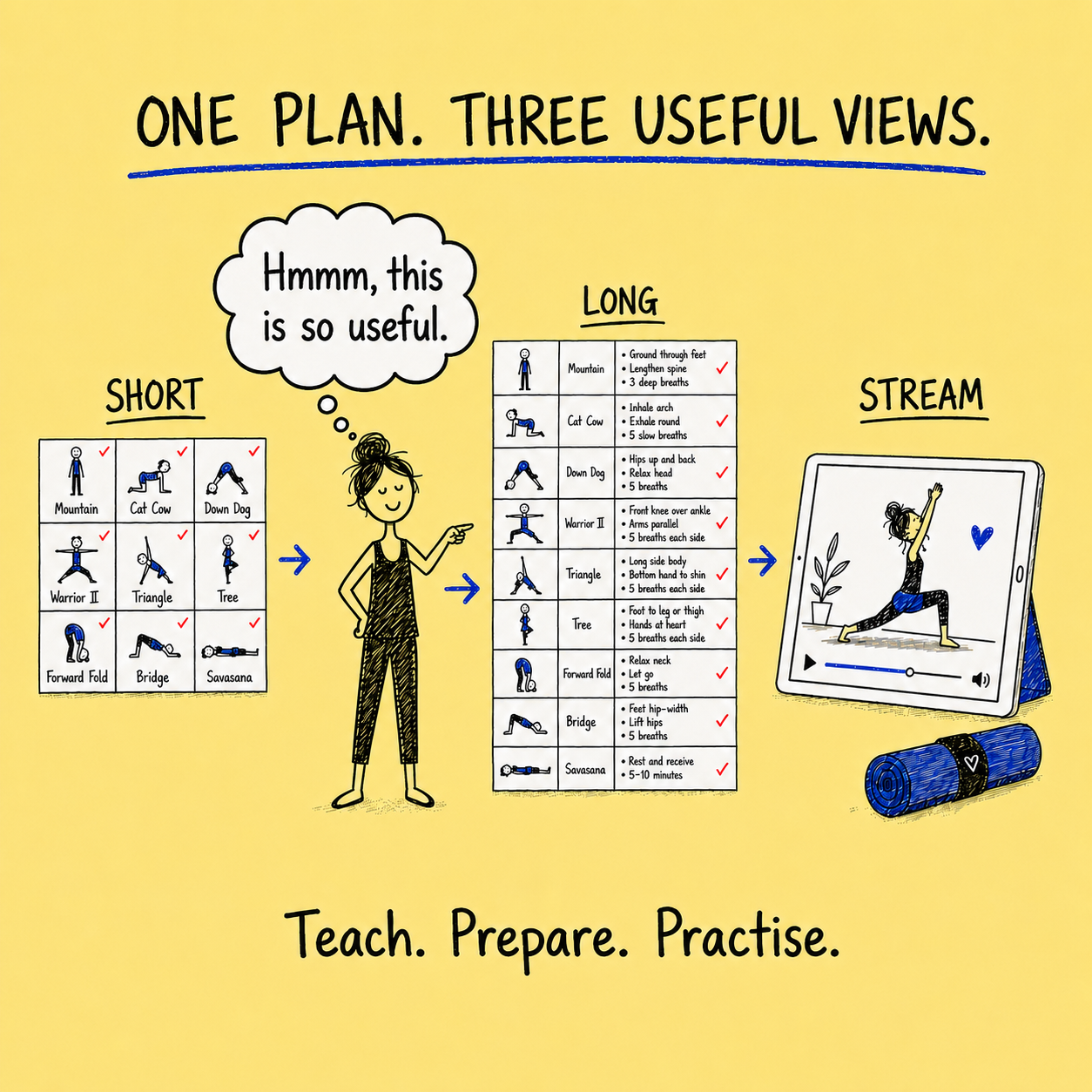
Short Plan
A compact visual sequence for a quick glance while you teach.
Long Plan
Fuller teaching information for practising and preparing the lesson.
Stream Plan
Follow the lesson online, step by step, from any suitable device.
Preparation before elevation
Shoulder Stand is the destination—not the starting gun. These plans give you themed sequences for preparing the shoulders, upper back, core and legs before exploring the peak pose.
Choose a full 90-minute class, a concise 15-minute practice, or a focused collection of variations and supported inversion options.
Class focus
✓ Progressive preparation
✓ Shoulder stability
✓ Supported variations
✓ Chair inversion options
Six plans. Six ways to approach Shoulder Stand.
Teach them as a six-week course or select the plan that suits the class in front of you.
90-Minute Shoulder Stand
A complete class that progressively builds towards the peak pose.
15-Minute Shoulder Stand
A shorter focused practice for more limited teaching time.
12 Shoulder Stand Variations
Explore different ways to adapt and develop the central pose theme.
General Preparation
Build the foundations needed before approaching Shoulder Stand.
Preparation: 28 Inversions
A broad inversion-themed sequence with plenty of teaching options.
Preparation: 12 Chair Inversions
Use a chair to explore supported inversion preparations and variations.
Teach the person—not just the peak pose
These plans support qualified yoga teaching. Inversions are not suitable for everyone, so assess individual needs and use appropriate preparation, support and alternatives.