
On This Page
I updated this post in 2026.
George’s Intro
Hi, I’m George. I’m a British Wheel of Yoga teacher, creator of the Online Yoga Lesson Planner and an obsessive yoga card deck creator.
I avoided teaching mantras for years.
I worried about pronunciation, whether I knew enough, and whether students would feel awkward.
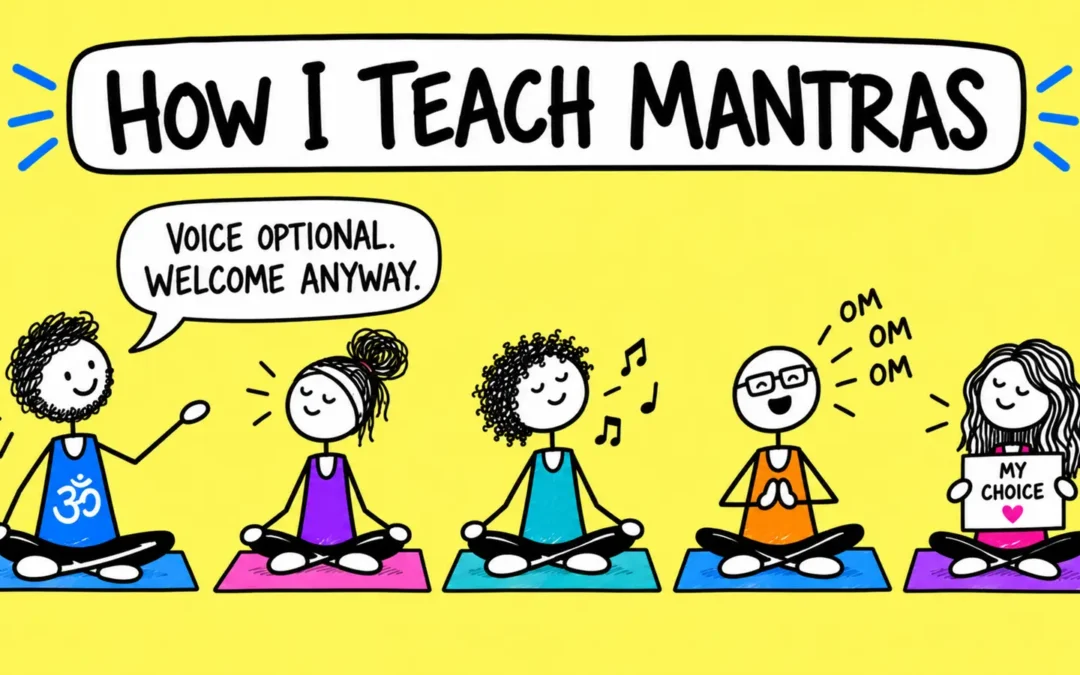
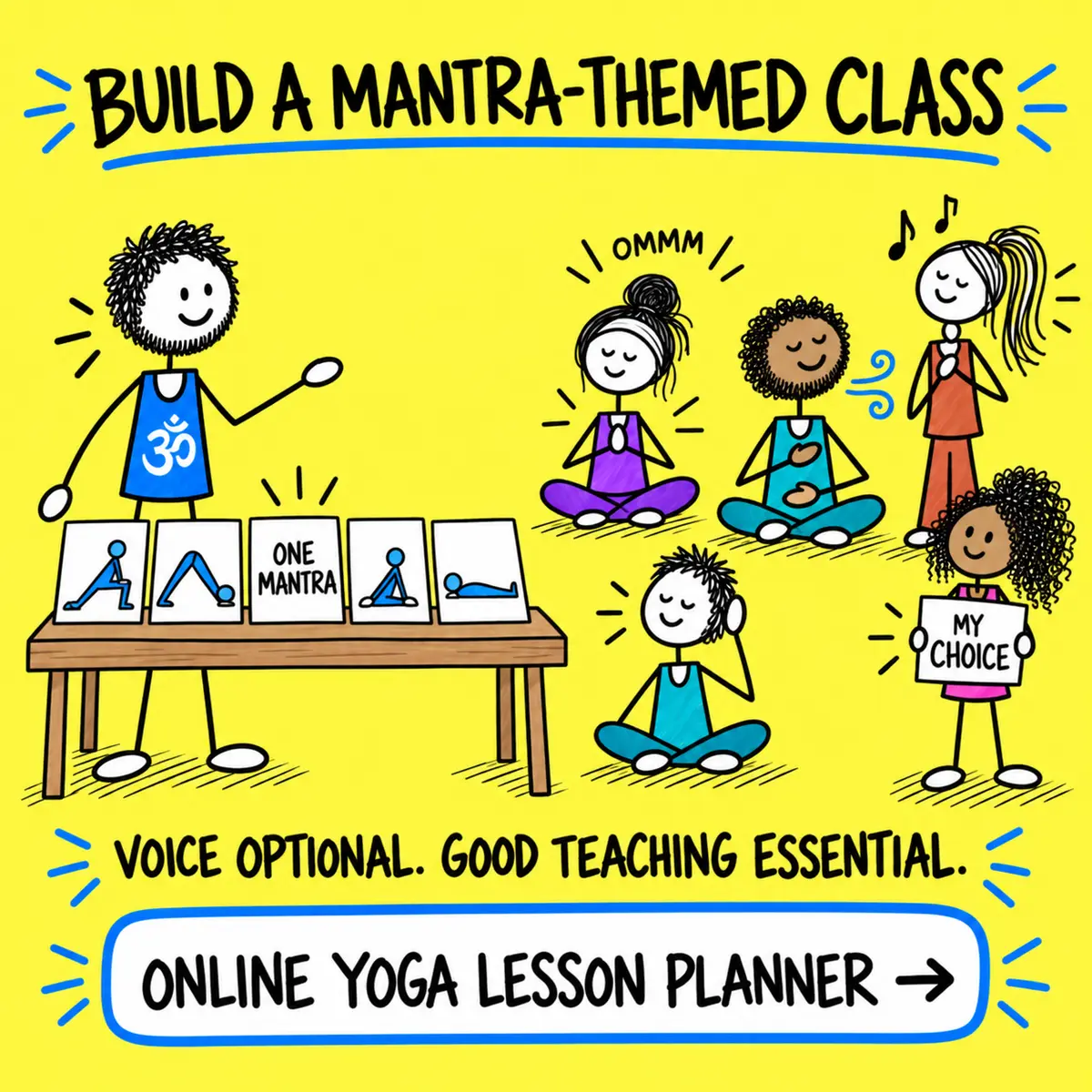
Eventually I stopped treating mantra as a performance. I began with one short phrase, explained why I had chosen it and made participation genuinely optional. Students could speak, listen, breathe or sit quietly. The room did not revolt. They enjoyed it.
This guide gives you the method I now use, six real class examples, 52 English mantras, 52 Sanskrit mantras and an editable yoga class mantra planner. It is a practical starting point for teaching mantras in a normal, traditional yoga class.
We yoga teachers have spent so long drawing stick figures in our yoga lesson plans that they feel like old friends. Naturally, I’ve snuck them into my sticky-note doodles to make the useful bits of this post easier to remember. Small yellow spaces for big ideas that stick.
Jump to The Yoga Class Mantra Planner ↓
Why Yoga Teachers Avoid Mantras
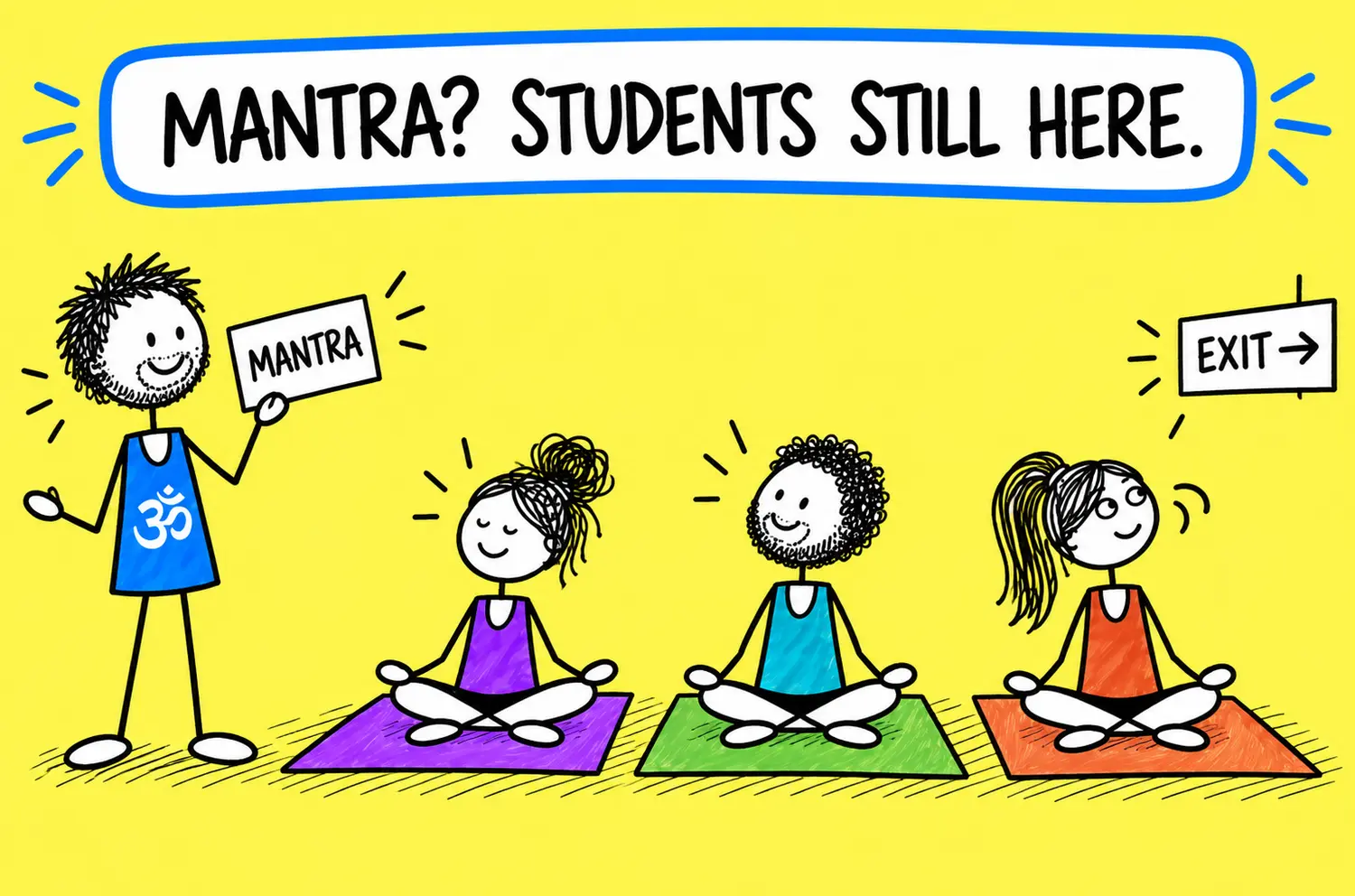
The hesitation is understandable. A mantra can carry language, history, devotion and community practice. It deserves more care than a nice-sounding sentence found between two social-media adverts.
“My pronunciation is imperfect.”
Learn from a reliable teacher or recording, use a shorter mantra and be honest about your level. Confidence should follow study, not replace it.
“Students may feel self-conscious.”
Offer listening, humming, silent repetition and ordinary breathing as equally valid choices. Never scan the room for missing singers.
“I don’t want to misuse a tradition.”
Name the source or tradition when you know it. Avoid inventing literal translations and avoid promising medical, emotional or spiritual results.
“It will feel bolted onto the class.”
Choose one phrase that supports the class intention and return to it briefly. One useful thread is better than a suitcase of spiritual accessories.
Introduce Mantras Without Making Students Uncomfortable
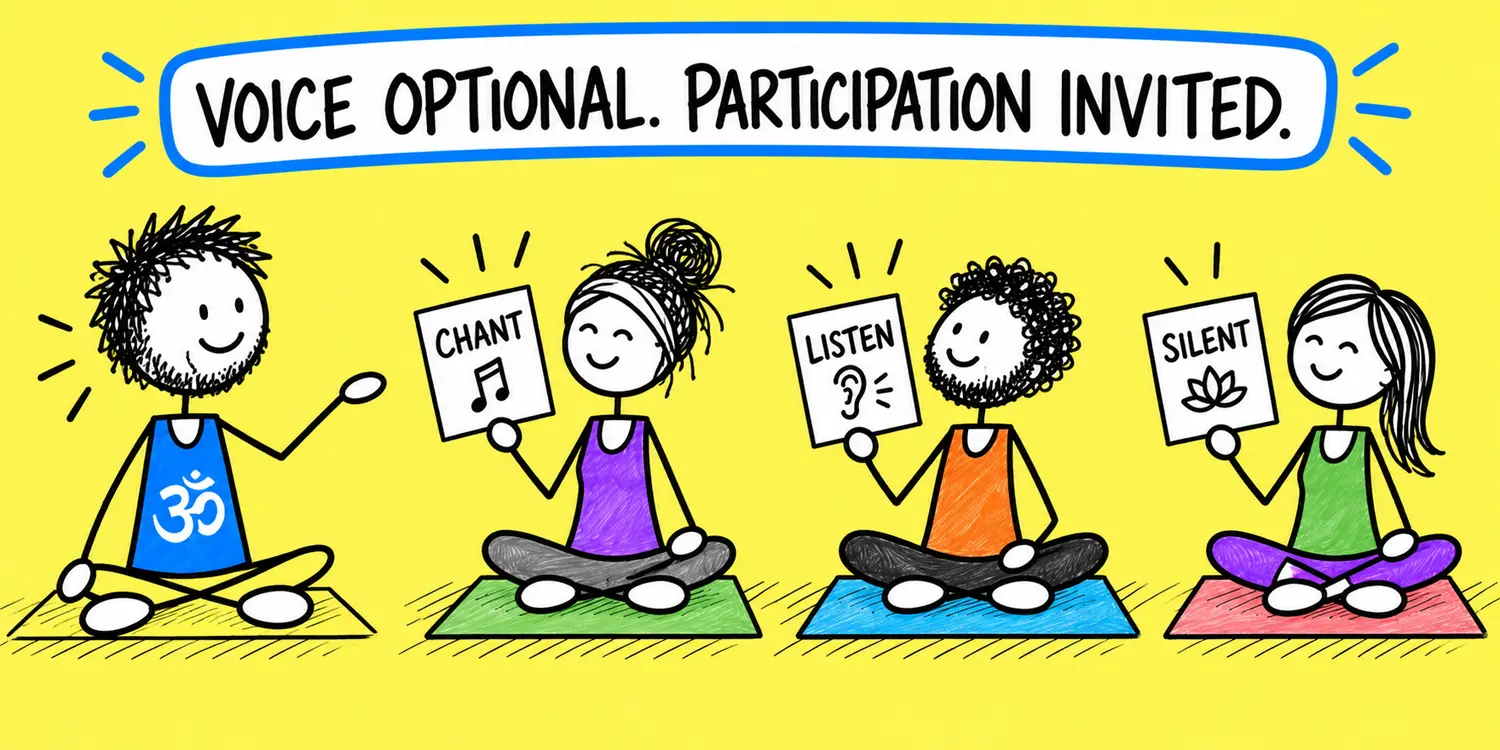
Say what will happen before it happens. Students relax when they know the purpose, the length and their choices.
A script you can adapt
“I’m going to introduce a short mantra connected with steadiness. I’ll say it once, then repeat it three times. You’re welcome to join in, hum, repeat it silently, listen or simply breathe. All of those choices belong in this room.”
Keep the invitation clear
- Explain the purpose in plain English.
- Give the meaning before asking for repetition.
- Model the words slowly, one small phrase at a time.
- State the number of repetitions or approximate duration.
- Offer a quiet alternative without making it sound second best.
- Leave a short silence afterwards so the class can notice what is present.
If your class includes people from different faiths or no faith, avoid pretending that mantra means the same thing to everyone. You can say, “This phrase comes from a particular tradition. Take part in the way that feels appropriate to you.”
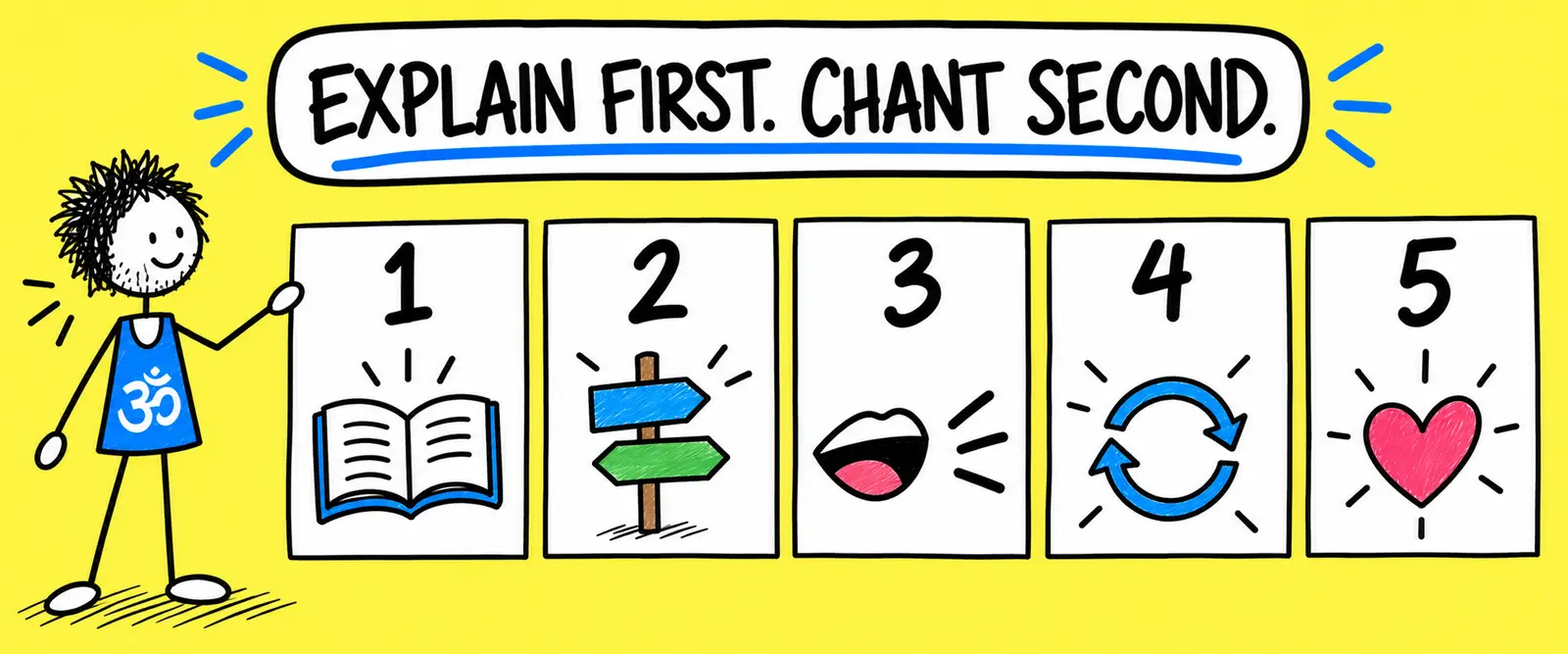
My Five-Step Mantra Teaching Formula
- 1
Context
Name the intention, source or teaching context. Keep it short enough that students can still remember why they are sitting there.
Example: “Shanti means peace. Repeating it three times is often understood as an invocation of peace through different layers of experience.”
- 2
Choice
Offer voice, humming, silent repetition, listening or ordinary breathing. Choice is part of the teaching, not a nervous disclaimer added at the end.
- 3
Words
Speak the phrase slowly. Break longer mantras into small units and use call-and-response before chanting together.
- 4
Repeat
Begin modestly: three repetitions or about thirty seconds. More repetition is not automatically more meaningful.
- 5
Reflect
Pause. Invite students to notice breath, sound, silence or sensation without telling them what they ought to feel.
Use the same formula when planning a class theme. My guide to creating yoga class themes will help you keep one idea running through the practice without turning the class into a lecture.
Six Real Yoga-Class Examples
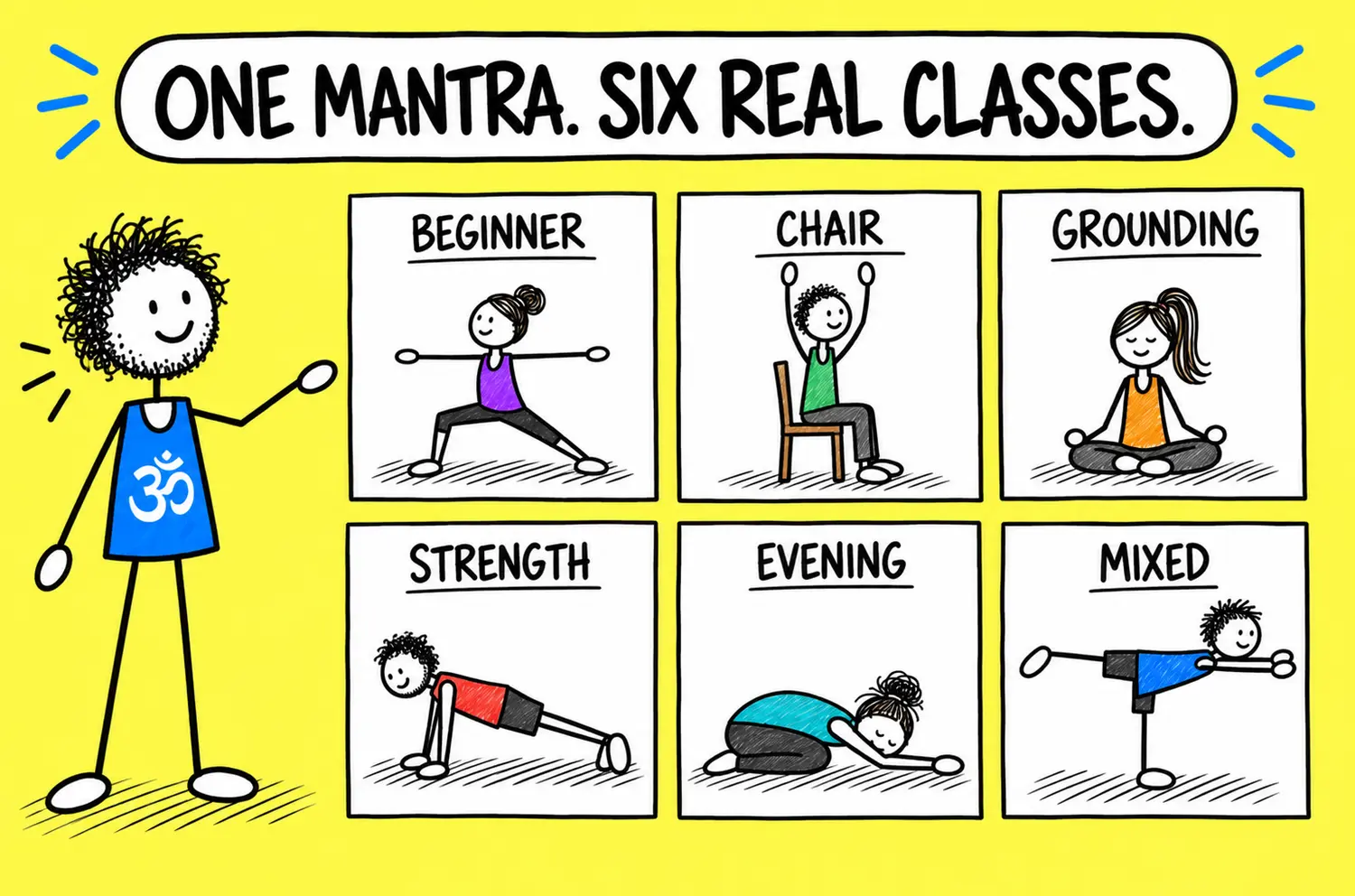
Complete beginners
Intention: Arrive without pressure.
Mantra: “I am here.”
Where: After the first body scan.
Teacher words: “Repeat this silently if it helps you arrive. If words are not useful today, stay with the breath.”
Chair yoga
Intention: Steady, supported movement.
Mantra: “Supported, steady, able.”
Where: During seated arm movements.
Teacher words: “Use one word with each comfortable breath, or simply notice the chair beneath you.”
Grounding class
Intention: Notice reliable contact.
Mantra: “Press down. Feel supported.”
Where: In standing poses and before relaxation.
Teacher words: “Let the phrase describe an action rather than demand a mood.”
Strength and courage
Intention: Meet effort without drama.
Mantra: “Steady breath. Clear choice.”
Where: Before a standing sequence.
Teacher words: “Courage may look like continuing, changing the pose or resting.”
Evening class
Intention: Reduce unnecessary effort.
Mantra: “Nothing else is needed now.”
Where: At the beginning of floor work.
Teacher words: “Repeat it silently once or twice, then let the words go.”
Mixed-experience group
Intention: Shared practice, personal choice.
Mantra: “Om Shanti.”
Where: At the end of class, three repetitions.
Teacher words: “Om is a sacred sound used in several Indian traditions; shanti means peace. Join, hum, listen or breathe.”
52 English Mantras by Intention
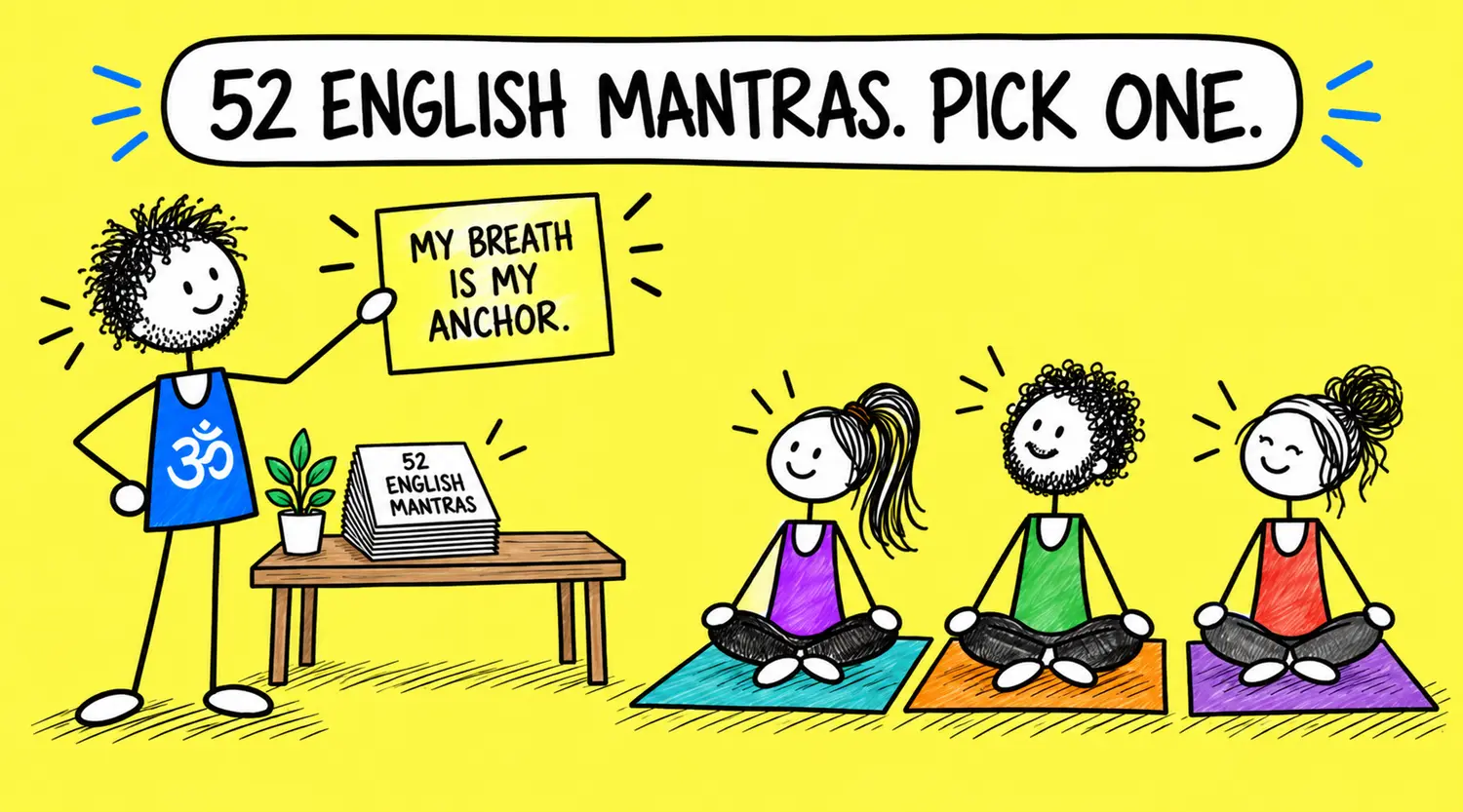
These are short teaching phrases, not promises. Choose one that suits the students, the class intention and the action you are actually teaching.
Arriving
- I am here.
- This breath is enough.
- I can begin gently.
- I notice before I change.
- I arrive as I am.
- One breath at a time.
- Nothing needs proving.
Grounding
- Press down. Feel supported.
- The ground is already here.
- Steady feet, easy breath.
- I can return to contact.
- Support first, movement second.
- I belong in this moment.
- I make room for steadiness.
Choice
- My body, my choice.
- I can stay, change or rest.
- Less can be useful.
- I listen before I push.
- A pause is part of practice.
- Curiosity over judgement.
- I choose what serves me.
Courage
- Steady breath. Clear choice.
- I can meet this moment.
- Effort does not require force.
- I can be brave and careful.
- I begin before I feel ready.
- I make space for possibility.
- I trust the next small step.
Compassion
- May I meet myself kindly.
- May all beings be safe.
- Kindness belongs here.
- I can soften without disappearing.
- There is room for every breath.
- I practise with, not against, myself.
Focus
- One point. One breath.
- I return without criticism.
- Attention can begin again.
- I notice what matters now.
- Clear eyes, quiet effort.
- I stay with the next breath.
Rest
- Nothing else is needed now.
- I allow the floor to hold me.
- Rest is part of the work.
- I release what I do not need.
- Quiet is welcome.
- I can stop doing.
Closing
- I carry one useful thing with me.
- May practice support daily life.
- I leave with a little more space.
- May this steadiness travel with me.
- I can return to this breath.
- The practice continues in small choices.
52 Sanskrit Mantras With Meaning and Context
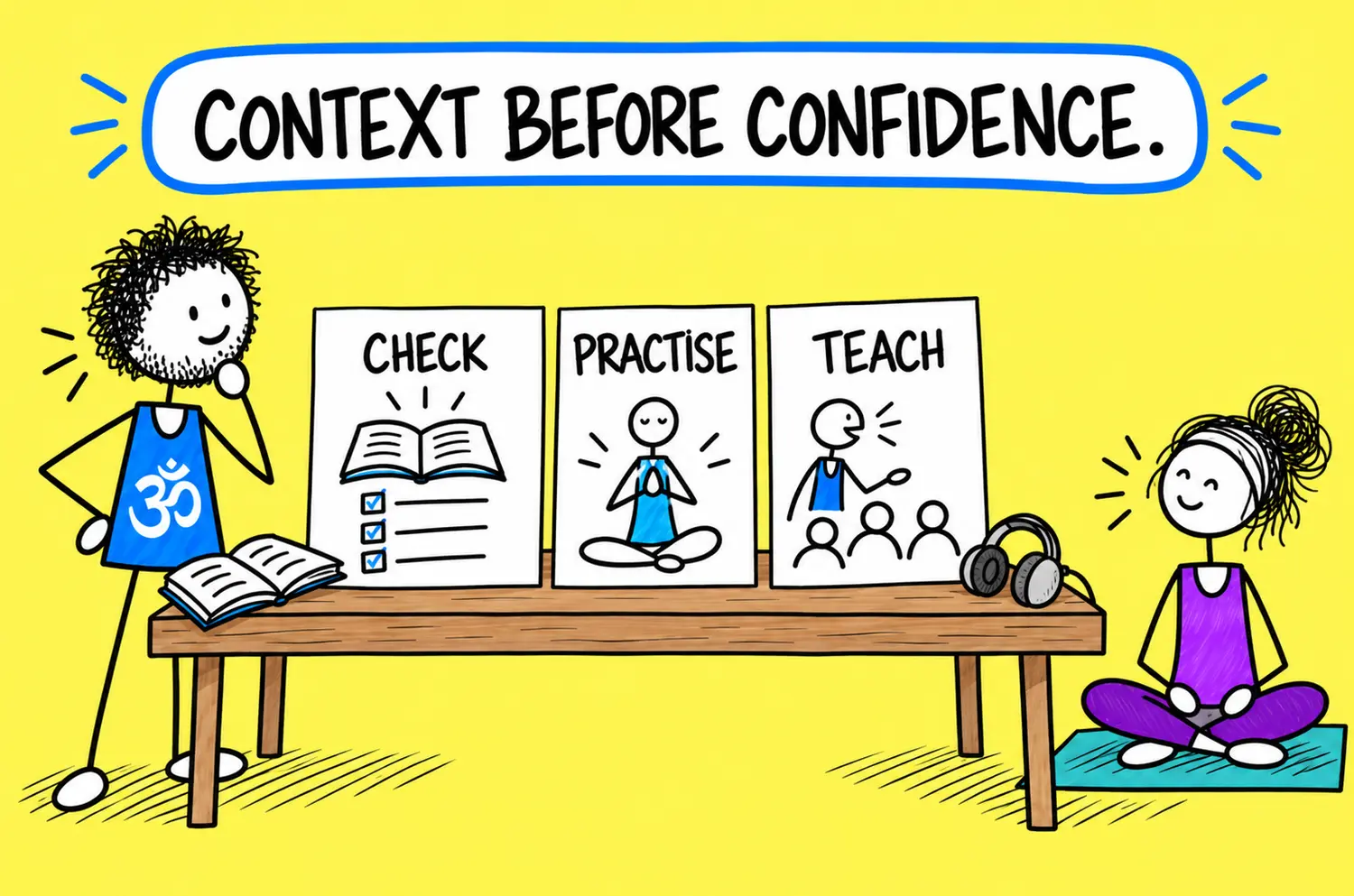
If you are learning Sanskrit pose names, my free guide to pronouncing and memorising 101 asanas in Sanskrit is a useful companion.
The Yoga Class Mantra Planner
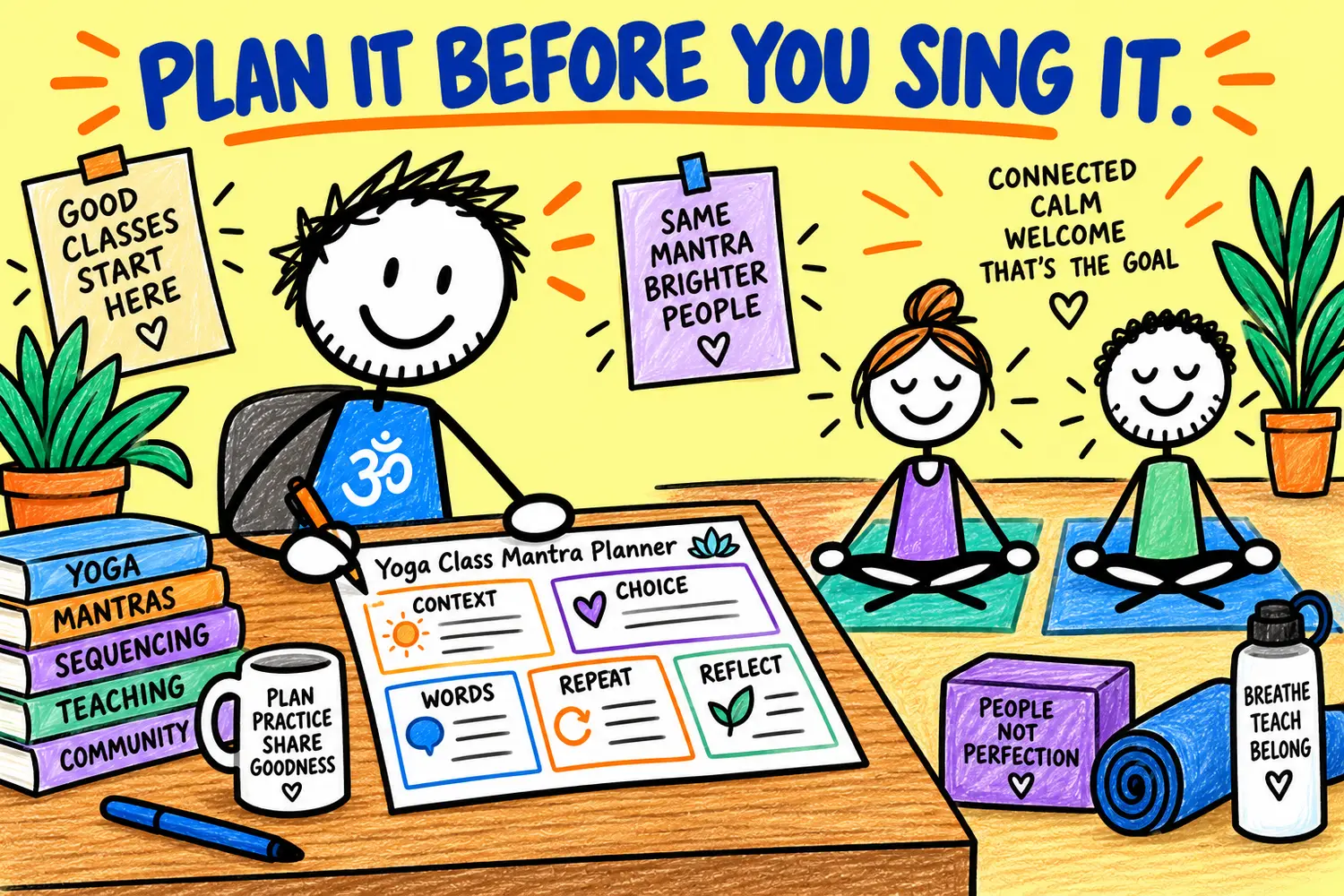
The Yoga Class Mantra Planner
- Click to load a worked example.
- Replace the example answers with your own class details.
- Copy your finished plan before leaving the page.
One-page plan
George’s Conclusion
When teaching mantras, you do not need a concert voice, a vast repertoire or the confidence of someone who sings for a living. You need one suitable mantra, enough context to teach it responsibly and a clear invitation that leaves students free to choose.
Start with the English phrase that fits your next class.
If you use Sanskrit, study it carefully and say what you know without pretending to know what you do not. Then listen to the room. Good teaching is less about producing a particular sound and more about creating conditions in which people can participate without pressure.
Pick one mantra. Plan where it belongs. Offer it kindly.