
George’s Intro
I updated this post in 2026.
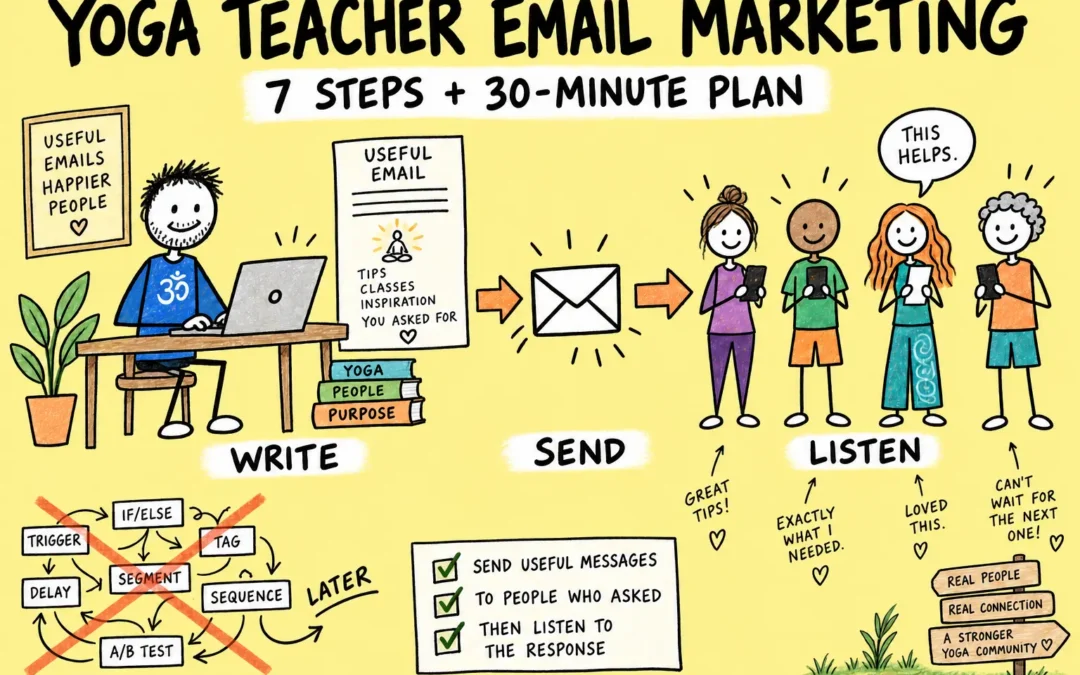
An email list is useful when the people on it have asked to hear from you—and the emails are worth opening.
I’m George, a BWY yoga teacher, creator of the Online Yoga Lesson Planner, yoga card deck maker and enthusiastic sticky-note doodler.
Jump to the 30-Minute Email Plan ↓
You do not need the “perfect” platform, a vast subscriber count or an automated contraption with more branches than an old oak tree. You need a clear reason for suitable people to join, permission to contact them and a manageable rhythm of useful emails.
Decide what you will send, how often you expect to send it and how people can leave. In the UK, marketing emails to individuals normally require valid consent unless every condition of the limited soft opt-in applies. You must identify yourself and provide a valid, simple way to unsubscribe. Check the current ICO guidance for your situation.
7 Steps To Build A Useful Yoga Email List
Earn attention before asking for an address.
The first four steps choose the reader, reason to join, platform and sign-up wording. Steps five to seven welcome new readers, send useful emails and measure what deserves repeating.
Jump to choose the reader, give a reason to join, choose a platform, write the sign-up form, welcome new readers, send useful emails or measure what matters.
Choose the Reader
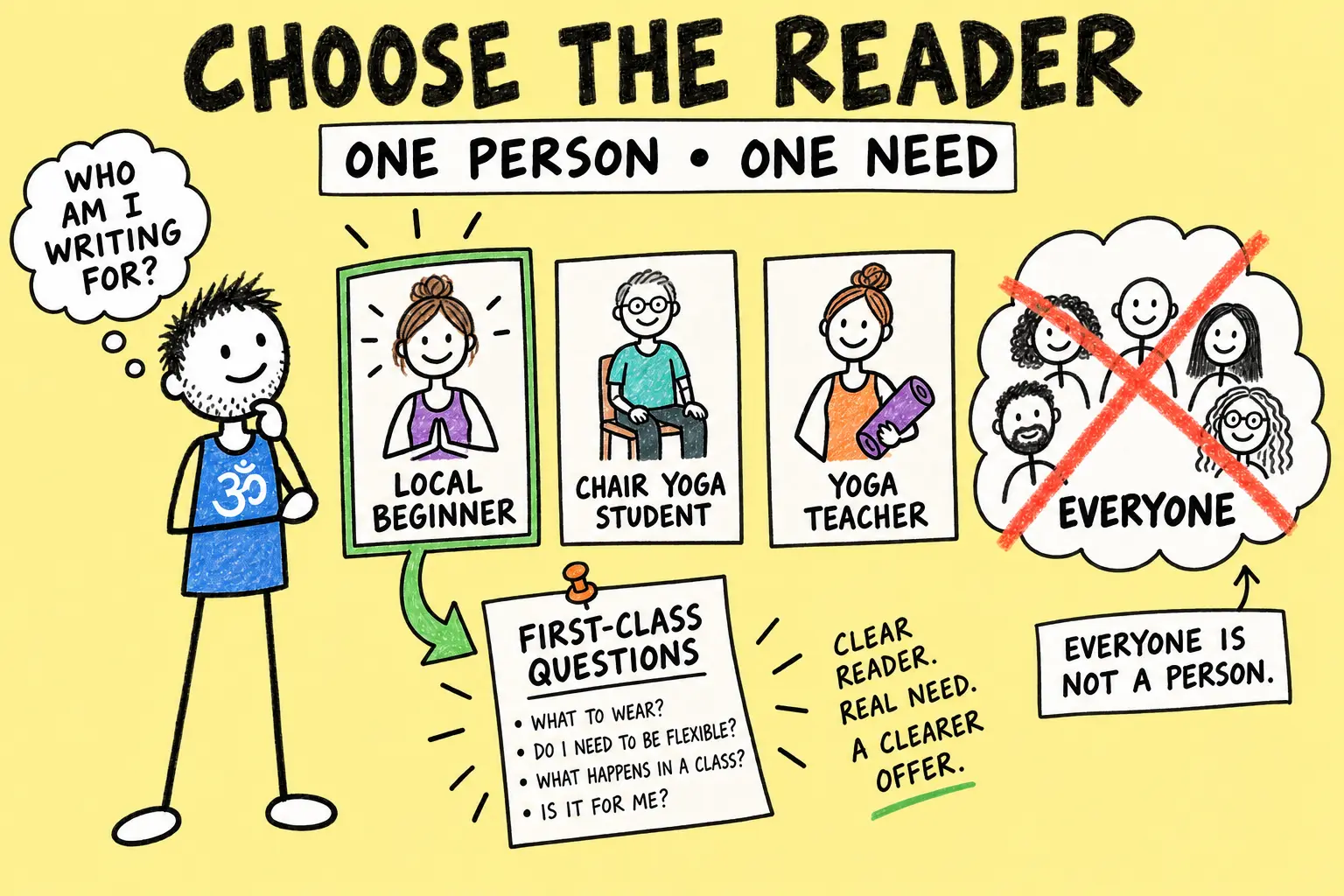
A useful list is built around a recognisable person, not “everyone interested in wellness”.
Write down who you teach, what they are trying to do and what makes your approach relevant. A local beginner class, a chair-yoga programme and continuing education for yoga teachers need different promises and different emails.
I help [specific people] with [specific need] through [your class, workshop or resource].
If you teach more than one audience, begin with the group connected to your clearest offer. You can add tags or separate lists later.
Give People a Reason to Join
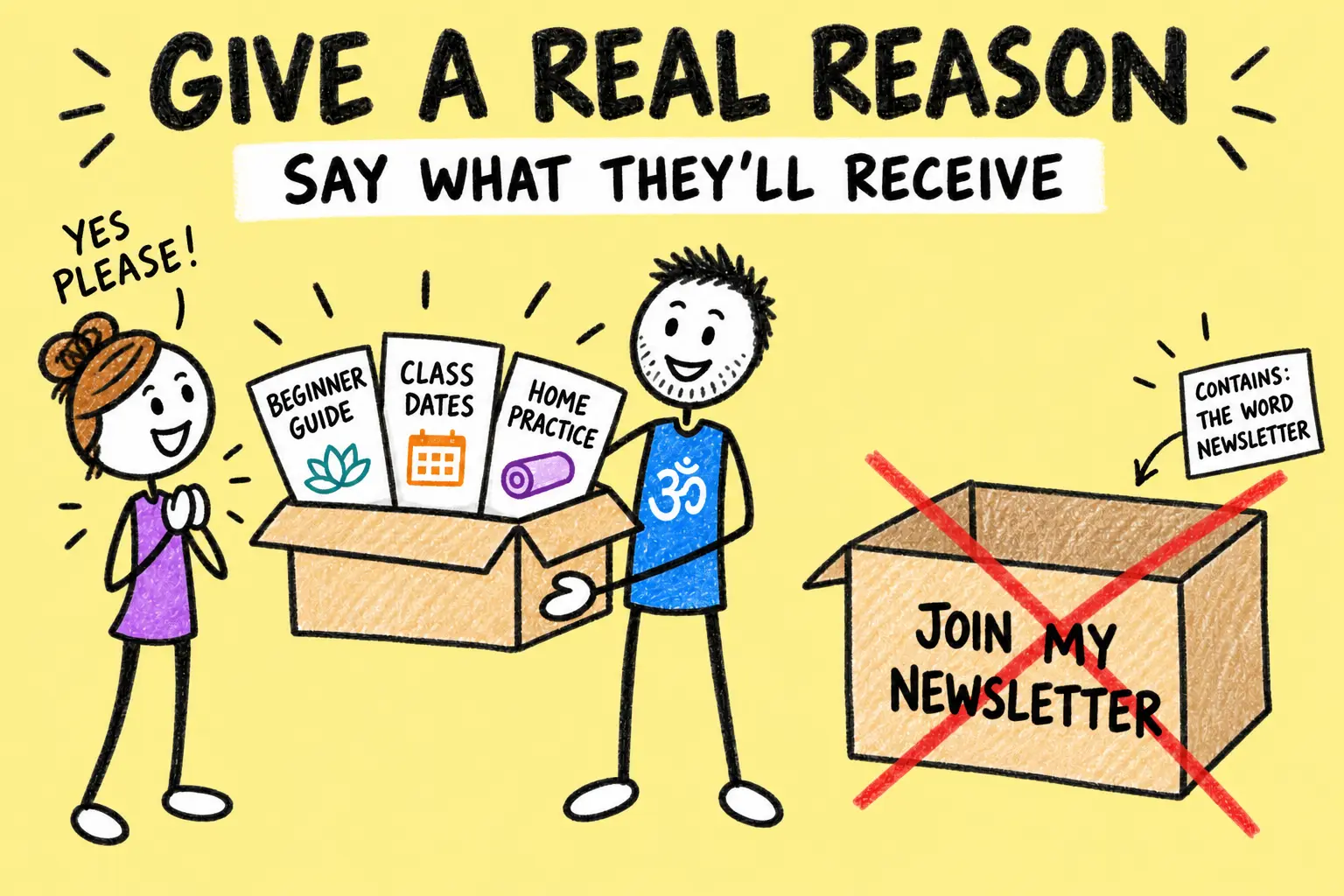
“Join my newsletter” describes the container. Tell people what useful thing will be inside it.
Your reason to join might be a short beginner guide, a workshop waiting list, one home-practice prompt each month or first notice of new class dates.
- Make it specific: “Five ways to feel more comfortable in your first yoga class” is clearer than “free yoga ebook”.
- Make it relevant: the resource should lead naturally towards the class or service you offer.
- Make it deliverable: a one-page checklist you finish is more useful than a twelve-video course living permanently on Tuesday’s to-do list.
An honest promise can be enough: “Occasional emails with new class dates, practical beginner tips and local workshop news.” Do not invent a downloadable resource merely because the internet has taught us to call everybody a lead.
Choose an Email Platform
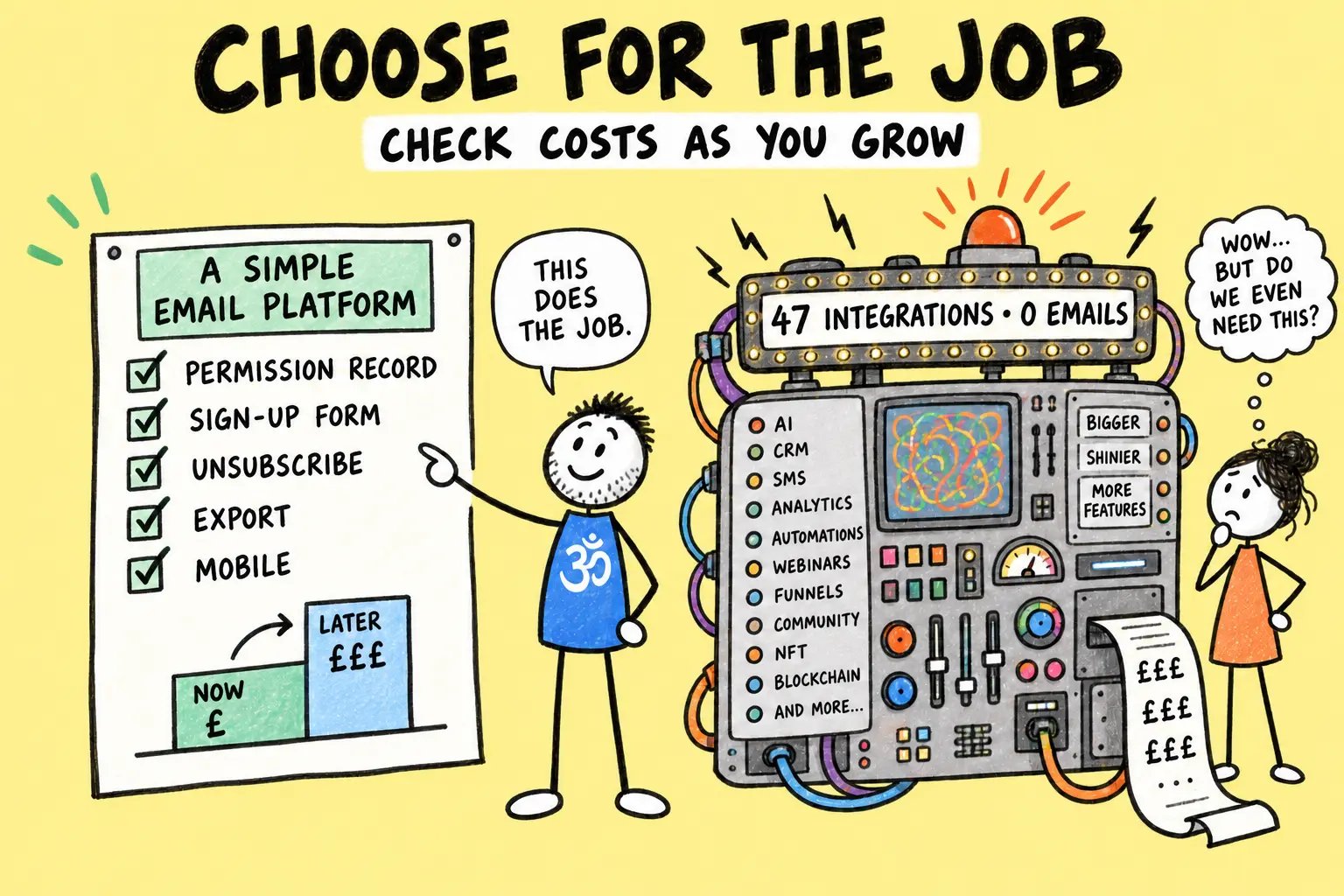
Choose for the job you have now, while checking what it will cost if the list grows.
Provider prices, limits and features change. Compare the current terms rather than building your plan around a “free forever” headline.
- Does it record how and when a person joined?
- Can you create a clear sign-up form and confirmation process?
- Can every email include a straightforward unsubscribe link?
- Can you send an automatic welcome email?
- Can you tag or group readers by genuine interests?
- Can you export your subscriber and consent records?
- Are the emails readable on a phone?
- What happens to the monthly cost as your list grows?
The platform delivers the email. It does not decide what is useful, obtain valid permission for you or turn every subscriber into a booking while you practise Savasana.
Write an Honest Sign-Up Form
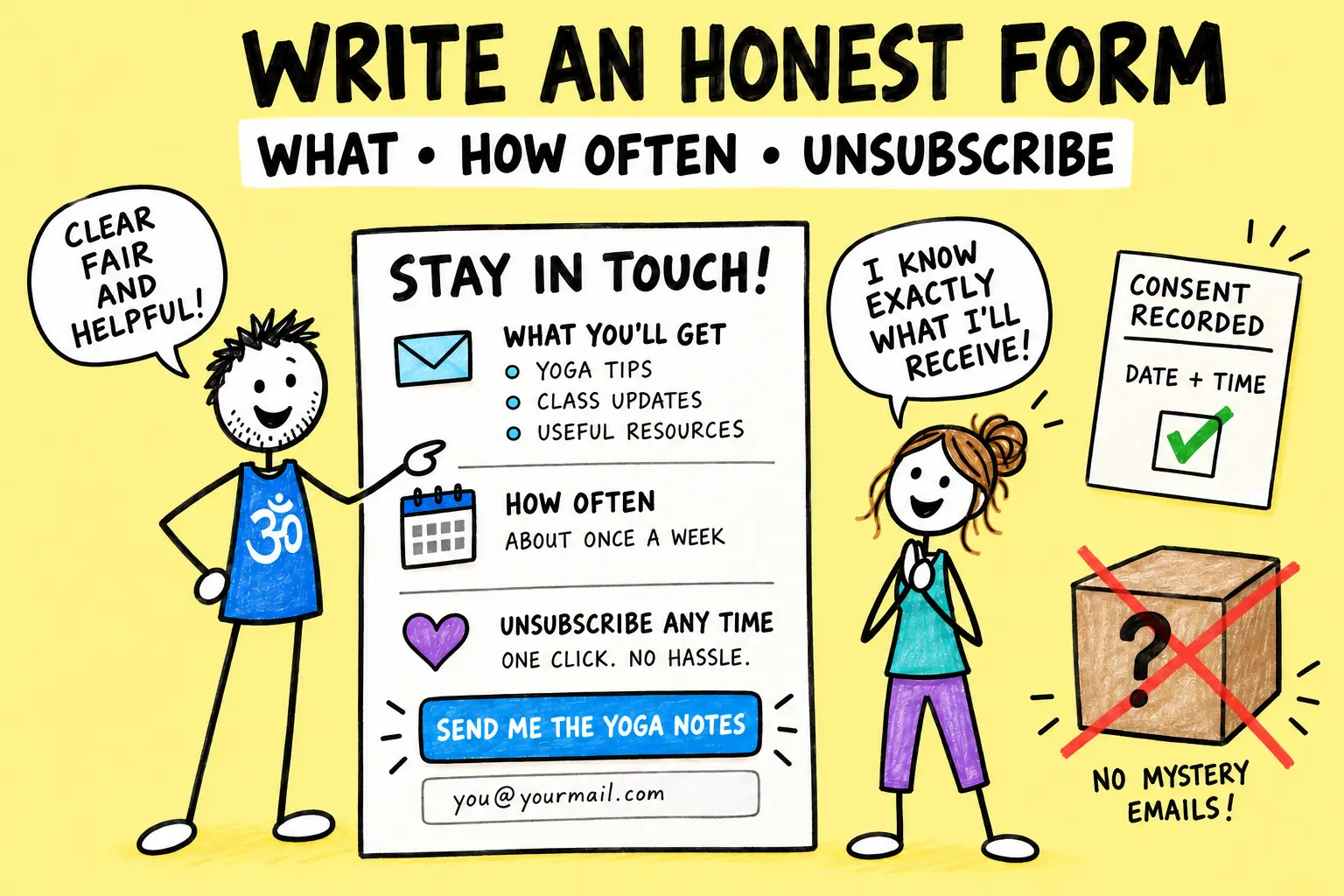
The form should explain what people are agreeing to receive.
Heading: Get practical yoga notes for [audience]
Description: I’ll email you [frequency] with [two or three specific types of content]. You can unsubscribe at any time.
Button: Send Me The Yoga Notes
Privacy line: Read how I use and protect your information in my privacy notice.
Keep consent separate from booking terms and other conditions. Do not use pre-ticked boxes. Keep a record of what the person was shown and the action they took.
If you collect an address on paper after class, enter it carefully, store the consent record and avoid leaving the sheet beside the teapot for the remainder of the decade.
Welcome New Readers
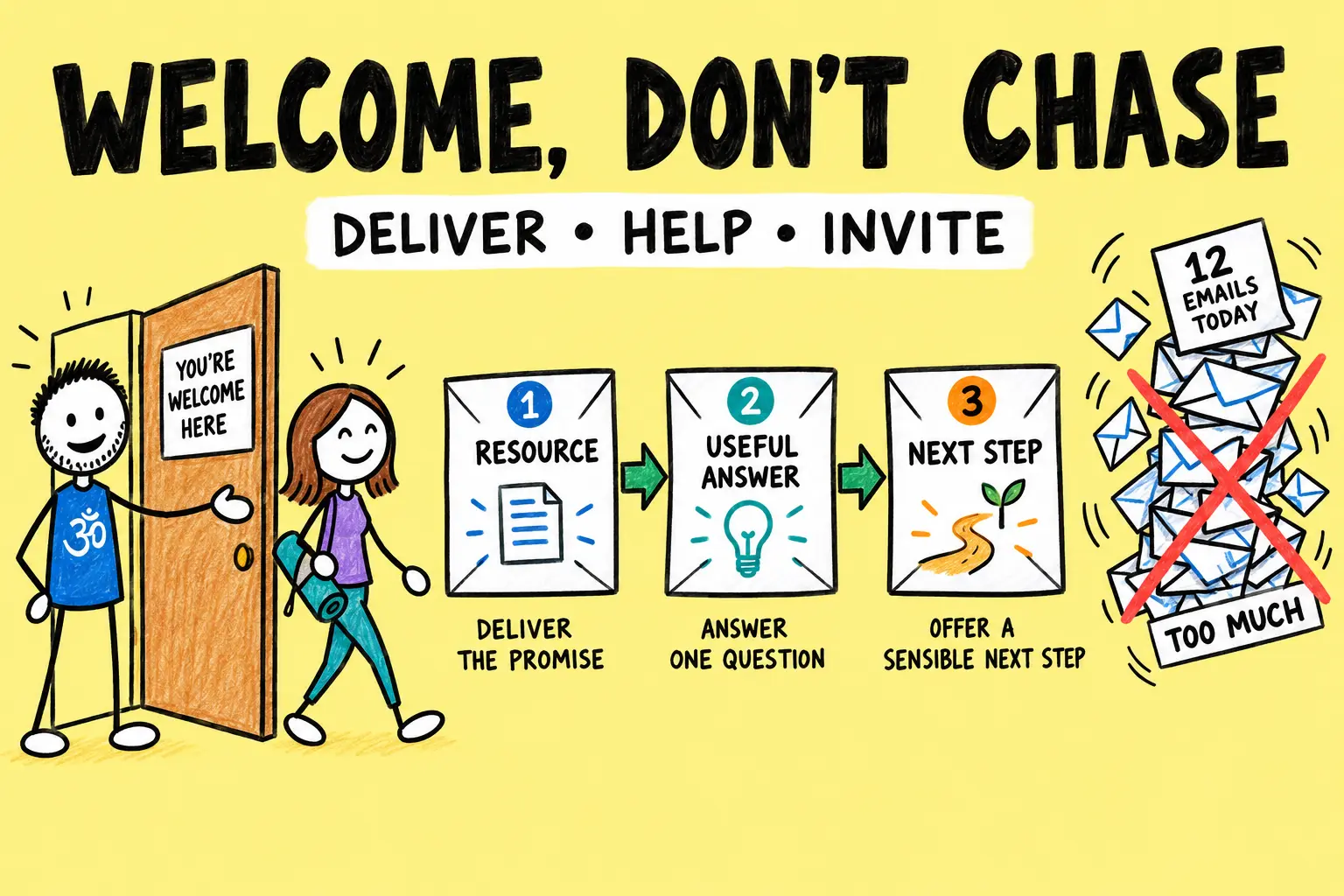
A short welcome sequence confirms the promise and starts a useful conversation.
- Deliver and orientate.
Send the promised resource or information, explain what will arrive next and provide the unsubscribe route.
- Answer one question.
Share a practical answer to a common student question. Invite the reader to reply with their own question.
- Offer one next step.
Introduce the most relevant class, workshop or article. Explain who it suits and what to do next.
Space the messages sensibly and stop there until your normal email rhythm begins. A welcome should feel like opening a door, not being pursued down the corridor by a sequence of twelve emails.
Send Useful Emails Consistently
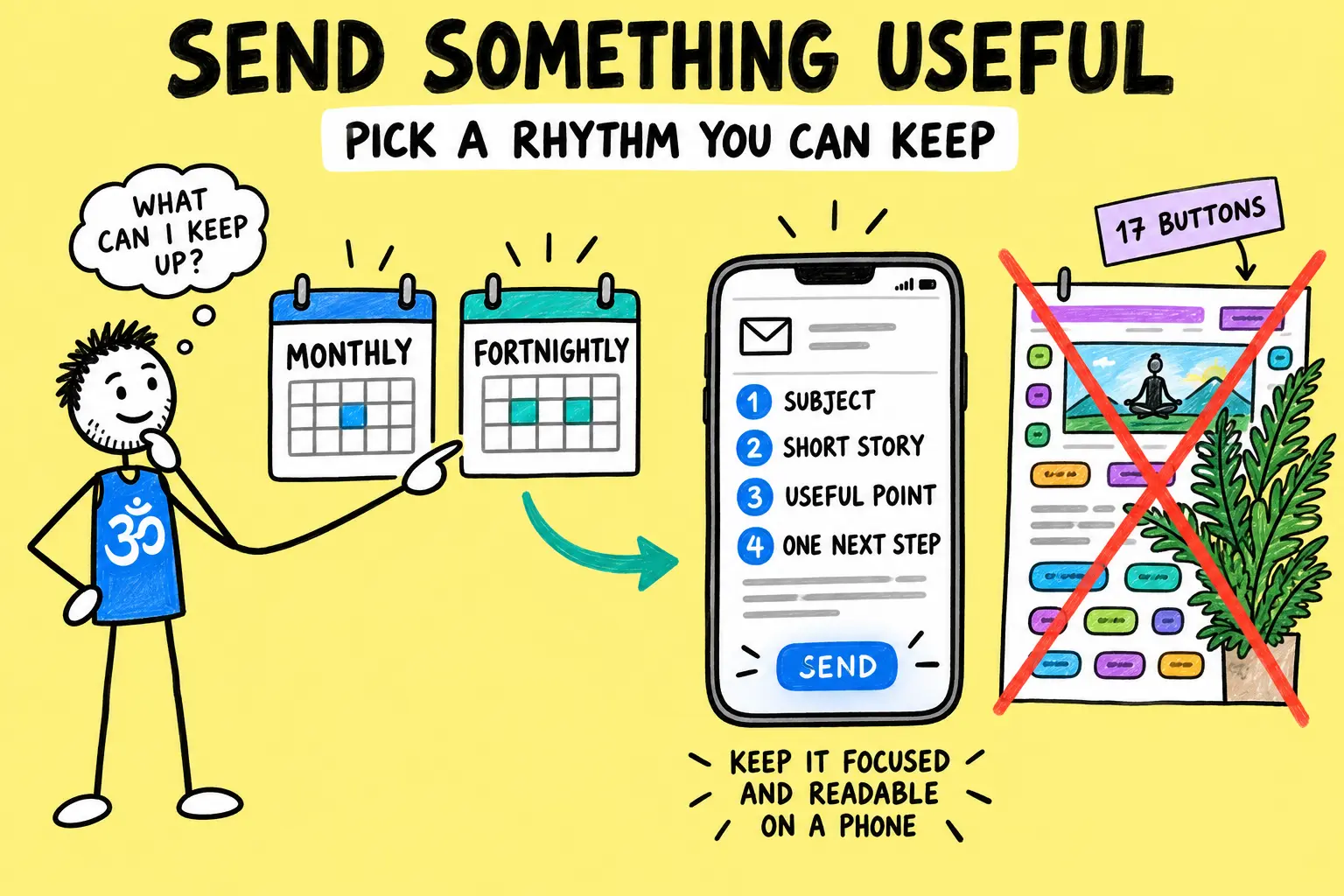
Choose a rhythm you can sustain. Monthly or fortnightly may be a practical starting point for many independent teachers, but there is no universal perfect frequency.
- Clear subject line.
Name the question, benefit or update without theatrical fog.
- Friendly opening.
Tell the reader why this email is arriving today.
- One useful idea.
Share a cue, answer, story, checklist or link that earns attention.
- One relevant next step.
Invite a reply, article visit, booking or workshop enquiry.
- Answer one question heard in class.
- Share a short home-practice reminder.
- Explain who an upcoming class or workshop suits.
- Introduce a useful article and its main takeaway.
- Share a small behind-the-scenes teaching decision.
- Ask one focused question and invite replies.
Keep the email readable on a phone. A thoughtful plain email can be more effective than a decorative template containing seventeen buttons and a photograph of a fern.
Measure What Matters
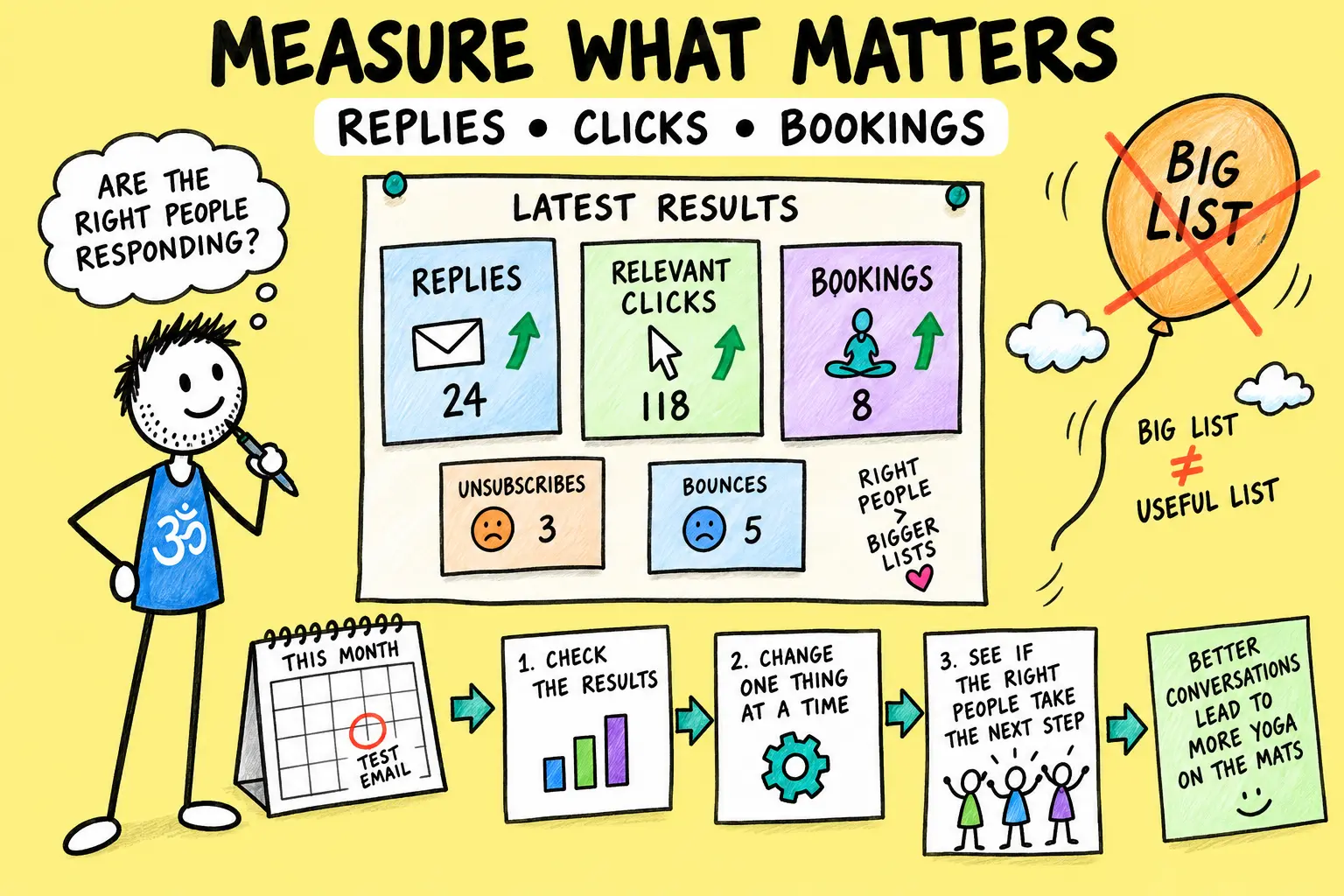
A large list is not automatically a useful list. Look for evidence that the right people read, respond and take appropriate next steps.
- Replies: did the email begin a useful conversation?
- Relevant clicks: did readers choose the resource or offer you mentioned?
- Enquiries and bookings: did suitable people take the intended next step?
- Unsubscribes: was the promise, relevance or frequency wrong?
- Delivery problems: does the list need cleaning or an address correcting?
Review a small set of results every month or quarter. Change one thing at a time—subject line, topic, frequency or offer—so you can learn from what happens.
Your 30-Minute Starting Plan
Use this short checklist to turn the guide into a small working system.
- Describe the reader.
Write the one-sentence reader description from Step 1.
- Choose the invitation.
Give people one honest reason to subscribe.
- Check the platform.
Compare it with the eight essentials before decorating anything.
- Draft the form.
Adapt the sign-up copy and make the consent wording clear.
- Outline the welcome.
Write one line for each of the three welcome emails.
- Set the first date.
Choose the topic and sending date of your first regular email.
Then build the smallest working version.
Email systems are particularly good at tempting sensible people into spending three hours choosing the colour of a button nobody has seen yet.
Yoga Email Marketing FAQs
Can I add every current student to my marketing list?
Do not assume that providing an address for a booking also means agreeing to marketing. In the UK, you normally need valid consent for unsolicited marketing emails to individuals unless every condition of the limited soft opt-in applies. Check your exact collection process against current ICO guidance.
Do I need a free download?
No. You need a clear, honest reason to subscribe. A waiting list, useful teaching notes or first notice of workshops may be enough. If you offer a resource, make it genuinely relevant and ready to deliver.
How often should a yoga teacher email?
Choose a useful rhythm you can sustain and describe it honestly. Watch replies, clicks, unsubscribes and bookings. Adjust when the evidence says the rhythm is wrong.
Should the email be plain or highly designed?
Use the simplest format that is easy to read on a phone and supports the message. Clear writing, useful content and one obvious next step matter more than decoration.
Should I buy an email list?
No. A purchased address is not the same as permission to hear from you, and bought-in lists create legal, trust and deliverability problems. Build the list through clear invitations and direct relationships.
Current UK Guidance
This article offers practical marketing guidance, not legal advice. For current requirements, use the ICO’s own material:

George’s Conclusion
Your email list should be a useful conversation with permission. Be clear about who it is for, make an honest promise, send something worth reading and give people an easy way to leave.
Begin with one sign-up form and one useful email. The seventeen-branch automation can wait until it has a job.