
George’s Intro
I updated this post in 2026.
A new qualification creates urgency.
Suddenly, every marketing idea looks like something you should have completed last Tuesday.
I’m George, a BWY yoga teacher, creator of the Online Yoga Lesson Planner, yoga card deck maker and enthusiastic sticky-note doodler.
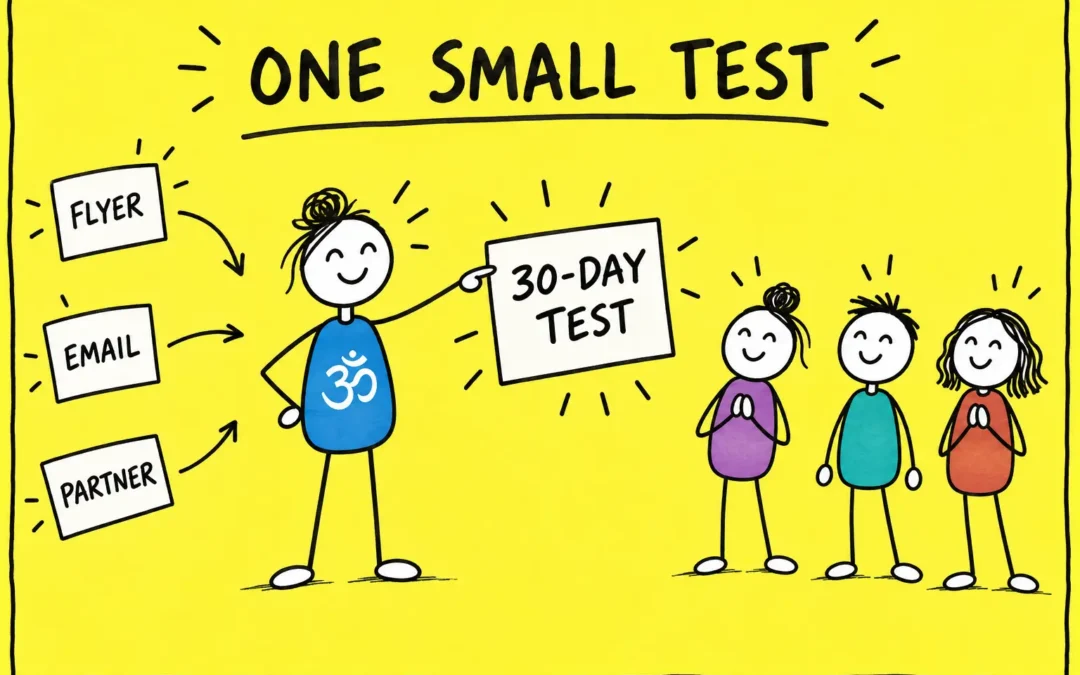
The answer is a sequence. Make one offer easy to understand, show it to one suitable group of people and measure what happens. You do not need to launch a retreat, membership and online course while your first class is still looking for its second Tuesday.
Yoga Marketing at a Glance
First, Make the Class Easy to Understand
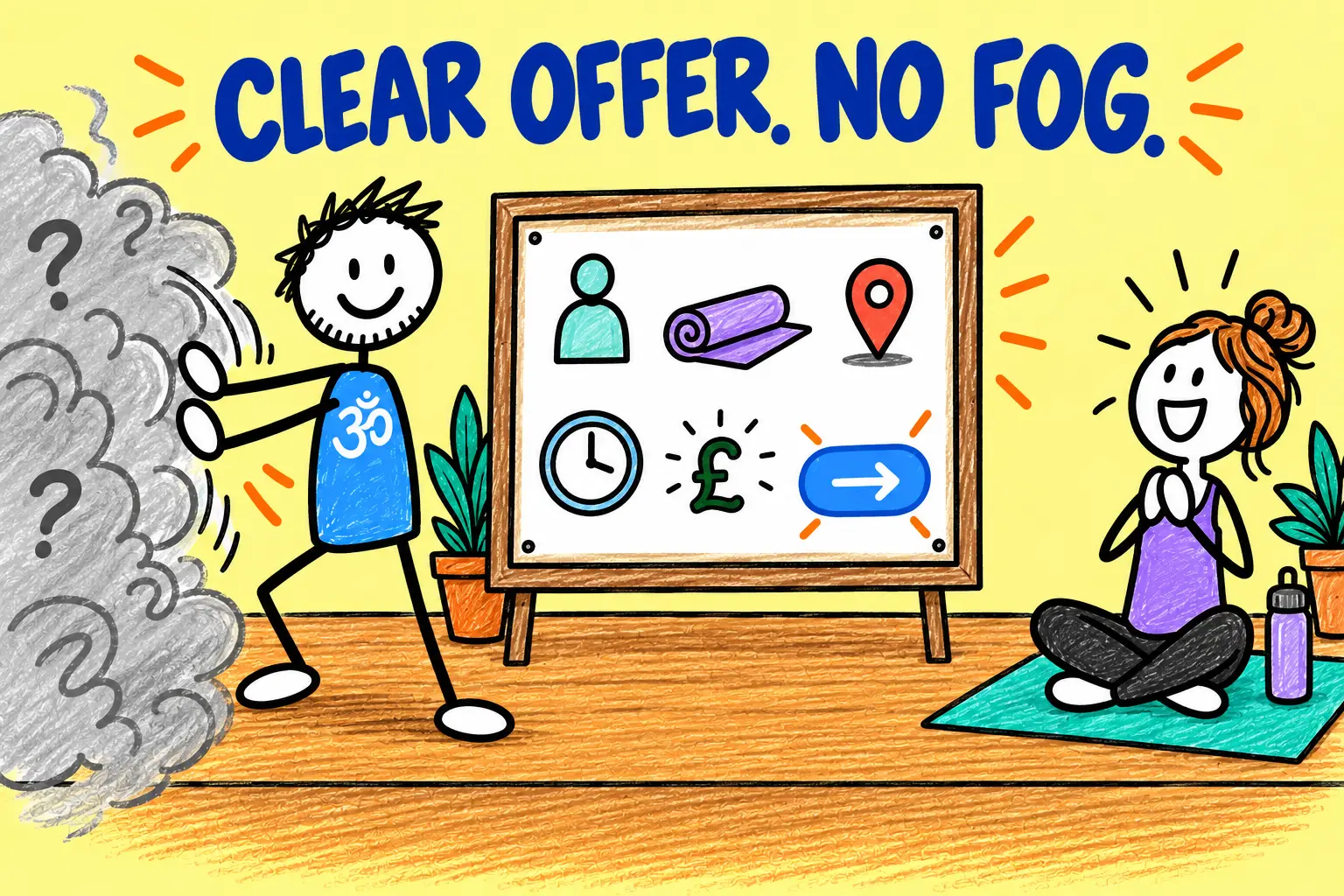
Marketing cannot solve fog. Before choosing a platform, poster or partnership, write one plain sentence that answers five questions:
- Who is the class for?
- What kind of yoga will you teach?
- Where and when will it happen?
- What does it cost?
- What should an interested person do next?
“A [level or type] yoga class for [specific people], held at [place] on [day and time]. [Price or introductory arrangement]. [One clear booking action].”
“Beginners’ Hatha yoga in Aberystwyth on Tuesdays at 6 pm” is more useful than “Transform your life”. Transformation may occur later. At 5:47 pm, the prospective student mainly wants the postcode.
If your offer still sounds like every other class nearby, read Uncover Your Yoga Teaching Niche. If you need an offer to test, browse 101 Yoga Business Ideas.
Do Not Begin with the Biggest Idea
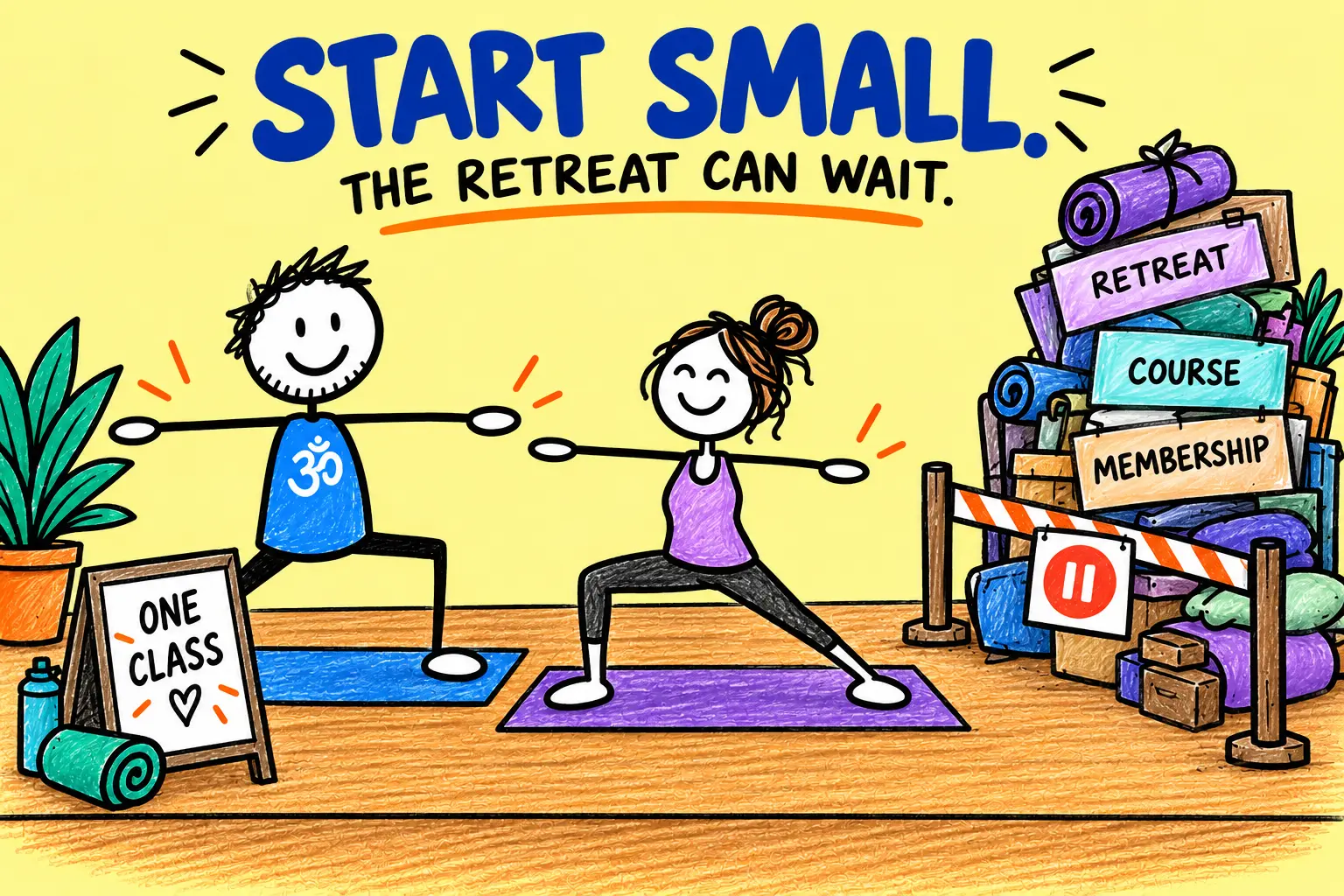
A workshop, retreat, private package, workplace programme or recorded course can become a useful part of a yoga business. Each also creates extra decisions, costs and administration.
Prove one repeatable offer. A sensible progression for a new teacher might look like this:
- Fill one regular class—or establish that enough suitable people want it.
- Learn why students enquire, attend and return.
- Check the class economics: venue, travel, equipment, preparation time, cancellations and realistic attendance.
- Add one adjacent offer, such as a private session, short course or modest workshop.
- Expand only when the smaller version has taught you something useful.
A tactic earns more attention when it brings suitable enquiries or paid bookings. A heroic amount of admin is not the same result wearing a cape.
Choose One First Marketing Test
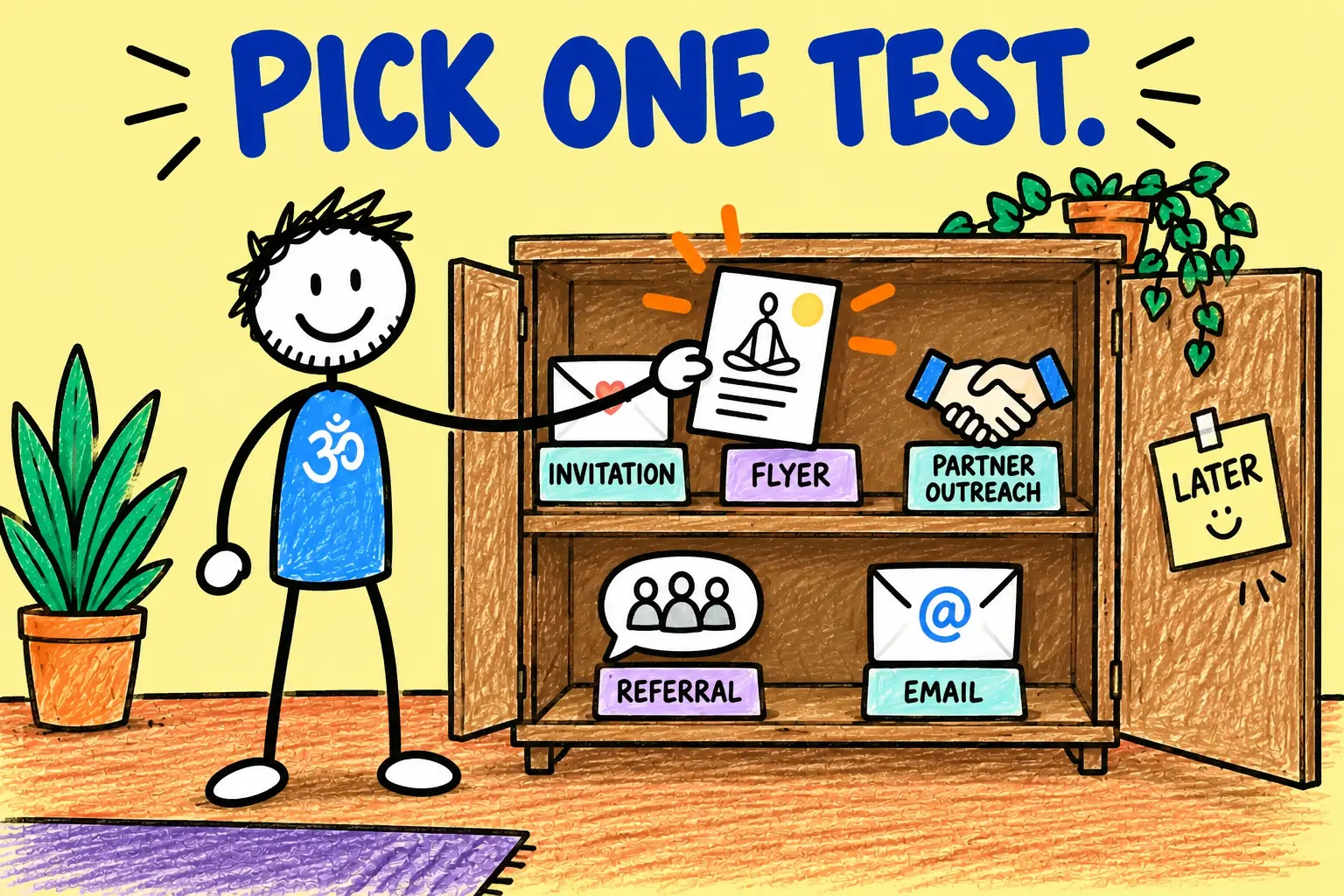
Pick the option that gives you the shortest honest route to suitable people. You can test another one later; the marketing cupboard will not lock overnight.
1. Personal invitations
Speak individually to people who have already expressed a relevant interest. Give them the full class details and let them decide without pressure.
2. A local partnership
Approach one complementary organisation whose community genuinely matches the class: a community centre, workplace, sports club or suitable health professional.
3. A clear local flyer
Place a small number where your intended students already visit. Record the location and use a specific booking link, email address or question so you can identify responses.
4. Referrals
Ask current students to share the class with one suitable person. Make the request specific and easy to pass on.
5. A useful email
If people have appropriately joined your mailing list, send a useful, accurate invitation with one clear next step and an easy way to unsubscribe.
Your 30-Day Yoga Marketing Test
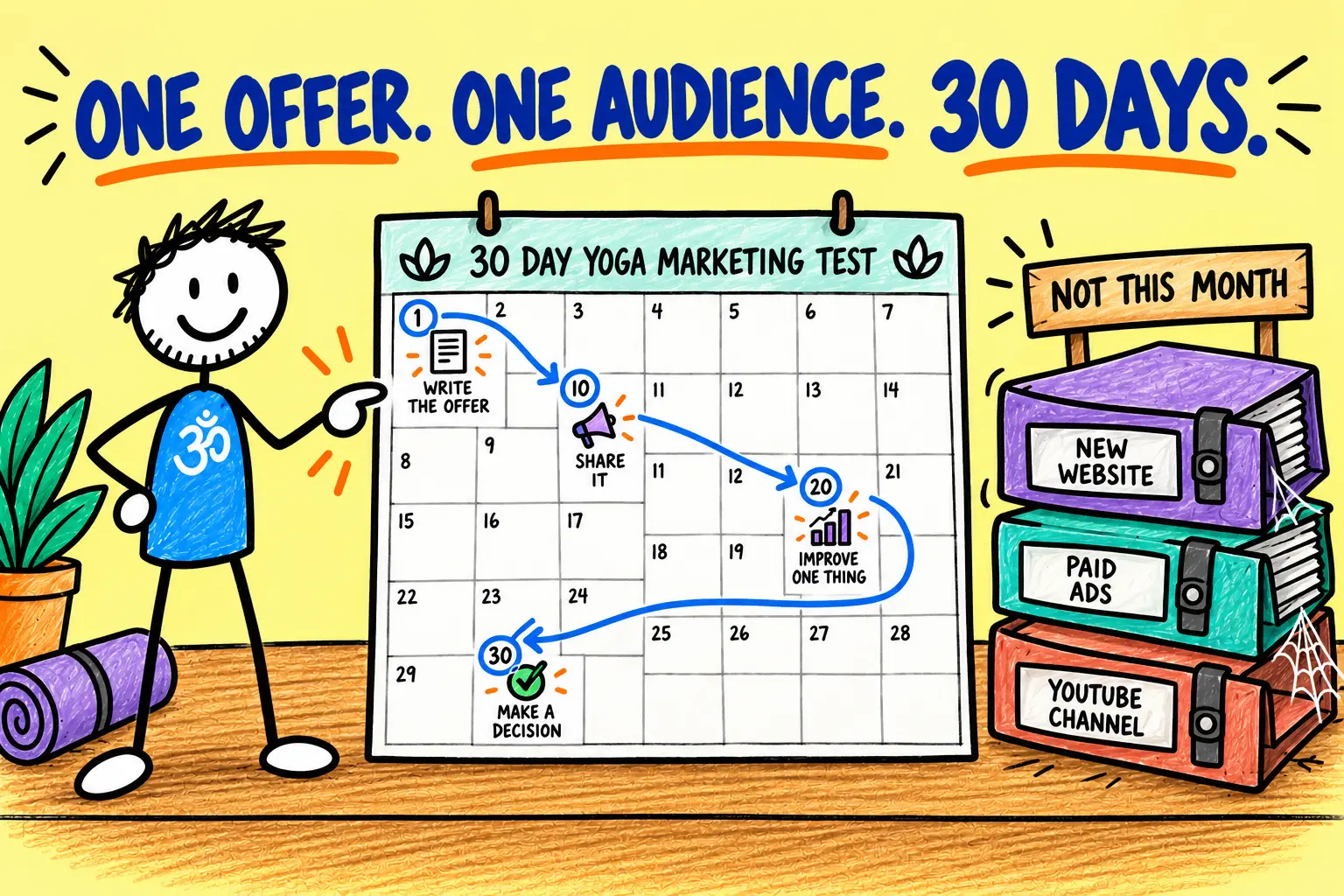
Choose one class, one audience and one main marketing route. Set a modest limit for money and time before you begin.
- Days 1–3: Define the test
Write the offer, audience and booking action. Decide the maximum budget and the result that would make the test worth repeating.
- Days 4–7: Create the message
Write a specific headline, accurate class details and one believable reason to trust you. Check every date, price, condition, link and contact detail.
- Days 8–14: Put it in the right places
Use the one route you selected. Speak to relevant people, approach a suitable partner, display the flyer or send the email.
- Days 15–21: Improve one thing
If people see the offer but do not enquire, clarify the message or next step. If nobody sees it, change the distribution rather than adding seven exclamation marks.
- Days 22–30: Continue consistently
Give the test enough time to produce a useful signal without endlessly funding a tactic that has clearly gone for a nap.
- Day 30: Decide
Keep, improve, stop or test again. Write down the reason before the next exciting idea arrives.
Use the simple scorecard below. No mysterious dashboard is required.
Record What Happened
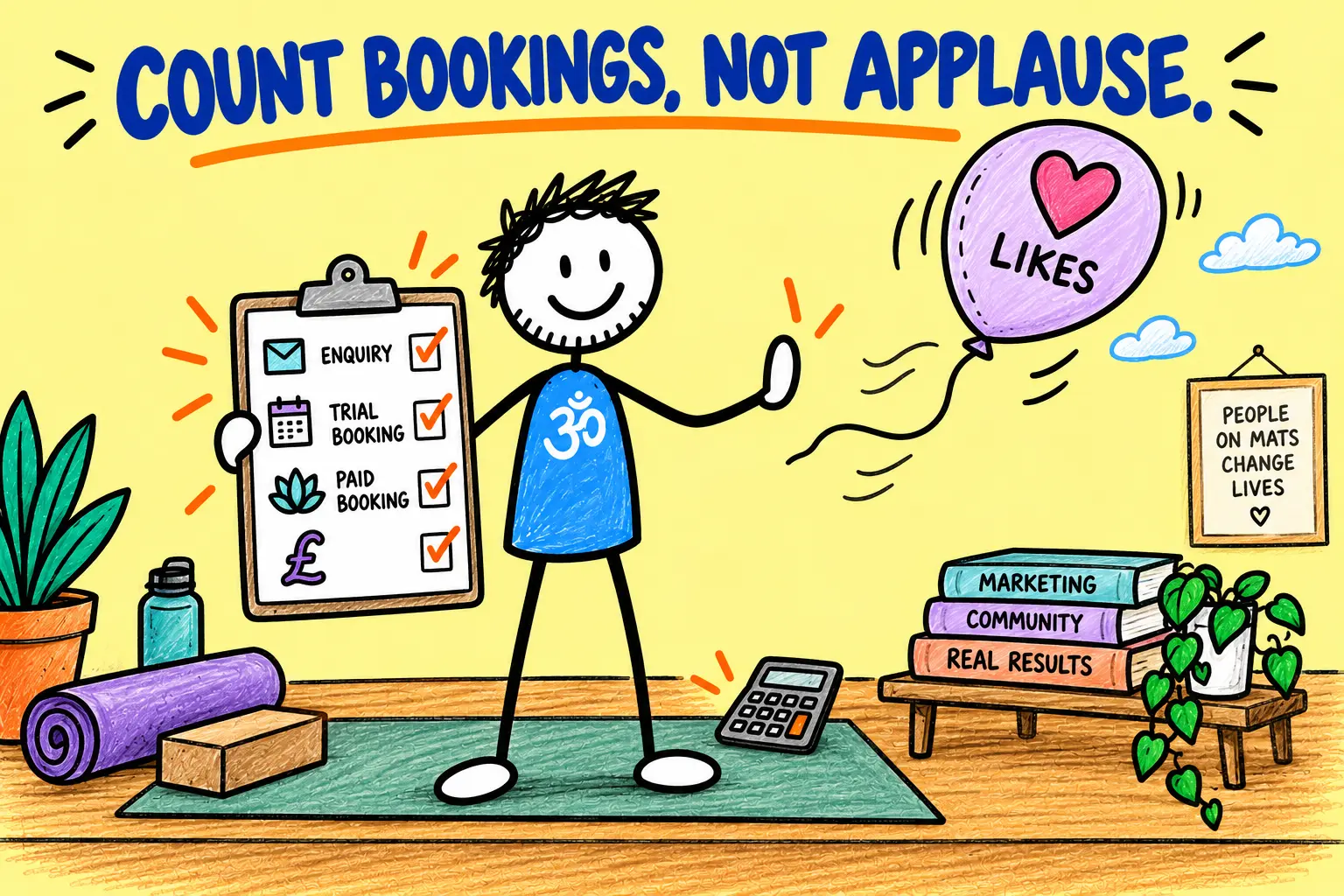
Write the starting figures down before the test, then record the result at the end. A notebook or spreadsheet is enough.
Likes, impressions and the number of leaflets printed may help explain what happened, but they are not the final result. A popular post that produces no enquiries may simply be a tiny entertainment service you provided free of charge.
Keep the Offer Fair and Clear
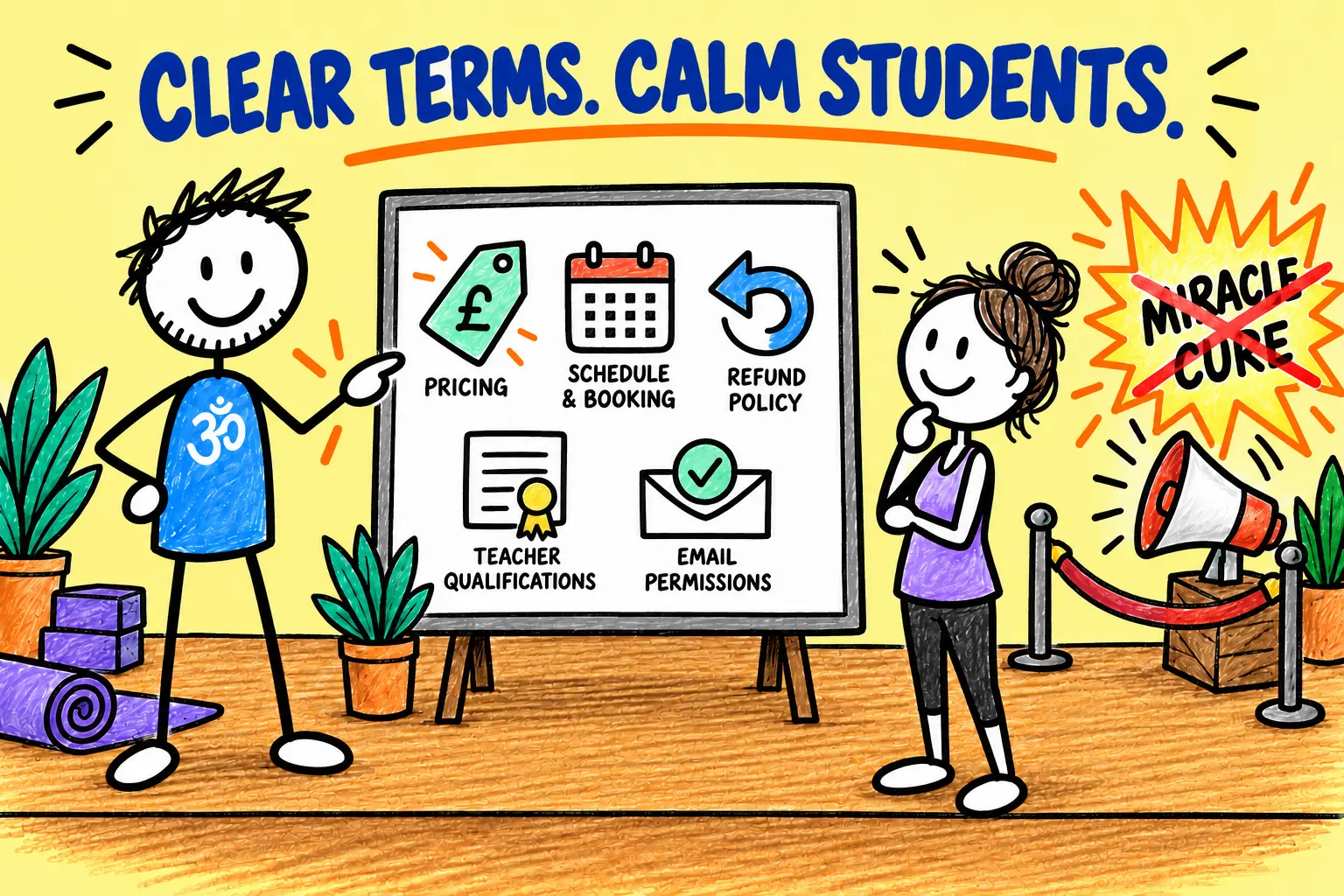
Clarity protects everyone. Explain prices, booking rules, expiry dates, refund arrangements and important conditions before somebody pays. Describe your qualifications and class accurately, and avoid promises that yoga will cure a condition, guarantee a result or suit every person.
- The UK Competition and Markets Authority provides guidance on fair and transparent consumer terms.
- If you run a discount, introductory offer or loyalty promotion, the ASA’s promotional marketing guidance explains why significant conditions should be clear.
- If you collect email addresses for marketing, consult the ICO’s electronic-mail marketing guidance. Do not quietly turn an enquiry, attendance register or competition entry into a permanent mailing list.
This is a practical marketing guide rather than legal advice. Check the rules that apply to your business, location and particular offer.
Common Questions
How many marketing tactics should I test at once?
For a new class, begin with one main route so you can understand what caused the response. You can still answer enquiries and speak naturally about the class; the point is to avoid launching five campaigns that cannot be compared.
What if nobody enquires?
Check whether suitable people saw the offer. If they did, improve the audience, message or booking step. If they did not, change where or how it was distributed. A quiet test gives you information, not a verdict on your teaching.
Should the first class be free?
Not automatically. A free taster may suit a particular test, but it still needs clear conditions and a purpose. A paid introductory class or short course may give you better evidence of genuine demand.
When should I add private sessions, workshops or retreats?
Add an adjacent offer when you understand the audience, delivery work and likely costs. Start with a manageable version before committing to a large venue, accommodation or a calendar full of deposits.
Do I need a large social-media following?
No. A clear local offer shown to a small number of suitable people can be more useful than a large general audience. Measure enquiries and bookings rather than treating follower numbers as the business itself.
Give Your Marketing a Plan
One test is enough. Choose the class, decide who needs to see it and record the result before adding another tactic.

George’s Conclusion
Marketing is a practice. Choose one useful offer, show it to suitable humans and listen to what happens. Keep the tactics that earn another month. Let the rest return peacefully to the notebook.
Your new qualification already gave you plenty to learn. Your first marketing plan does not need to audition for a second qualification.