
George’s Intro
I updated this post in 2026.
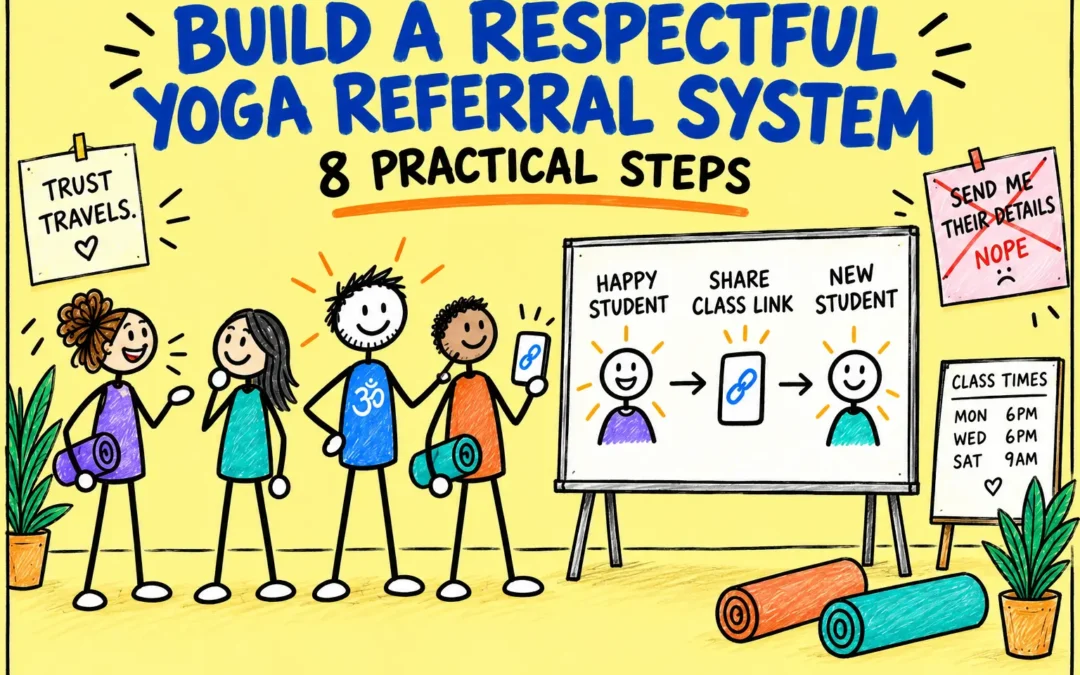
The best yoga referrals do not feel like a sales scheme.
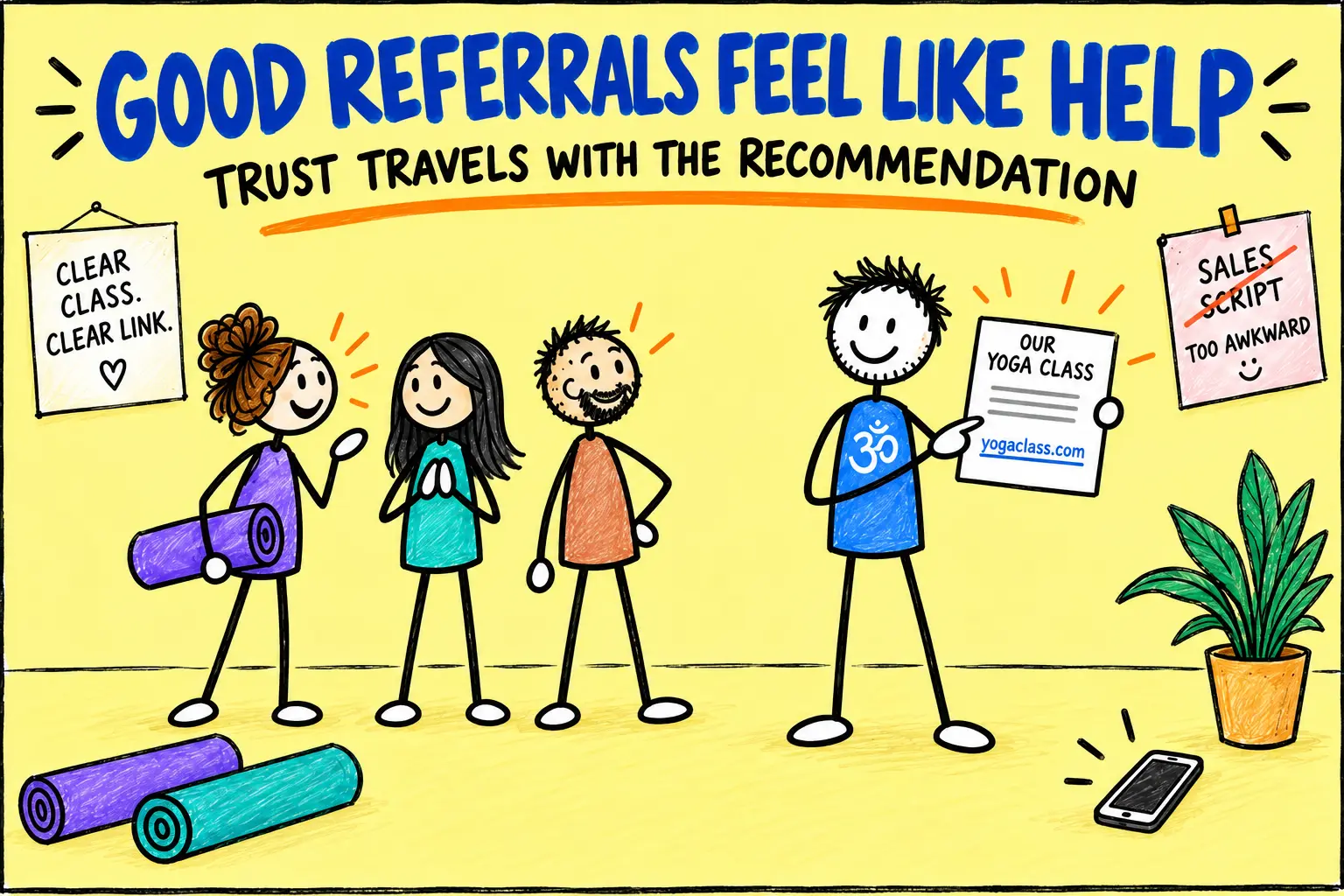
They feel like one person saying, “This class helped me, and I think it might suit you too.” Your job is to earn that sentence, make the useful details easy to share and give the new student a comfortable first step.
Referral marketing is powerful because trust travels with the recommendation. It is also easy to mishandle. Ask too often, make the reward too prominent or turn a student into an unpaid salesperson and a warm recommendation quickly becomes an awkward favour.
I’m George, a BWY yoga teacher, creator of the Online Yoga Lesson Planner, yoga card deck maker and enthusiastic sticky-note doodler.
Jump to the 20-Minute Referral Reset ↓
What Yoga Referral Marketing Is
Referral marketing gives a happy student or useful local contact a simple way to point the right person towards your class. It begins with a class worth recommending and ends with the interested person choosing whether to contact or book with you.
It is not a request for somebody else’s address book. Do not ask students to supply friends’ email addresses or phone numbers. For UK readers, the ICO’s electronic-mail marketing guidance explains the rules around marketing emails, texts and direct messages. The cleanest route is for the friend to scan a QR code, follow a class link or start the conversation themselves.
8 Steps To Build A Respectful Yoga Referral System
Make recommending the class easy, not awkward.
The first four steps make the class, invitation and booking link easy to share. Steps five to eight improve the first visit, build suitable partnerships, thank people and track what works.
2Choose the Right MomentAsk after value has been felt.
3Use an Optional InvitationKeep the wording human and pressure-free.
4Give One Shareable LinkReplace the old Facebook script with useful details.
5Make the First Visit EasyRemove uncertainty for the new student.
6Build Local Referral PartnersLook for a genuine two-way fit.
7Thank Without PressureAppreciate the introduction without buying it.
8Track and ImproveNotice which recommendations lead to visits.
Make the Class Easy to Recommend
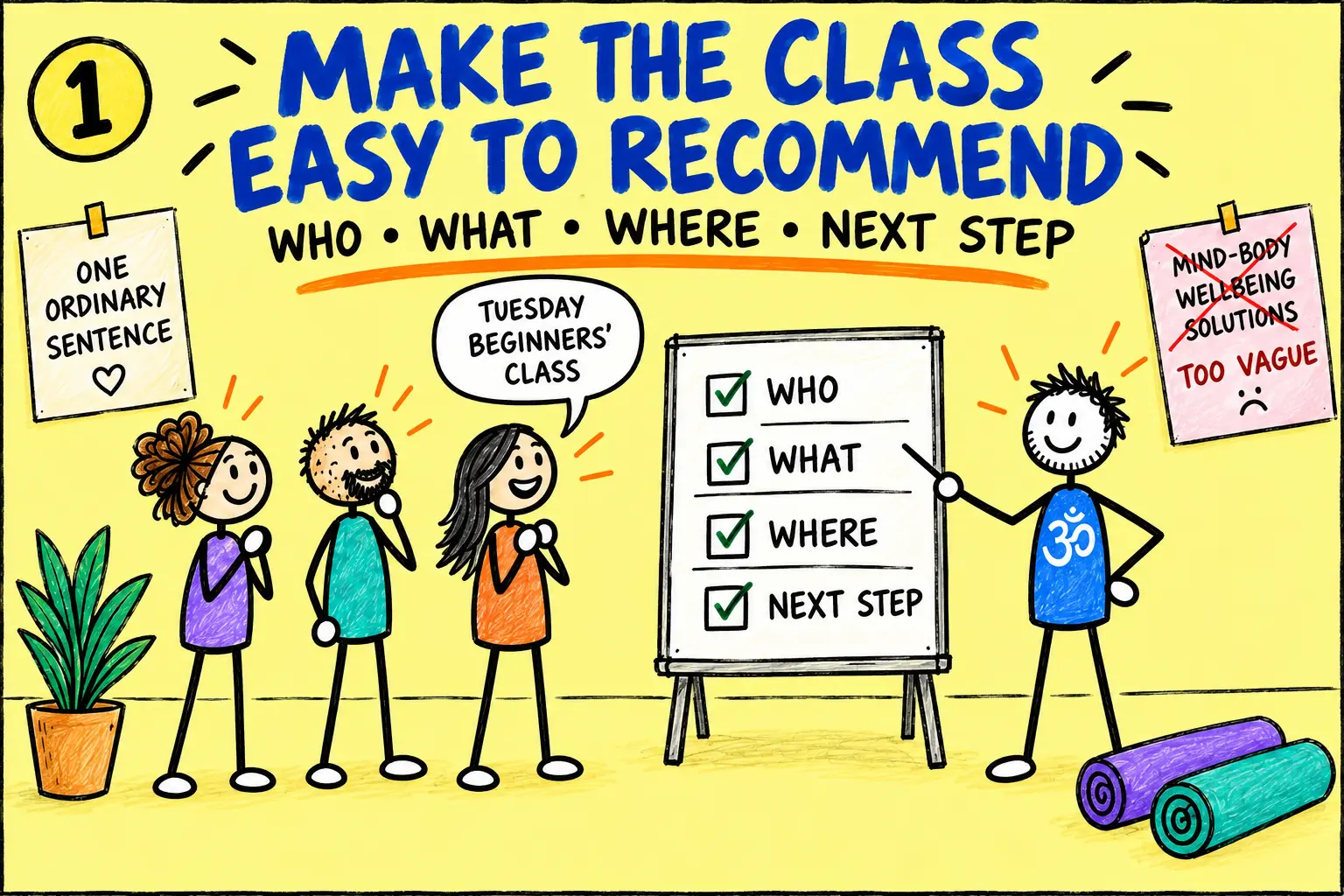
People rarely recommend “a varied timetable of mind-body wellbeing solutions.” They recommend a recognisable experience: a calm beginners’ class on Tuesday, chair yoga for people who dislike getting down to the floor, or a short course that helped their back feel less stiff.
Start by giving the class a clear shape. A useful description answers four questions:
- Who is the class designed for?
- What happens in the session?
- Where and when does it run?
- What should a beginner do next?
If current students cannot explain the class in one ordinary sentence, improve the offer before improving the referral tactic. The work you did in Uncover Your Yoga Teaching Niche can help you make that sentence more precise.
Referral testCould a student describe this class accurately without opening your website?
Choose the Right Moment to Ask
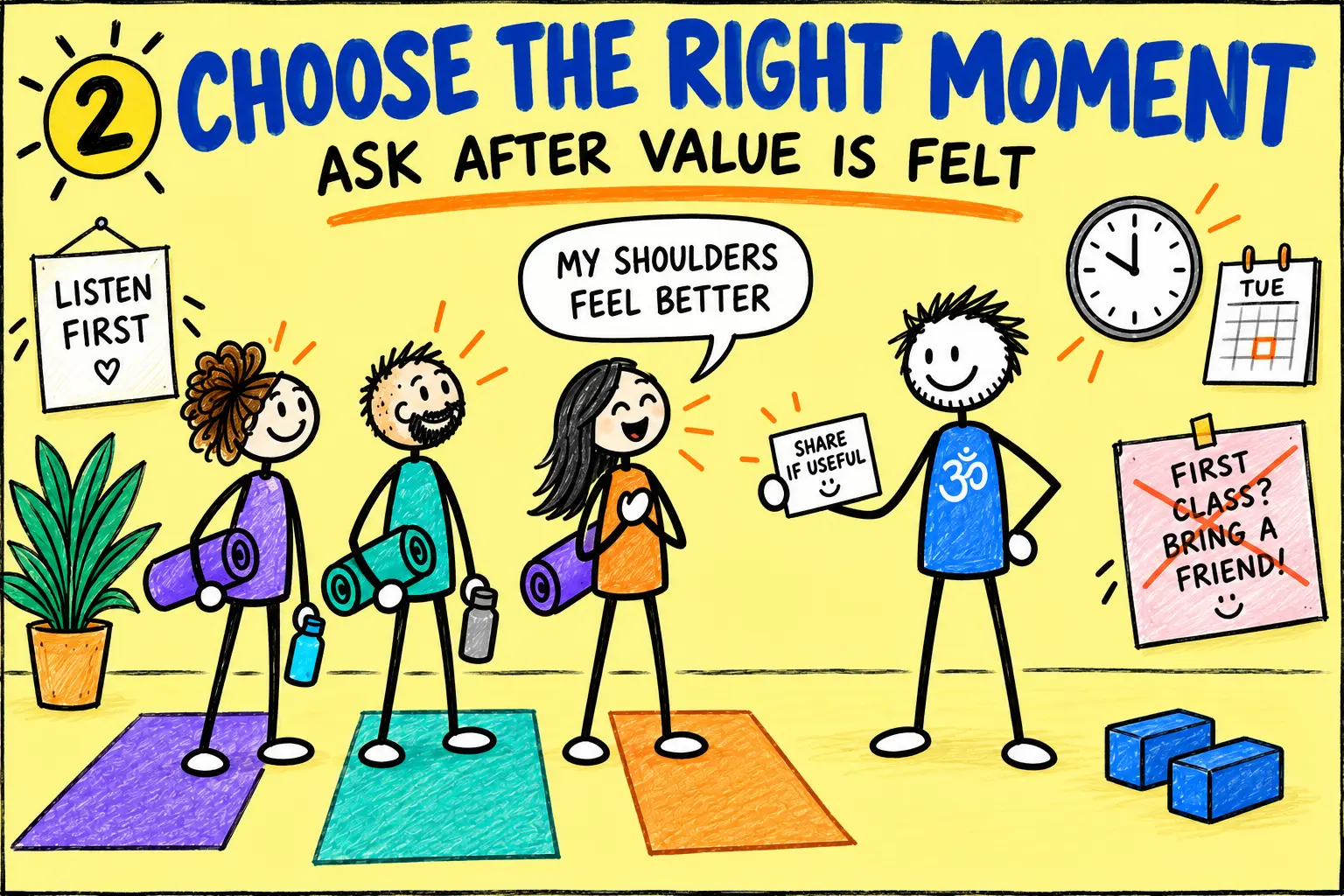
A referral request lands best after a real sign of satisfaction: a student says the class helped, completes a course, returns regularly or asks when the next block begins. That is very different from greeting a first-time student with “bring a friend next week.”
Listen before asking. If somebody says, “My shoulders always feel better after this class,” you might reply:
Simple in-person wording
“I’m glad it’s helping. If you know somebody who might enjoy this kind of class, you’re welcome to send them the class page. No pressure at all.”
Ask once, then return to the relationship. A referral system should not make every compliment feel like the opening of a sales conversation.
Best momentAfter a student volunteers a positive result—not before they have experienced the class.
Use a Short, Optional Invitation
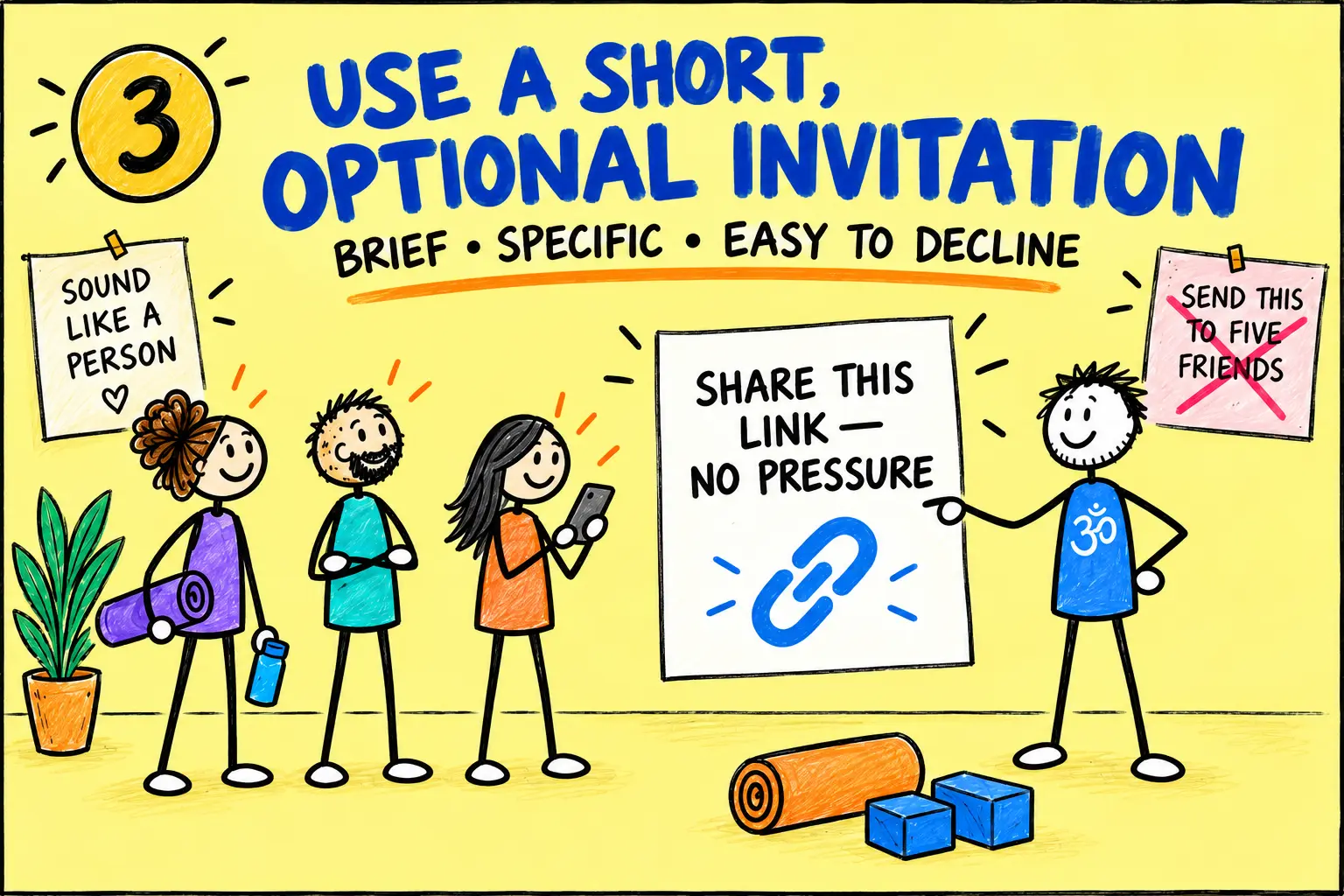
Good referral wording is specific, brief and easy to decline. It does not tell a student whom to approach, require them to perform a sales pitch or imply that your friendship depends on a booking.
Follow-up email to an existing student
“Thank you for coming to the course. If a friend has been looking for a gentle beginners’ class, you’re welcome to share this page with them: [class link]. They can read the details and decide for themselves.”
Only send that email to people you are permitted to contact. Keep the referral line secondary to the useful purpose of the message, such as course information or a genuine follow-up.
Notice what the wording avoids. You are not asking for a name, offering to contact the friend or telling the student to copy a promotional message into a private conversation.
Give One Shareable Class Link
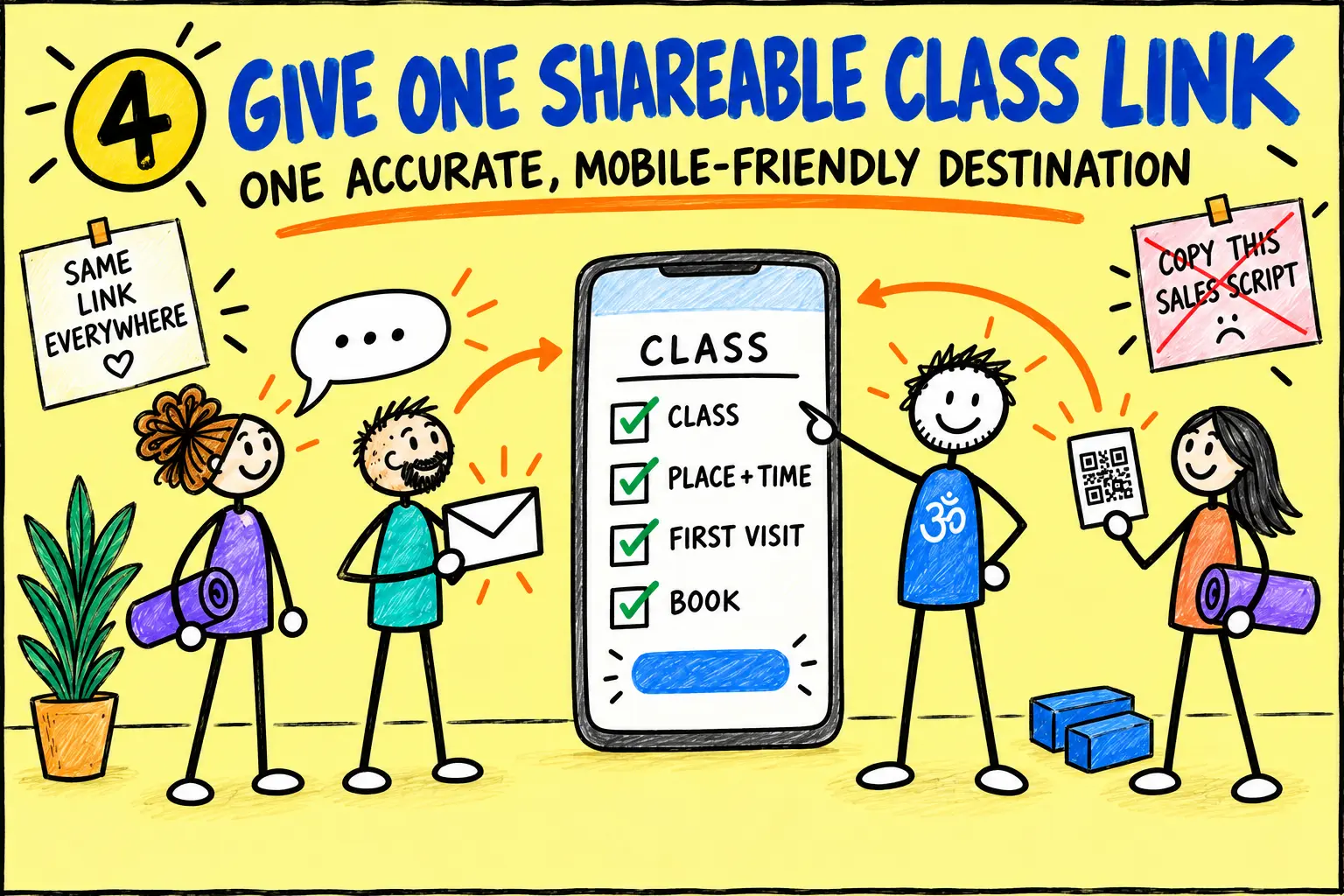
The older Facebook tactic absorbed into this guide had one useful instinct: make it easy for people to explain what you offer. The dated part was treating Facebook as the strategy and supplying a promotional script for students to distribute.
A modern version is channel-neutral. Create one class page that works when somebody finds it through a conversation, email, WhatsApp group, printed QR code or optional public social post. The page should show:
- the class name and who it suits;
- venue, day, time, accessibility and price;
- what to bring and what happens on a first visit;
- a clear booking or enquiry step.
Optional public social caption
“I’ve enjoyed [class name] with [teacher]. It is a [short, accurate description] in [place]. Details are here if it sounds useful: [class link].”
The student should use their own words and share only if they genuinely want to. A public recommendation is more credible when it sounds like a person, not a pre-written advertisement wearing somebody else’s name.
One destinationSend every route to the same accurate, mobile-friendly class page.
Make the First Visit Easy
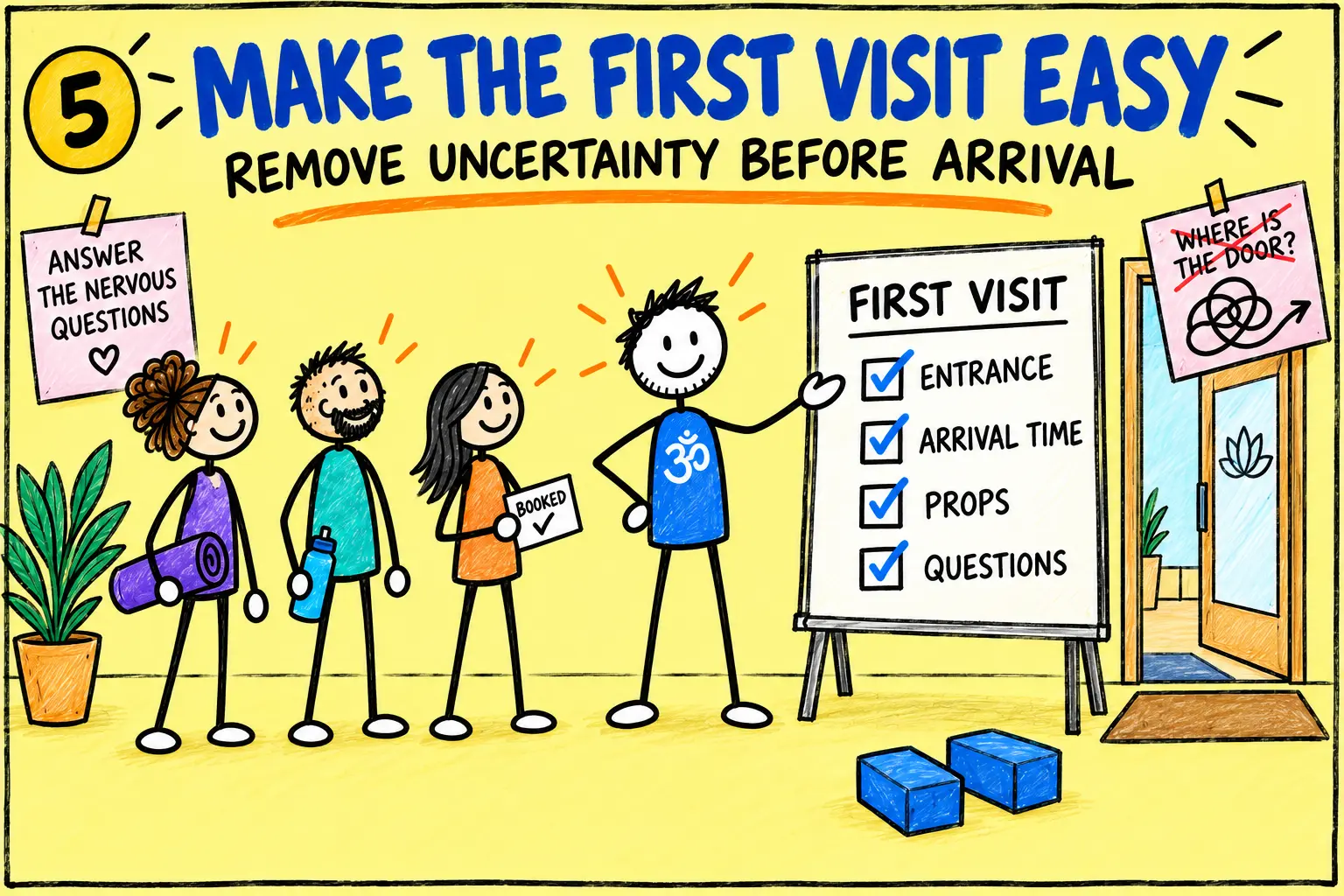
A recommendation creates interest, but the first-visit details turn that interest into a booking. The referred person may trust their friend and still worry about flexibility, fitness, clothing, equipment, parking or being the only beginner.
Answer those concerns before they need to ask. A useful first-visit note can say where to enter, when the door opens, whether mats are supplied, which clothing is comfortable and how you adapt the class. Include a real contact route for anything personal.
A bring-a-friend session can work when it fits the class, but it is not compulsory. A clear beginners’ route is often more useful than a discount. If you do offer a trial or paired booking, state the dates, price and conditions plainly.
Build Local Referral Partners
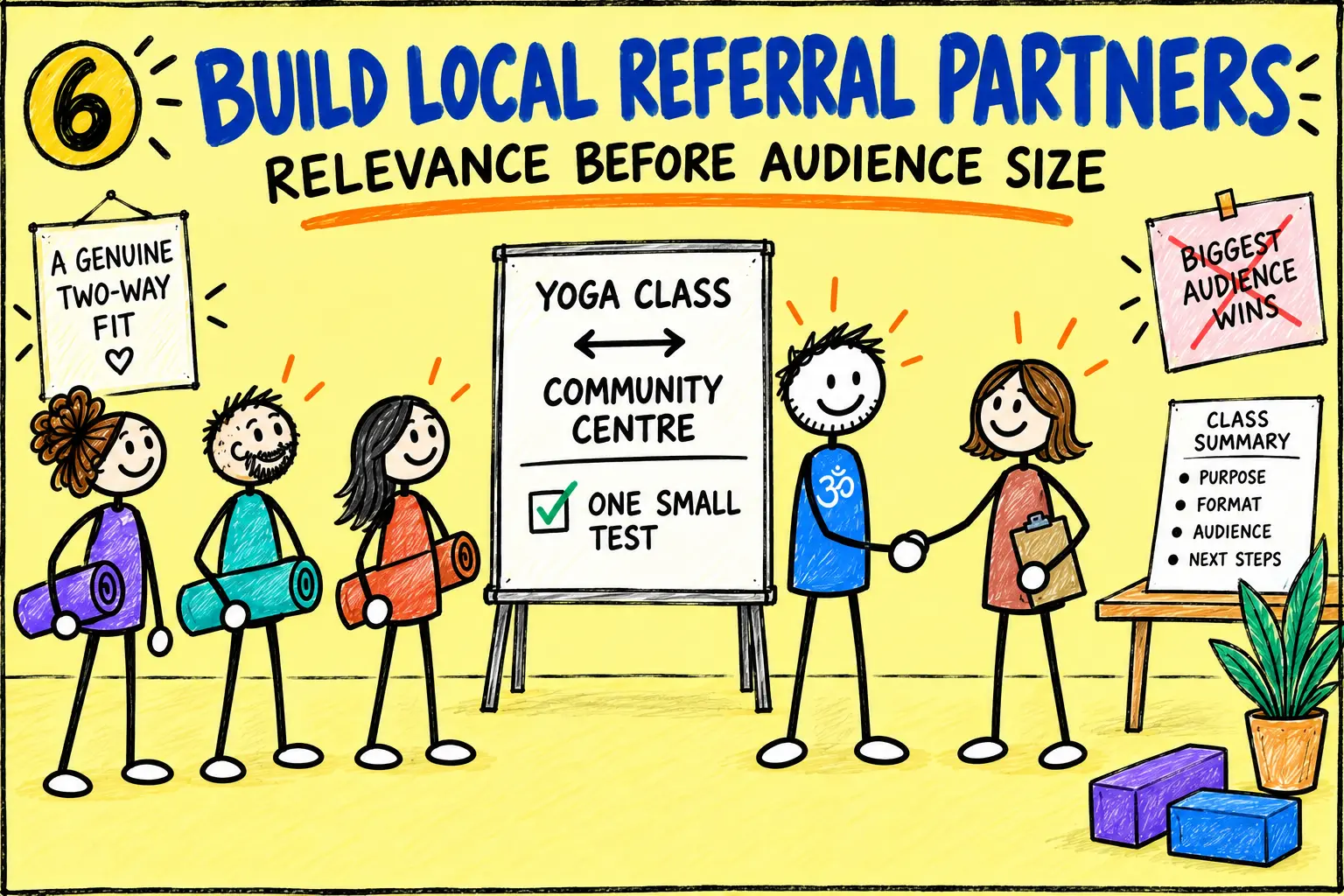
Students are not the only people who can introduce your class. A community centre, complementary therapist, workplace wellbeing lead, walking group or local charity may already serve people who genuinely fit your offer.
Choose partners by relevance, not by audience size. Learn what they do, check whether your class is appropriate for the people they support and propose one small test. You might exchange useful leaflets, contribute a short taster session or create a clearly described route between complementary services.
Partner introduction email
“I teach [specific class] for [people or situation] in [place]. I noticed that you [relevant work]. Would a short conversation be useful to see whether our services are a sensible fit? I can send a one-page class summary first.”
Do not imply clinical outcomes you cannot support, and do not ask a partner to share client details. A partner can give people your information; interested people can then choose to contact you.
Partnership testDoes this introduction genuinely help the person being referred?
Thank People Without Adding Pressure
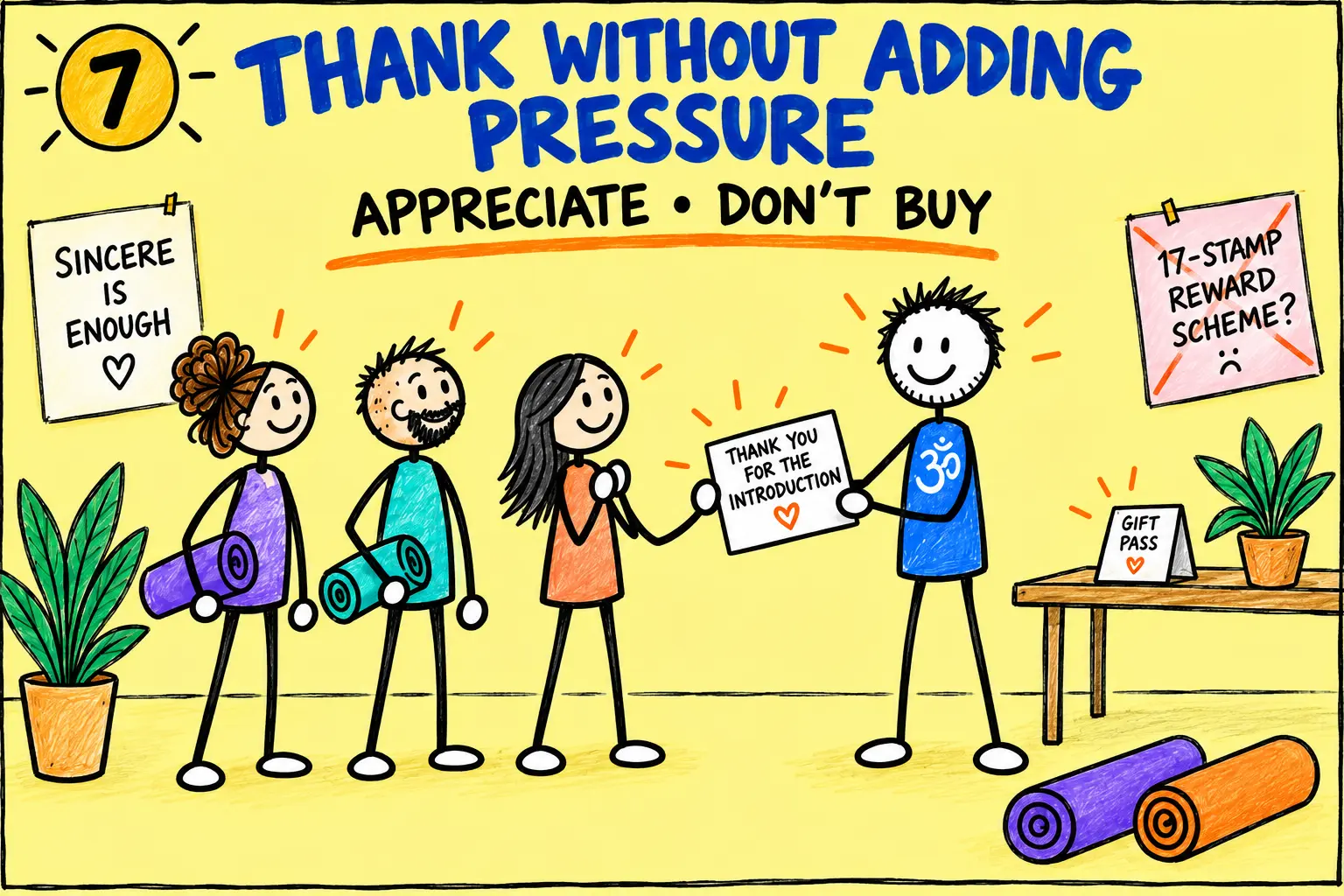
A sincere thank-you is enough for many referrals. A private message after the new student has made contact—without revealing anything they have not agreed to share—can acknowledge the introduction and close the loop.
If you use a reward, keep it modest and transparent. A guest pass, small class credit or community contribution may fit better than a complicated points scheme. Explain who qualifies, when it applies and whether the new student receives anything too.
Never make praise conditional on a referral. Students should be able to enjoy the class, give feedback and talk about it—or not—without feeling that they owe you access to their friends.
Track How People Heard About You
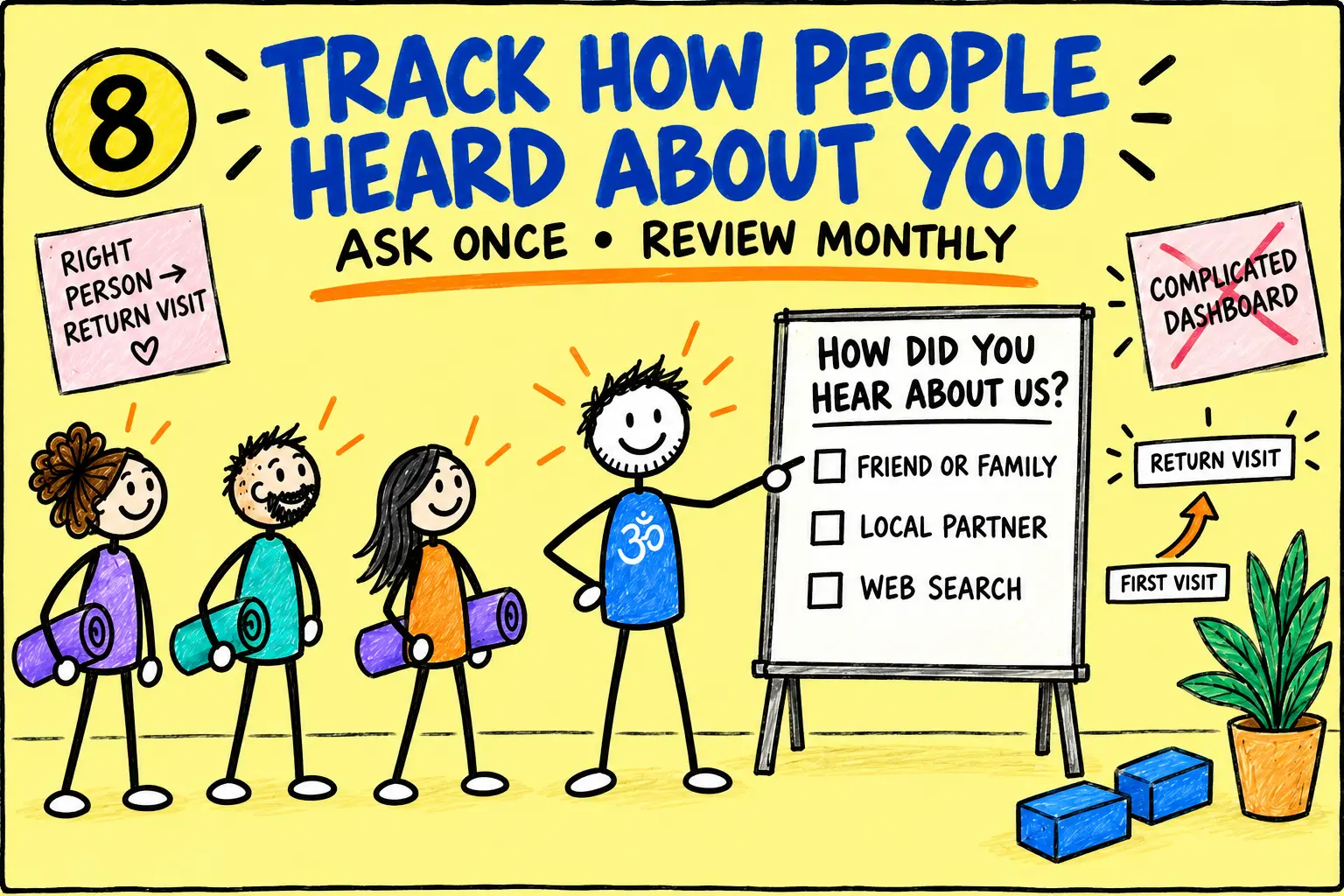
You do not need a complicated dashboard. Add one optional question to the booking or welcome process: “How did you hear about this class?” Use a short set of answers such as friend or family, local partner, web search, social post, leaflet or other.
Review the answers monthly. Count first visits and, separately, how many people return. A channel that produces many enquiries but few suitable students is less useful than a smaller source that produces comfortable, repeat attendance.
- Which class is easiest to recommend?
- Which wording produces suitable enquiries?
- Which partner sends the best-fit students?
- Where do first-time visitors hesitate?
Improve one weak point at a time. Clearer venue directions may produce more value than another referral incentive.
Measure the whole journeyA referral is useful when the right person arrives, feels welcome and wants to return.
Your 20-Minute Referral Reset
Use this short exercise before creating a reward scheme or another social post.
- 1Choose one class. Write a one-sentence description of who it helps and what happens.
- 2Check the destination. Open its class page on your phone and fix the first missing detail.
- 3Write one invitation. Use the pressure-free wording from Decision 3 and save it for the right moment.
- 4Add one source question. Record how new students heard about the class.
Make one class easier to recommend before asking more people to recommend it.
Yoga Referral Marketing FAQs
How often should I ask students for referrals?
There is no useful universal frequency. Ask selectively after a student expresses a real benefit or completes a suitable programme. A thoughtful invitation at the right moment is better than a recurring request in every class.
Do I need to offer a referral reward?
No. Clear class information, a welcoming first visit and a genuine thank-you may be enough. If you test a reward, keep it simple, transparent and secondary to the quality of the recommendation.
Can students share my class on social media?
Yes, if they choose to and the wording reflects their honest experience. Give them the accurate class link, not a script they must paste. Public posts and private direct messages are not interchangeable, so check the rules that apply to your marketing.
Should I collect a friend’s contact details?
No. Let the interested person contact you, book through the class page or opt in themselves. This respects privacy and avoids turning a friendly recommendation into unsolicited direct marketing.
How should I track referrals?
Add an optional “How did you hear about us?” question to the booking or welcome process. Review both first visits and repeat attendance so you can see which sources bring suitable students.
What if referrals are not working?
Check the offer before the incentive. Make sure the class has a clear audience, one-sentence description, complete first-visit information and simple booking step. Then test one invitation with a small number of satisfied students.
Give Referrals a Marketing Plan
A referral works best as one part of a sensible system. The Yoga Marketing Kit helps you clarify the offer, create useful messages, choose practical marketing tests and track what deserves another round.
George’s Conclusion
Referral marketing is not a hunt through your students’ address books. It is the quieter work of teaching something worth mentioning, describing it clearly and letting interested people take the next step for themselves.
Start with one class and one invitation. Make the destination useful. Thank people properly. Then track whether the recommendation led to a comfortable first visit and a second one. That is a referral system you can improve without making anybody feel recruited.