
George’s Intro
I updated this post in 2026.
A useful local partnership begins with two audiences who genuinely benefit from the same small idea.
I’m George, a BWY yoga teacher, creator of the Online Yoga Lesson Planner, yoga card deck maker and enthusiastic sticky-note doodler.
When I taught in Llandrindod Wells, I wrote to a local spa with a reciprocal pass-and-class idea. The useful lesson was not to assume that another business would promote my yoga classes. It was to approach as an equal, describe a fair exchange and make it easy for the other person to say yes, no or “let’s try something smaller”.
Jump to the Local Yoga Partnership Planner ↓
What Is Local Partnership Marketing?
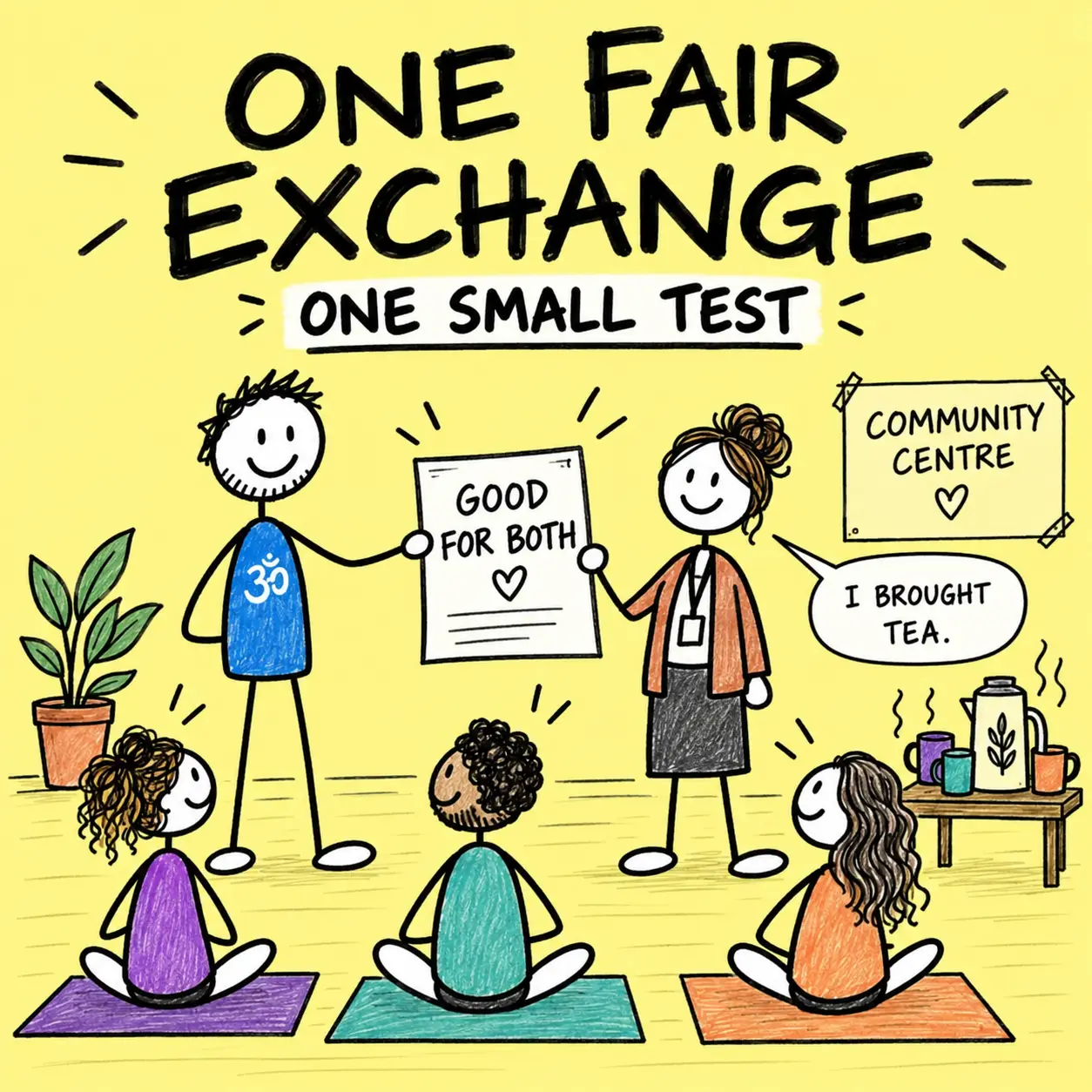
Local partnership marketing is a simple agreement between two complementary teachers, businesses or organisations. Each side helps make a genuinely relevant offer, event or piece of information easier for the right people to find.
The agreement should have a clear purpose, a fair exchange and defined roles. It might be a community centre sharing a beginner-course page, a café including your workshop card beside a relevant event, a workplace testing a lunchtime taster, or an accommodation provider and yoga teacher planning a retreat weekend together.
It is not a promise of bookings. It is not a reason to send the same pitch to every local business. The best partnership usually begins with a modest question: could we test one useful idea together?
8 Steps To Build A Useful Local Yoga Partnership
Start small, agree clearly and review the result.
The first three steps choose the partner, audience overlap and fair exchange. Steps four to eight plan the pilot, find the right person, write the message, agree the details and review the result.
Choose One Suitable Local Partner
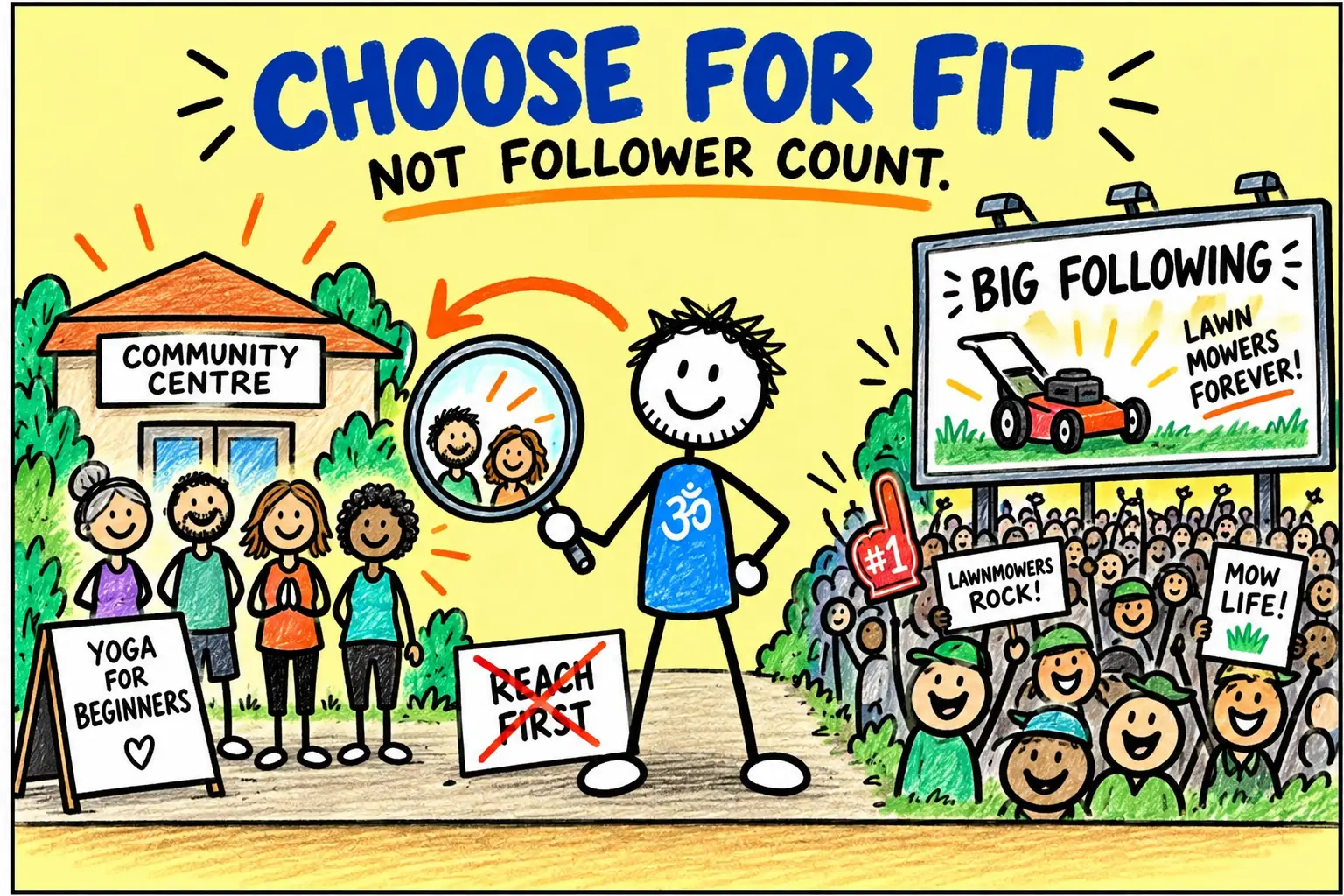
Begin with relevance, not reach.
Make a short list of organisations that already serve people who may genuinely value your class, workshop or resource. A small community group with the right audience can be more useful than a large business with no obvious connection.
Possible Partners
Community centres, independent cafés or bookshops, local employers, sports clubs, accommodation providers, retreat venues, charities and carefully chosen health or wellbeing practitioners.
First Filter
Would I be comfortable recommending this organisation to a student? Is the idea relevant to their audience? Can both sides explain the exchange honestly?
Find the Real Audience Overlap
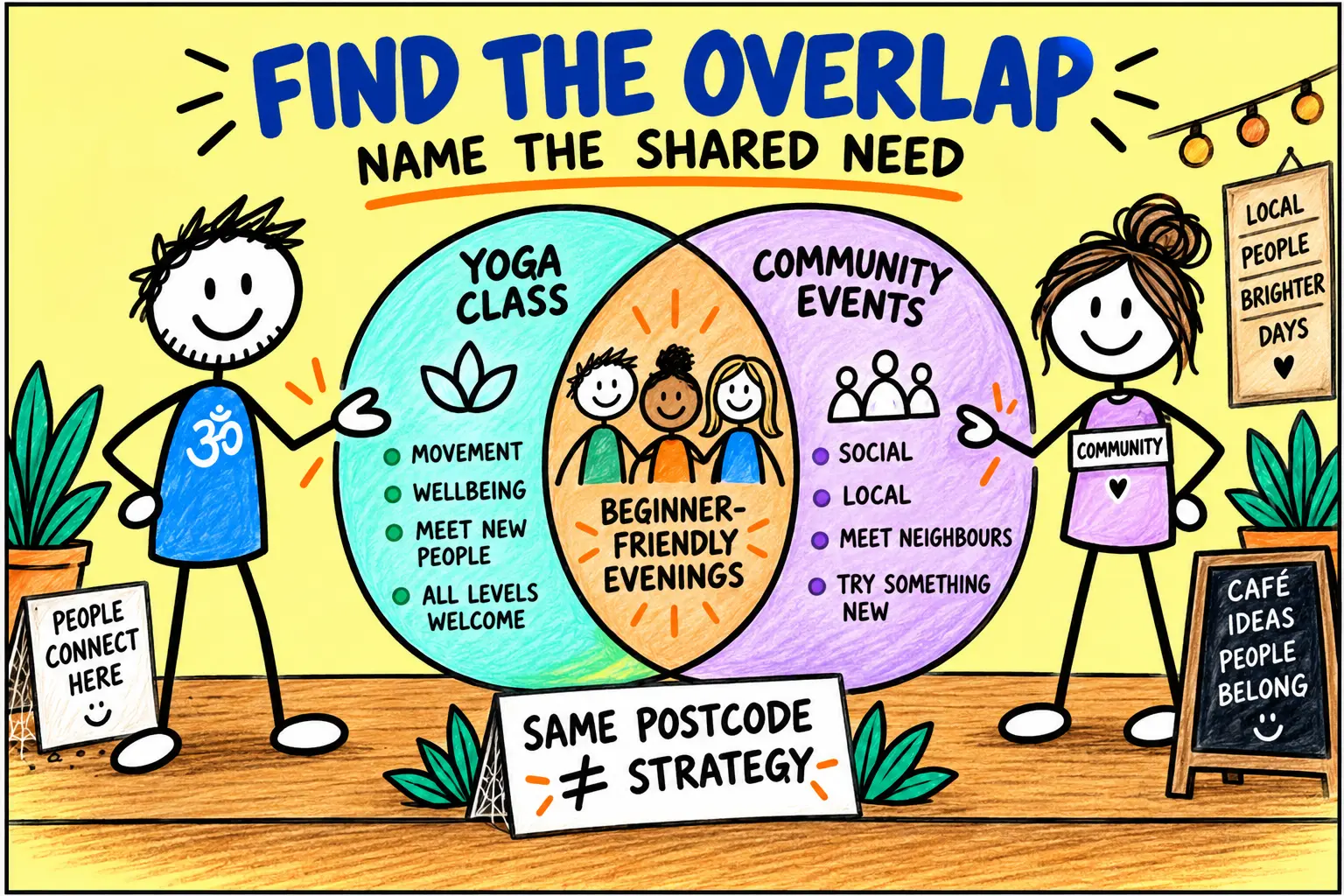
Name the people or practical need you have in common.
A café and a yoga teacher do not overlap merely because both are local. They might overlap because the café hosts community events and your students ask where they can meet after class. A workplace and yoga teacher might overlap because staff have asked for a beginner-friendly lunchtime activity.
Write the overlap in one sentence. If the sentence relies on stereotypes, vague wellness language or an unsupported health claim, the partnership needs more thought.
Useful beats convenient.Choose the partner because the idea helps real people—not simply because their premises are nearby.
Shape a Fair Exchange
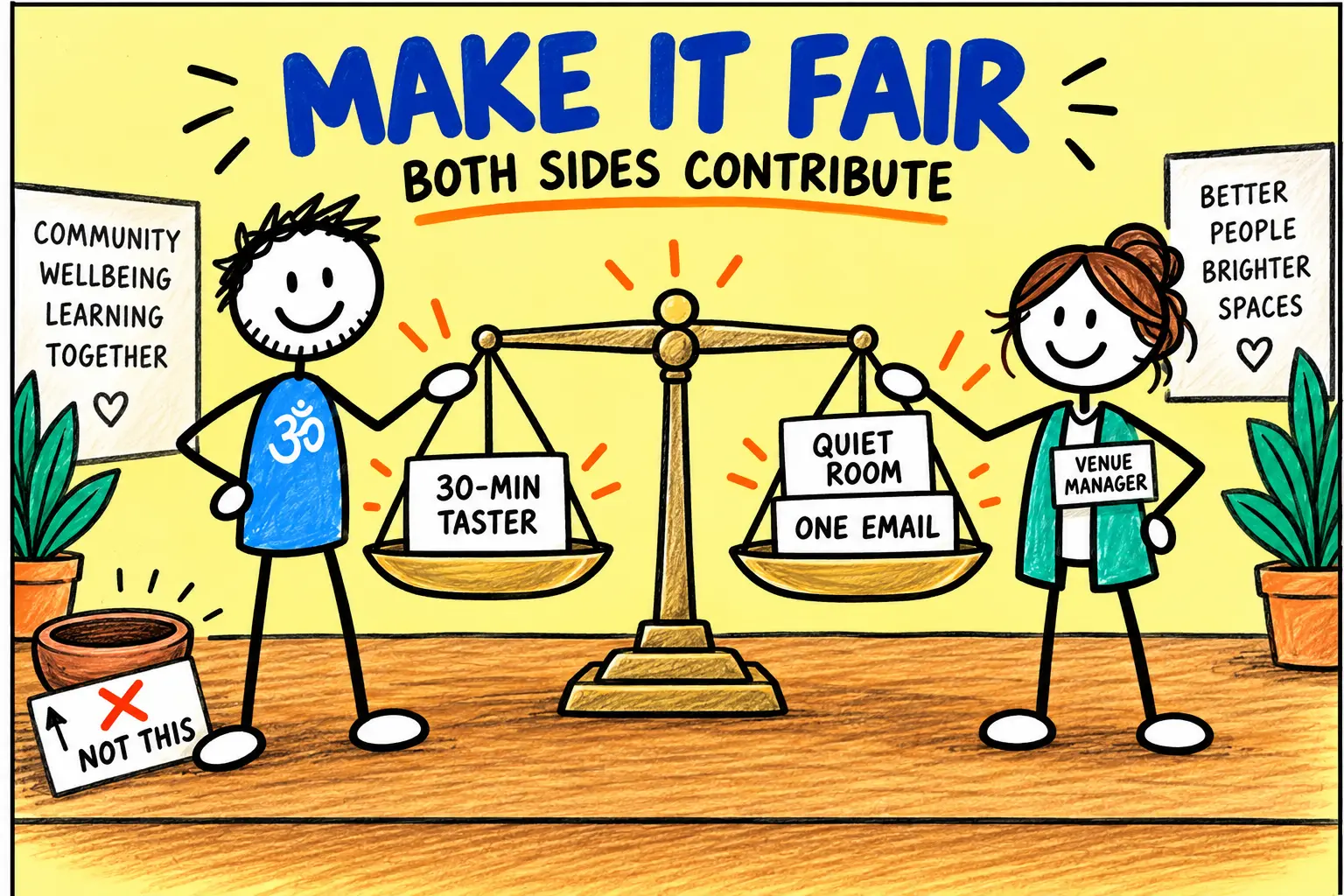
Be clear about what each side contributes.
You might provide a short beginner guide, a taster class, a useful article or a relevant event for the partner’s audience. The partner might provide a suitable room, introduce the event to a permission-based list, display accurate information or contribute specialist knowledge.
Avoid arriving with a begging bowl disguised as a partnership. Offer something specific and useful, but do not give away so much time that the arrangement becomes unsustainable.
Plan One Small Pilot
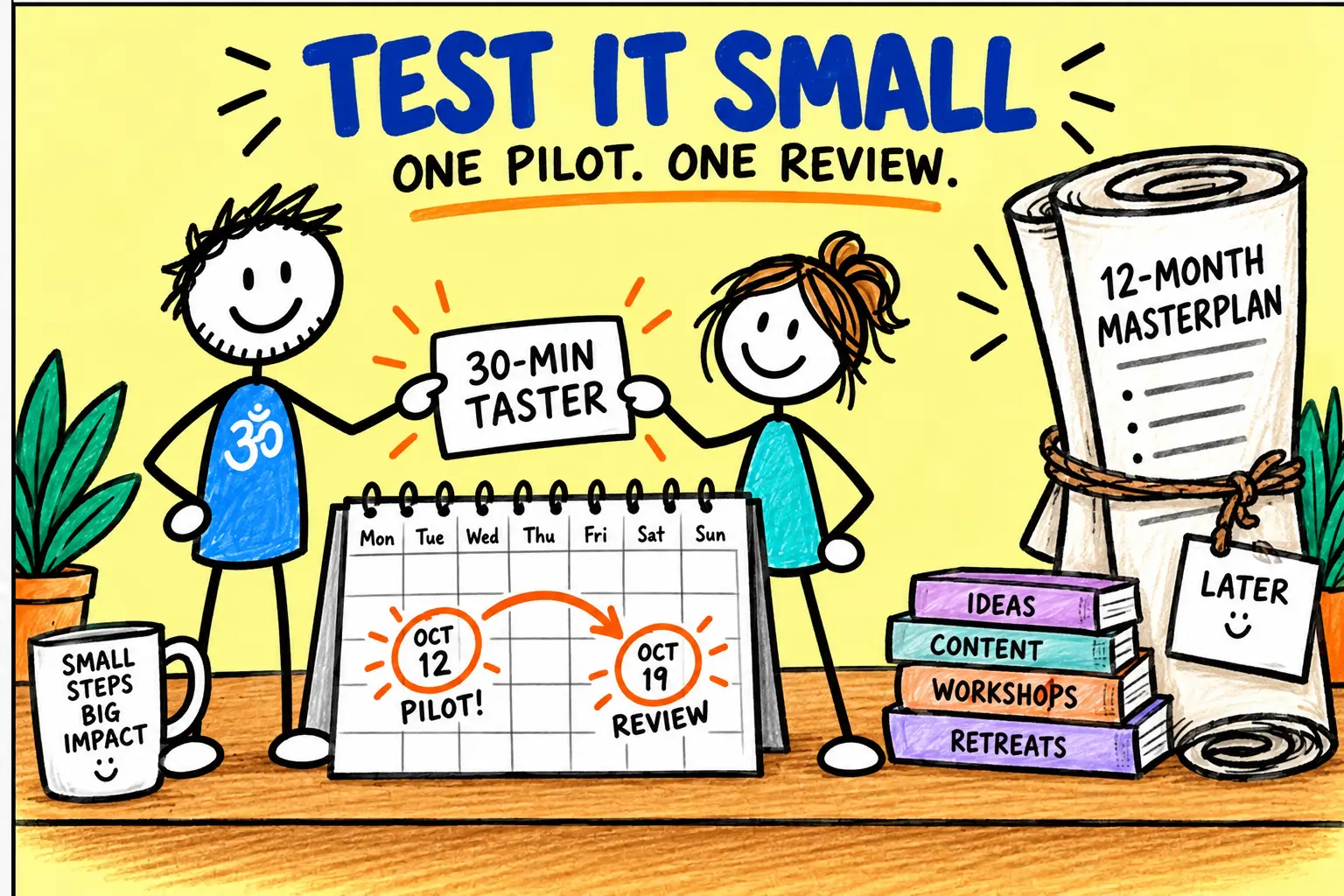
Make the first test easy to understand and easy to stop.
Examples include one lunchtime taster, one jointly promoted workshop, one useful handout at reception, a four-week venue test or a small partner benefit with a clear end date. Agree what will happen, who it is for and when you will review it.
A pilot protects both sides from a vague, permanent commitment. It also gives you real questions and observations to improve the next version.
Small is a feature. The first test should answer a useful question without requiring a complicated campaign.
Find the Right Person
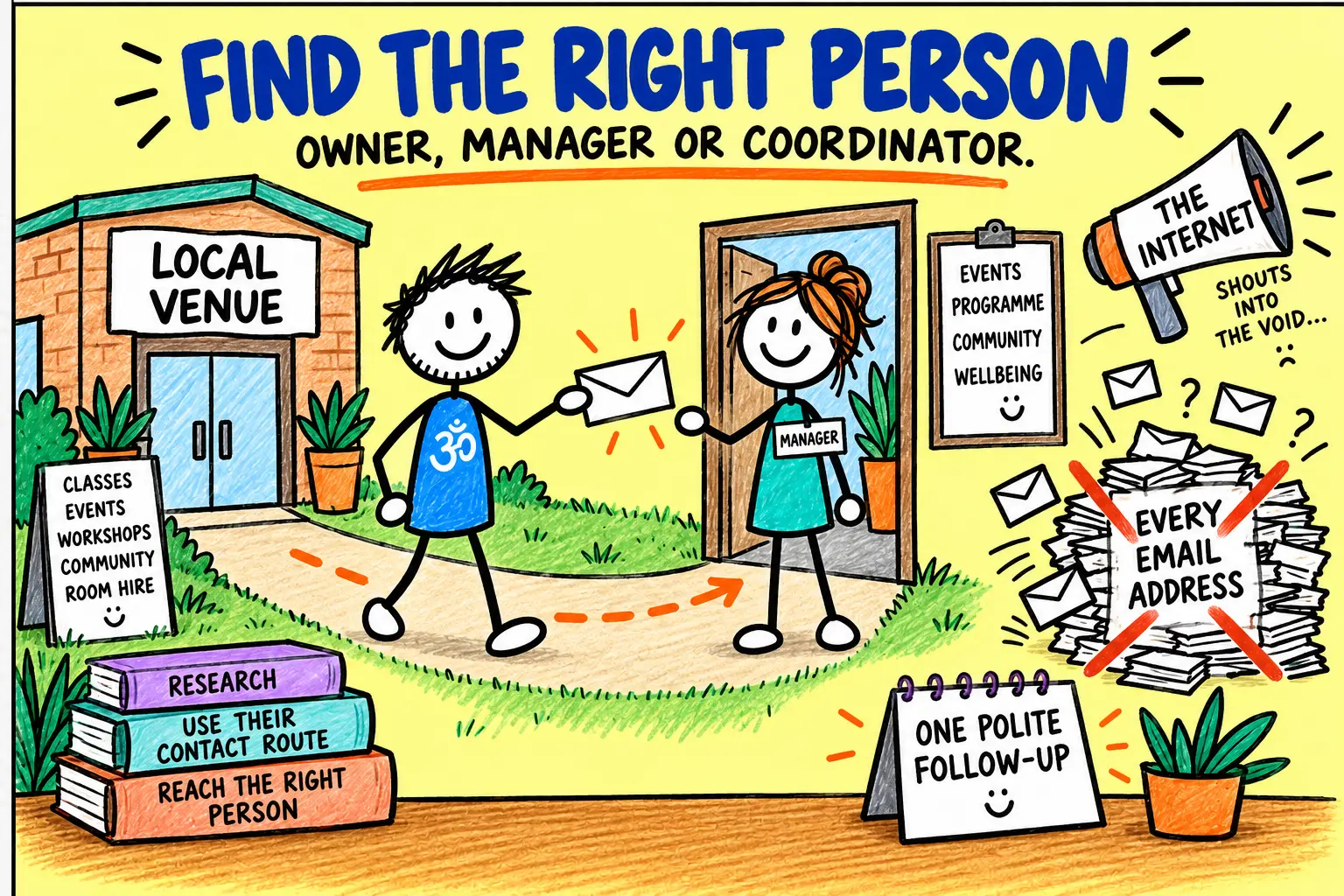
Contact the person who can sensibly assess the idea.
That may be the owner, venue manager, community coordinator, HR contact or practitioner. Read the organisation’s current information before writing. Use the published business contact route where possible and explain why you chose them.
Do not treat an old email list or a scraped address as permission to send repeated messages. If there is no reply, one polite follow-up may be reasonable; persistence is not a partnership.
Write a Short, Specific Message
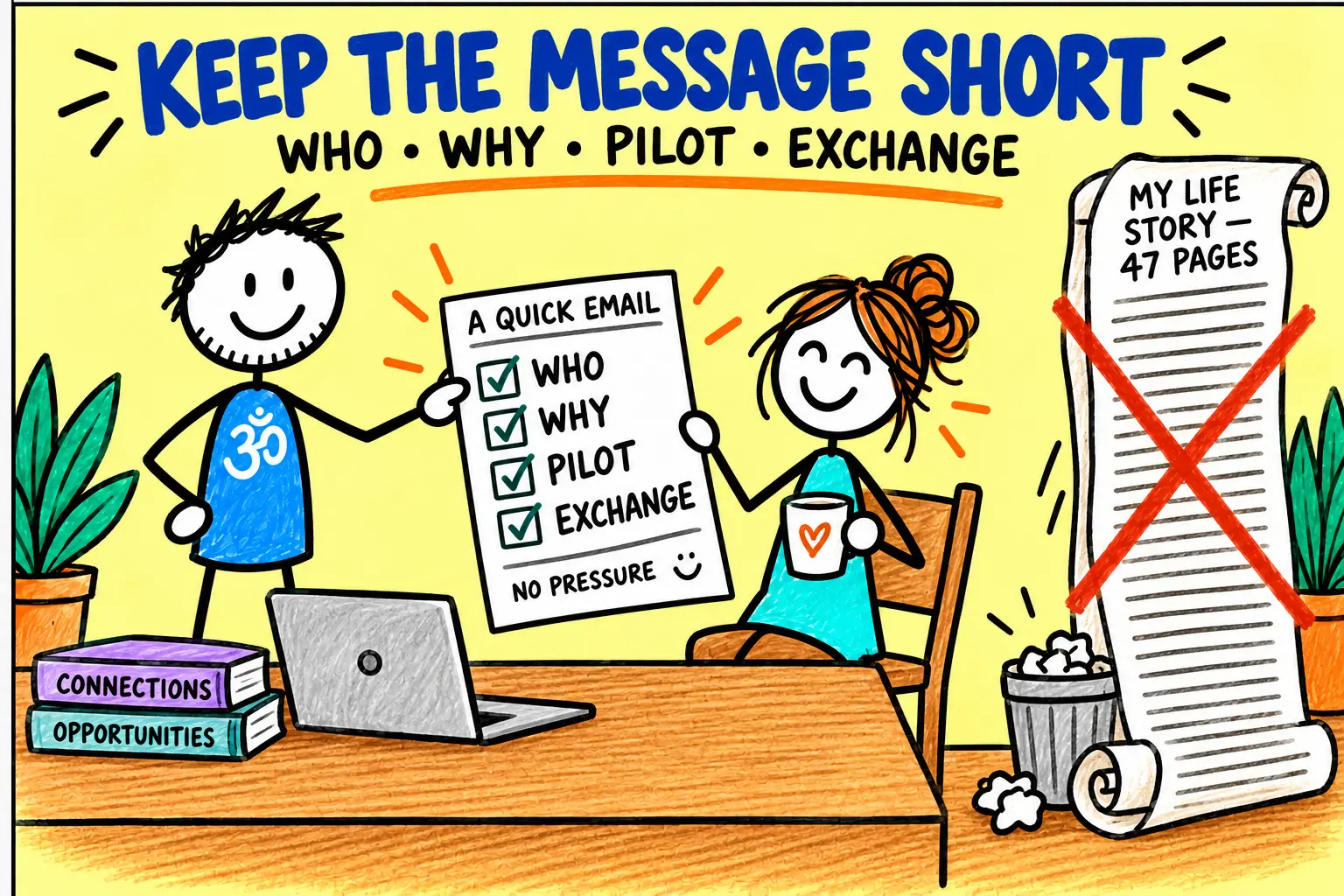
Give the recipient enough detail to decide whether a conversation is worthwhile.
Your first message should say who you are, why the audiences overlap, what small test you are proposing and what each side would contribute. Avoid a long biography, inflated claims and pressure.
Simple Outreach Example
Subject: Small local yoga partnership idea for [organisation]
Hi [name],
I’m [your name], a local yoga teacher. I’m getting in touch because [shared people or need].
I wondered whether you would be open to a small test: [pilot]. To keep the exchange fair, [what each side contributes].
If it sounds relevant, would a short conversation be useful? No problem if it is not a fit.
Warm wishes,
[your name]
The editable planner below turns your answers into a message like this, ready to copy and personalise.
Agree Roles, Boundaries and Practical Details
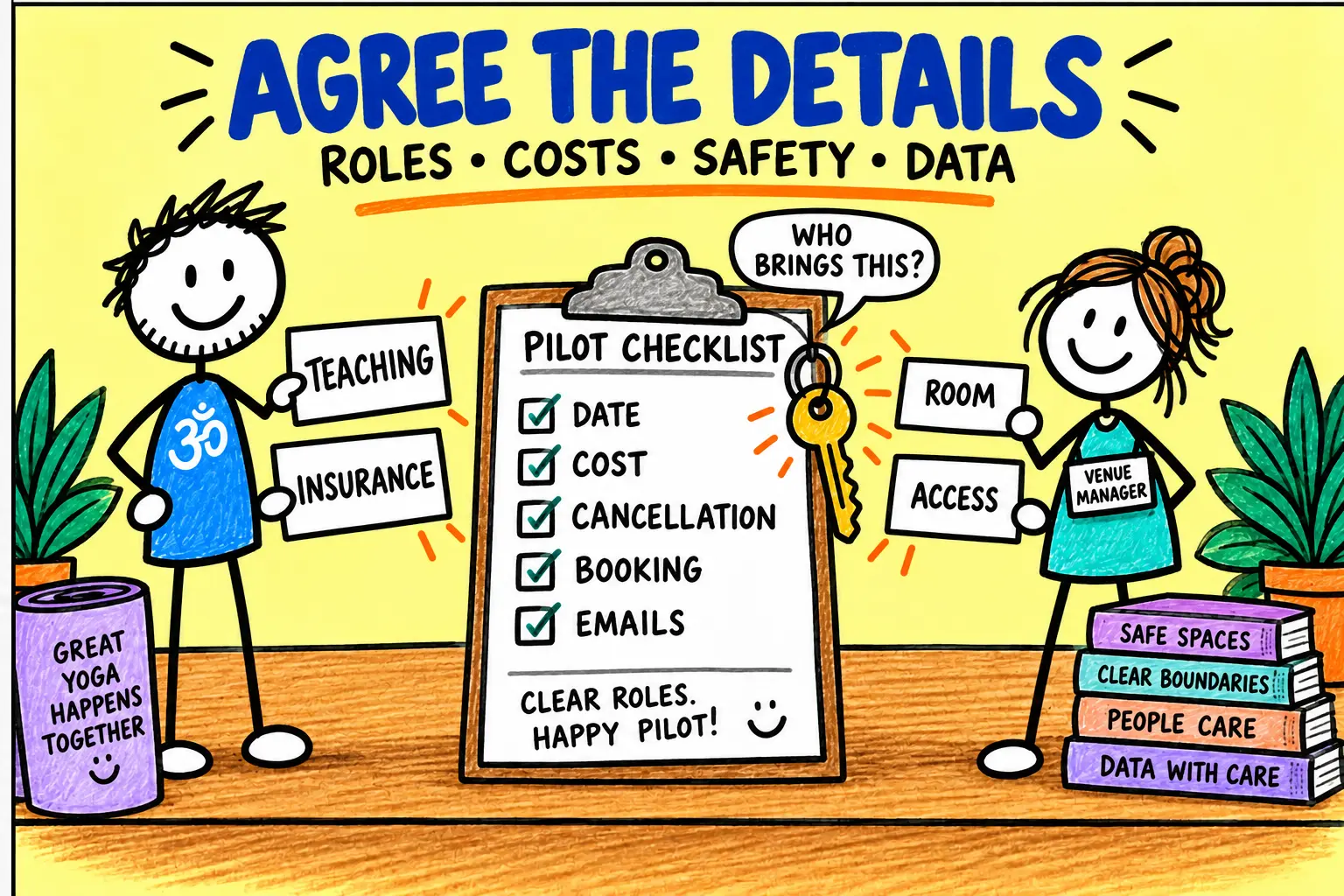
Write down the small agreement before the pilot begins.
Confirm the date, venue, audience, capacity, costs, cancellation arrangements, safeguarding responsibilities, insurance, accessibility, booking route and who will answer questions. Agree how names, email addresses or photographs will—and will not—be used.
If you contact UK businesses, follow the ICO’s current business-to-business marketing guidance. The rules differ by contact method and business type, and data-protection law can apply when you use personal information. Identify yourself, provide a clear way to object and respect opt-outs.
Local Yoga Partnership Planner
Plan the exchange and create a respectful outreach email without leaving this page.
Your answers save automatically in this browser. Bookmark this post and return on the same device. Nothing you type is submitted to GeorgeWatts.org.
- Plan one fair exchange. Work through seven prompts and keep the first pilot small.
- Draft the message. Add three names, then copy the outreach email and personalise it before sending.
- Return for the review. Your plan remains in this browser until you clear it.
Stored on your device: your entries are not sent to GeorgeWatts.org.
Your Outreach Email
Review the Pilot Together
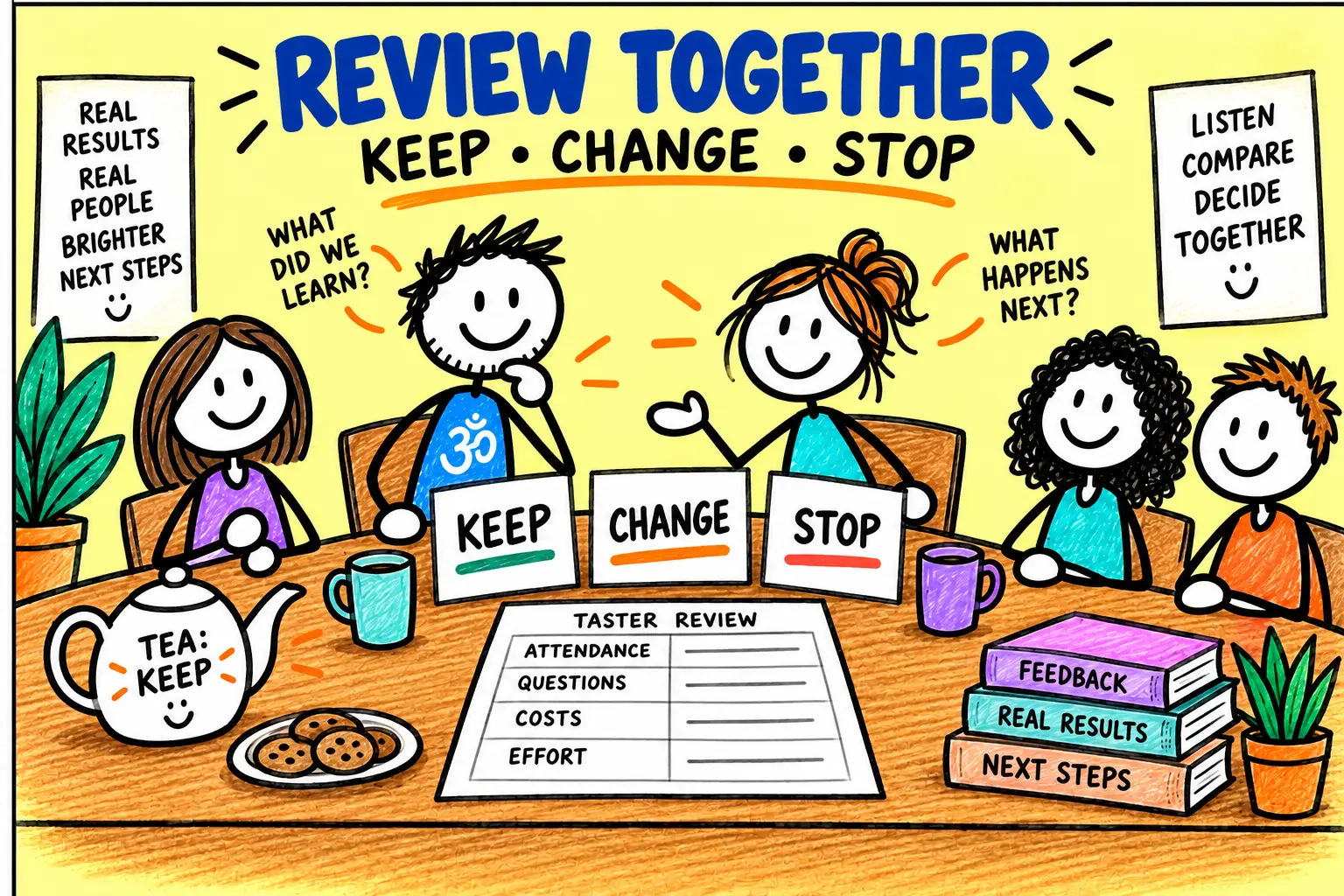
Decide whether to keep, change or stop the arrangement.
Ask what was useful, what caused confusion, how much time each side contributed and whether the people involved were a genuine fit. Attendance or enquiries may help, but so can the questions people asked and the practical problems you discovered.
Do not turn one quiet pilot into proof that partnerships never work—or one busy event into a permanent commitment. Improve one thing, agree another small test if it makes sense, and thank the partner even if you decide not to continue.
George’s Conclusion
A useful partnership is not a clever way to borrow somebody else’s audience.
It is a fair exchange between two people who can make one relevant idea easier for the right people to find. Choose carefully, propose a small pilot, agree the practical details and review it honestly.
If the idea is useful for both sides, you have something worth testing. If it is not, a respectful “no” saves everybody time.