
Browse by category
George’s Intro
Dolphin brings a little playfulness to serious shoulders. I’m George, a BWY yoga teacher, creator of the Online Yoga Lesson Planner and yoga card deck maker. I draw sticky-note yoga doodles because a small square is excellent at telling me when I’ve written too much.
This post brings together my Dolphin-themed class plan, a new pose handout and a gentle relaxation handout. Borrow what fits your students. Becoming an actual dolphin remains optional.
Explore Dolphin Pose
Dolphin uses the forearms as its base, with the hips lifted and the feet on the floor. It asks for shoulder effort and gives you plenty of room to adjust the knees and heels.
The shape is an invitation. Start with a kneeling preparation, keep the knees bent if that helps, and come down before the effort overwhelms the breath.
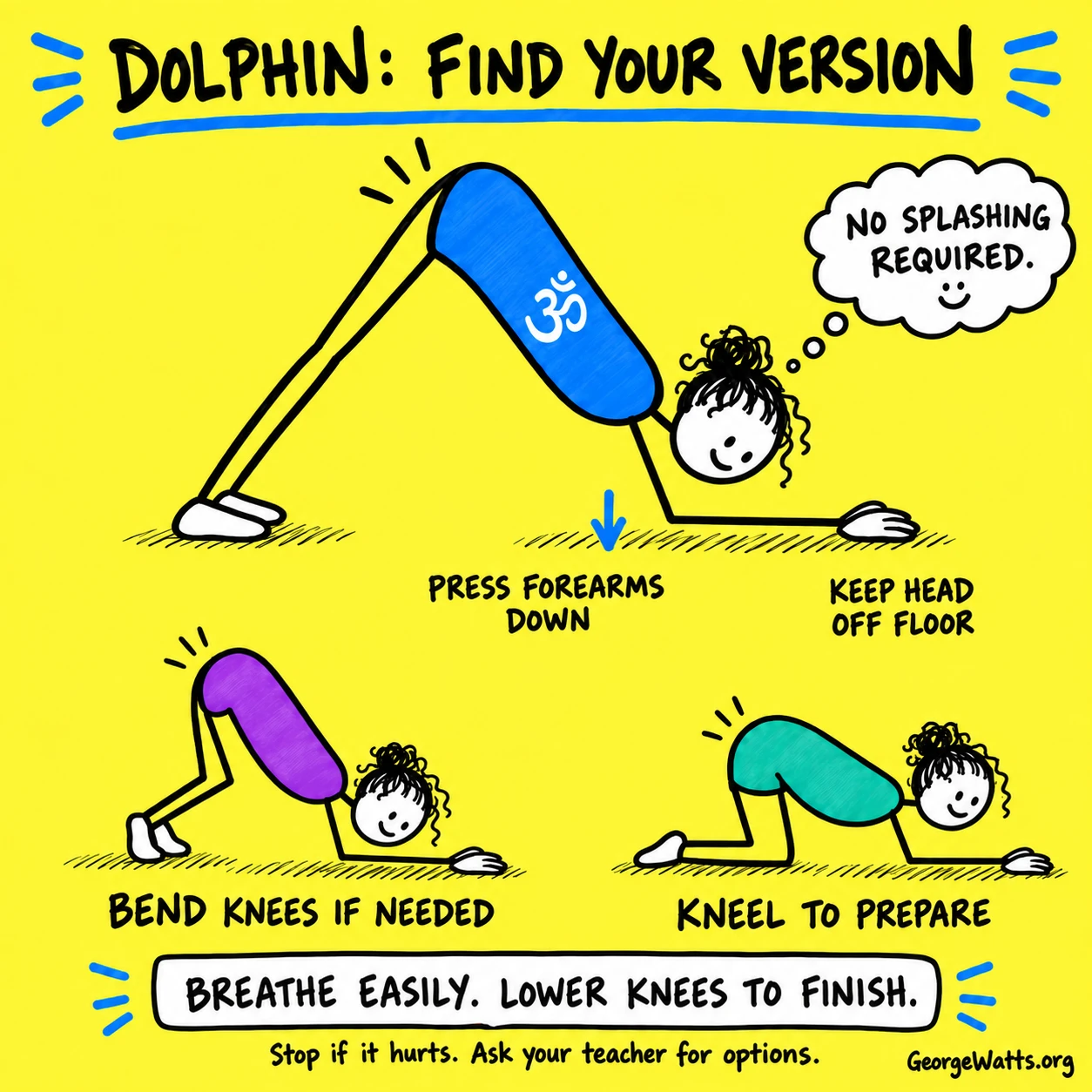
Download the Dolphin Pose handout
How to Teach Dolphin
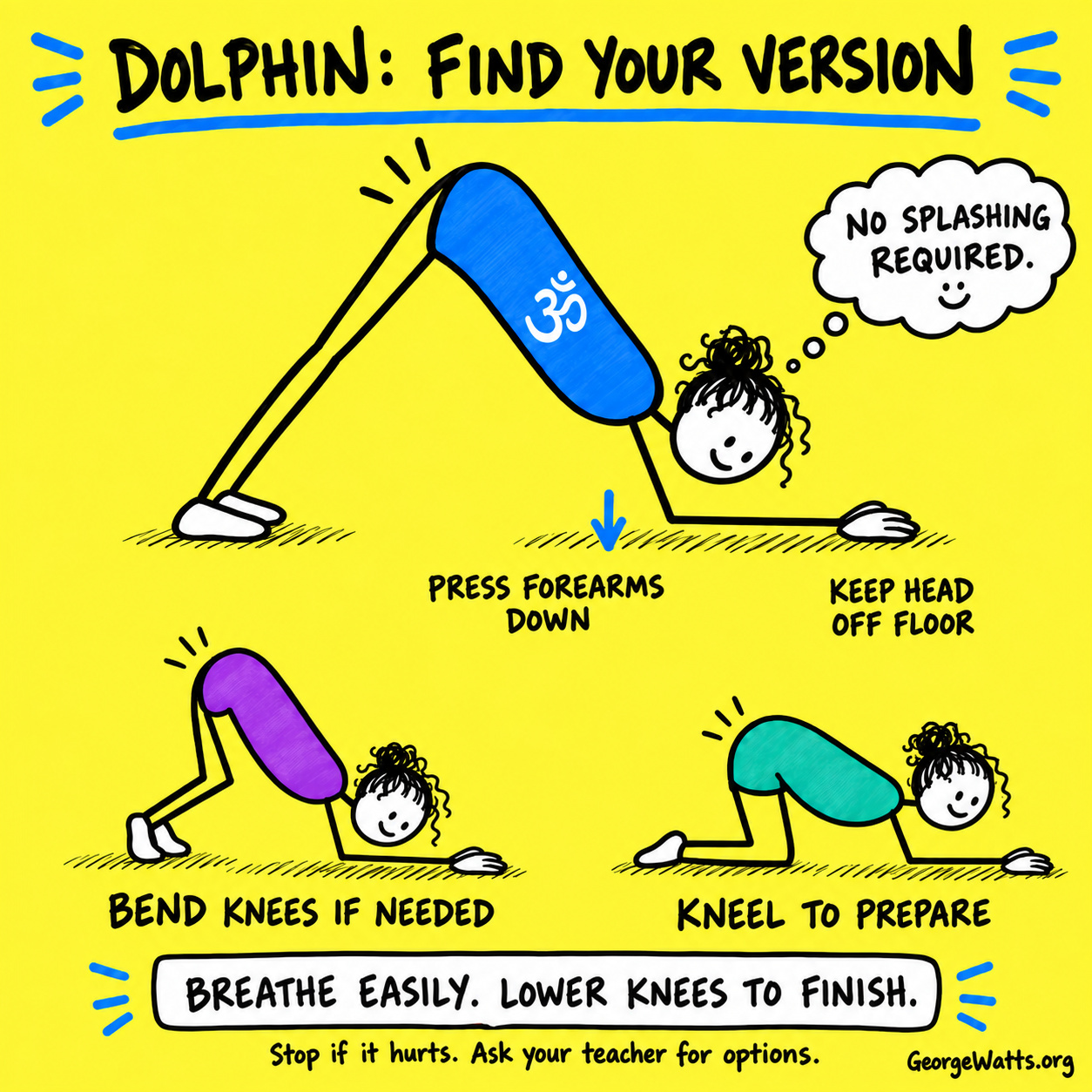
- Make a steady base. Begin on hands and knees. Lower the forearms, place elbows about shoulder-width apart and press evenly through them.
- Lift gradually. Tuck the toes and lift the knees, sending the hips up and back. Begin with bent knees and lifted heels.
- Give the neck room. Keep the head off the floor between the upper arms. Keep pressing through the forearms instead of sinking towards the head.
- Choose the leg position. Lengthen the legs only as far as you can maintain a long back and an easy breath. Heels do not have to touch down.
- Leave with control. Lower the knees gently. Pause in a comfortable kneeling, seated or resting position.
Offer options early
Try the forearm position with knees grounded before lifting. Use a shorter hold, bend the knees or choose another comfortable movement. Bent knees change the shape; they do not automatically make Dolphin suitable for a shoulder or neck injury.
If there is pain, dizziness or uncomfortable pressure, come out. Students managing an injury or a condition affected by inversions should seek individual guidance before practising.
For another explanation of the forearm base and head position, see Yoga Journal’s Dolphin guide.
Free Dolphin-Themed Class Plan
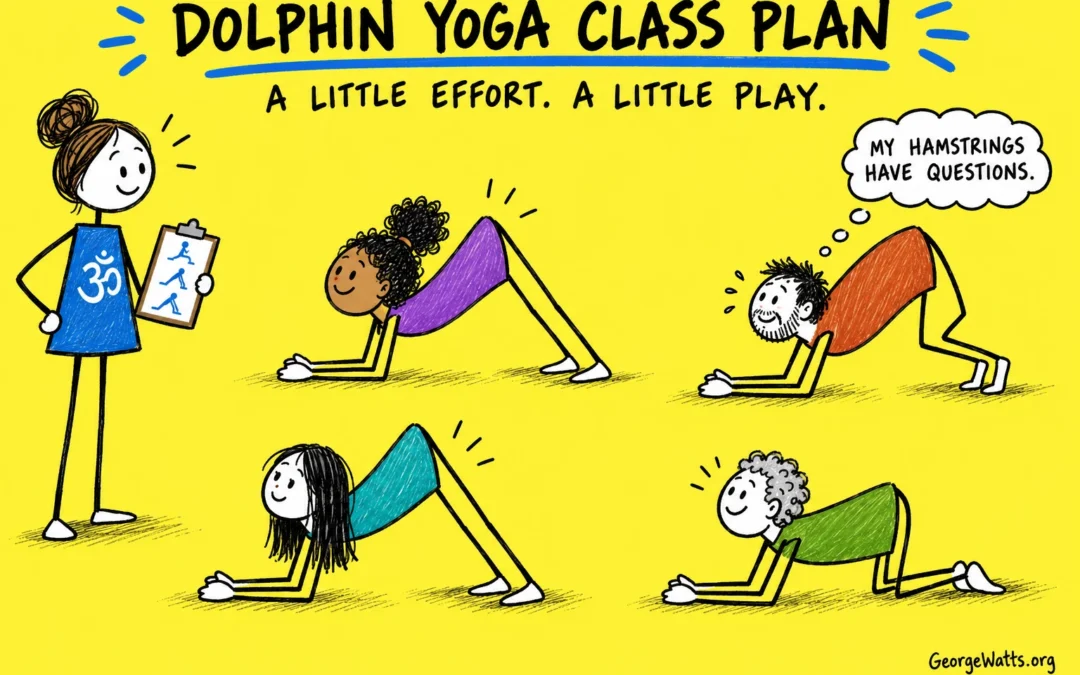
Let a little fun flow into the lesson. The original plan uses Dolphin as its peak pose. Review the sequence and adapt its pace, holds and alternatives to the people you teach.
The Short Plan gives you a compact class reminder. The Long Plan includes teaching detail, and the Stream Plan displays the sequence on screen. Use the plan’s print options for a paper copy.
A Playful Class Theme
Invite curiosity rather than a perfect performance. Ask students to notice what happens when they make the pose a little smaller, soften the knees or take a pause.
Playfulness does not have to be energetic. It might mean experimenting with an option or smiling at the effort. Nobody needs to audition for a marine documentary.
Guided Dolphin Relaxation
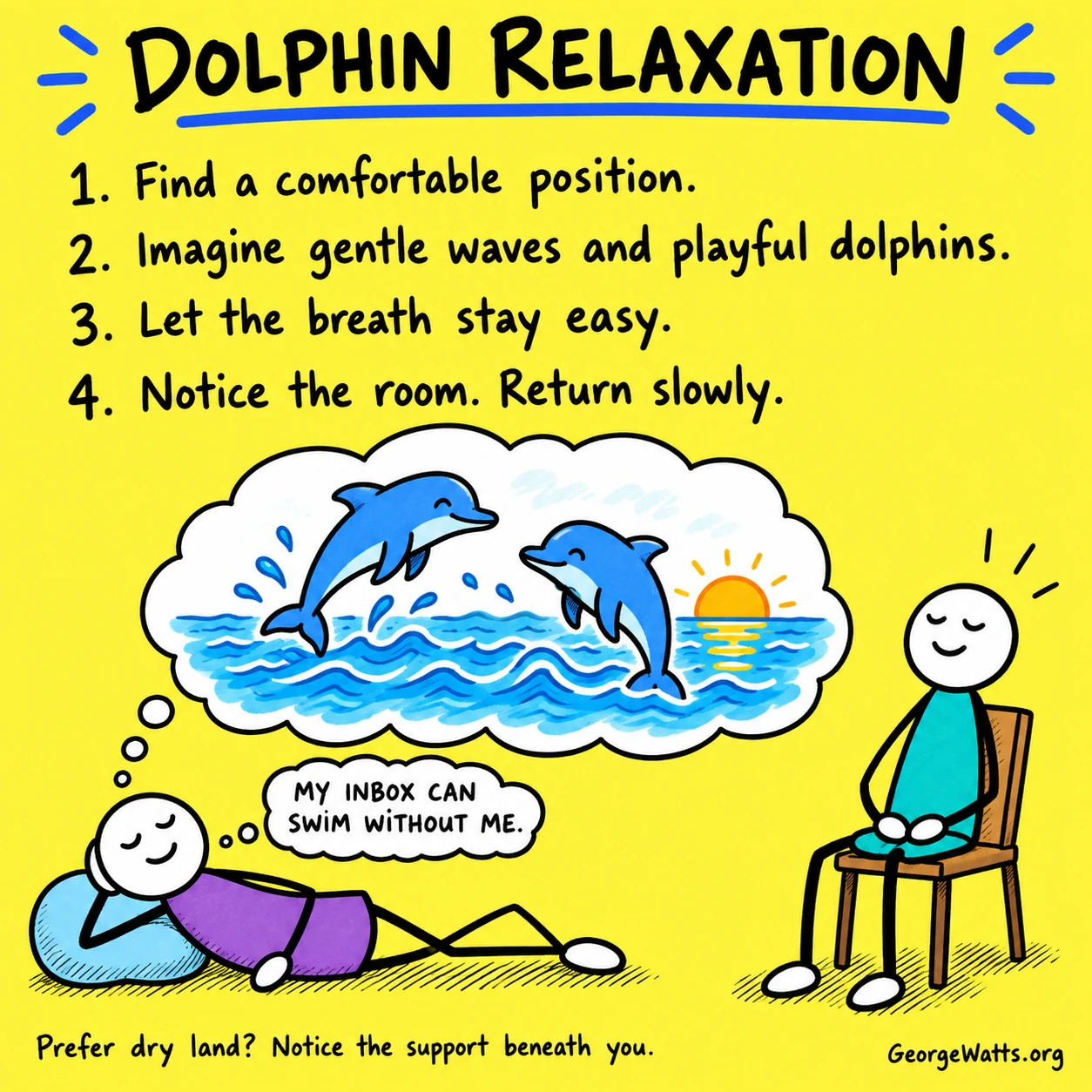
Download the relaxation handout
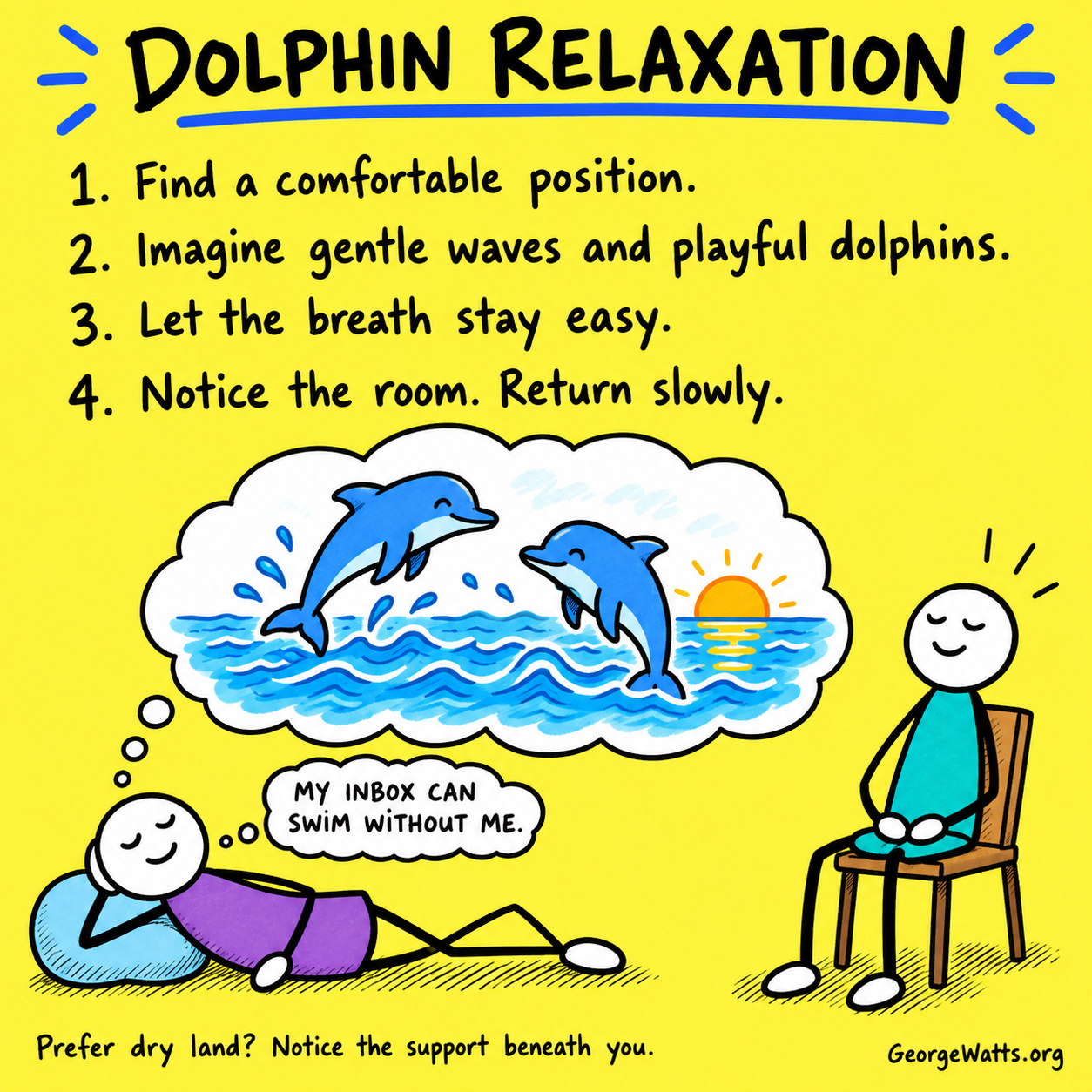
Read slowly, leaving room for pauses. Invite students to rest lying down, on their side or seated. Eyes may stay open. If ocean imagery is not comfortable, they can simply notice the support beneath them.
Find a position that lets you settle. Notice the places where your body meets the floor or chair. Let your breathing find its own rhythm.
If you like, imagine a quiet shoreline. Gentle waves arrive and leave. There is nothing you need to catch up with here.
Out on the water, a small group of dolphins rises and disappears again. Watch from the shore. Notice their playfulness without needing to join in or feel any particular way.
Let the image soften. Feel the support beneath you again. Notice sounds in the room. Make a few small movements and return at your own pace.
Build Your Own Dolphin Class
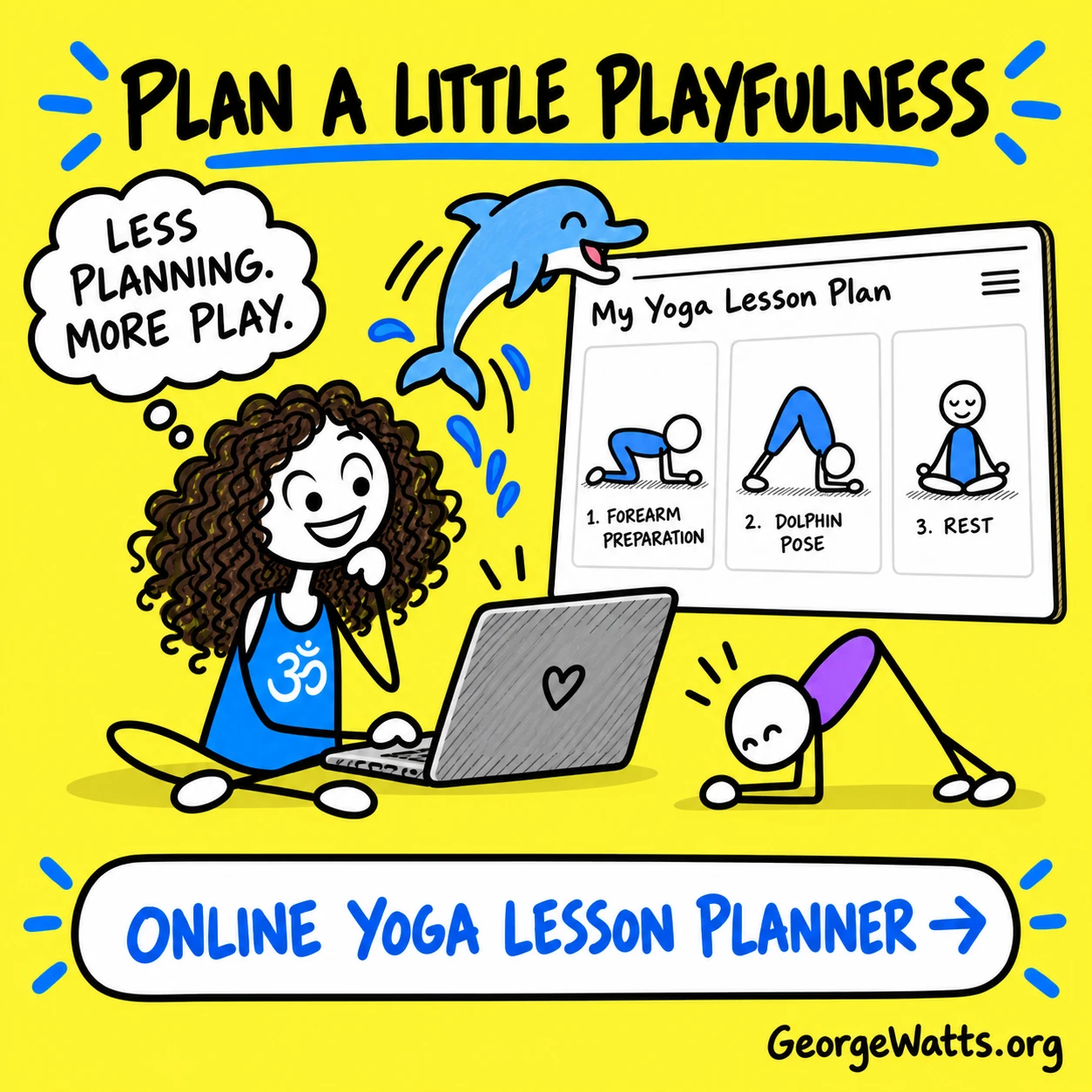
Keep the playfulness. Make the plan your own. Use the Online Yoga Lesson Planner to choose poses, reorder your sequence and save a class that suits your students.
George’s Conclusion
Keep the curiosity. Leave the performance behind. A useful Dolphin-themed yoga class plan has room for effort, adaptation and a comfortable rest.
Take the plan, share the handouts and let your students find their own version. A little encouragement and plenty of choice can help everyone feel part of the class.