

George’s Intro
Downward Dog is a familiar pose with plenty of room for choice. Bent knees, lifted heels and a wall can all belong in the conversation. The floor is remarkably patient about the whole thing.
I’m George Watts, a British Wheel of Yoga teacher, creator of the Online Yoga Lesson Planner and maker of yoga card decks. My sticky-note doodles turn teaching ideas into something short, visual and hopefully worth a smile.
Below is my original Downward Dog lesson-plan resource, followed by modifications, teaching cues and playful class themes. Choose what fits your students rather than trying to squeeze everyone into the same silhouette.
Jump to the free lesson plan ↓
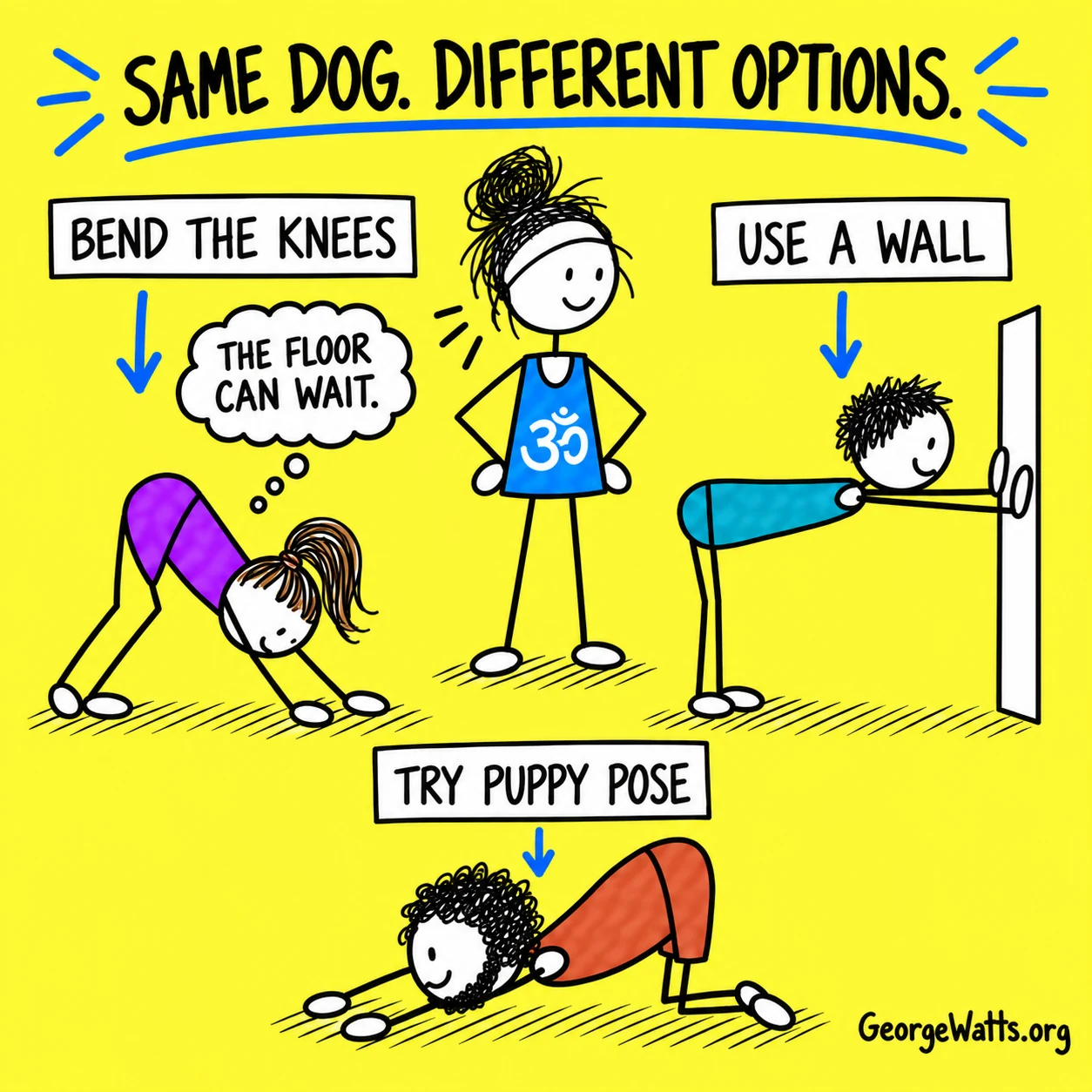
Download the Free Downward Dog Lesson Plan
The original collection is called “Doga: 30 Variations of Downward Facing Dog”. It brings together Downward Dog variations, related poses and more demanding inversion and partner options. Treat it as a resource to select from, rather than a beginner class everyone should complete.
The Short Plan gives you a compact overview, the Long Plan provides more detail, and the Stream Plan displays the sequence on screen. Use the plan’s PDF option when you want a printable copy.
The collection includes advanced inversions and partner work. These need appropriate experience, preparation and supervision; they are optional choices, not the inevitable destination of a Downward Dog class.
Download the Class Handout
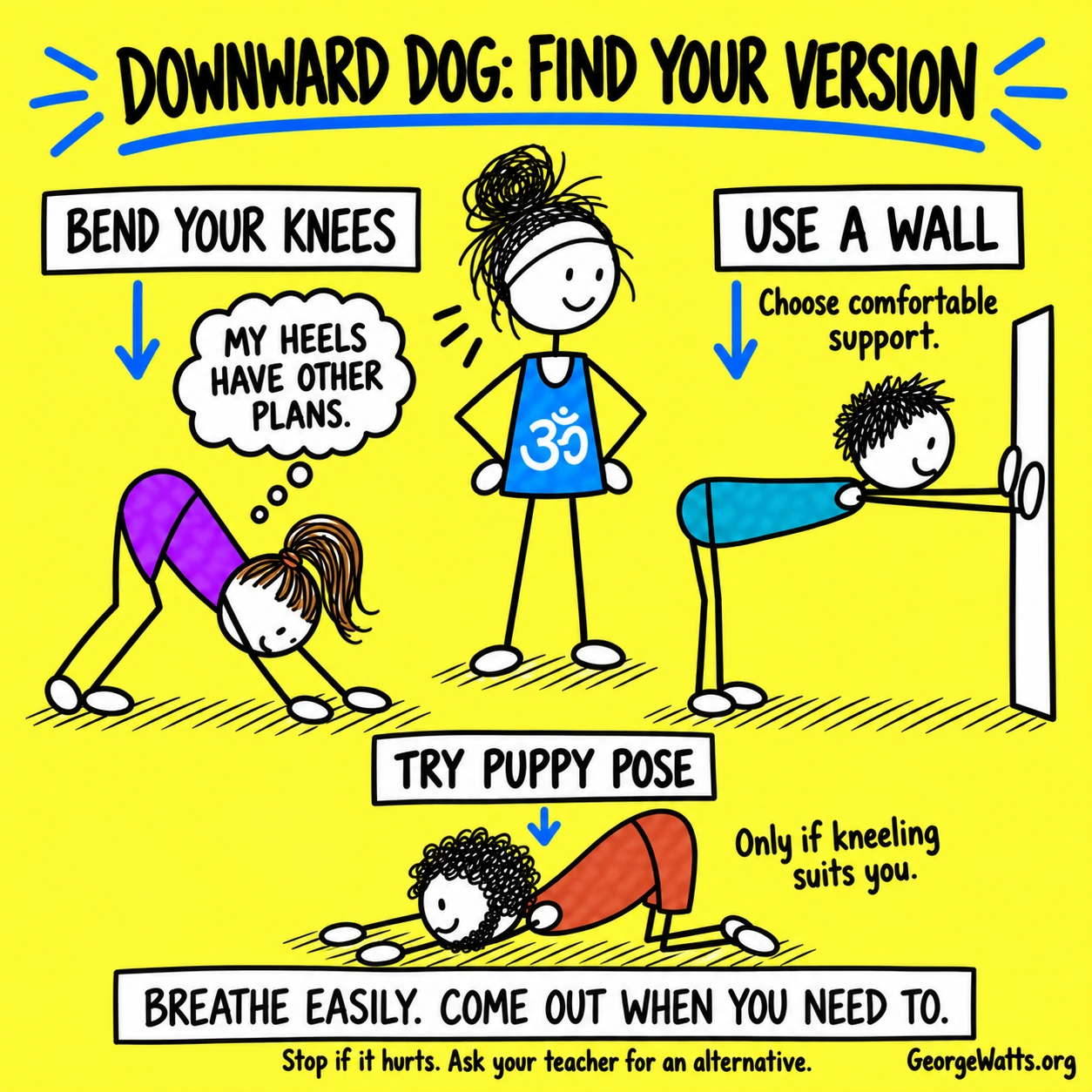
Your Downward Dog handout
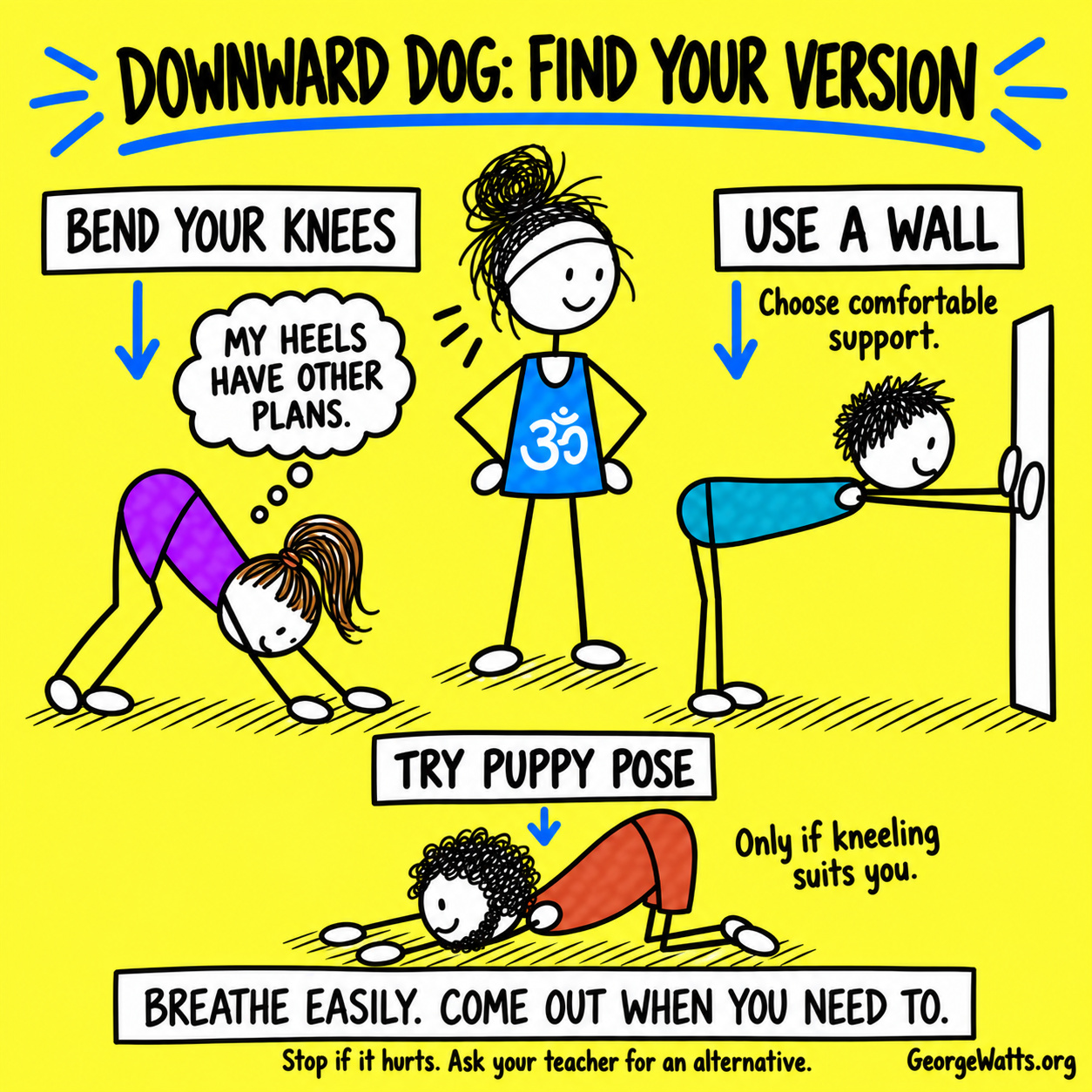
Offer Modifications That Make Sense
Ask what needs changing. A student’s comfortable version may look different from yours. A prop is useful when it helps the person, rather than simply making the pose look more elaborate.
- Bend the knees. Leave room to reach the hips back without forcing the legs straight.
- Let the heels lift. Contact with the floor is not a pass mark.
- Adjust the stance. Explore a small change in hand-to-foot distance or width and notice the response.
- Use a wall. A standing hinge with hands supported on a wall offers a different position and amount of load.
- Consider a secured chair. Use a sturdy, non-slip chair that cannot slide or tip; check the setup before loading it.
- Offer Puppy Pose or another alternative. Kneeling does not automatically make a pose suitable for sore shoulders or knees. Seated movement or rest may be the better choice.
Yoga Journal’s pose guide illustrates bent-knee and wall-supported options. No modification is a universal fix.
A Short Downward Dog Teaching Script
Keep the cues short enough to use. Demonstrate the version you are offering and give students time to respond before adding another instruction.
“Begin on hands and knees, with hands a little forward of shoulders. Spread your fingers comfortably. Tuck your toes and lift your hips up and back, keeping your knees bent. Let your neck feel easy and breathe naturally. Your heels may stay lifted. When you are ready, lower your knees and rest.”
Adapt the setup and duration to the student. Avoid prescribing an exact percentage of weight through hands or feet; look for a manageable load, steady breathing and a controlled exit.
Five things to notice
- Is the student comfortable enough to breathe without strain?
- Would bent knees allow a less forced shape?
- Are they pushing for heels-down at the expense of comfort?
- Would a different stance or support help?
- Do they know they can come out before the rest of the class?
Start With the Student
Familiar does not mean suitable for everyone. Ask about relevant symptoms and experience, and offer an alternative before someone has to request it publicly.
Wrist, shoulder or ankle injuries, blood-pressure concerns, pregnancy and conditions affected by head-down positions call for individual guidance. Stop for pain, dizziness or other concerning symptoms. A qualified teacher or healthcare professional can help determine an appropriate approach.
Describe the movement and effort students may notice without promising to treat illnesses. Keep teaching language clear, practical and grounded in what students can observe.
Introduce the Sanskrit Name
Adho Mukha Svanasana is the Sanskrit name used for Downward Facing Dog. You can introduce it alongside the English name, then repeat both naturally during class.
A playful personal memory cue can help students remember a name. Keep it clearly separate from the word’s meaning and pronunciation, and avoid turning remembering Sanskrit into another performance test.
Playful Themes for Your Class
Borrow the dog’s curiosity. These are my creative class prompts, rather than claims about traditional yoga philosophy. Pick one theme and let it run lightly through the class.
- Curiosity: “What changes if you bend your knees a little?”
- Play: “Can you explore without needing to get it perfect?”
- Friendship: “How would you speak to a friend finding this difficult?”
- Attention: “Notice this breath before planning the next pose.”
- Service: “What small kindness could you offer after class?”
Bring curiosity. Leave the obedience test outside.
Use imagery as an invitation. “Send your hips towards the back of the room” can suggest a direction; it does not need to become a promise about what the pose is doing inside the body.
Build Your Own Downward Dog Class
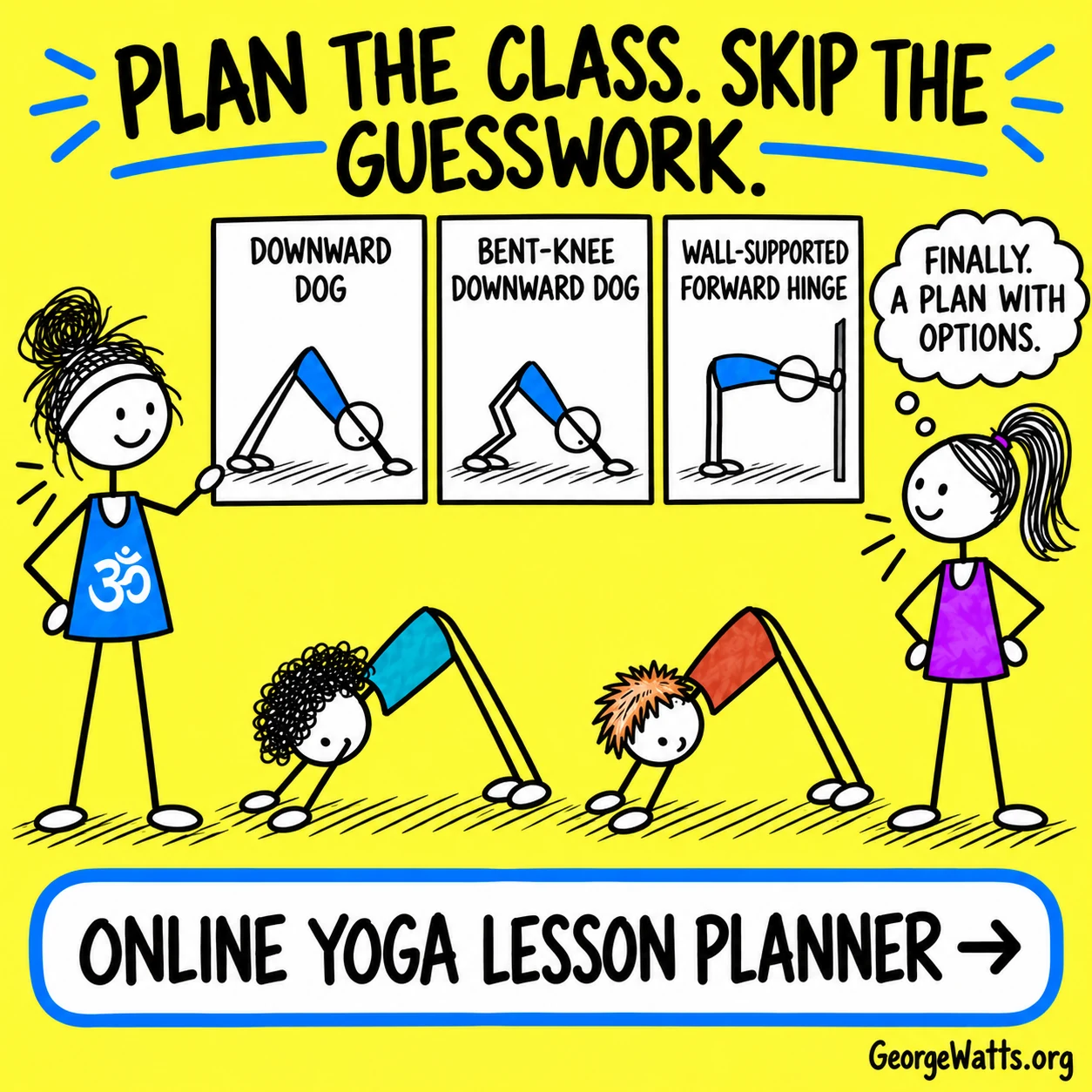
Use the Online Yoga Lesson Planner to organise your chosen poses and teaching notes. Include preparation, alternatives and a comfortable finish, with room to change the plan when your students need something different.
George’s Conclusion
Teach the person in front of you. The useful Downward Dog is the one that belongs in their practice today, with an alternative available when it does not.
Enjoy the plan, borrow a theme and offer plenty of choice. A little less obedience-school energy can make a much friendlier yoga class.