Bridge Block
| Sanskrit Name: | Dwi Pada Pitham |
|---|---|
| Category: | Seated & Floor |
| Share on: |
|


 Yoga Lesson Planner
 Pilates Lesson Planner
| Category: | Pregnancy Lesson Planner |
|---|---|
| Sub Category: | Seated & Floor |
| Types: | Arm Balance, Back Bend, Balance, Hip Opener, Inversion, Object, Seated & Floor, Stretch, Supine |
| Anatomy: | Arms & Shoulders, Core, Hamstrings, Hips, Knees, Middle Back, Neck, Psoas, Wrists & Arms |
| Chakras: | Crown Centre, Heart Centre, Solar Plexus Centre, Third Eye, Throat Centre |
| Therapy: | Back Pain, Confidence Building, Depression, Headaches, Herniated Disc, Indigestion, Poor Posture, Stress |
| Drishti: | Up |
| Dosha: | Pitta, Vata |
| Meridian Lines: | Bladder, Kidney, Spleen, Stomach |
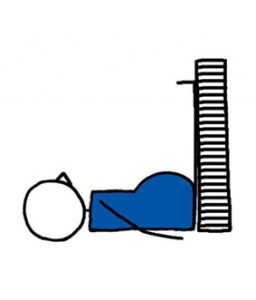
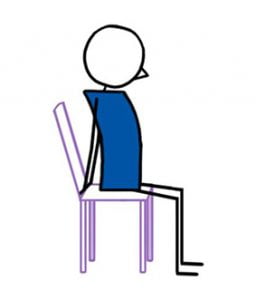
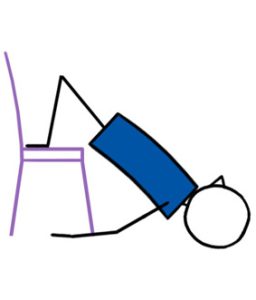
Lie on your back with knees bent and feet flat, placed hip width apart and far enough forward to leave gentle space for the belly. Lift the hips and slide a block under the sacrum for support. Let the weight rest into the block rather than gripping the buttocks. Keep legs soft, chest open, and throat relaxed. Stay for a few breaths, then lift hips slightly, remove the block, and lower down slowly.
Open front body gently. Ease pressure through lower back. Support pelvic awareness without a strong backbend. Create a calm, supported feeling that can be soothing during pregnancy.
Beginner: Use lowest block height and keep arms resting by the sides. Intermediate: Place block at a medium height and stay for 3 slow breaths. Advanced: Rise onto the toes briefly while keeping pelvis supported by block.
Avoid lying on back for more than a short time, especially after 16 weeks. Use extra height under pelvis. Come out straight away if it causes dizziness, breathlessness, or any strain through belly, pelvis, or lower back.
Click here for lots of FREE downloadable Yoga lesson plans.
Click here for lots of FREE downloadable Pilates lesson plans.
- Whole body 12 (incl Tri 2)
- Whole body 13 (incl Tri 2)
- Ask Genie3
- Hip opening sequence
- pregnancy yoga
- 170, Zoom
- Arthritic Spine
- Assessment Class - 06/06/19 - second 45 mins
- pregnancy seated and floor
- Prenatal Partner Class
- Week 4 Backbends
- Bridge (training sequence)
- Sciatica
- 259, zoom F
- 67, zoom
- 78, zoom
- 74, zoom
- Functional approach - HATHA YOGA #
- yin yoga 2021
- 83, zoom
- 87, zoom
- 91, zoom
- 94, zoom
- 95, zoom
- 98, zoom
- Ask Genie1
- 100, zoom
- Yoga Sil wk 47
- 103, zoom
- 106, zoom
- Tech neck
- 118, zoom
- 116, zoom
- 120, zoom
- 226, zoom M, F
- 134, zoom
- 139, zoom
- Sil Wk 5 - 2023 Oog serie - trataka
- First Trimester Pregnancy Yoga (15 min)
- 156, Zoom, Chakra 1 and 2
- Yin Yoga For Arthritis: Warm up, Main Practice & Cool Down
- Ask Genie 2
- 5, Greenwood Park
- 171, Zoom
- 176, Zoom
- 187, zoom
- 192, zoom
- 194, zoom
- Yoga Therapy For Arthritis: Floor & Chair
- Pregnancy Yoga For Trimesters 1, 2 and 3
- 205, zoom
- Pregnancy Yoga For Trimesters 1, 2 and 3
- Pregnancy Yoga For Trimesters 1, 2 and 3 wyers
- Yoga Therapy For Arthritis: Floor & Chair
- 10, Greenwood Park
- 216, zoom, M
- 11, Greenwood Park
- Cool Down - Triangle
- 223, zoom M
- Ask Genie 3
- 16, Greenwood Park
- Ask Genie 1
- 230, zoom F
- Zwangerschapsyoga
- Asana families Restorative and reclining poses
- 248, zoom F
- 253, zoom F
- Hatha Yoga - lezione 75
- 34, Greenwood Park
- 260, zoom F
- tighten and release
- Gentle Cool Down
- sacred feminine
- 262, zoom F
- 263, zoom F
- 36 Greenwood Park
- 37, Greenwood Park
- 42 Greenwood Park
- 45, Greenwood Park
- 51
- 49, Greenwood Park
Bridge On Block For Prenatal Yoga
Bridge On Block is one of hundreds of exercises in the Online Pregnancy Lesson Planner.
It is one of those poses that sounds far more architectural than it really is. Nobody hears “Bridge On Block” and thinks, ah yes, a lovely little rest. It sounds as though someone is about to build a bypass. But in prenatal yoga, this pose can feel surprisingly kind. It offers a gentle lift, a supported opening through the front of the body, and a small sense of relief when the lower back has been doing rather a lot of complaining. Baby may not be interested in the block itself, but baby may quite enjoy the calm breath, the soft support, and the general atmosphere of “we are not forcing anything today.”
Why Teach Bridge On Block in Prenatal Yoga?
Bridge On Block can be a useful prenatal pose when taught gently and briefly. It offers a supported lift through the pelvis and lower spine without asking the body to hold a strong backbend. During pregnancy, when the front body is carrying more weight and the lower back can feel overworked, that little bit of support can feel wonderfully civilised.
Done well, it can help students feel more open through the chest and front body, while also giving the lower back a small pocket of ease. It is not a dramatic pose. It is a supported one. And sometimes support is exactly the magic ingredient.
And baby? Baby gets a calm, lifted pause. A little space. A little softness. A mother lying there thinking, “Oh, that is actually rather nice,” which is never a bad thing.
How to Teach Bridge On Block for Prenatal Yoga
Lie on your back with knees bent and feet flat, placed hip width apart and far enough forward to leave gentle space for the belly. Lift the hips and slide a block under the sacrum for support. Let the weight rest into the block rather than gripping the buttocks. Keep legs soft, chest open, and throat relaxed. Stay for a few breaths, then lift hips slightly, remove the block, and lower down slowly.
Teaching Tips for Prenatal Bridge On Block
Prenatal Bridge On Block works best when nobody is trying to turn it into an acrobatic backbend. The aim is not to hoist the pelvis skyward and emerge transformed. The aim is to feel supported, gently open, and able to breathe without effort.
Useful reminders:
keep the lift small and supported
place the block under the sacrum rather than the lower back
avoid staying too long on the back
keep the throat and jaw soft
let the buttocks relax onto the support
come out straight away if breath feels strained or the body says no
Think less “grand bridge of the ancient world” and more “pregnant woman sensibly propped up for a moment of relief.”
10 Beginner Modifications For Prenatal Bridge On Block
Beginner 1: Use the lowest block height and keep arms resting by the sides.
Beginner 2: Keep the lift very small before placing the block.
Beginner 3: Place a folded blanket under the head for comfort.
Beginner 4: Keep feet a little wider for more belly space.
Beginner 5: Stay for just one or two soft breaths.
Beginner 6: Keep hands on the belly or ribs instead of pressing down.
Beginner 7: Use a softer support instead of a block if preferred.
Beginner 8: Lift and lower the hips with help from the hands if needed.
Beginner 9: Keep the chest easy and avoid rolling heavily onto the shoulders.
Beginner 10: Come out of the pose as soon as it stops feeling restful.
10 Intermediate Modifications Prenatal Bridge On Block
Intermediate 1: Place block at a medium height and stay for 3 slow breaths.
Intermediate 2: Keep the pelvis heavy on the block and the legs relaxed.
Intermediate 3: Walk feet slightly closer if that feels comfortable for the knees.
Intermediate 4: Broaden across the chest without forcing the ribs upward.
Intermediate 5: Keep arms long by the sides with palms down.
Intermediate 6: Lift the hips slightly to adjust the block more precisely.
Intermediate 7: Stay steady and breathe softly into the front body.
Intermediate 8: Keep the neck neutral and the throat relaxed.
Intermediate 9: Lower down slowly and pause before repeating.
Intermediate 10: Repeat the pose once more after a short rest.
10 Advanced Modifications Prenatal Bridge On Block
Advanced 1: Rise onto the toes briefly while keeping pelvis supported by block.
Advanced 2: Use a slightly higher block if the back feels comfortable.
Advanced 3: Stay for 5 calm breaths without gripping the buttocks.
Advanced 4: Lift one heel and then the other while keeping the pelvis steady.
Advanced 5: Sweep the arms overhead briefly if the ribs stay soft.
Advanced 6: Add a gentle chest opening while keeping the neck easy.
Advanced 7: Lower and lift the heels with slow control.
Advanced 8: Press evenly through both feet before rising off the block.
Advanced 9: Move into and out of the pose with smooth, quiet control.
Advanced 10: Repeat a second round if the body still feels comfortable on the back.
A Few Lovely Things to Say in Class
Sometimes a pose lands better when it is wrapped in kinder words.
You might say:
“Let the block do some of the work.”
“Keep the lift gentle and the breath soft.”
“Allow the front body to open without forcing anything.”
“Take only as much height as feels calm.”
“Supported can still be powerful.”
That last one is worth remembering. Most babies are not demanding an impressive backbend. They are much more likely to enjoy a mother who feels comfortable, steady, and not locked in a dramatic wrestling match with a yoga block.
Conclusion: A Little Lift, A Lot of Support
Bridge On Block for prenatal yoga is a simple supported pose, but it can bring a lovely sense of ease. It offers a gentle opening through the front body, a little relief for the lower back, and a reminder that support is not cheating. Support is often the whole point.
The beauty of prenatal yoga is that even a small lift can feel meaningful when the body is working so hard already.
Bridge On Block can be lower, shorter, softer, and simpler, and still be deeply useful. For access to hundreds more pregnancy-safe exercises, teaching ideas, and class-planning resources, explore the Online Pregnancy Lesson Planner.