
Oblique Twist Reformer
| Category: | Reformer |
|---|---|
| Share on: |
|


 Yoga Lesson Planner
 Pilates Lesson Planner
| Category: | Pilates Lesson Planner |
|---|---|
| Sub Category: | Reformer |
| Types: | Standing, Twist |
| Drishti: | Tip Of Nose |
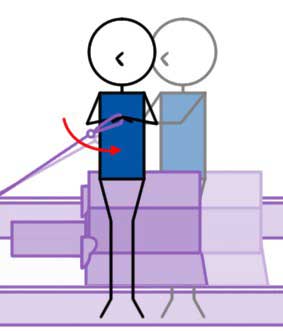
Place the long box lengthwise on the carriage. Sit facing sideways and hold the hand loop with both hands in front of you, arms in a circular position. Inhale to lengthen your spine, then exhale and twist away from the headrest, keeping your hips square.
Strengthens obliques. Stabilises hips and trunk. Improves spinal rotation. Enhances core stability. Promotes better posture.
Beginner: Perform with feet grounded for added stability. Intermediate: Lift one foot off carriage during the twist. Advanced: Extend arms fully while twisting for added resistance.
Avoid if you have lower back or shoulder injuries.
Click here for lots of FREE downloadable Yoga lesson plans.
Click here for lots of FREE downloadable Pilates lesson plans.
- opt
- Reformer
- Keith Feb 10th
- Reformer
- reformer beginner side lying 1
- reformer beginner side lying 1
- Reformer
- Mitch Week 4
- Mitch Week 3
- opt
- LCK Reformer 2
- Reformer Flow 1
- REFORMER ADVANCED KL
- REFORMER ADVANCED KL
- reformer icons
- reformer icons
- HFE Level 3 Session
- All Reformer Excersises
- All Reformer Exercises
- CP Flow 1 Test Out
- Equipment class
- Reformer Exercises
- April week 3 equipment
- Flow 1.5 ideas - delete
- All Reformer Excersises
- workshop flow
- Reformer- Week 1
- Reformer- Week 1
Oblique Twist on Reformer: 30 Modifications for All Levels
The Oblique Twist on the Reformer is a foundational exercise included in the Reformer Pilates Expansion Card Deck, which expands on the original Reformer Pilates Card Deck containing 48 essential exercises.
In this reformer exercise, you’ll build core strength and enhance rotational control, making it ideal for beginners and seasoned Pilates practitioners alike. As part of the Foundation category in the Reformer Pilates Expansion Card Deck, the Oblique Twist is designed to be accessible while also providing variations that make it progressively challenging.
The setup is simple: with the long box placed lengthwise on the Reformer, you’ll sit sideways, holding the hand loop with both hands in front of you. Your arms form a circular position as you inhale, lengthen your spine, and then exhale to twist away from the headrest while keeping your hips square. This combination of core stability, rotation, and postural alignment makes the Oblique Twist an excellent tool for improving strength and flexibility.
Below, you’ll find 30 modifications—ten each for beginner, intermediate, and advanced levels—to help you tailor this exercise to your needs.
10 Beginner Modifications For Oblique Twist on Reformer
Beginner Modification 1: Foot Support Twist
Keep your feet firmly grounded on the carriage to add stability, focusing on controlled movement and reducing strain on your lower back.
Beginner Modification 2: Small Range Twist
Limit the rotation range to half, easing into the twist while building core strength and reducing strain on the spine.
Beginner Modification 3: Elbow Bend Hold
Bend your elbows slightly while holding the loop, making it easier to control and maintain balance during the twist.
Beginner Modification 4: One-Handed Twist
Use one hand on the loop and place the other hand on the box for extra stability as you perform the twist.
Beginner Modification 5: Hands Closer to Chest
Hold the loop close to your chest rather than extended in front, minimising leverage and providing greater stability during the twist.
Beginner Modification 6: Slow Exhale Twist
Twist slowly, extending the duration of your exhale to help control the movement and improve awareness of your core engagement.
Beginner Modification 7: Add Lower Back Support
Place a small pillow or towel roll behind your lower back for added support, reducing strain while still allowing rotation.
Beginner Modification 8: Split Breath Twist
Inhale halfway before twisting and then finish the inhale while turning, focusing on breath control throughout the movement.
Beginner Modification 9: Close-to-Body Loop Hold
Keep the loop close to your body, minimising the load on your shoulders while allowing a gentle rotation.
Beginner Modification 10: Short Hold at End Range
Hold briefly at the end of each twist, training your muscles to stabilise in the rotated position without overexertion.
10 Intermediate Modifications For Oblique Twist on Reformer
Intermediate Modification 1: Extended Arm Twist
Extend your arms fully while holding the loop to increase the challenge on your core and shoulders as you twist.
Intermediate Modification 2: One Foot Elevated
Lift one foot slightly off the box as you twist, challenging your balance and adding an element of instability.
Intermediate Modification 3: Add a Hold at Peak
Pause and hold the twist for 2–3 seconds at the peak of rotation, increasing the intensity on your obliques.
Intermediate Modification 4: Increase Range of Motion
Extend your twist as far as possible within your comfort zone, activating deeper rotational muscles.
Intermediate Modification 5: Slow Motion Twist
Perform the entire twist and return sequence at a slower pace, requiring increased control and muscle engagement.
Intermediate Modification 6: Half Kneeling Position
Move to a half-kneeling position with one knee on the box, which increases core and hip stability demands during the twist.
Intermediate Modification 7: Progressive Twist
Begin with a small twist and gradually increase rotation with each rep, working toward your maximum comfortable range.
Intermediate Modification 8: Add Resistance with Loop
Use a slightly heavier spring setting for increased resistance, focusing on maintaining form and control.
Intermediate Modification 9: Alternating Arm Reaches
As you twist, extend one arm fully and alternate sides for a controlled reach, enhancing shoulder engagement.
Intermediate Modification 10: Arm Extension with Return
After each twist, extend your arms overhead briefly before returning to the start, challenging core stability and coordination.
10 Advanced Modifications For Oblique Twist on Reformer
Advanced Modification 1: Full Arm Extension
Hold the loop with arms fully extended and overhead, maximising core and shoulder engagement during the twist.
Advanced Modification 2: Single-Leg Rotation
Keep one leg lifted straight out as you twist, adding a core challenge and testing your balance further.
Advanced Modification 3: Pulsing Twist
Add small pulses at the end range of the twist, engaging your obliques deeply and building endurance.
Advanced Modification 4: Double Loop Hold
Hold a loop in each hand, twisting with both arms extended out to double the resistance and balance demands.
Advanced Modification 5: Twist with Hip Lift
As you twist, lift your hips slightly off the box, requiring full-body stability and control.
Advanced Modification 6: Side Crunch on Return
Add a side crunch when returning to the start position, intensifying oblique engagement.
Advanced Modification 7: Closed Eyes Twist
Perform the twist with eyes closed to challenge your proprioception and balance awareness.
Advanced Modification 8: Opposite Side Reach
Twist and reach the loop toward the opposite side of the box, intensifying the rotation and core activation.
Advanced Modification 9: Single-Arm Reach
Release one hand from the loop and extend it fully behind you during the twist, engaging the obliques deeply.
Advanced Modification 10: Twist with Leg Extension
Extend one leg straight out as you twist, alternating legs with each rep for a balanced challenge.
George’s Conclusion and the Reformer Pilates Card Deck
The Oblique Twist on Reformer is a versatile and highly effective exercise, benefiting all levels of Pilates practitioners. With these modifications, you can gradually build strength, enhance stability, and challenge your core from beginner through to advanced levels. This exercise, along with others in the Reformer Pilates Card Deck and Reformer Pilates Expansion Card Deck, brings the flexibility and precision of Pilates into a structured format that’s accessible for any setting—whether you’re in a studio or at home.
Investing in the Reformer Pilates Card Decks is an excellent way to deepen your Pilates practice and explore a wide variety of exercises at your own pace. These decks offer a valuable resource, whether you’re a beginner looking to get started with the foundational moves or an advanced student seeking progressive challenges.


