
How to Do Magic Circle Side Bend: 30 Modifications for All Levels
[br]
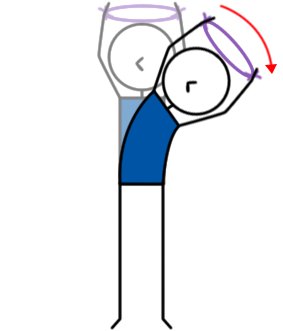
[caption id="attachment_67988" align="aligncenter" width="886"] Pilates Magic Circle Side Bend[/caption]
[br]
The Magic Circle Side Bend is a brilliant side-body strength and mobility exercise featured in the Flow & Precision category of the Magic Circle Pilates Card Deck. It’s ideal for improving lateral flexion, shoulder organisation, and that long, lifted feeling through the waist that makes posture look effortless (even when the obliques are working hard behind the scenes).
In this variation, you stand tall holding the ring. You inhale to lift it overhead, exhale to bend to one side, inhale to return to centre, then exhale to bend to the other side. The ring helps keep the arms connected to the torso and encourages the shoulders to stay wide rather than creeping toward the ears. The goal is to move through the ribs and waist while keeping the pelvis stable, legs grounded, and breath smooth.
Below are 30 modifications for the Magic Circle Side Bend, organised by level. These variations are ideal for tailoring the move to clients in mixed-level classes, private sessions, and warm-up sequences.
[br]
10 Beginner Modifications for Magic Circle Side Bend
[br]
Beginner Modification 1: Smaller Overhead Lift
Lift the ring to eye level instead of fully overhead to reduce shoulder strain.
Beginner Modification 2: Ring at Chest Height
Hold the ring in front of the chest and perform side bends from there.
Beginner Modification 3: Softer Knees
Keep knees slightly bent to reduce lower-back tension and improve balance.
Beginner Modification 4: Smaller Side Bend Range
Bend only a few centimetres, focusing on length rather than depth.
Beginner Modification 5: One Side at a Time
Do all reps to one side, rest, then switch sides to keep it simple.
Beginner Modification 6: Wall Support
Stand with your back near a wall to help keep the pelvis from shifting.
Beginner Modification 7: Wider Stance
Step feet wider than hips for more stability while learning the movement.
Beginner Modification 8: Slow Breath Timing
Pause at centre for one breath before bending to the next side.
Beginner Modification 9: Ring-Free Option
Remove the ring and place hands on hips to focus on rib movement.
Beginner Modification 10: Seated Version
Perform seated tall on a chair, lifting the ring and side bending gently.
[br]
10 Intermediate Modifications for Magic Circle Side Bend
[br]
Intermediate Modification 1: Standard Overhead Side Bend
Lift the ring overhead and alternate side bends with steady control.
Intermediate Modification 2: Gentle Ring Press
Press lightly outward into the ring to stabilise shoulders and arms.
Intermediate Modification 3: Longer Exhale Bend
Take a slow exhale as you bend to increase abdominal control.
Intermediate Modification 4: Hold at End Range
Pause for one inhale at the deepest point of the side bend, then return.
Intermediate Modification 5: Feet Together
Stand with feet closer together to increase balance and core demand.
Intermediate Modification 6: Keep Hips Square
Focus on keeping both hip bones facing forward as the ribs move sideways.
Intermediate Modification 7: Add a Micro Pulse
At end range, add one tiny pulse deeper into the bend without collapsing.
Intermediate Modification 8: Tempo Set
Do 4 slow reps each side, then 4 normal reps each side.
Intermediate Modification 9: Eyes Forward
Keep the gaze forward to reduce neck involvement and keep the twist out of it.
Intermediate Modification 10: Two Sets
Complete one full set, rest briefly, then repeat for endurance.
[br]
10 Advanced Modifications for Magic Circle Side Bend
[br]
Advanced Modification 1: Strong Isometric Ring Press
Maintain a firm press into the ring for the entire set without shrugging.
Advanced Modification 2: Slow 5-Second Side Bend
Take five seconds to bend and five seconds to return to centre.
Advanced Modification 3: Larger Range Without Hip Shift
Increase the depth of the bend while keeping the pelvis level and still.
Advanced Modification 4: Hold and Breathe
Hold the side bend for three full breaths, then return with control.
Advanced Modification 5: Heel Lift Challenge
Rise slightly onto the balls of the feet as you bend to add balance demand.
Advanced Modification 6: Narrow Stance
Bring feet closer together than hip-width to increase instability and control.
Advanced Modification 7: Add Rotation Accent
At end range, add a tiny rotation of the ribcage toward the ceiling, then return.
Advanced Modification 8: Side Bend Pulses
Add two small pulses into the side bend on each exhale.
Advanced Modification 9: One-Sided Burn Set
Perform 8–10 reps to one side before switching to increase endurance and intensity.
Advanced Modification 10: Lunge Side Bend Variation
Step one foot slightly forward into a small lunge and perform side bends for added stability challenge.
[br]
George’s Conclusion
[br]
The Magic Circle Side Bend is a simple but highly effective way to build strength and length through the waist while keeping the shoulders organised and the breath in charge. With the ring overhead, the arms stay connected and the side body gets the attention it deserves, without collapsing into the lower back or wobbling through the hips.
This is one of 50 exercises featured in the Magic Circle Pilates Card Deck, designed to give teachers and students an easy way to structure, modify, and explore Pilates sessions. Whether you're planning classes, creating home workouts, or simply wanting fresh inspiration, the deck puts variety and progression at your fingertips.
[br]
Pilates Magic Circle Card Deck
[br]
[caption id="attachment_68012" align="aligncenter" width="810"] Pilates Magic Circle Card Deck[/caption]
[br]
Below are the 50 exercises included in the Magic Circle Pilates Card Deck—neatly categorised and totally clickable. Each link lets you preview the move, so you know exactly what you’re getting.
Core & Stability Category (Blue Border)
The 17 exercises in the “core & stability” category progress logically from foundational core work to more dynamic challenges. The sequence flows from: supine basics → crunch variations → rotation → double-leg load → reach patterns → roll-up sequence → seated control → kneeling stability → supine leg circles.
Together, these exercises strengthen your centre, improve postural control, and build balanced stability from the inside out — helping you move with precision, support, and confidence in every Pilates session.
- Crunches
- Crunch Pulse
- Crunch Arm Twist
- Crunch Arm Twist Pulse
- Crunch Double Leg
- Crunch Double Leg Twist
- Double Leg Lift
- Double Leg Pulse
- Double Leg Stretch
- Leg Reach Crunch
- Leg Reach Pulse
- Halfway Rollback Twist
- Full Roll Up
- Knee Pulses Side I
- Knee Pulses Side II
- Bird Dog
- Single Leg
Flexibility & Stretching Category (Green Border)
The 16 exercises in the “flexibility & stretching” category are organised for a natural progression through the body. The flow moves from: standing lengthening → forward folds → kneeling rotations → side-lying hip mobility → lunges → bridges → kneeling extensions → hamstring stretches → finishing with a grounded upper-body opener.
These movements release tight muscles, enhance mobility, and improve range of motion using the Magic Circle as a gentle stretching aid. Great for warming up, cooling down, or restoring ease to the body after long days or tough workouts.
- Calf Stretch
- Forward Fold
- Spinal Twist
- Side Bend
- Side Pulse
- Leg Side Pulse I
- Leg Side Pulse II
- Lunge I
- Lunge II
- Hip Lift
- Bridge
- Kneeling Down Dog
- Kneeling Squat
- Single Leg Stretch
- Single Leg Toe Touch
- Pushup
Strength Category (Red Border)
The 17 exercises in the “strength” category move from upper-body strength to lower-body power, following a deliberate progression: upper-body pulses → chest squeezes → shoulder work → triceps → inner-thigh pulses → leg lifts → standing adduction work → lunges and squats → finishing with deep lower-body strength.
These exercises use the Magic Circle’s resistance to tone the arms, sculpt the legs, and build total-body strength — delivering a powerful, well-structured sequence that challenges the whole body in a balanced way.
Video Of Pose
Yoga and Pilates lesson planning made easy