

George’s Intro
I updated this post in 2026.
A good corporate yoga proposal makes a small, practical promise.
I’m George, a BWY yoga teacher, creator of the Online Yoga Lesson Planner, yoga card deck maker and enthusiastic sticky-note doodler.
I once received an email from an HR manager at my local council asking to join my yoga class. I replied and, a little cheekily, asked whether the Council might also tell its staff about the class. That real conversation taught me something useful: a warm connection and a clear next step can be more helpful than a grand presentation full of promises.
Jump to the Corporate Yoga Outreach Planner ↓

What Is Corporate Yoga?
Corporate yoga is yoga offered for people connected to a workplace. A class might happen in a meeting room, a hired venue or online. The employer may pay the full fee, subsidise part of it, or simply provide the space while employees book individually.
The practical question is not, “How do I persuade a large company to buy yoga forever?” It is, “Can I design one suitable pilot that the teacher, organiser and participants can evaluate honestly?”
Employer-Funded
The organisation pays an agreed fee and decides how staff join.
Employee-Funded
Participants pay, while the organisation helps with space or communication.
8 Steps To Start A Corporate Yoga Programme
Begin with a small workplace pilot.
The first four steps choose the workplace, purpose, pilot and class format. Steps five to eight set the price, contact the right person, agree the practical details and review the result.
Choose a Workplace You Can Understand

Begin close to a real connection.
Make a short list of organisations where you know an employee, teach someone who works there, understand the working day, or can identify a genuine contact. A warm introduction is useful because the person can explain how decisions are made and whether the idea is relevant.
- Current students’ workplaces
- Previous colleagues or clients
- Local organisations you know
- Professional or community contacts
Do not ask a student to become your unpaid salesperson. A simple question is enough: “Would a short lunchtime yoga pilot be relevant where you work, and who would be the right person to ask?”
Define One Practical Purpose
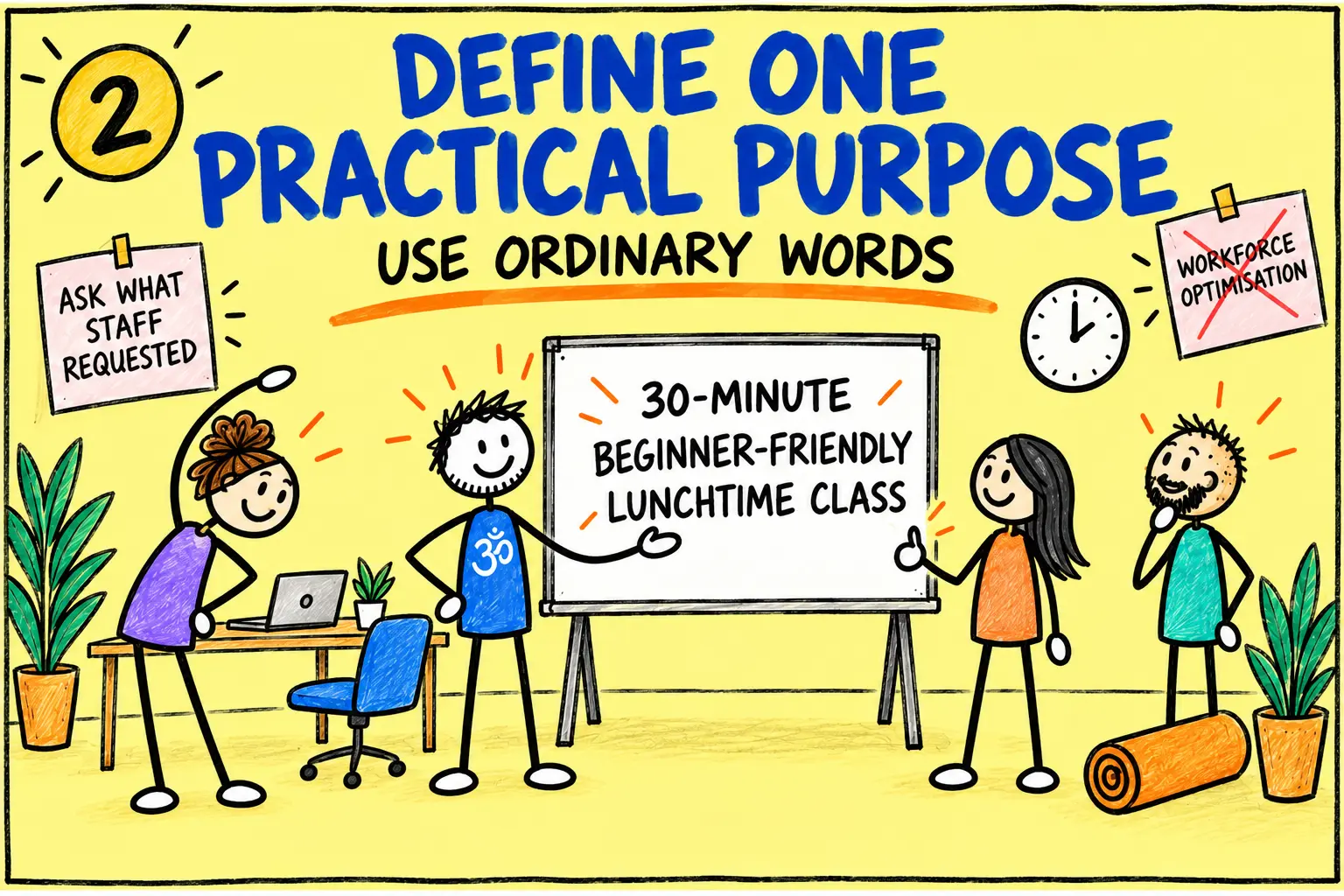
Describe the class without inflated claims.
A useful purpose might be helping beginners try a guided movement break, offering a calm transition at the end of the working day, or making a regular practice more convenient. Keep the language appropriate to your training and the people in front of you.
Ask the organiser what employees have requested, when they could attend, whether the class must be chair-based, and what would make the pilot workable. Their answers are more valuable than a generic list of impressive-sounding benefits.
Use ordinary words.“A beginner-friendly 30-minute lunchtime class” is clearer than “a transformational workforce optimisation experience”. The flip chart will cope.
Design a Small Pilot
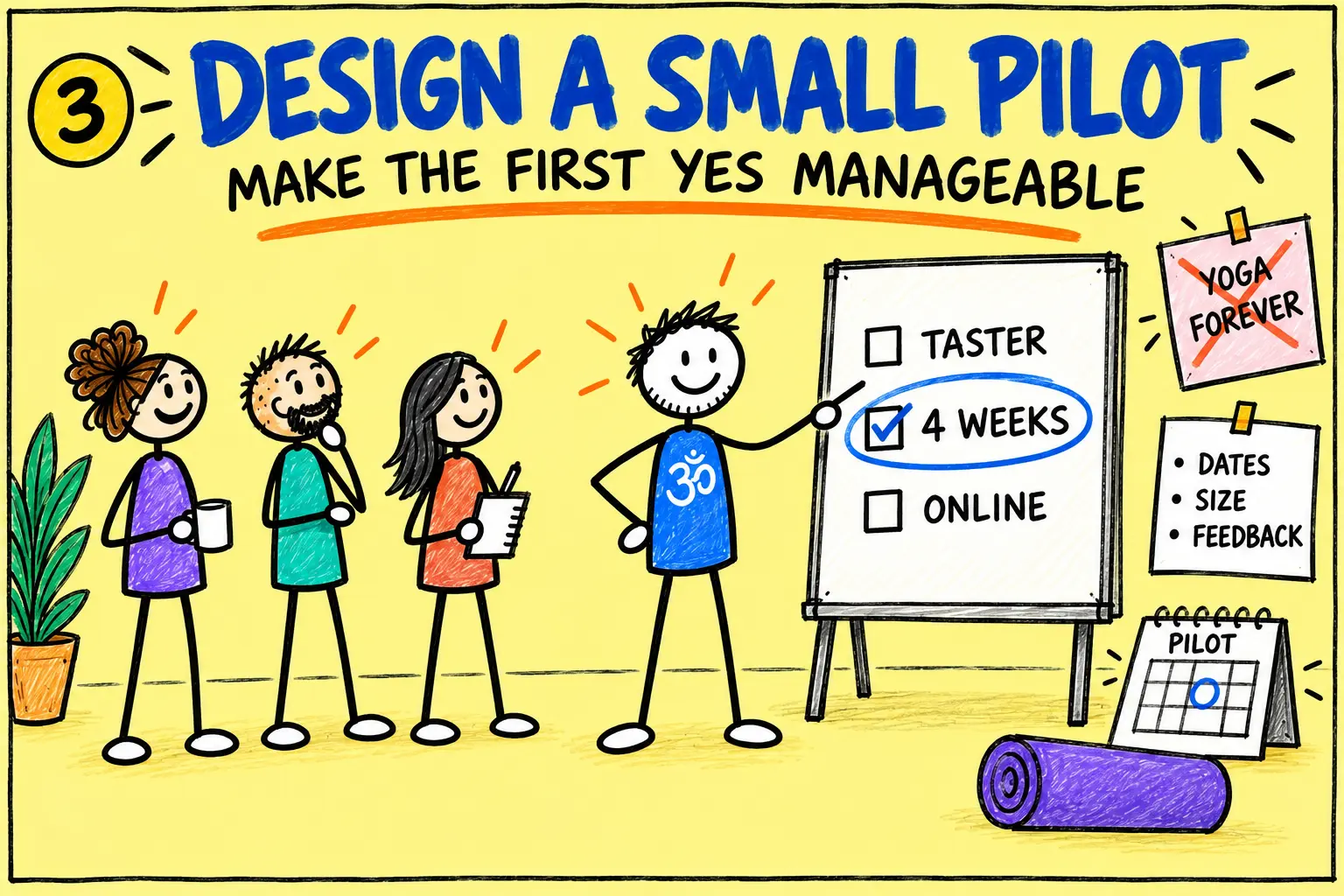
Make the first decision easy to understand.
A single taster can test the room and interest. A short series can show whether the timing, format and booking process work more than once. Neither should be sold as a guaranteed route to an ongoing contract.
Taster Session
Useful for checking the venue, access, attendance and general fit before anyone commits to a series.
Four-Week Pilot
Useful when the organiser wants to test a repeatable slot and gather simple participant feedback.
Online Pilot
Useful for distributed teams, provided the joining instructions, camera expectations and teaching scope are clear.
Write down the number of sessions, class length, maximum attendance, proposed dates, venue, equipment arrangement, fee and cancellation terms. That small specification prevents a surprising number of future emails.
Plan the Class Around the Working Day
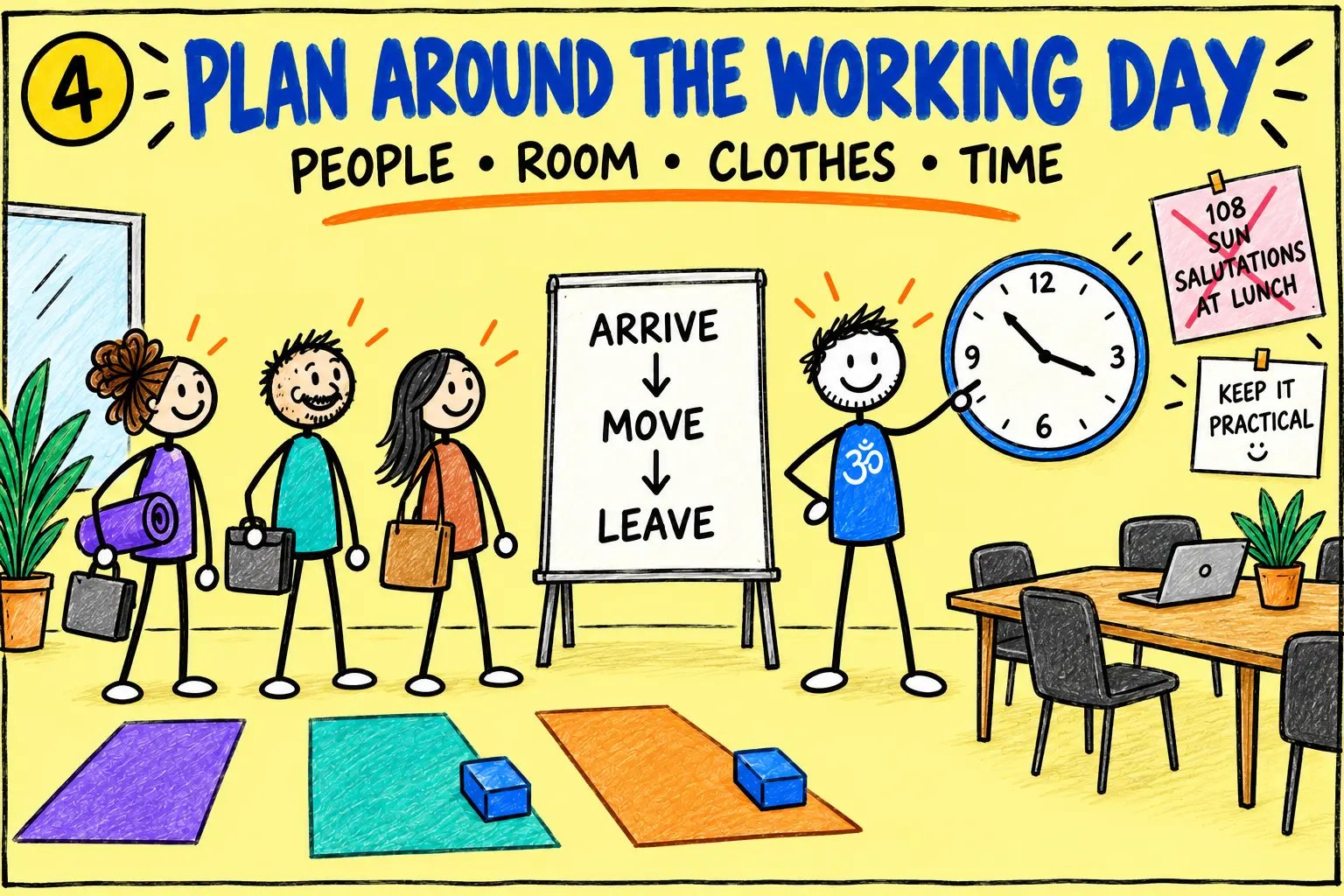
Start with the constraints.
Ask how much time is genuinely available, what people will be wearing, whether changing facilities exist, how private the room is, and how participants will move between work and the class.
- Choose accessible, familiar movements
- Allow time to arrive and leave
- Offer clear options and rests
- Avoid an unnecessarily sweaty finish
- Keep emergency access clear
- Confirm how participants seek help
Prepare a simple yoga lesson plan for the actual group rather than importing your usual evening-class sequence unchanged.
The old mat dilemma is still real. Carrying a large stack through a car park is not a transport strategy; it is an unexpected farmers’ walk. Ask the organisation to buy and store suitable mats, ask participants to bring their own, or price transport and setup honestly.
Set a Price You Can Explain

Calculate before you quote.
Include planning, teaching, travel, setup, administration, insurance, payment charges and any equipment. Add the profit you need for the work to be sustainable. Old prices from somebody else’s article cannot tell you what your time costs today.
Flat Session Fee
Simple for an employer-funded class. Agree the maximum attendance and charge the organisation one fee.
Per-Person Fee
Can suit employee-funded bookings, but decide who handles registration, minimum numbers, refunds and no-shows.
I have previously recommended a flat session fee because it gives the teacher a known amount and lets the organiser fill the available places. That remains a sensible option, but it is not automatically best. Use the structure that matches who is paying and who carries the attendance risk.
Quote the offer, not just the class.State exactly what the fee includes: sessions, duration, capacity, travel, equipment, admin and any tax that applies to you.
Contact the Right Person

Write one relevant, respectful message.
The right contact might work in HR, people operations, learning and development, wellbeing, facilities, an employee network or a smaller organisation’s management team. A named introduction helps, but a published departmental address can also be appropriate.
Keep the first message short: why this organisation, what the pilot is, what practical question it answers, and the next small step. Do not attach a deck of twenty-seven slides before anyone has asked for it.
Simple Outreach Email
Subject: A short yoga pilot for [organisation or team]
Hello [name],
[Connection or relevant reason for writing]. I teach [plain description of your suitable class], and I wondered whether a [number]-session [duration]-minute pilot might be useful for [team or group].
I can provide a one-page outline covering the format, room, equipment, capacity, fee and participant information. Would a 15-minute conversation be a sensible next step?
Best wishes,
[name and contact details]
If you contact UK organisations, check the ICO’s current business-to-business marketing guidance. The rules differ by contact method and type of organisation; personal data still carries UK GDPR responsibilities, and objections must be respected.
Plan Your Corporate Yoga Outreach in 20 Minutes
Answer eight prompts, then copy or download your completed outreach plan.
Type directly into the boxes. They resize from the bottom-right corner and save automatically in this browser. Your answers are not submitted to GeorgeWatts.org.
Agree Safety and Logistics

Put the practical agreement in writing.
Confirm the room, access, capacity, booking method, participant information, equipment, setup responsibility, emergency contact, cancellation terms, payment date and what happens if the space becomes unavailable.
Discuss responsibilities with the organisation and follow the requirements of your training, insurer and local rules. The UK Health and Safety Executive explains the basic process of identifying hazards, assessing risk and controlling it. The organisation should understand its workplace responsibilities; the teacher should understand the teaching activity and remain within their competence.
- Suitable room and clear floor
- Realistic class capacity
- Emergency and first-aid contact
- Participant information process
- Appropriate insurance cover
- Written cancellation terms
Run, Review and Decide
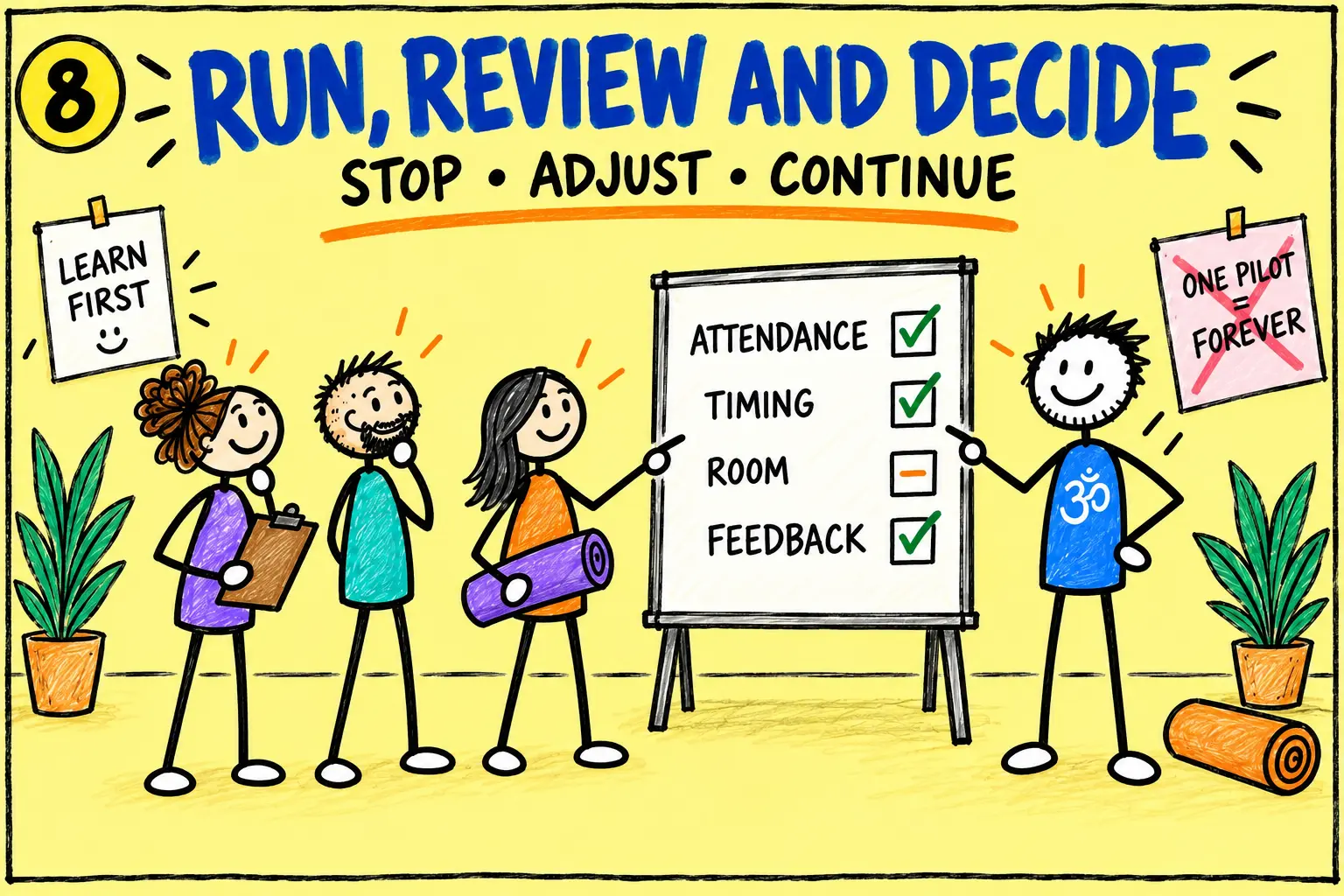
Measure whether the arrangement worked.
After the pilot, ask the organiser and participants a few useful questions. Was the time workable? Was the room suitable? Were instructions clear? Did the booking process create confusion? What should change if the class runs again?
Attendance is one signal, not the whole story. A well-attended class in an unsuitable room may not be repeatable. A smaller class with a workable slot and clear internal organiser may be a better foundation.
Offer one of three honest next steps: stop, adjust and test again, or agree a further block. An ongoing programme is earned through fit and reliable delivery, not declared in the opening email.
Your One-Page Proposal Checklist
- 1Purpose and People
Who the pilot is for and the practical reason it is being offered.
- 2Format and Logistics
Dates, duration, capacity, venue, equipment, access and booking method.
- 3Fee and Next Step
What the price includes, payment terms and the small decision you are asking for.
Keep it to one page. The proposal should not require its own yoga mat.

George’s Conclusion
A corporate yoga programme begins with a real workplace, a suitable group and a small proposal everyone can understand.
Choose one practical purpose. Design a pilot around the room and working day. Quote a fee that covers the whole job. Then run the class, review the arrangement and let the evidence guide the next step.
The best proposal is not the loudest. It is the one that makes the next sensible conversation easy.